
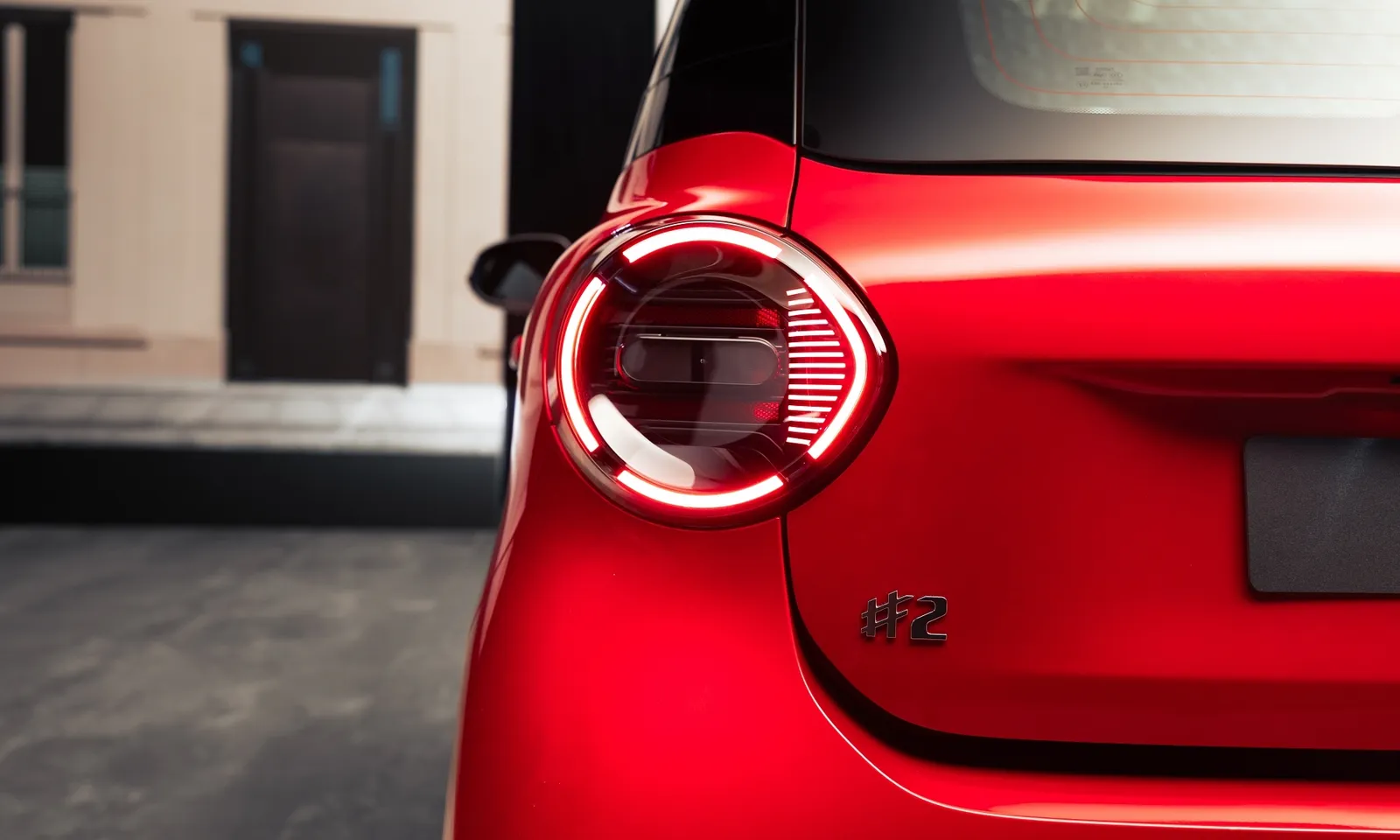
It isn’t yet in production, but it’s already a success: the Smart #2 has triggered a surge in orders, with dealers working extra shifts.
22/10/2026 17:00
Updated to
22/10/2026 17:00
Extra shifts are being arranged to process orders for a car that won’t begin delivery until mid-2027. This is what’s happening at some Mercedes-Benz dealerships in Germany with the Smart #2, the two-seater electric vehicle that brings back the concept of the Fortwo. Orders opened across Europe, including Spain, on October 13th last year, and since then some sellers claim they haven’t seen such interest in a new model in years.
That said, there are no official order figures available at the moment, only testimonials from the sales network. Still, it’s good news for a brand that needed it. In 2025, Smart registered only 4,726 cars in Germany, and many of its dealers had been complaining for a long time that the business wasn’t profitable. The problem extended across the entire continental network. Smart’s shift in strategy took longer to kick in than expected.
Back to basics: two seats and 2.75 meters
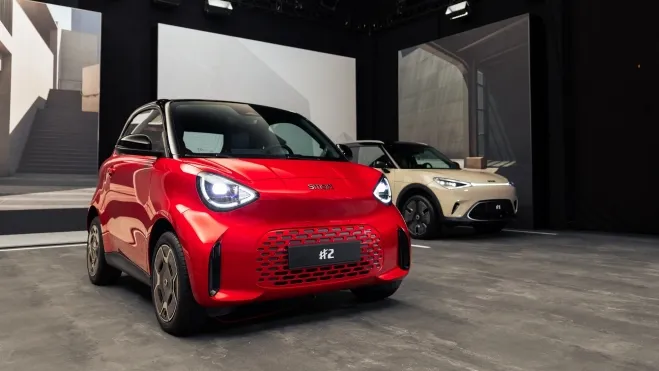
After the end of the Fortwo, which stopped production in 2024, the company shifted focus to much larger models: the Smart #1, Smart #3, and Smart #5. The #2 returns to the original concept of a minimal car designed for city driving and parking. It measures only 2.75 meters long, with wheels placed at the corners to maximize interior space.
Its turning radius is 6.95 meters between curbs, ideal for making turns in narrow streets. It also features the Electric Compact Architecture (ECA) platform, developed by Mercedes-Benz and Geely for this two-seater vehicle. At the rear, it uses a five-point multi-link suspension, a setup that is uncommon in a city car of this size.
82 HP rear engine and LFP battery
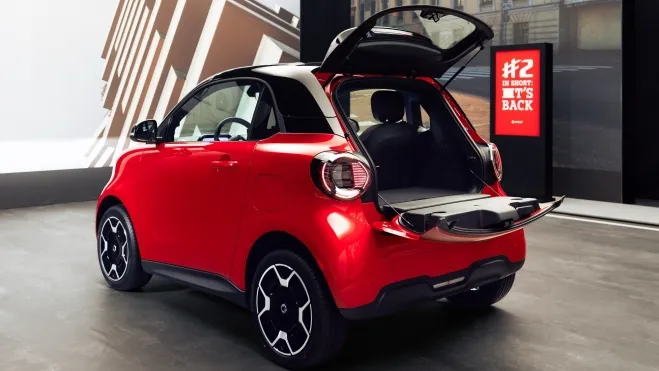
The Smart #2 features an electric motor of 82 horsepower mounted on the rear axle, delivering 130 Nm of torque and rear-wheel drive. The rear wheels are wider than the front ones to enhance stability. The LFP battery has a capacity of 35.8 kWh and provides a provisional range of 290 kilometers according to the WLTP cycle.
It supports fast charging at up to 65 kW, allowing it to go from 10% to 80% charge in less than 20 minutes. At alternating current, it reaches 11 kW, except for the Pure trim level, which is limited to 7.4 kW. All versions include a V2L function for powering external devices.
Selling and leasing prices
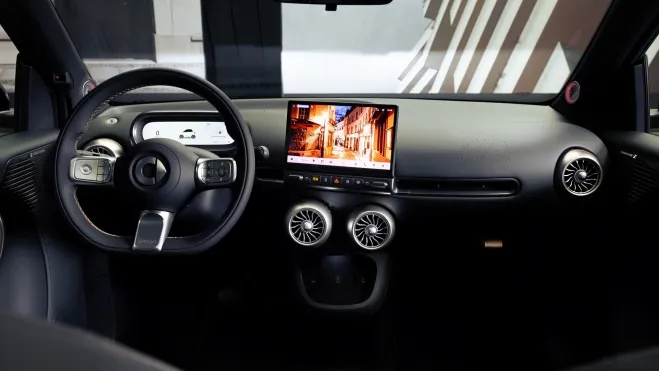
The Smart #2 starts at 19,990 euros with the Pure finish. Above that are the Pure+ (20,990 euros), Premium (24,490 euros), and Couture Edition (25,690 euros), with the latter limited to 999 units for all of Europe. In Germany, on a leasing basis, the #2 Pure is available for 151.63 euros per month over 36 months with 10,000 kilometers per year. However, this payment requires the maximum government subsidy of 6,000 euros, which is only available to households with at least two minor children and an annual taxable income of up to 45,000 euros. Adding the 990 euros in delivery costs raises the actual monthly payment to around 179 euros. Without German subsidies, it would be nearly 346 euros.
Is this the car Smart needed?
A starting price below 20,000 euros has a significant impact on a car of this type. If demand holds, the #2 model could bring back sales volumes that Smart hasn’t seen in a long time. It remains to be seen whether the enthusiasm from these early days will spread across the entire European market and, most importantly, turn into actual order numbers. The brand notes that the car is still in the homologation process, so deliveries won’t begin until it’s complete. In terms of price, it will compete with four-seater electric urban cars like the Dacia Spring or Leapmotor T03, though its advantage lies not in space but in size and agility in city driving.