
The Science on fossil fuel subsidies: “The world’s worst energy policy”
Cutting excise taxes is not an Italian-only mistake. The war in Iran has prompted nearly half of the world’s countries to introduce emergency subsidies. A decision that, according to an editorial in the prestigious journal Science written by Paasha Mahdavi and Michael L. Ross, is highly harmful because it makes the transition “slower, more expensive, and more unequal.”
Countries that do not cut subsidies are turning to remote work and free buses.
Are there alternatives? The authors cite measures taken in Pakistan, Indonesia, and Egypt, where public employees are required to work from home at least one day a week. There are also examples from Chile, Lithuania, and the Philippines, which have reduced or eliminated bus fares to promote sustainable transportation. We could also consider bike to work programs—where employers pay employees to commute by bike—already tried out in some Italian municipalities and companies, a measure that could be expanded nationwide with government funding.
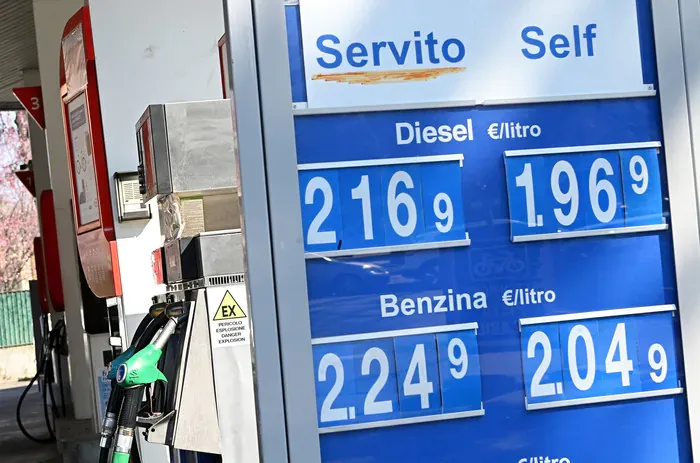
Subsidies—such as cuts to excise taxes—incentivize the dirtiest form of energy. Italy’s suspension of fuel taxes also goes in the same direction, hindering the energy transition. Yet, the two authors note, there are more environmentally friendly and socially equitable policies than what they call “the world’s worst energy policy,” the title of their editorial. The pursuit of electoral approval hinders medium- and long-term plans.
Schlein to Meloni: 14 billion for climate and energy in 5 proposals
"The conflict involving Iran could represent a turning point to accelerate the global transition away from fossil fuels: every additional day of high oil and gas prices and uncertainty about future supply makes wind and solar energy — more affordable and scalable than ever — increasingly attractive. However, nearly half of the world’s countries have introduced emergency subsidies that, according to research, will make this transition slower, more costly, and more unequal."
Subsidies as incentives for pollution reached one trillion dollars in 2022
Paasha Mahdavi and Michael L. Ross consider consumer subsidies to be “the worst type of energy policy.” They encourage the most polluting form of energy—fossil fuels—through an inefficient policy that is surprisingly difficult to reverse. In addition to boosting consumption, these subsidies “worsen air pollution, strain public budgets, discourage investment in renewables, and disproportionately benefit the wealthiest urban populations.”

According to the International Energy Agency, global subsidies for fossil fuel consumption reached a record level of one trillion dollars in 2022. Once approved, it is difficult to reverse such policies. The two researchers draw this conclusion from studies published since 2003, especially after the Paris Agreement in 2015, when governments promised to limit subsidies. It was a failure: “Of the approximately 130 reform attempts carried out between 2016 and 2023 by the 21 countries that provide the largest subsidies, 70% failed within a year, while over 90% were abandoned within three years.”
Charging: Polestar brings Intelligent Octopus incentives to Italy
Citizens do not like price increases. We recall France, which was thrown into chaos in 2018 by the Yellow Vests, a movement that arose from protests against rising fuel prices and diesel taxes.
Cutting excise taxes benefits the wealthy
To connect this broader perspective to our current political situation, this passage is interesting: “Those who offer modest tax cuts as a temporary measure rarely let them expire: subsequent elections, the next oil shock, or another protest quietly turn a temporary solution into permanent policy. The G20’s promise in 2009 to gradually eliminate ‘inefficient subsidies for fossil fuels’ produced almost no results. A similar commitment made during the 2021 Glasgow climate summit met no better fate.”
EU to China: Stop the sale of hybrids
In Italy’s case, the weekly reduction in excise taxes—which is also ineffective at controlling prices—is combined with a waiver of vehicle tax until 2027, a measure that favors internal combustion engines.
Beyond the environmental sustainability aspect, where higher consumption equals more emissions in the air, the social dimension must also be considered. It’s not true that cuts protect those in greatest need. “Most of the benefits go to the wealthier, not the poor, and such temporary measures often tend to become permanent. To support low-income families affected by rising energy costs, governments should adopt measures that the International Monetary Fund defines as ‘temporary, targeted, timely, and tailored.’ These include direct cash transfers, specific assistance for the poorest families, and subsidies for public transportation. Such tools can help the most vulnerable citizens without prolonging the crisis itself that is being addressed.”
The charging station bonus starts (September 22): 80% full reimbursement
In other words, the opportunity that war in Iran presents for transition is undermined by subsidies and excise tax cuts, as Paasha Mahdavi and Michael L. Ross conclude: “Making fossil fuels cheaper today will have catastrophic consequences in the future.”
READ ALSO: Cardinals (UNRAE): Italy’s electric cars moving backward. An alarm is needed — watch the VIDEO
Previous Article
A World Tour of 45,000 km with Tobias’s Truck
Next Article
Lidl charging at 0.18/kWh in France — unbelievable