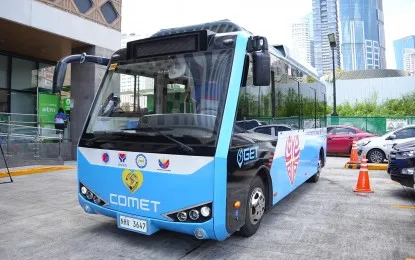
The Philippines Is Taking Its Electric Love Bus Beyond Metro Manila
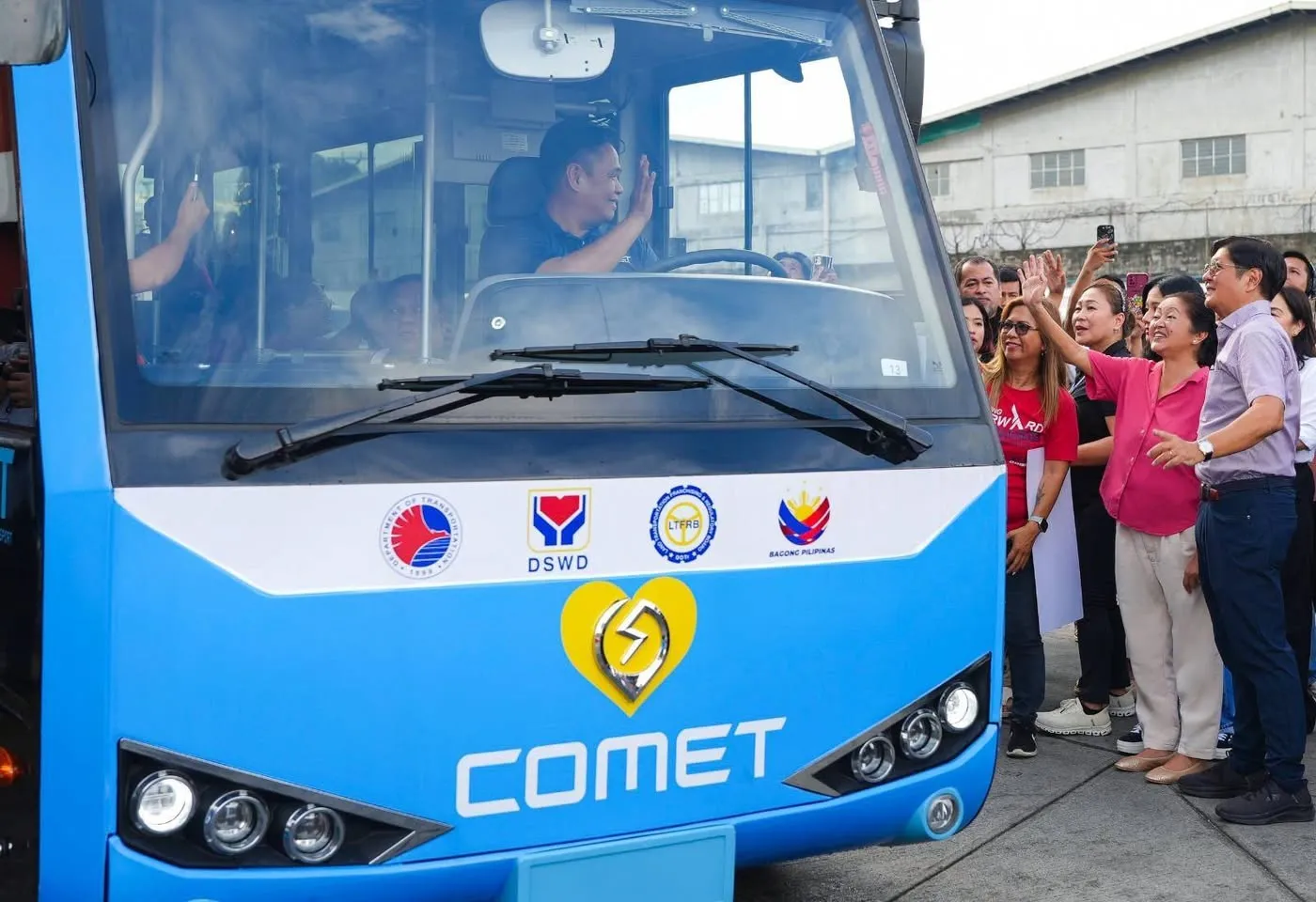
At the new route launch with Philippine President Marcos and Mayor Vico of Pasig City and Mayor Joy Belmonte of Quezon City. (Photo by PCO)
Support CleanTechnica's work through a Substack subscription, on Patreon, or on Stripe. Help us produce all of the high-quality, original content we publish week after week despite the challenges of content-scraping AI, antisocial media, inflation, and other hurdles.
Electric Love Bus Expands Across Philippine Cities
as Test for Public EV Adoption
THE Philippines is expanding its electric Love Bus program beyond its initial Metro Manila route, integrating electric minibuses into public transport networks and community livelihood programs supported by local governments and private developers.
The latest deployment launched along the Robinsons Galleria to Eastwood corridor, operating daily from 6 a.m. to 9 p.m. The free service connects the Ortigas business district with C5, Arcovia, Bridgetowne, and Eastwood. The fleet is operated in partnership with the Metropolitan Manila Development Authority and Global Electric Transport Philippines, whose COMET electric vehicle serves as the hardware backbone for the Love Bus initiative.
This expansion follows a 2025 initiative between the Department of Social Welfare and Development (DSWD) and GET Philippines that integrated persons with disabilities into transport operations. Those vehicles serviced routes connecting the Valenzuela Gateway Complex to the DSWD Central Office in Quezon City, as well as the Parañaque Integrated Terminal Exchange. The southern route passed through dense urban corridors before reaching PITX, a primary hub for commuters traveling to Cavite, Laguna, and Batangas.
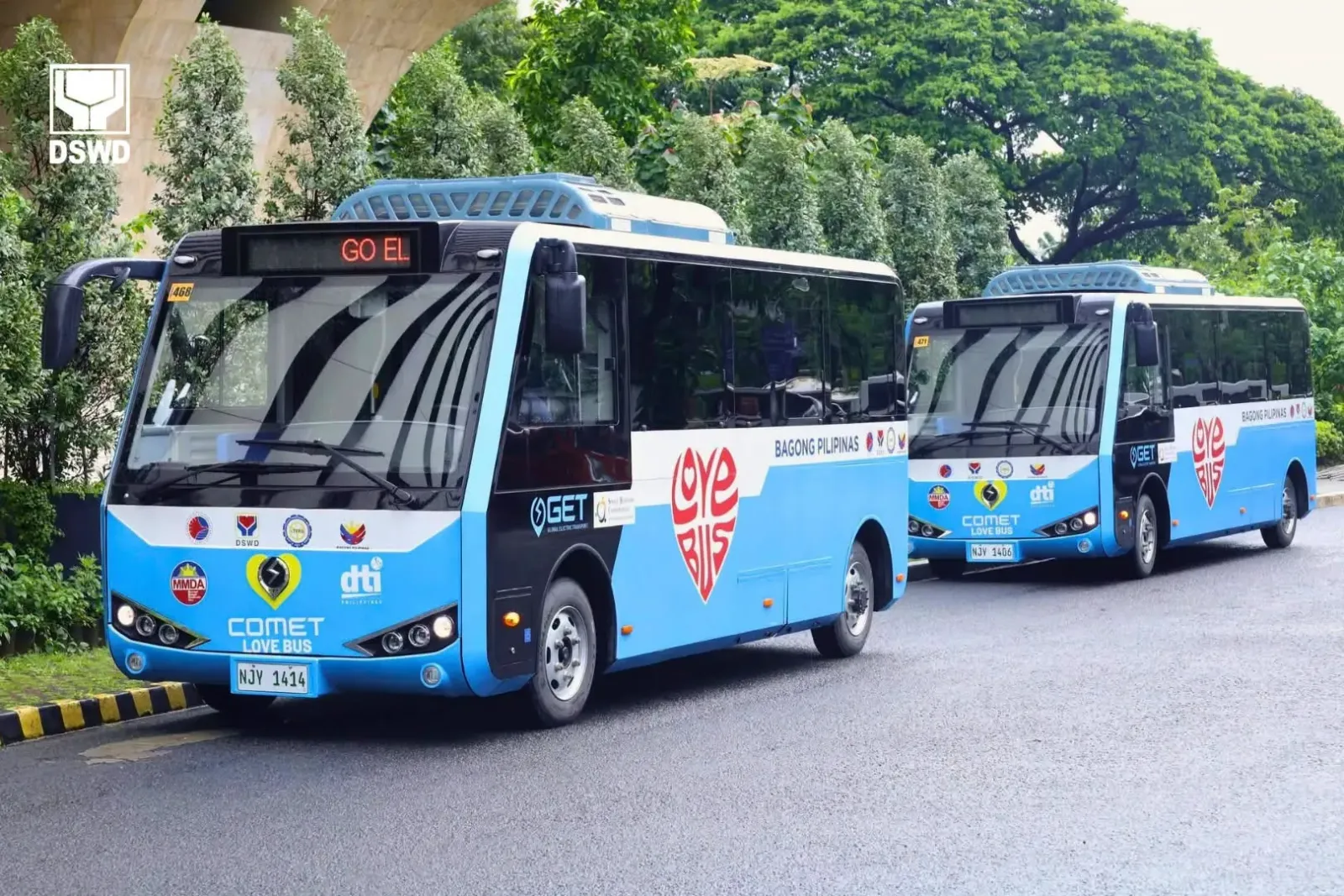
That program functioned as both a transit option and an economic project, with DSWD granting livelihood assistance to PWD associations while GET provided the minibuses, charging infrastructure, and fleet management systems.
Designed for short and medium-distance urban transit, the COMET features a 54-kWh lithium-iron-phosphate battery, a 350-volt electrical architecture, a claimed 100-kilometer range, and a top speed of 70 kph. GET states the battery recharges from 20 to 90 percent in roughly 45 minutes. Unlike large municipal transit buses, the compact COMET is tailored for flexible urban routes where passenger volume and traffic density fluctuate.
Local operating conditions present a rigorous testing environment. Tropical heat and severe congestion place heavy demands on battery capacity, as continuous air conditioning and extended idle times draw power even over brief distances. Stop-and-go traffic continuously alters the balance between energy consumption and regenerative braking recovery. Beyond laboratory range estimates, field operations yield actual data on daily energy usage, charging frequency, and operational downtime.
GET manages the ecosystem supporting the vehicle fleet, supplying charging stations, monitoring software, and a mobile passenger app. This integrated system provides real-time data on vehicle locations, battery status, and route utilization.
Adoption is also growing outside the capital. Cebu introduced its own Love Bus fleet in 2025 across established transport corridors, while Davao launched a program using a different vehicle platform. President Ferdinand Marcos Jr. cited Davao’s initiative in his 2026 State of the Nation Address when discussing national electric vehicle targets.
DSWD recently entered into another agreement involving the MVP Group, GET Philippines, and the Pampanga provincial government to establish local transport operations managed by PWD groups.
This collaborative model addresses major operational barriers facing developing EV markets. Deploying public electric vehicles requires dedicated depot charging, trained technicians, route-aligned charging schedules, and clear financial structures for electricity and long-term battery maintenance.
Private property developers are increasingly funding and shaping these deployments. Companies including Robinsons Land and Megaworld have provided vehicles, charging space, and route access connecting major commercial centers. This approach places electric buses directly into high-density passenger corridors without requiring private firms to manage entire transit networks.
For GET, these deployments serve as a large-scale field test for the COMET platform under demanding tropical conditions. As the Love Bus initiative scales across more routes and cities, focus is shifting from initial deployment to long-term operational reliability, fleet maintenance, energy cost management, and vehicle availability.