
Thailand raises tax on imported electric vehicles dramatically
Thailand will significantly raise the consumption tax on imported electric vehicles from 10 or 15 percent to a uniform 35 percent starting in 2027. The government aims to curb vehicle imports from China and encourage foreign manufacturers to establish their own factories and create jobs in the country.
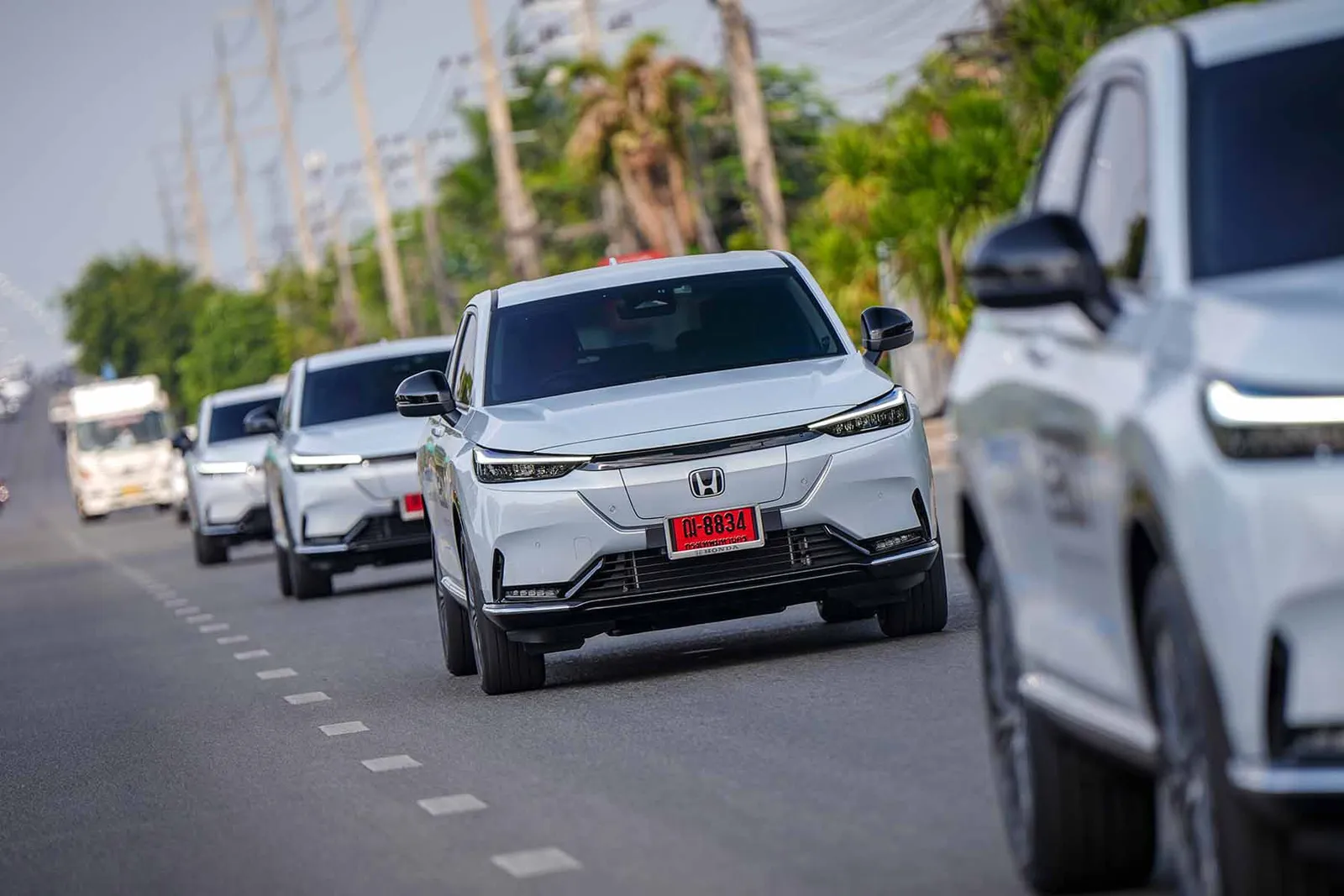
Image: Honda
Thailand will raise the consumption tax on imported electric vehicles dramatically to 35 percent on January 1, 2027. This applies to BEVs, whose current tax rate is 10 percent, as well as REEVs, or electric vehicles with range extenders, which have been taxed at 15 percent so far. The regulation targets vehicles that are imported as finished products to Thailand or do not use components manufactured in Thailand.
The tax adjustment is based on decisions made in 2025 and 2026 by the National Committee for Electric Vehicle Policy. It was prompted by strong pressure on the domestic market. Thai industry associations warned of a crisis for local automakers, as they are unable to compete with significantly cheaper imports from China. Although figures from 2026 show that electric mobility in Thailand is experiencing demand growth, with electrified vehicles accounting for 55 percent of all new registrations for the first time, it was mainly foreign vehicle imports that benefited from this trend.
To keep the industrial location attractive, the Ministry of Finance has instructed the Consumption Tax Authority to engage in direct talks with foreign investors and companies. The authority offers special tax rates to manufacturers who commit to new investments in the production or assembly of key components in Thailand.
Through previous incentive programs, tax breaks, and purchase subsidies, Thailand has already attracted investments worth over 3.5 billion euros, made by Chinese manufacturers such as BYD, Changan, and Great Wall Motor, among others. By August 2026, approved investments in the entire electric mobility ecosystem rose to 4.1 billion euros, spread across 189 projects. The tax adjustment starting in 2027 is intended to sustainably retain these capital inflows in the country and strengthen its position through the following principle:
Investment-driven vehicle imports are directly linked to the willingness to invest locally. This approach aims to ensure that Thailand does not remain merely a consumer market but becomes a hub for the production and export of environmentally friendly vehicles. The strategy focuses on high local value addition by deliberately increasing the proportion of Thai components to safeguard market share for domestic suppliers.