
Testing the Volkswagen ID. Polo: packed with smart technology, strikingly human
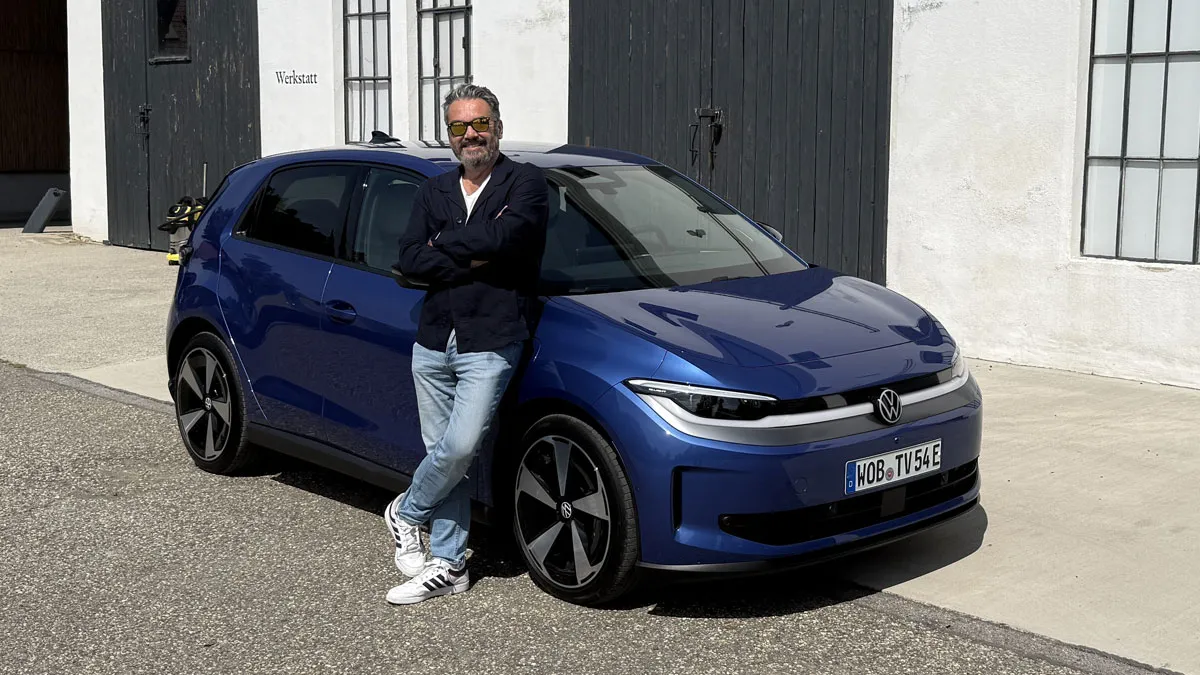
After our first drive with the Volkswagen ID. Polo, we were already amazed by what Volkswagen had created with this compact EV. During a second, longer test drive in Vienna, it was particularly striking how much technology Volkswagen has packed into this compact EV — and how naturally those driving assistance systems feel while in use.
This time it’s about something different
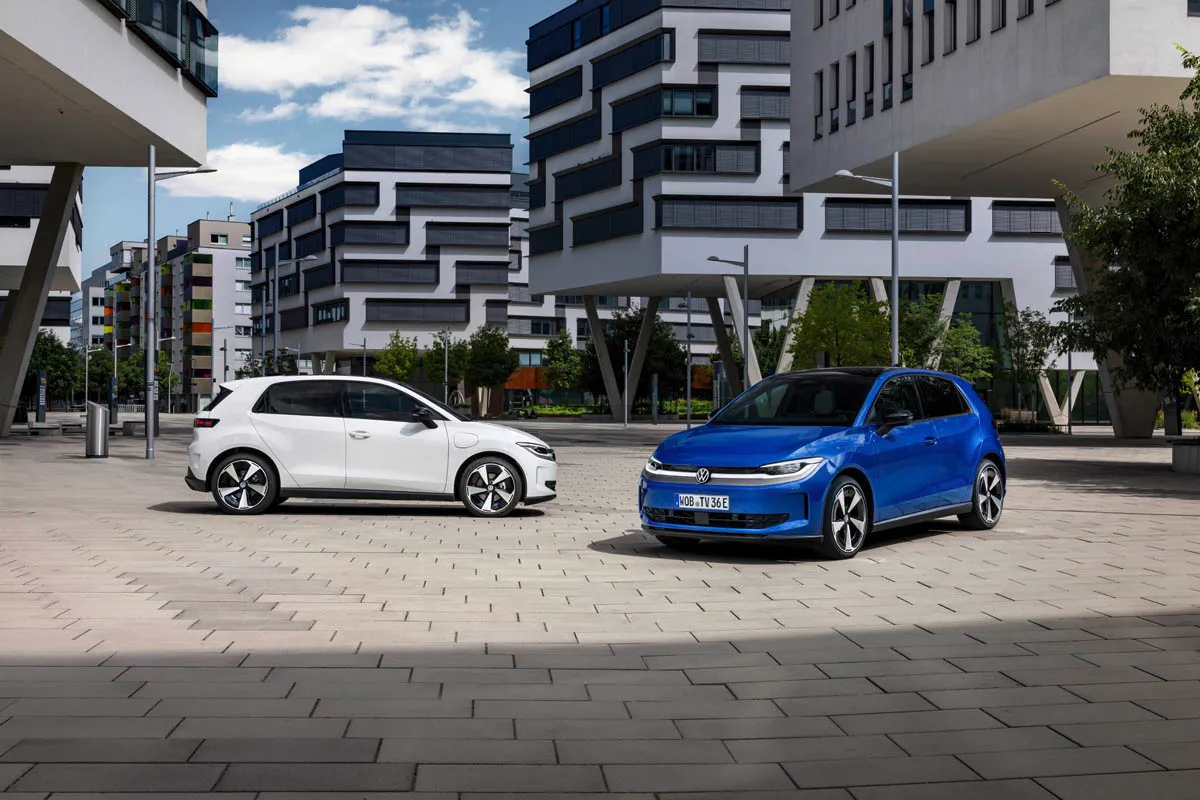
We’ve already spent quite a bit of time and distance testing the new Volkswagen ID. Polo. First, we drove a camouflaged prototype of the ID. Polo, then we took a close look at its interior, followed by the ID. Polo GTI, and now we’ve also gotten to know the final version of the ID. Polo without camouflage. Our conclusion after those initial drive impressions was quite clear: the best Polo ever is an electric one.
A new drive through and around Vienna didn’t have to revolve again around questions about how the ID. Polo handles, how much space it offers, or what battery packs Volkswagen provides. During this longer acquaintance, something else became particularly prominent: the enormous amount of assistive technology Volkswagen brings to this class, and especially how those systems function.
Volkswagen itself says that certain features of the ID. Polo were until recently reserved for higher vehicle classes. Connected Travel Assist is one of the clearest examples of this. But the number of functions alone tells only part of the story. What’s much more interesting is that all this electronics behind the steering wheel feels surprisingly little like electronics.
Lane Assist without constant steering input
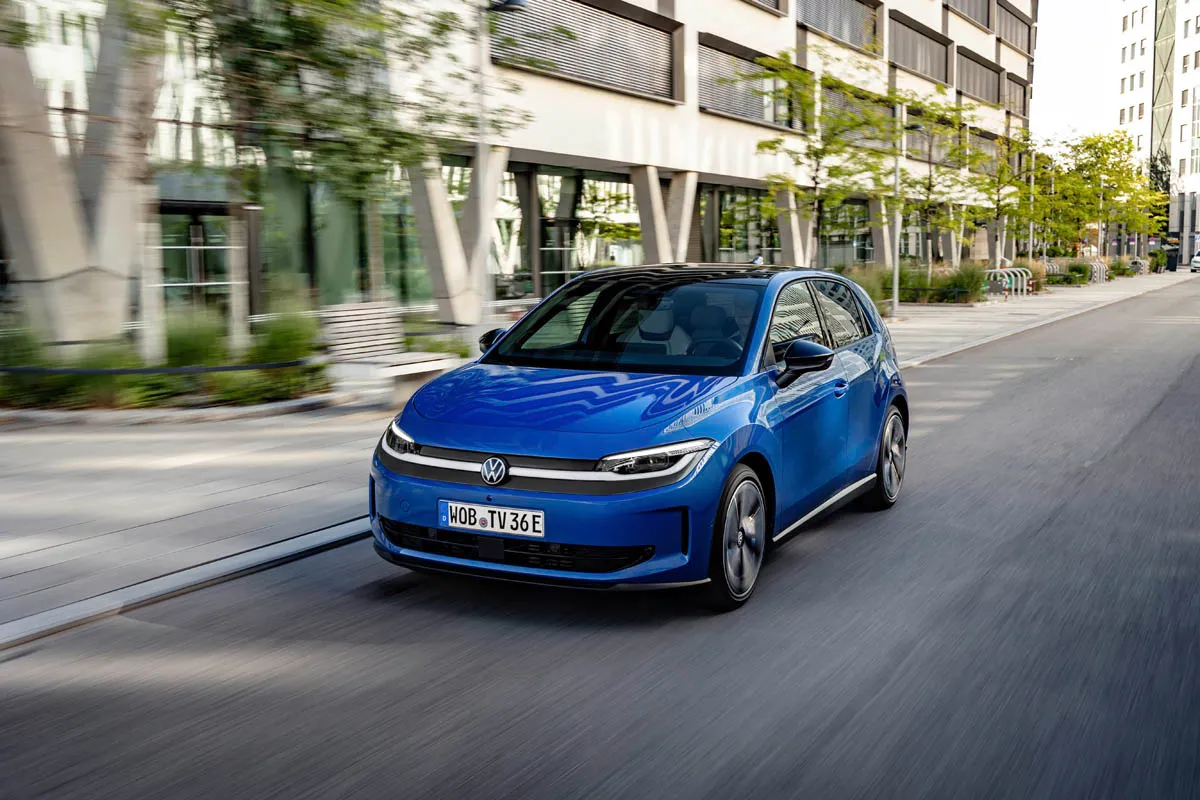
Lane assistance is now almost a standard feature in new cars. However, that doesn’t necessarily mean such systems work smoothly. There are plenty of vehicles where Lane Assist responds late and then pulls on the steering wheel quite forcefully. This quickly gives the impression that the driver and the car are constantly correcting each other.
The ID. Polo does things differently. The steering corrections are gentle, subtle, and mild. Instead of constantly pulling the car back when approaching a lane line, the system seems to keep it gently in the correct position within the lane. As a result, there’s no back-and-forth movement between the road markings.
It might sound strange to call software “human,” but that’s exactly the impression it gives. After all, a good human driver doesn’t constantly correct steering with abrupt moves either; they make adjustments almost imperceptibly. That’s how Lane Assist in the ID. Polo feels as well.
In addition, the ID. Polo communicated remarkably calmly during our drive. There were no constant beeps or urgent warnings whenever you weren’t actively steering to make corrections. Of course, as a driver, you need to stay engaged and keep your hands on the steering wheel when using Connected Travel Assist, but the way the system monitors this feels much less stressful than in many other cars.
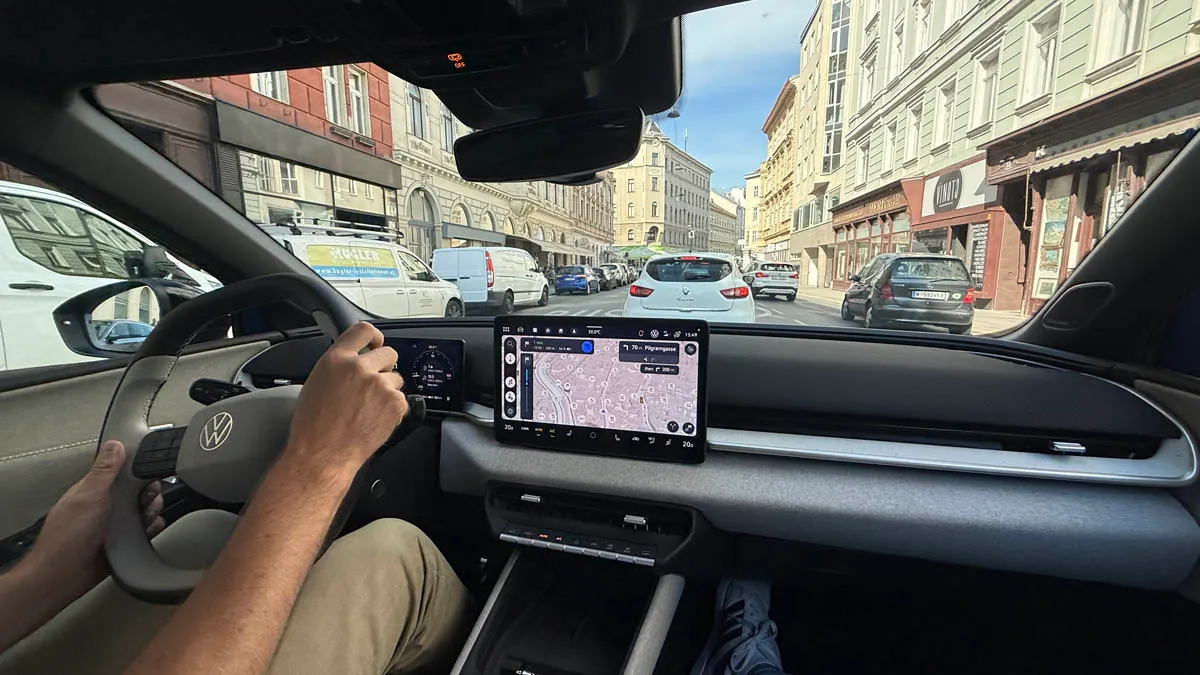
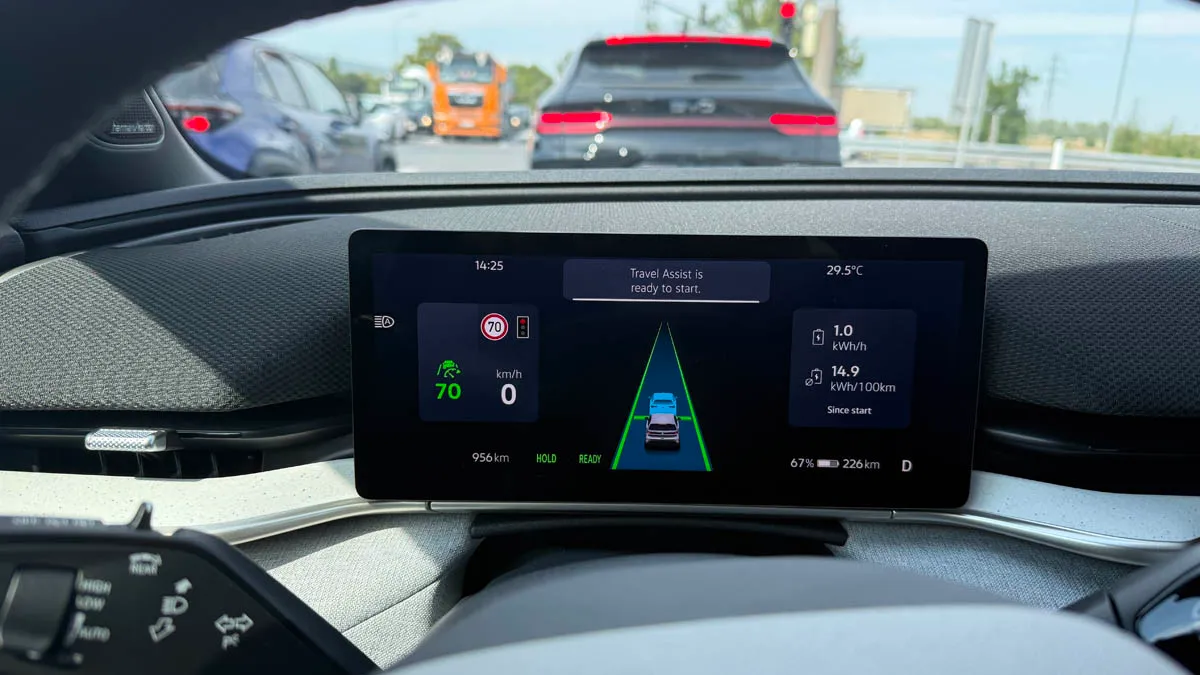
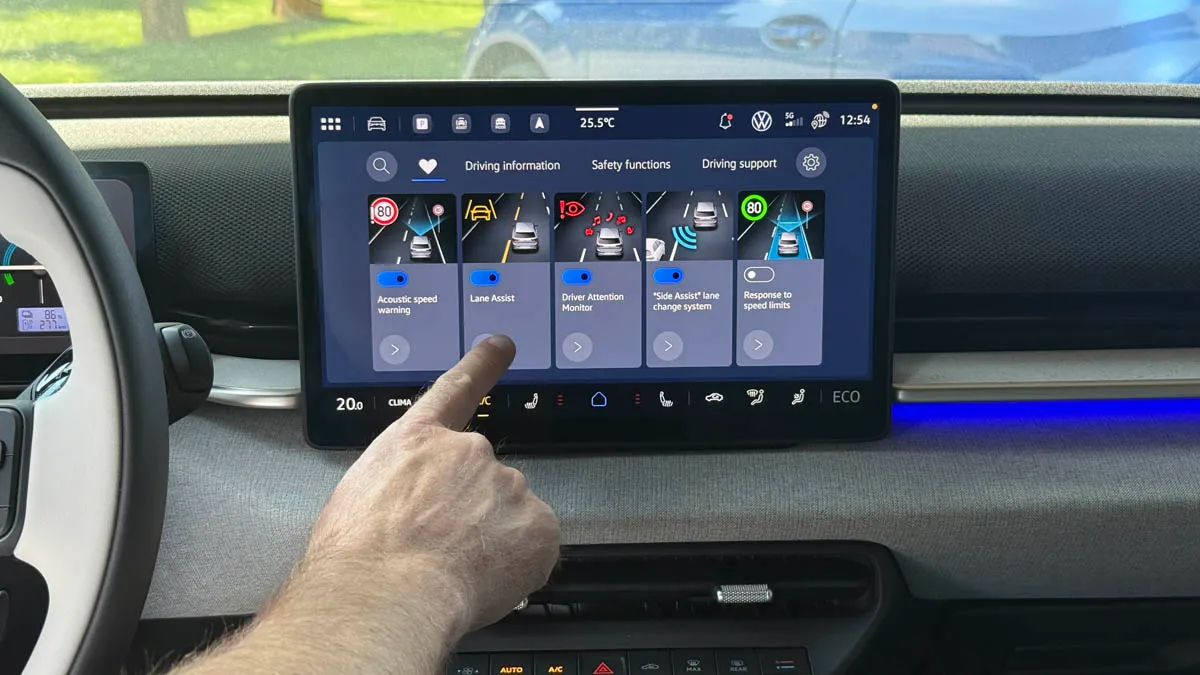
Connected Travel Assist drives through Vienna
Connected Travel Assist goes far beyond Lane Assist. The system combines lateral guidance with automatic speed control. The ID. Polo can steer, accelerate, and brake on its own within the system's limits. It relies not only on the vehicle ahead but also on traffic sign recognition, navigation data, and information about the route ahead.
In Vienna, we could experience how much work it takes off our hands. In heavy traffic, we didn’t have to use the gas or brake pedal for long periods or apply brakes manually. The car also handled the constant minor steering adjustments. The Volkswagen followed the traffic, maintained its distance, and stayed steadily within its lane.
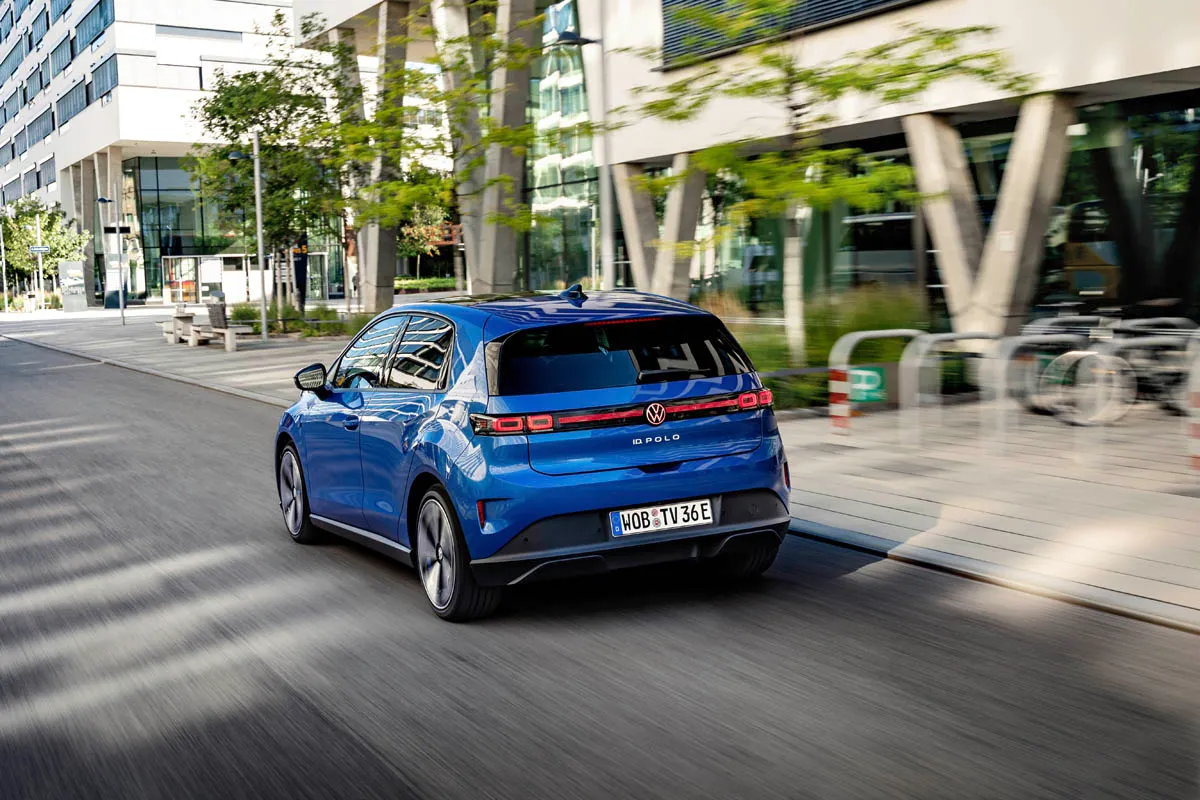
Connected Travel Assist looks further ahead than just the front car’s bumper. Curves, intersections, and roundabouts can be taken into account when determining speed. When sufficient information is available, the system can also use data from other vehicles and infrastructure via V2X communication. Even the vehicle ahead can serve as an additional reference for road position. In certain situations, the ID. Polo thus needs only one recognizable lane marker to guide itself. These are quite advanced features for a car that, at 4.05 meters in length, belongs to the compact segment.
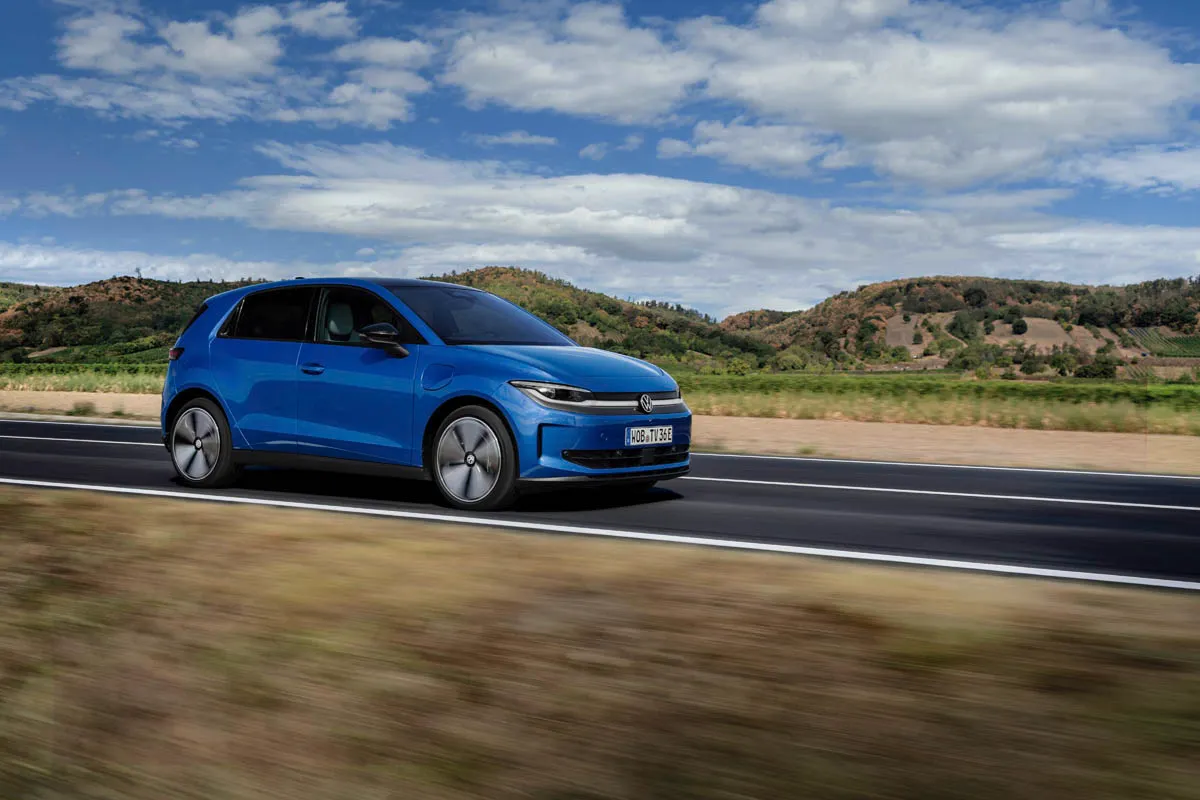
Even traffic lights play a role
Even more remarkable is traffic light recognition. Connected Travel Assist can identify a red traffic light and automatically bring the ID. Polo to a stop. Volkswagen even calls this application of Travel Assist a first in its class.
During our drive through Vienna, it worked several times exceptionally well. Approaching, gradually slowing down, and stopping—all without us needing to use the brake pedal ourselves. Then the ID. Polo could resume its journey once traffic conditions allowed it.
Once, the assistant might have been a bit too human-like. The ID. Polo decided to stop even though the traffic light was green. That was the only mistake; the recognition system worked well for the rest of the journey. This incident highlights why Volkswagen rightly refers to it as a driving assistance system rather than autonomous driving. The driver remains responsible and must be able to intervene. For our overall impression, that single mistake made little difference. Precisely because the system functioned so seamlessly for the rest of the trip, Connected Travel Assist impressed us.
Up to nineteen driving assistance systems in a Polo
Those who then look at what Volkswagen offers realize how far this compact car has come. Depending on the trim level and option package, the ID. Polo comes equipped with up to nineteen assistance systems.
Lane Assist, Front Assist, Side Assist, traffic sign recognition, and various safety features are already standard. The Life and Style trims add Adaptive Cruise Control among other things. In addition, there are systems such as Connected Travel Assist, V2X, proactive occupant protection, Area View, and advanced parking assistance.
Lane changing support is also included. On a multi-lane highway, a brief tap on the turn signal may be enough for the ID. Polo to check if there is space. If so, the car then assists with steering into the other lane. The driver remains responsible in this case as well and must continue to control the steering wheel.
Park Assist Pro remembers how you park
Park Assist Pro deserves special attention, as it too enables the ID. Polo to perform tasks that you wouldn’t immediately associate with a small car. The system in the Style version can record the last 50 meters of a parking maneuver. That maneuver can then be saved.
If you return to the same spot later, the car can offer to take over parking again. Up to five parking maneuvers can be stored. This can be useful, for example, when you need to drive into the same tight driveway or garage every day.
That’s not all. With Park Assist Pro, the ID. Polo can also be driven in and out of a parking space from outside the car using a smartphone. Thus, the driver doesn’t need to be behind the wheel. This is especially convenient when a parking space is so narrow that getting out after parking becomes difficult. Meanwhile, Area View uses cameras on the front, rear, and sides to create a 360-degree view. According to Volkswagen, the system can even provide visibility around corners within its technical capabilities. A few years ago, one would have expected this kind of technology in a much larger and more expensive Volkswagen rather than in a Polo.
Emergency Assist intervenes only when necessary
Owners probably never expect to need another system. Emergency Assist checks whether the driver is still active. When steering, accelerating, and braking stop working, the car first tries to get the driver to react through various warnings.
If there’s still no response, the ID. Polo can ultimately perform an emergency stop. On a multi-lane road, it can move to the innermost lane within the system’s limits and, if possible, toward the emergency lane. The hazard lights are activated, the horn can be used to warn other road users, and an emergency call can be made automatically after coming to a stop. It’s technology that operates mainly in the background. Exactly as you want it.
The smartest technology requires the least attention
This philosophy is also reflected in the braking system. Volkswagen uses a new one-box braking system in the ID. Polo that continuously determines which part of the deceleration comes from regenerative braking and which part from the four disc brakes.
It sounds more complicated than it feels behind the wheel. The brake pedal responds instantly and predictably, and there is no noticeable transition between regenerative and mechanical braking. The technology shines here when you don’t constantly notice how hard the computers are working.
In addition, the ID. Polo comes standard with one-pedal driving. In B-mode, the car can brake heavily after releasing the accelerator pedal and eventually come to a complete stop. With Eco Assistance, the car can also adjust its deceleration based on vehicles ahead, speed limits, built-up areas, and the route ahead.
This creates a remarkably cohesive system: Connected Travel Assist looks ahead, Lane Assist keeps the car steady in its lane, and the powertrain determines when it’s logical to recover or release energy. As a driver, you’ll mainly notice that driving requires less effort.
14.9 kWh per 100 kilometers in practice
Meanwhile, energy consumption also stayed well within limits. After our drive, the onboard computer showed an average of 14.9 kWh per 100 kilometers. This wasn’t a specially planned fuel-efficient drive but a normal test drive through and around Vienna. Volkswagen provides official combined WLTP figures ranging from 13.3 to 14.9 kWh per 100 kilometers for the different versions. The 155 kW powerful Life model with a 52 kWh battery pack can travel up to 454 kilometers according to the manufacturer; the similar Style model reaches a maximum of 452 kilometers.
A single test drive is of course not enough to determine a definitive real-world range. However, 14.9 kWh per 100 kilometers does confirm the earlier impression that the new electric front-wheel drive system is quite efficient with energy use.
Volkswagen could use this success well
The ID. Polo arrives at a crucial time for Volkswagen. The company is undergoing a major restructuring and aims to significantly cut costs. German factories are particularly under pressure in this regard. It is still unclear what role facilities such as Emden, Zwickau, Hannover, and Neckarsulm will play after 2030, while Volkswagen also faces high production costs, declining sales in China, and increasing competition from Asian brands.
Volkswagen also aims to significantly simplify its model lineup and focus more on vehicles that can actually be sold in large quantities. It is in this regard that the ID. Polo could prove important. A relatively affordable electric Volkswagen in a familiar and popular format is exactly the kind of car that could help the brand regain market volume.
That’s why it’s helpful when a car emerges that is convincing in terms of performance. During our first test drive, we already called the electric ID. Polo the best Polo ever. After spending more time with it, our opinion only strengthens. It drives well, is efficient, and is packed with smart technology without that technology feeling overly prominent.
As far as we’re concerned, the ID. Polo won’t fail to deliver.
Text: Marc Verweij