
TEST: Tesla Model Y Standard with a range of 360 km at 120 km/h and 500 km at 90 km/h. Great audio, no sense of thriftiness [YouTube]
![TEST: Tesla Model Y Standard with a range of 360 km at 120 km/h and 500 km at 90 km/h. Great audio, no sense of thriftiness [YouTube]](https://api.ev-route.com/storage/news/2026-08/test-tesla-model-y-standard-z-zasi-giem-360-km-pr-1.webp)
Bjorn Nyland conducted a test of the Tesla Model Y Standard, now simply called Tesla Model Y RWD. To his (and our) surprise, the car had a very good audio system, charged better than traditional Teslas, and thanks to its low energy consumption, it could cover up to 500 kilometers on a single charge for urban or suburban driving. At Nyland’s location, this corresponds to a test speed of 90 km/h.
Tesla Model Y RWD, the premium among base versions
The battery in the Tesla Model Y RWD is built using LFP cells supplied by CATL; BYD’s cells have been completely removed from the company’s lineup. Its capacity is around 64 (~61) kWh, which might seem low. But the car has been thoroughly optimized and uses less energy than a Tesla Model 3 with the same battery pack, as we’ll see in a moment.
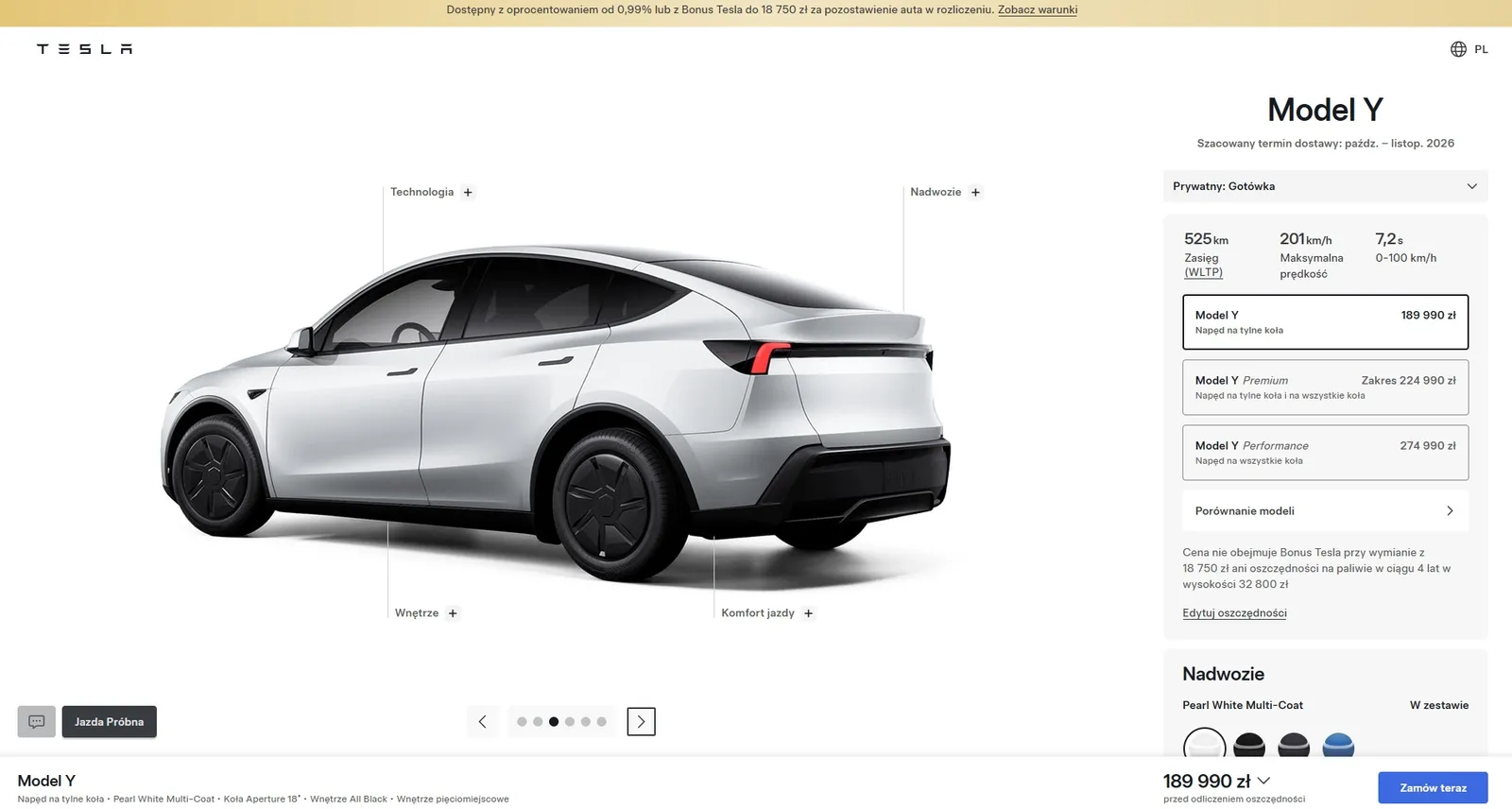
The Tesla Model Y Standard is the second cheapest car in Tesla’s lineup. It is available starting at 189,990 złoty.
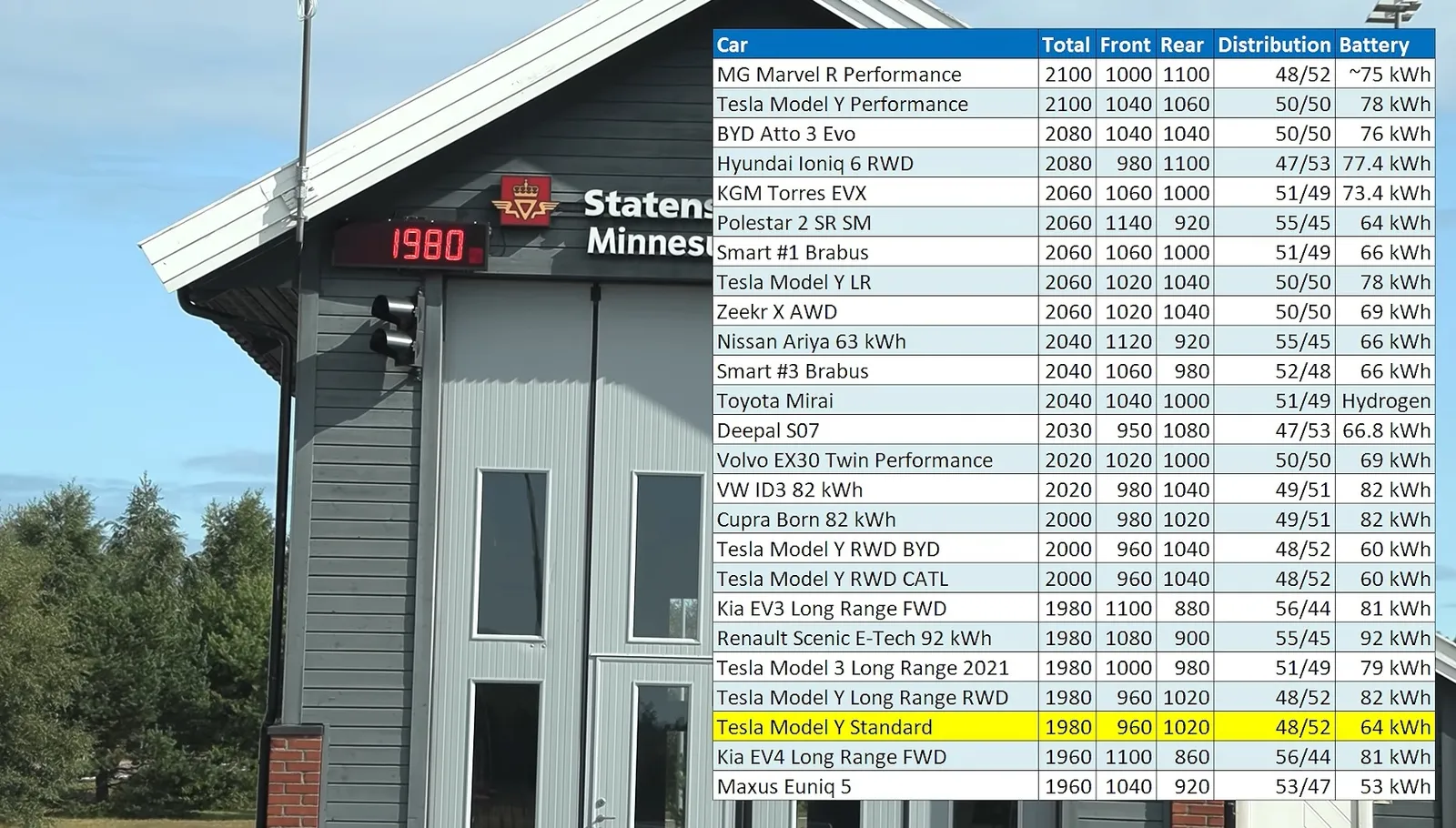
During testing, the Model Y RWD with a driver weighed 1.98 tons, exactly the same as the pre-lift Tesla Model Y LR RWD (pre-Juniper), the Renault Scenic E-Tech 92 (87) kWh, or the Kia EV3 81.4 kWh. This example shows that switching to Li-NCx cells allows for a reduction of at least several dozen kilograms in weight while maintaining the same battery capacity. Alternatively, it enables keeping the vehicle’s weight unchanged and increasing the battery capacity (=range) by several percent. Of course, this comes at a higher cost, as LFP cells are cheaper than Li-NCx cells.
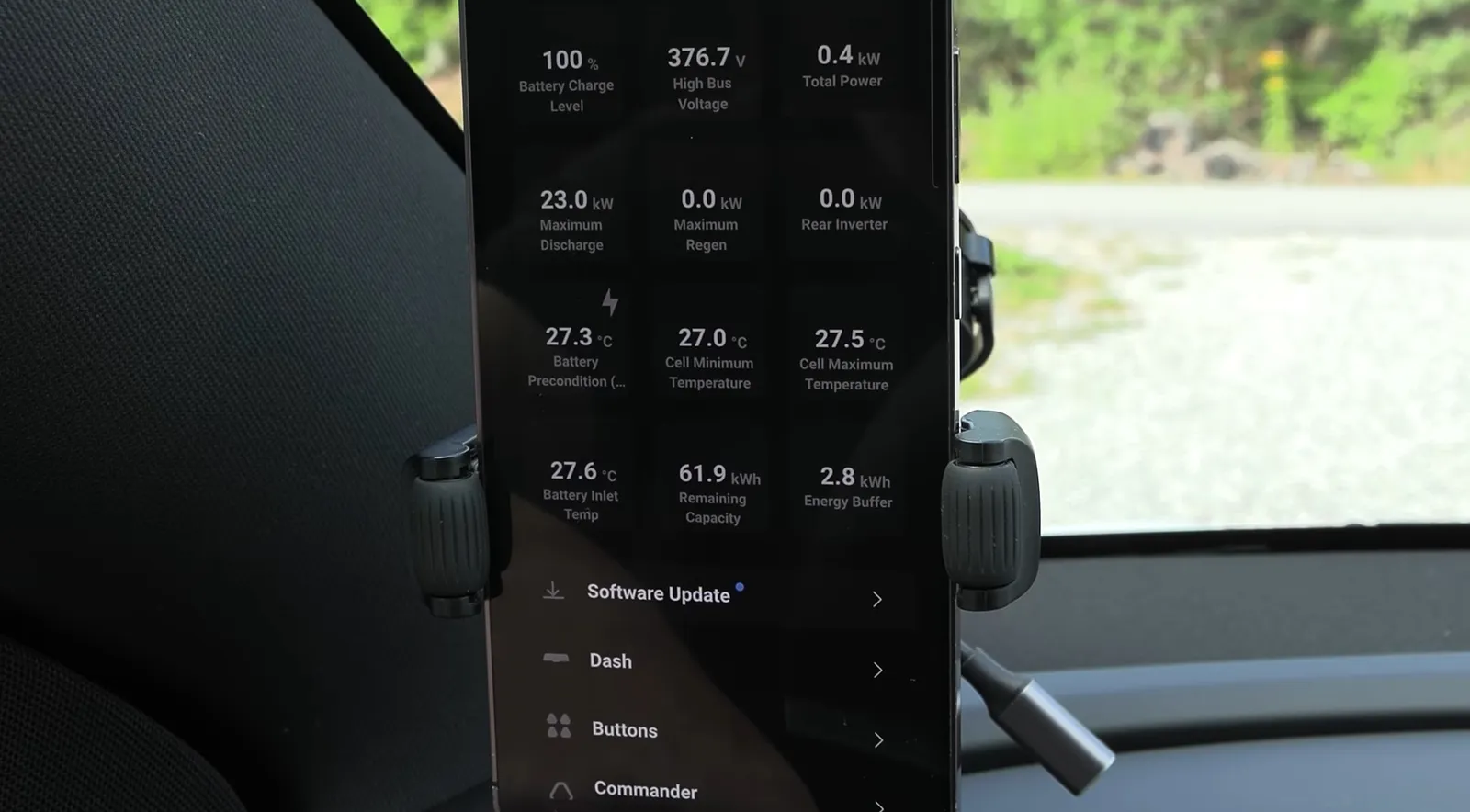
Tesla Model Y RWD. The battery capacity read from the BMS is 62 kWh, including 2.8 kWh for the buffer. Here it’s only 61.9 kWh (c). All other photos: Bjorn Nyland / YouTube
The Tesla Model Y Standard has a significantly reduced audio system, without a subwoofer, yet it still produced clear and powerful sound. Even Nyland was surprised by the quality of the audio, as were we—after all, basic car speakers can sound terrible, but this one performed excellently. The bass in one of the tracks caused visible image shaking, indicating that the speakers in the car handle low frequencies very well. Perhaps Tesla used some trick similar to one from Volvo?
The car could travel on battery power for the distances shown in the table below (bold indicates Nyland’s measurements, while regular text shows our calculations). To be fair, it should be noted that the temperature was in the low teens Celsius, giving the batteries enough time to warm up, and since it was sunny, the air conditioning wasn’t overloaded with cooling or heating demands:
500 kilometers at 90 km/h with the battery fully discharged,
400 kilometers at 90 km/h with the battery at 20 percent charge,
300 kilometers at 90 km/h with battery usage between 80-20 percent,
358 kilometers at 120 km/h with the battery fully discharged,
322 kilometers at 120 km/h with the battery at 10 percent charge.
251 kilometers at 120 km/h with a driving range of 80% to 10%.
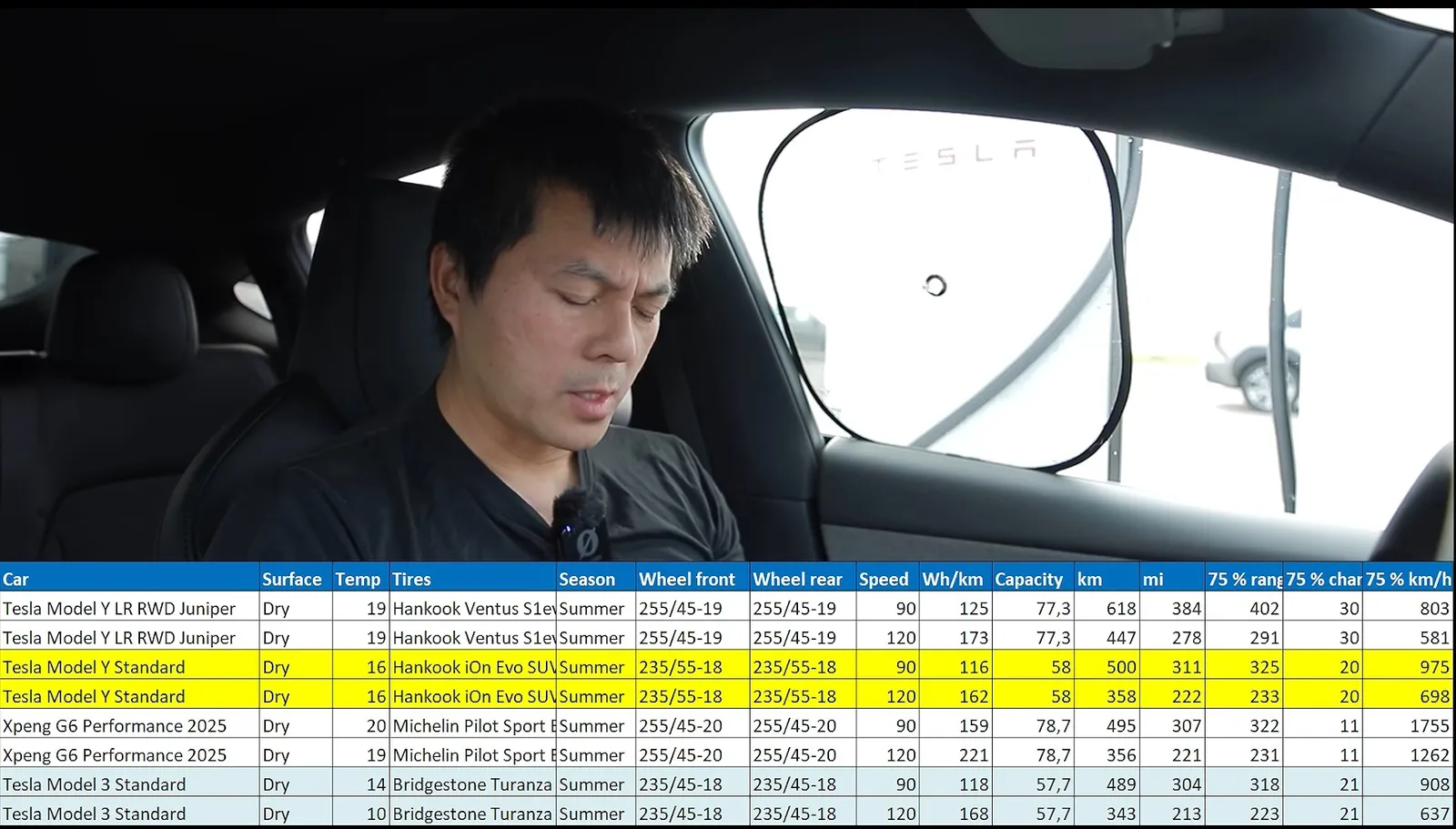
The Tesla Model Y Standard charged for much longer, up to about 26%, at a rate close to maximum. As a result, Nyland was able to shorten charging stops and cover 1,000 kilometers in the same time as a Tesla Model Y Long Range. The actual measured energy consumption was lower (!) than that of the Tesla Model 3 Standard, so the Tesla Model Y Standard traveled farther on a single charge than the Tesla Model 3 Standard. Therefore, if someone doesn’t need all-wheel drive, the Tesla Model Y RWD might be the best choice in Tesla’s lineup.
Worth checking out:
Article rating
Reader ratings
[Total: 8 votes Average: 3.1]
Don’t miss new content — CLICK and FOLLOW Elektrowoz.pl on Google News. You might also be interested in the following ads: