
Testing smart #5 Premium: from David to Goliath
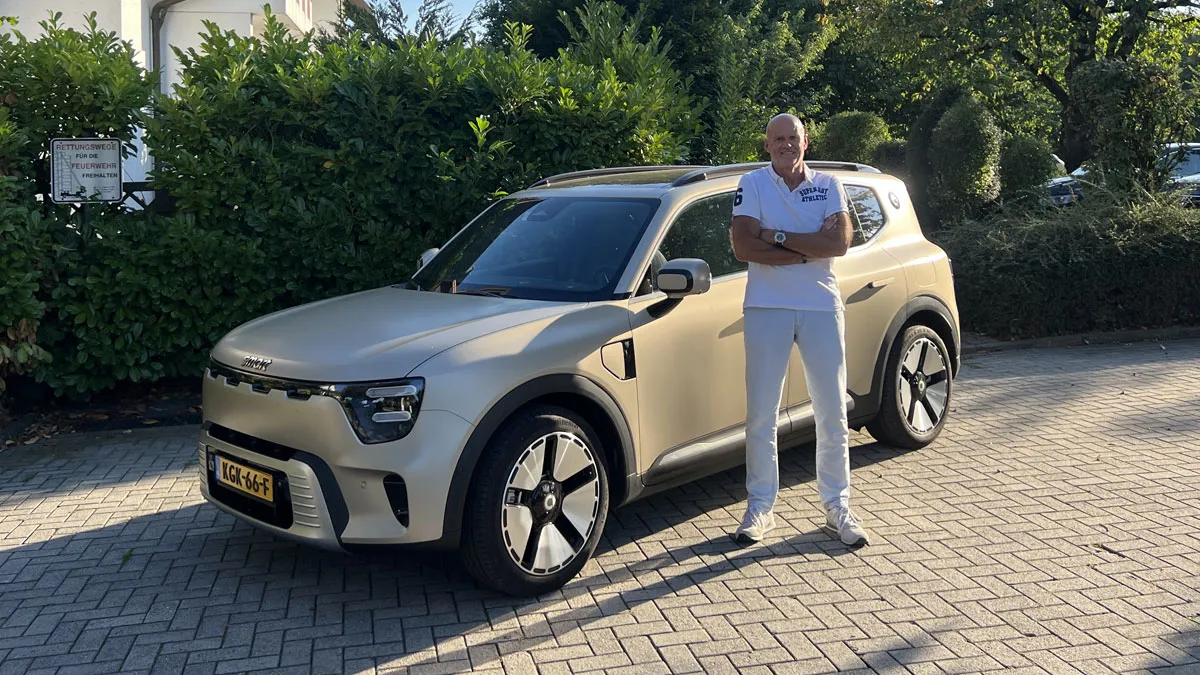
The brand, once famous for its small, compact cars, launched a Goliath last May. A giant vehicle, in smart terms. The smart #5 is the first fully electric premium SUV in the brand’s mid-segment, which is 50% owned by Mercedes-Benz and 50% by the Chinese company Geely. After an OTA update last March and the expansion of the model range with a Black Collection and AWD options, it was time to take this sporty model for another thorough test drive.
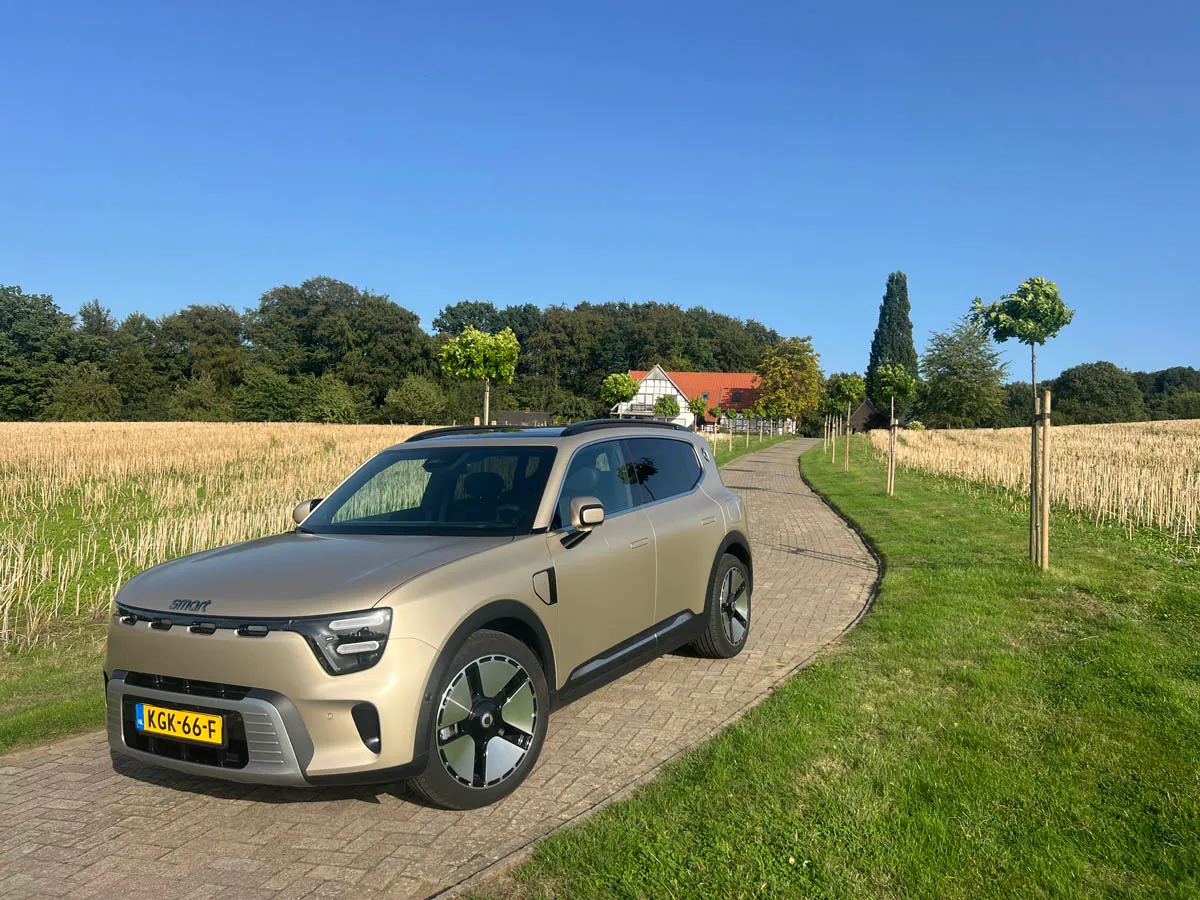
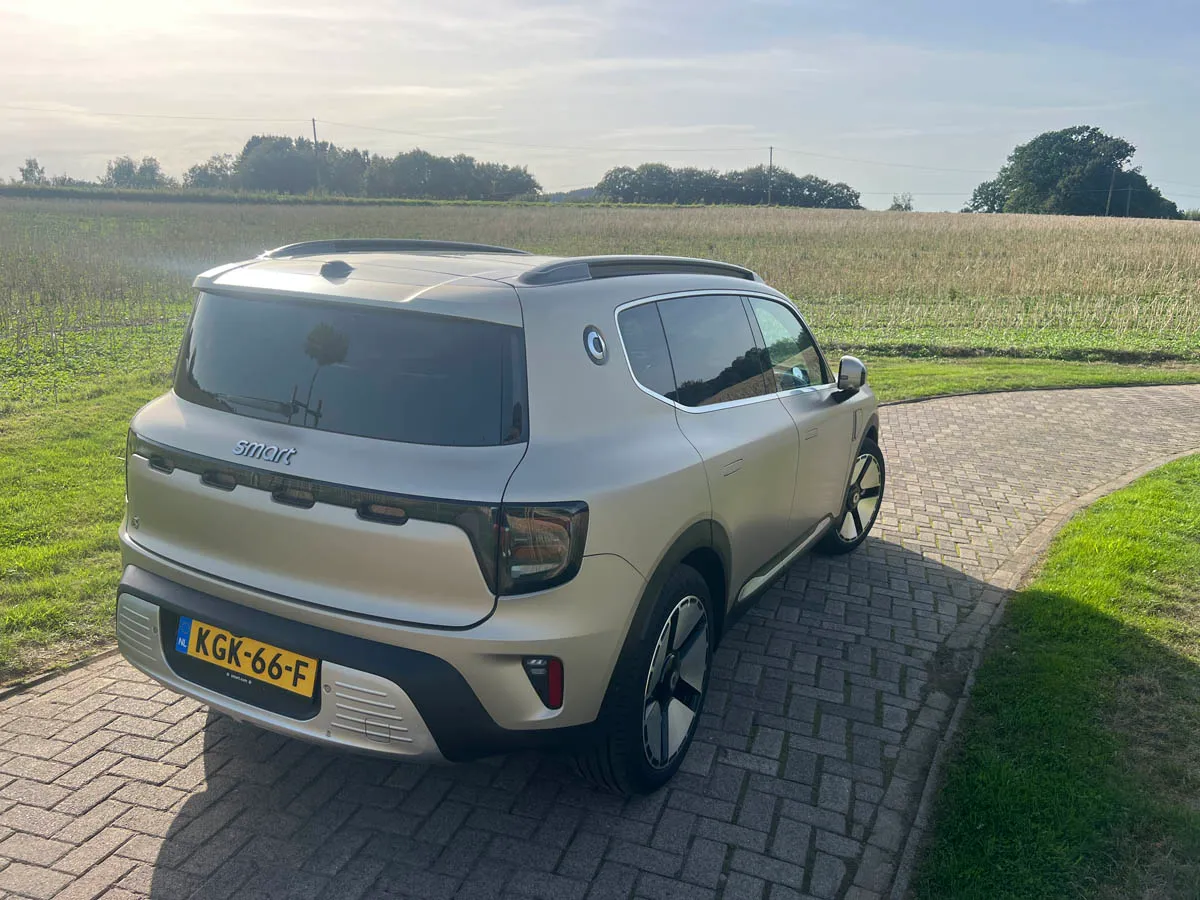
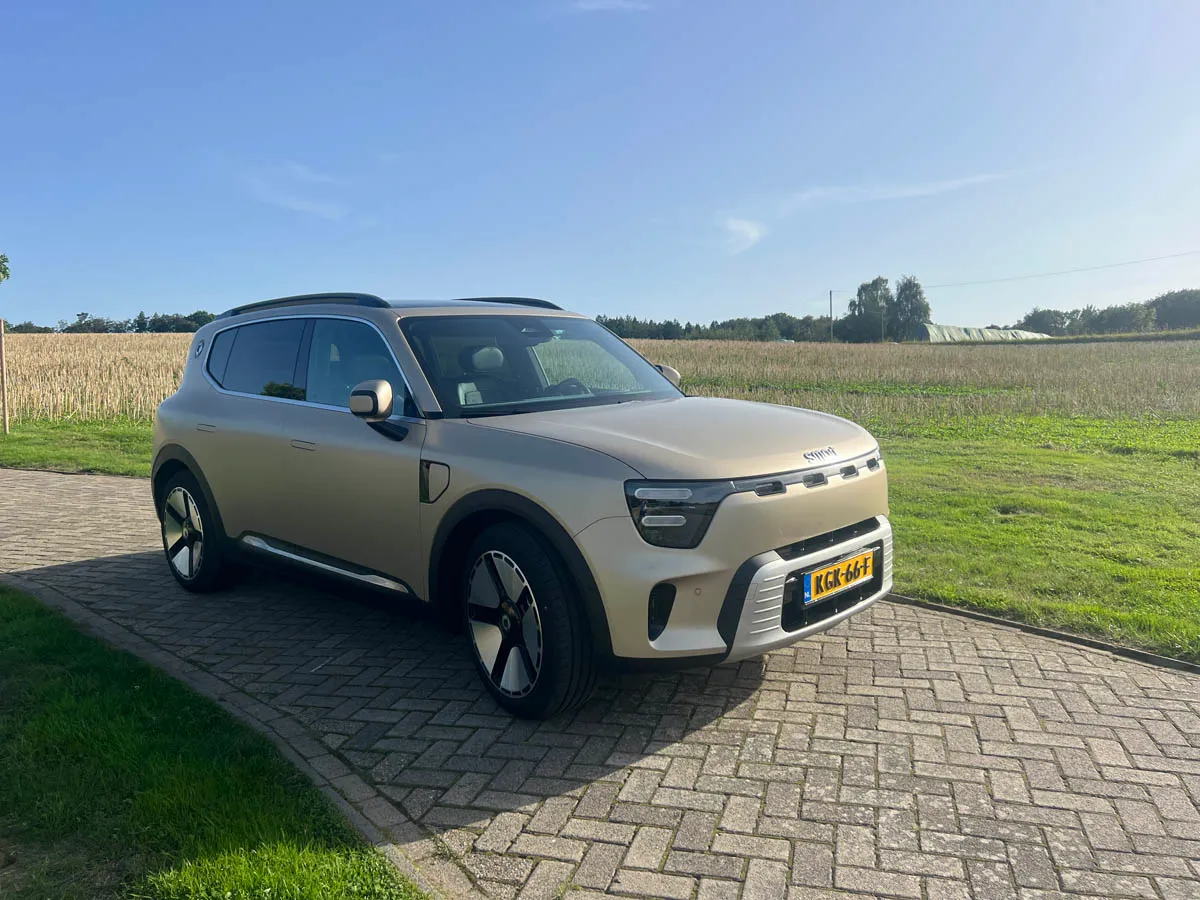
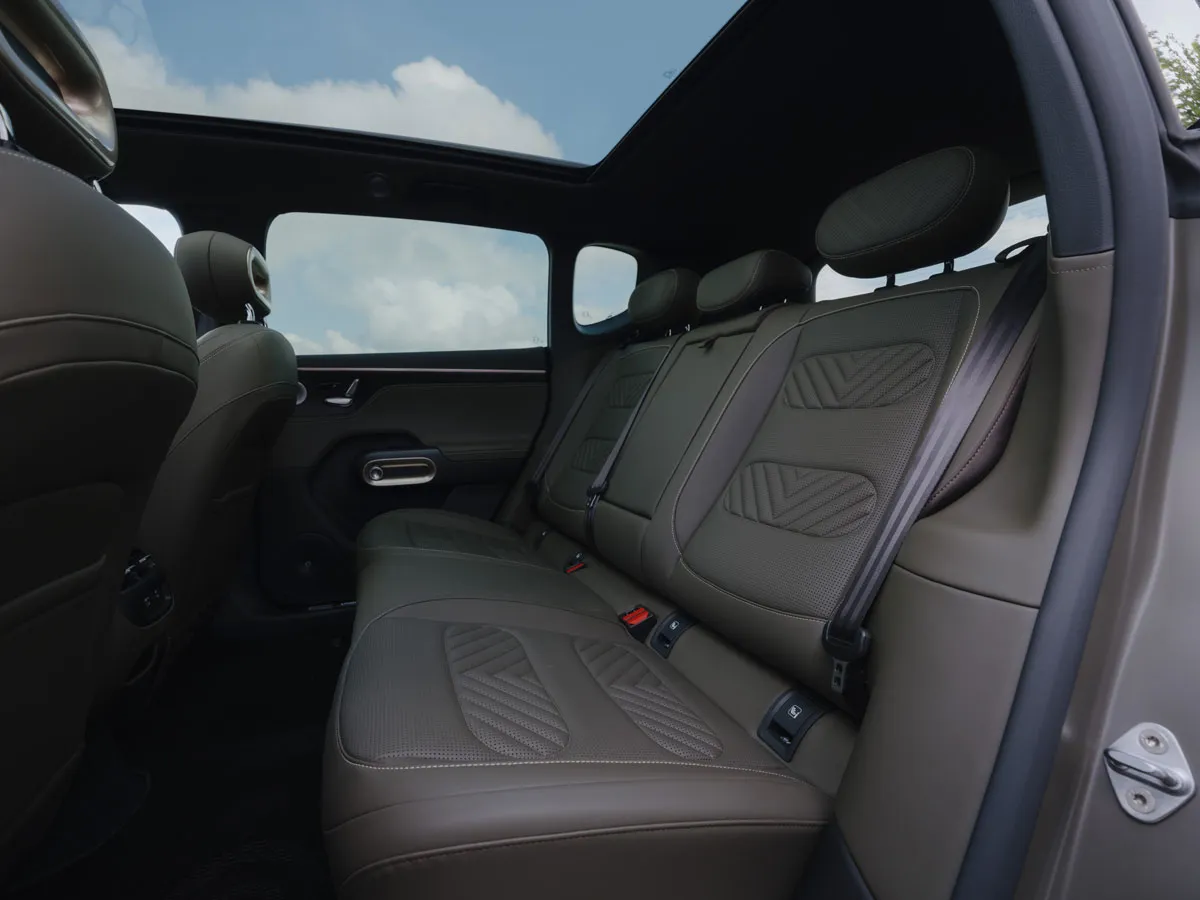
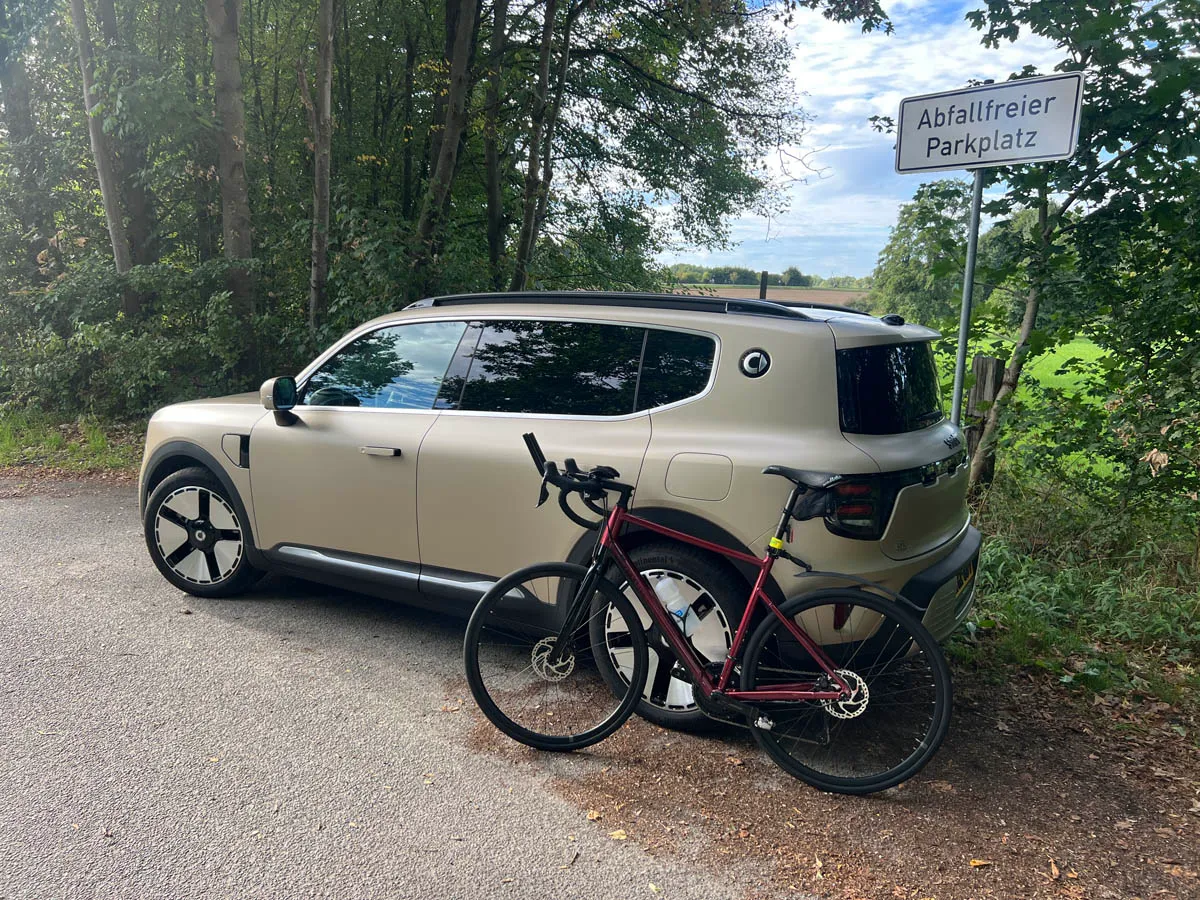
Sporty? Yes, the Smart #5 is aimed at adventurers. After all, the Summit Edition was the most outdoor-oriented version when it first launched, featuring a roof rack, side ladder, and various outdoor accessories. We, however, chose the available Premium with RWD, which in this lineup is only surpassed by the extremely sporty and powerful BRABUS model. We took it to the Teutoburg Forest in Germany, not far from Osnabrück. It’s a wonderful area for cycling trips. And yes, the bike can simply be placed in the back seat instead of on a wobbly bike rack. With the rear seat folded down, the 1,530-liter cargo space can easily hold much more.
Driving like a kart
Driving the Smart #5 is a pleasure. The higher seating position already gives you a superior feeling, which is enhanced by the reliable handling and agility with which this 2,260 kg SUV glides along German roads. The double-wishbone front suspension and multilink rear suspension ensure this. Even on the winding roads of the Teutoburg Forest, the #5 is easy and safe to steer, even at higher speeds. The chassis tilts hardly at all, and the car responds readily to the steering wheel, which is quite sensitive, almost like that of a go-kart. You end up steering a bit more than is actually necessary.
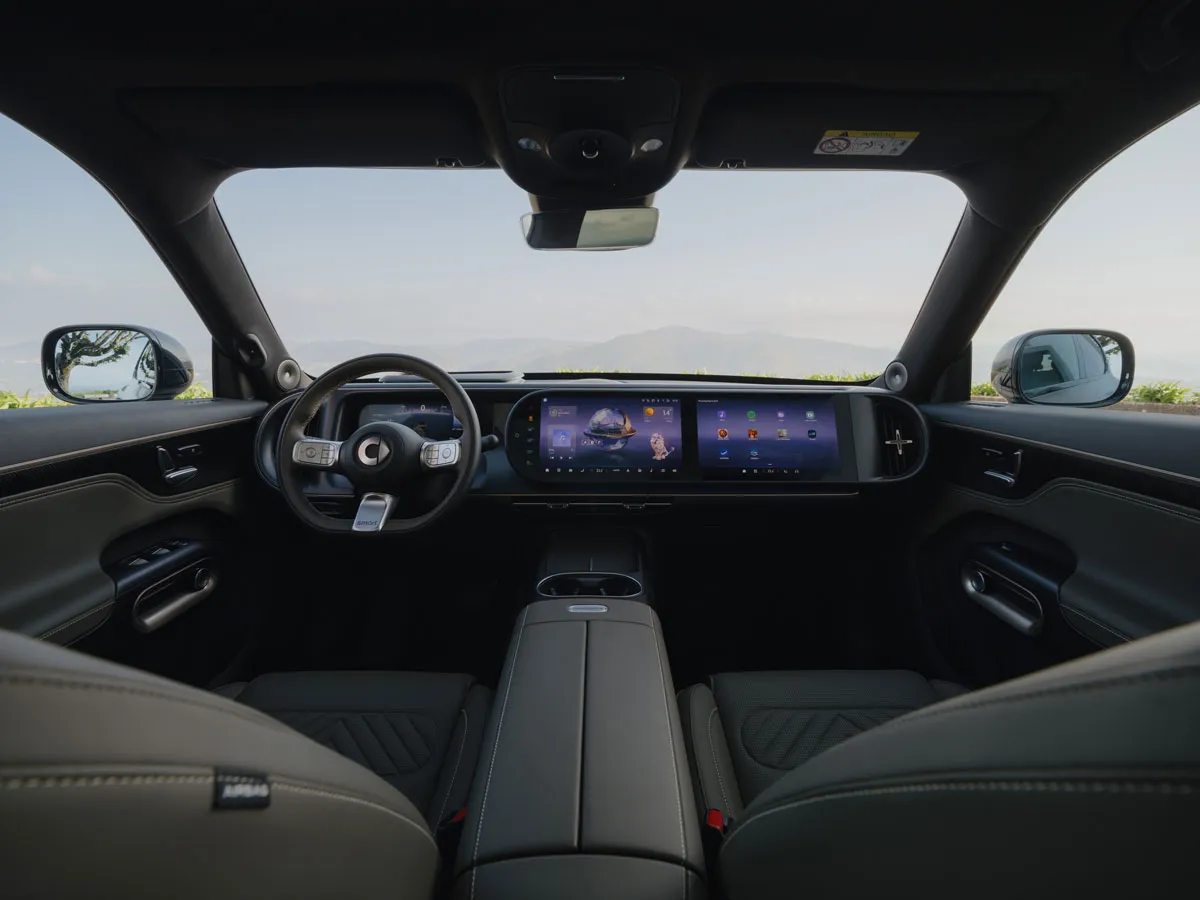
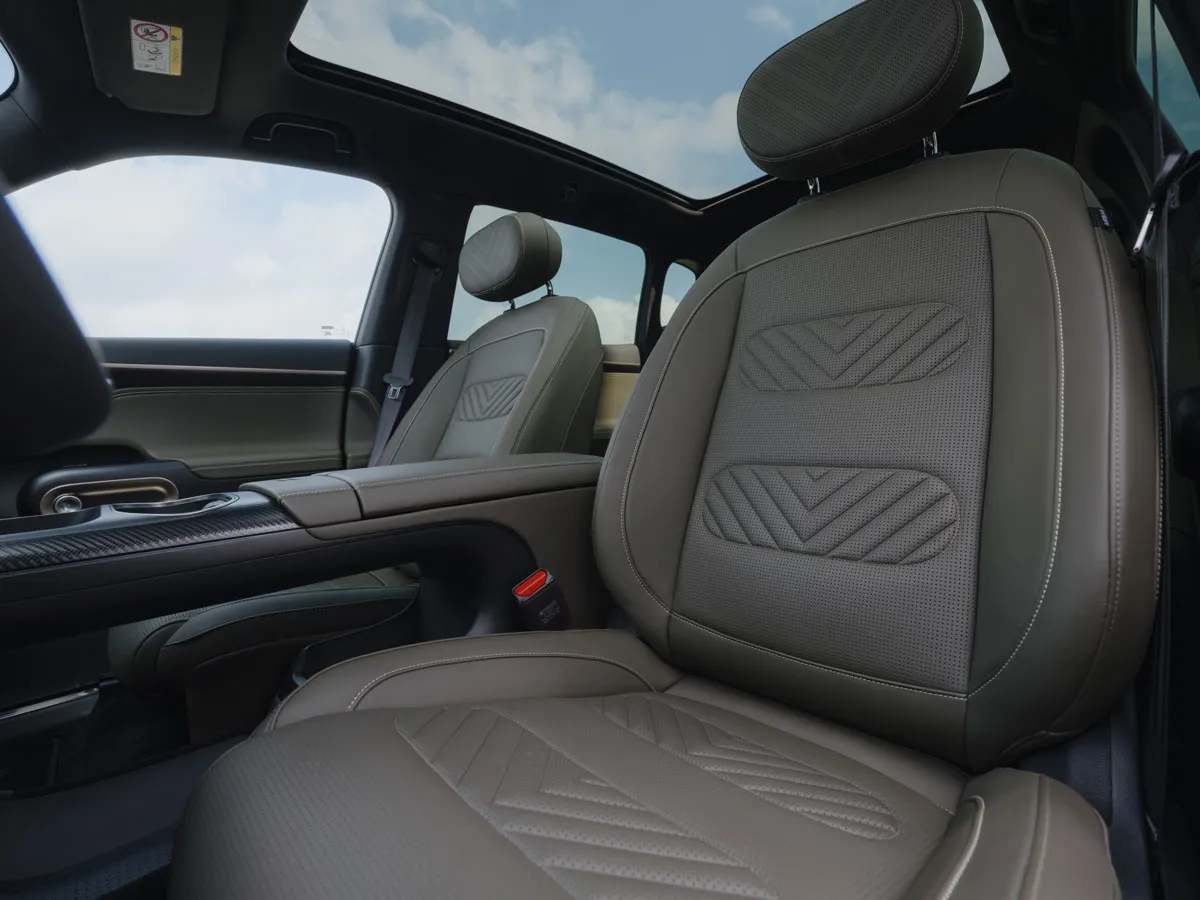
What stands out when getting in is the fairly sturdy A-pillars, which, combined with the large exterior mirrors, somewhat limit visibility. You get used to it, but especially on the right side, it can be difficult to accurately gauge the sharpness of a turn. Another notable feature is the handy sewn loop on the seat belt, preventing the buckle from sliding all the way down. Many brands use a clamped piece of plastic for this purpose, which often breaks or falls apart. This is much better.
Peek Inside
The head-up display (HUD) is a delightful travel companion. The display features excellent contrast and is highly sharp, even under strong sunlight. Additionally, it provides plenty of information that you can customize to your liking. Just don’t wear sunglasses with polarized lenses, as you won’t be able to see anything then. Unless you turn your head around like a puppy getting something tasty.
As is typical with a modern 100% electric car, it takes a few hours to explore all the features of the infotainment system (HMI). This system has actually received a Red Dot Design award, a prestigious international design prize.
A great new feature is that you can connect a laptop, tablet, or smartphone via the vehicle’s USB-C port using an HDMI converter to display content on both the central screen and the passenger screen when the #5 is stationary. You can switch between the two screens. It’s ideal for viewing presentations, participating in video calls, working on documents on a larger screen, or streaming content—all while the vehicle is stopped.
Passengers can watch whatever they want on their own screens while driving, but as soon as the driver looks over for too long, the screen turns black. This is controlled by a camera located in the left A-pillar, which monitors to ensure the driver keeps their eyes on the road.
After each restart, you must press at least one key to restore your preferred settings. This is due to Euro NCAP’s rules and safety requirements. However, once you’ve saved your preferences after a few weeks of driving and testing, you can easily retrieve them upon getting in the vehicle. With just two taps, the car immediately restores your preferred settings for various driving functions and driver assistance systems.
Intuitive?
While you might argue with a travel companion while on the road, I found myself at odds with the new voice assistant too often. The manual mentions a more intuitive and confident experience after the OTA update, but I kept hearing that “this feature is not available yet.” It was probably my fault, but it certainly wasn’t intuitive.
The physical buttons below and to the left of the large screen are very convenient. You don’t have to navigate through menus endlessly to control the heating or radio. Great!
The navigation displays the progress of the planned route at the very right with a vertical green bar. However, this color is exactly the same as that of the route itself, which can give you the impression that you need to suddenly turn left or right onto a straight road.
smart #5 Premium now also available with AWD and Black Collection
smart is now offering the #5 Premium with AWD as well, providing a capable and distinctive premium vehicle with four-wheel drive. This version costs €2,500 more than the rear-wheel-drive version we previously had available. By adding a four-wheel-drive option to the model range, the distinctive elegance of the #5 Premium is combined with the traction and stability of dual-motor drive technology.
By default, the Premium version comes equipped with Sennheiser’s Signature Sound System, featuring its Dolby Atmos-certified speaker setup. It delivers an excellent sound experience with crystal-clear audio reproduction.
In addition to the new AWD option, the #5 is now also available in the Black Collection. This includes coordinated black exterior details such as the grille, rear diffuser, side skirts, window frames, and roof rails, along with privacy glass and model-specific black wheels.
This distinctive exterior variant clearly caters to the growing demand for unique, high-performance EV styling. While taste is subjective, the car looks sleek and stands out significantly from other existing colors and wheel options.
Test smart #5 Premium: the figures after 1,618 kilometers
In total, we drove 1,618 kilometers in the #5 model. This was a thorough test drive. We spent 23 hours and 38 minutes behind the wheel, with an average fuel consumption of exactly 20.0 kWh/100 km. This is slightly higher than what Smart itself reports for the Premium model: 18.4 kWh/100 km according to WLTP standards.
The German Autobahn naturally encourages drivers to press the accelerator pedal all the way down from time to time. At 205 km/h, the #5 began to slow down, meaning the speed limiter was taking effect. Even at such speeds, the car remains easily controllable, providing a confident and safe feeling when braking.
100 kWh Battery Pack and 400 kW Fast Charging
The smart #5 Premium is equipped with a 100 kWh battery pack using lithium-nickel-manganese-cobalt (NCM) chemistry, capable of 4C DC fast charging with a peak power output of 400 kW. In practice, it was possible to charge from 10% to 80% (SoC) in just 18 minutes. Adding to this are a towing capacity of 1,600 kg, a two-year factory warranty with no mileage limit, and an eight-year warranty on the high-voltage battery pack, making the #5 a very reliable, safe, and extremely comfortable companion.
The prices start at €48,460 for the Pro. Our Premium in Saturn Beige Matte color costs €58,940.
More information about the models and technical specifications can be found on smart’s official website.
Text & photos: Jur Raatjes