
TEST – Skoda Epiq, a straightforward electric car at 26,400 €
Compact, spacious, and free of unnecessary special effects: The Skoda Epiq brings the “Modern Solid” philosophy to the electric B-segment. It starts at 26,400 euros, while the more powerful Epiq 55 costs 36,100 euros. It is precisely the price that greatly influences opinions about this car.
Skoda enters the electric B-segment with the Epiq, a model that focuses primarily on practicality. Compact dimensions, plenty of space relative to its external size, and a rational approach—without the pursuit of a “wow” technological effect that characterizes some competitors.
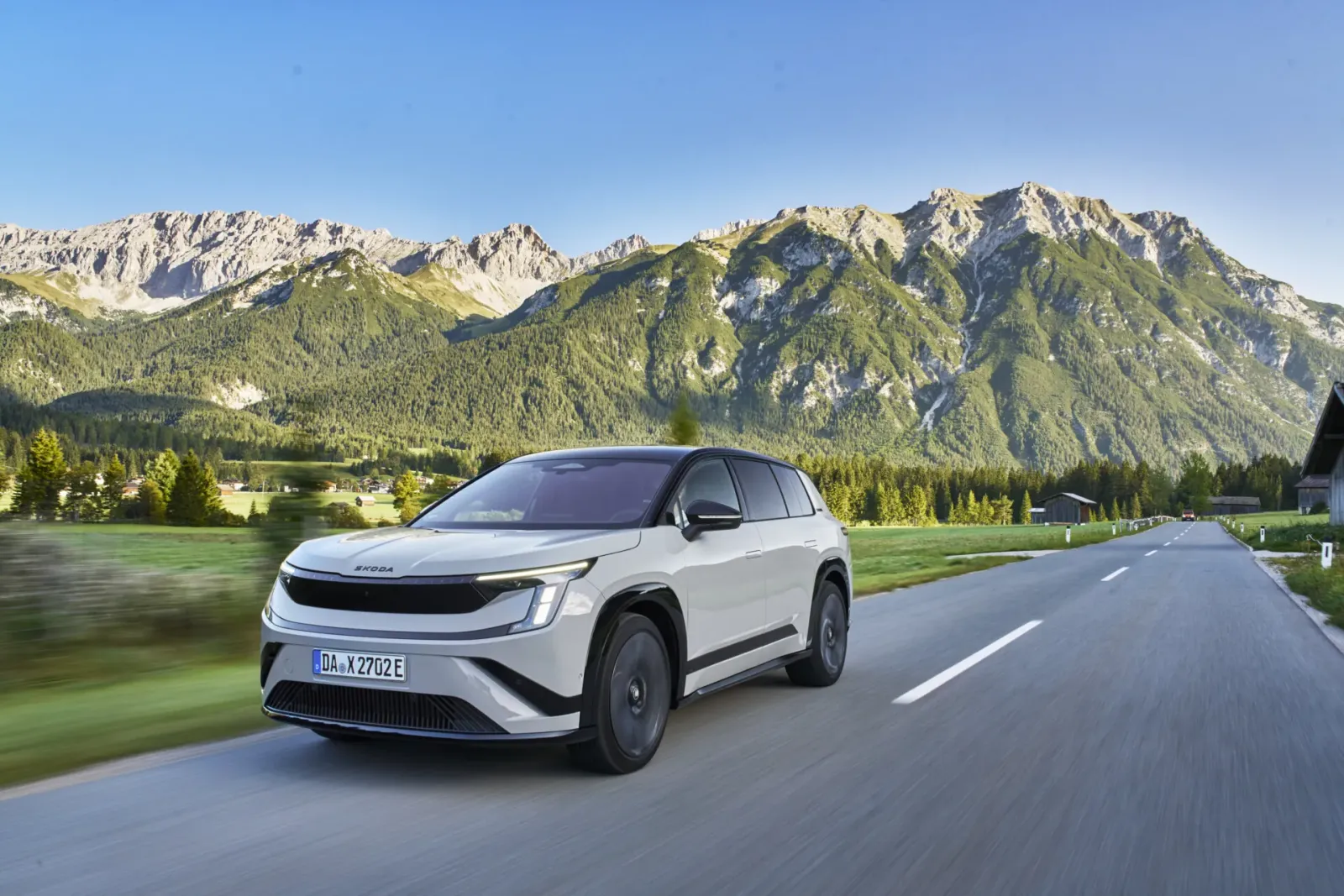
In person, the new stylistic language “Modern Solid” works well. The impact is clean and robust without being generic. The most distinctive feature is the front end, with a rather original arrangement of the lighting units and especially the new T-shaped light signature, which is set to become a hallmark element in future Skoda models as well. At the center lies a glossy black panel, the Tech-Deck Face, which hides most of the sensors. The vertical air intakes integrated into the front bumper are echoed in the rear, contributing to giving the Epiq an off-road touch.
Compact on the outside, but with 475 liters of trunk space
The side profile is likely the purest expression of the Modern Solid philosophy: few lines, clean surfaces, and balanced proportions. The aerodynamic design is also noteworthy, with a reported drag coefficient of 0.275.
Dimensions: The Epiq is slightly under 4.20 meters in length, 1.80 meters in width, and 1.60 meters in height, with a wheelbase of about 2.60 meters. It uses the MEB+ platform, with a front-engine and front-wheel-drive layout that allows for efficient use of interior space and creates a trunk volume of 475 liters—quite impressive given the car’s size. Additionally, there is a small 25-liter front frunk area, useful especially for storing charging cables, but it requires an optional upgrade to access.
Simple and functional interior: minimal distractions, everything in its place
The same philosophy continues inside the cabin. The space is ample, and thanks to the panoramic roof, it’s also very bright. The perceived quality is convincing: plastics are used extensively but are well-finished, while Skoda has made heavy use of recycled materials for the interiors.
The infotainment system follows the highly successful “everything needed and nothing more” philosophy. The Android-based system features a 13-inch central display that is easy to read and highly responsive. The menus are simple to navigate, and the main controls are easily accessible.
Skoda also hasn’t completely abandoned physical controls. A small keypad allows quick access to driving modes, parking assistants, and some climate control functions. Additional physical controls are available on the two-spoke steering wheel. In front of the driver, there’s a compact, clear, and customizable display for showing key information. A few extra inches in this area would have been helpful.
Three versions: 37 and 52 kWh batteries
The range will be available in three tiers. At the top is the Epiq 55, the model we tested, equipped with a 52 kWh battery and a 155 kW front-mounted motor. DC fast charging reaches up to 105 kW.
In the coming months, the two entry-level versions will arrive, both equipped with a 37 kWh battery. The Epiq 35 will have an 85 kW motor and be capable of DC charging at up to 50 kW, while the Epiq 40 will feature 99 kW of power and 90 kW for fast charging.
The Epiq also supports Vehicle-to-Load (V2L) technology, which allows the energy stored in the battery to be used to power external electrical devices.
How is the Skoda Epiq performing?
Excellent! We don’t expect supercar-level performance, but for a B-segment car, it’s quite enjoyable to drive, and the Epiq is truly a gem on the road. The steering is precise and responsive without being overly nervous, the 155 kW engine is very quick to respond, and braking is finally lag-free. The “One box” system introduced in the MEB+ platform allows the regenerative braking of the electric motor and mechanical braking to be combined and coordinated into a single unit. The result is smooth, progressive braking with an immediate feel. Additionally, the Epiq features One Pedal Drive, which is extremely useful in urban driving.
From 26,400 to 36,100 euros: and that’s where the assessment changes
The starting price is 26,400 euros for the Epiq 35, rising to 27,700 euros for the Epiq 40, while the Epiq 55 costs 36,100 euros.
The Epiq 55 does indeed have a larger battery, longer range, and significantly better performance, but it is a model that competes with tough rivals. In the price range of 35,000 to 40,000 euros, there are numerous alternatives that don’t all come from China. European brands such as Renault and Volvo also offer very interesting electric vehicles. Not to mention American options.
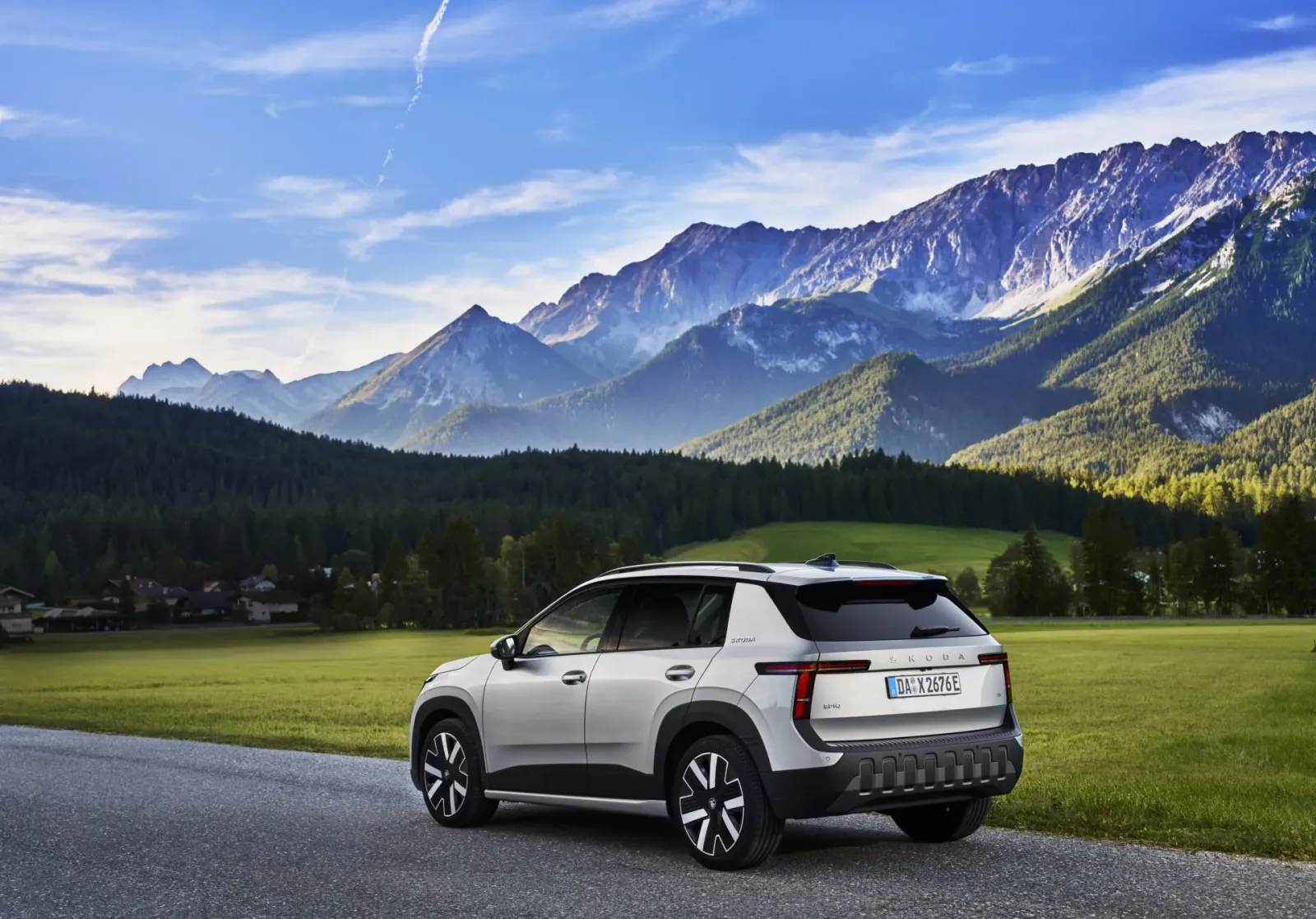
The versions with a 37 kW battery meet the economic needs and expectations of those seeking a Skoda-branded B-segment vehicle. Chinese competitors in this price range can certainly offer more or less extravagant options and may cost a few thousand euros less, but the Epiq is a European car belonging to the Volkswagen Group, with all that entails in terms of construction quality and after-sales support. In this case, the Epiq seems to aim for a different approach: less technical fluff and more substance.
It is a practical car with plenty of space, good build quality, a pleasant driving experience, and a technological suite focused primarily on ease of use. And this is the most interesting aspect of the new Skoda: the Epiq convinces especially when it stays true to its nature as a simple, practical electric vehicle at an affordable price.