
TEST – Renault 4: perfect balance, European styling
Renault brings back another iconic name, but the new R4 is more than just nostalgia. It’s spacious, original, and enjoyable to drive. With its 52 kWh battery, it also serves as a true all-rounder. Prices start at 28,000 euros.
Renault has recreated it: taking a model from its own history, reinterpreting it while incorporating elements reminiscent of the original. But just like with the R5, nostalgia is merely a pretext for a very practical car in the case of the Renault 4.
While many electric cars seem to pursue similar soft volumes, smooth surfaces, and aerodynamically shaped forms, the French brand chooses a nearly opposite approach. Distinctive volumes, angular lines, and numerous graphic elements. It’s a car that seems to proudly assert its European origins at first glance.
There are nods to the old R4, but without a retro vibe
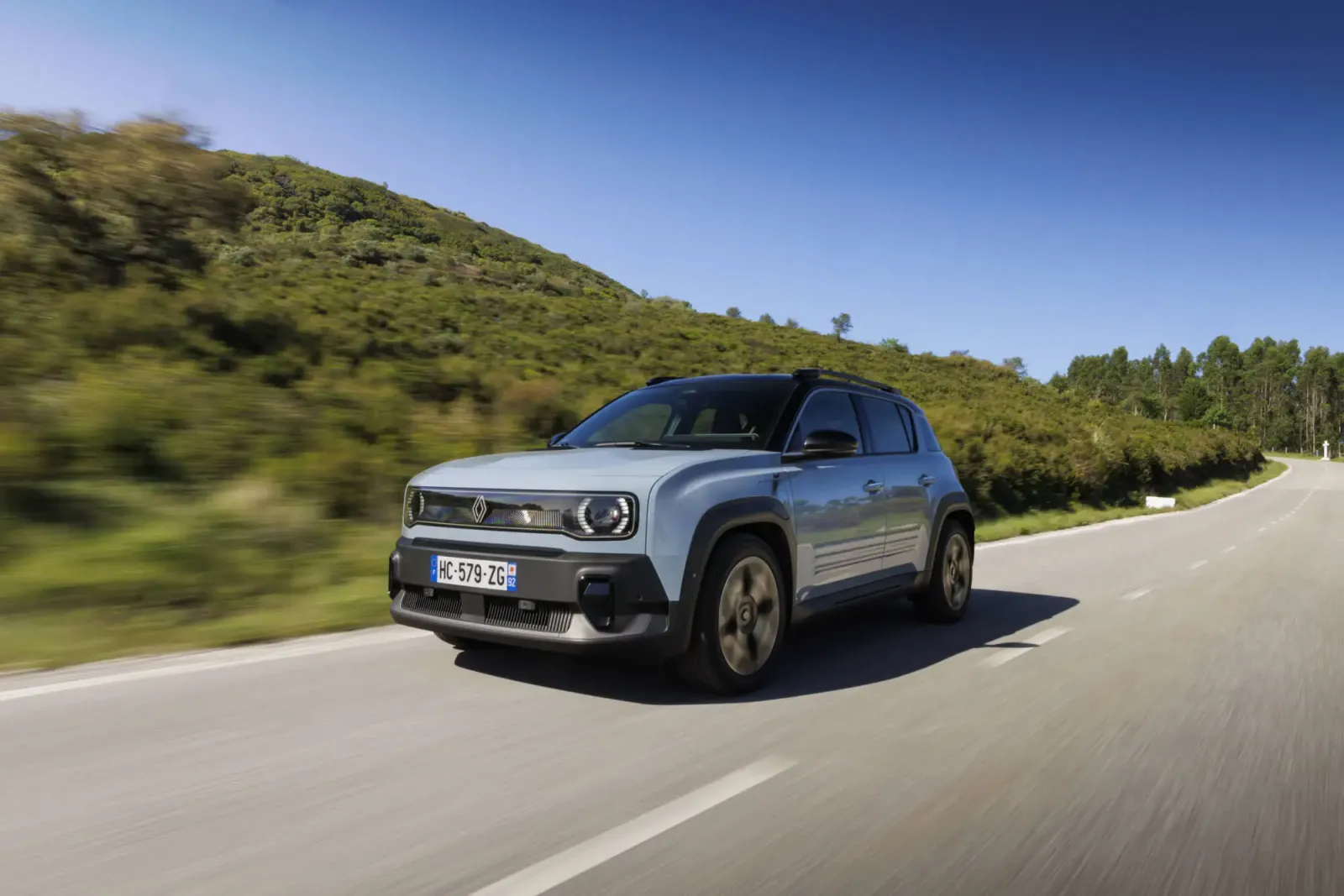
The front end is probably the most successful part. The large black frame houses the Renault logo and LED headlights, along with a circular light signature that explicitly echoes those of the old 4. The hood is almost flat, with only a slight bulge in the center.
On the sides, we find another element taken from the past: the three longitudinal ribs on the doors. The shape of the windows and the tilt of the trunk lid also return, while the much more square wheel arches immediately bring the car back to modern times.
The rear end also has a strong identity, especially thanks to the vertical headlights. But the most interesting aspect here is practical: the large trunk lid provides access to a 420-liter cargo space, a remarkable figure considering it’s still in the B segment. By folding down the seats, the capacity increases to about 1,400 liters.
It’s not just about capacity. The load threshold is very low and almost level with the trunk floor, so the space can actually be utilized even with bulky items.
A modern interior without nostalgia: it’s a contemporary Renault
Once the door is opened, any references to the past essentially end. A few nods remain in the materials and fabrics, but the dashboard and technology unmistakably belong to today’s Renault design language.
The setup is very similar to that of the Renault 5, starting with the two 10-inch displays. The software offers an ideal balance between completeness and ease of use. Nothing is missing, but there are no endless menus for adjustments. Navigation is handled by Google Maps.
The real difference from the R5, however, is space. The Renault 4 is only 4.14 meters long, but it makes much better use of its cabin space and immediately gives the impression of being a car in a higher category.
The interior focuses on functionality rather than luxury. There’s a slot for charging smartphones, a bottle holder, small storage compartments, and a recess under the armrest that isn’t particularly wide but is quite deep. The pockets in the doors are less convincing, as they’re a bit small.
40 or 52 kWh battery: the latter allows for real-distance driving
The Renault 4 E-Tech is built on the AmpR Small platform, the same technical family as the Renault 5. There are two main configurations. The Urban Range comes with a 40 kWh battery paired with a 90 kW motor, while the Comfort Range features a 52 kWh battery and an 110 kW motor. The claimed ranges are 308 km and 409 km respectively.
We tested the version with a larger battery, and especially in urban use, the actual range doesn’t deviate much from the claimed values. It’s not difficult to exceed 360 km in mixed conditions, while on the highway the actual range is roughly between 250 and 300 km, depending naturally on speed as well as weather and traffic conditions.
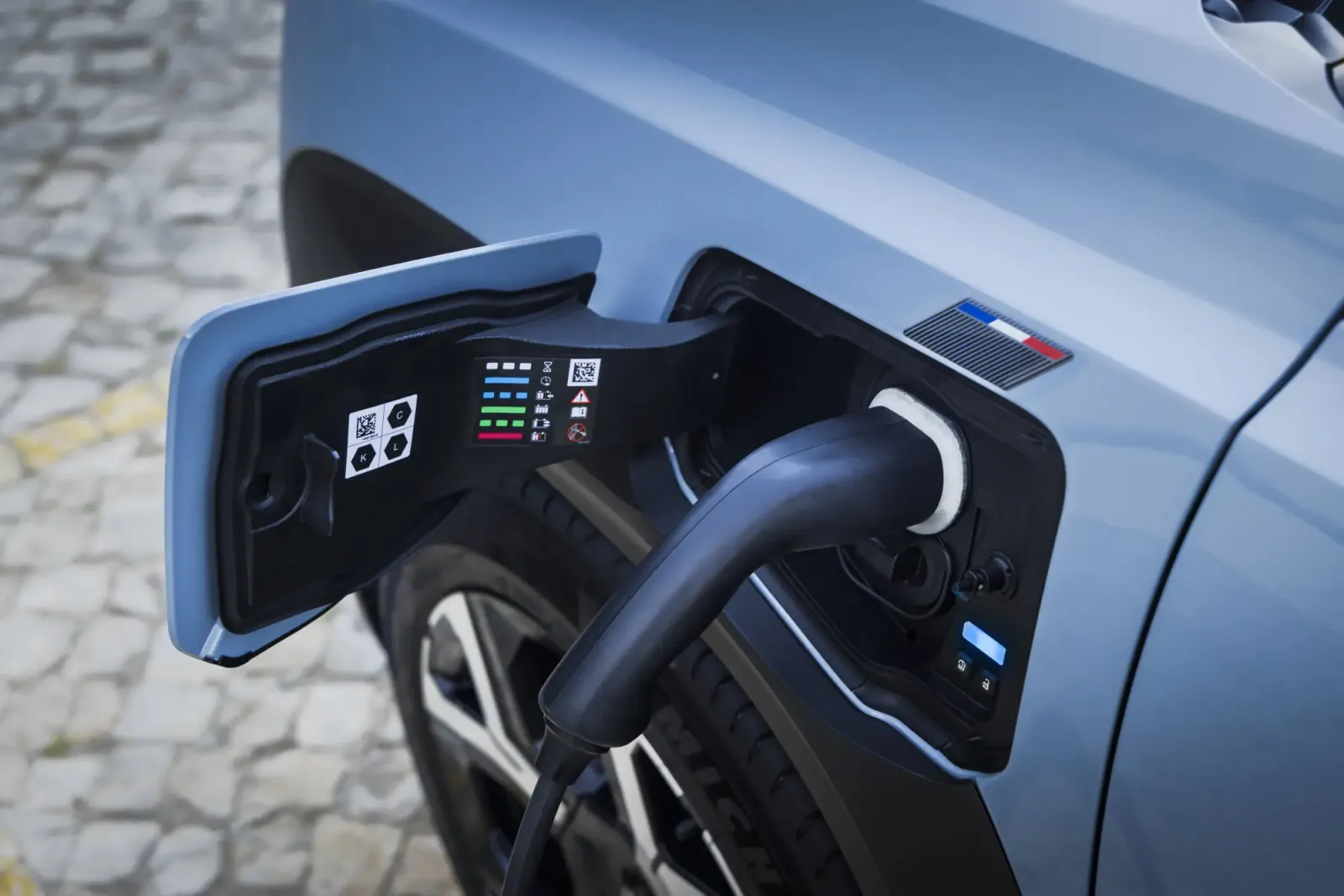
The AC charging capacity reaches 11 kW, while the DC charging power is 80 kW for the 40 kWh battery and 100 kW for the 52 kWh battery.
Less of a kart than the Renault 5, but more versatile
The connection to the R5 is evident in its design, even though the two vehicles have distinct characteristics. The Renault 4’s steering remains precise, direct, and light. The 110 kW output of the most powerful version ensures quick responsiveness without requiring aggressive acceleration, which would likely be unnecessary for a car of this type.
The braking system is also well-regulated. Through the levers behind the steering wheel, drivers can choose from four levels of regeneration, up to full one-pedal driving mode.
It is however the suspension setup that most clearly separates it from the R5. The Renault 4 has an ground clearance of 18 centimeters, about four more than its smaller sibling, along with softer-tuned suspensions.
The result is a car that is less precise and less “kart-like” when pushed to high speeds, but definitely more versatile. Potholes, cobblestones, ramps, light off-road terrain, and city sidewalks pose less of a challenge to the R4.
Renault 4: Price and Which One to Choose
The new R4 is one of those cars that performs better in reality than one might expect based solely on the technical specifications. It has a very recognizable style, offers plenty of space despite being just over four meters long, and retains that pleasant driving feel that has become one of the hallmarks of recent Renault electric vehicles.
With a 52 kWh battery, it stops being just a good city electric car and becomes a vehicle that can be used without major issues even for long trips.
Prices start at around 28,000 euros. However, the configuration that seems most balanced to us is the Comfort Range with Techno package, priced at about 33,000 euros: it features a 52 kWh battery, longer range, and an equipment set that better suits the versatility of the R4.
The choice between it and the Renault 5 ultimately depends mainly on what one is looking for. The R5 is more compact, lower to the ground, and more fun to drive. The R4 sacrifices some precision but offers much more in terms of space and practicality.