
Testing the Peugeot e-208 GTi – A tiny electric bomb
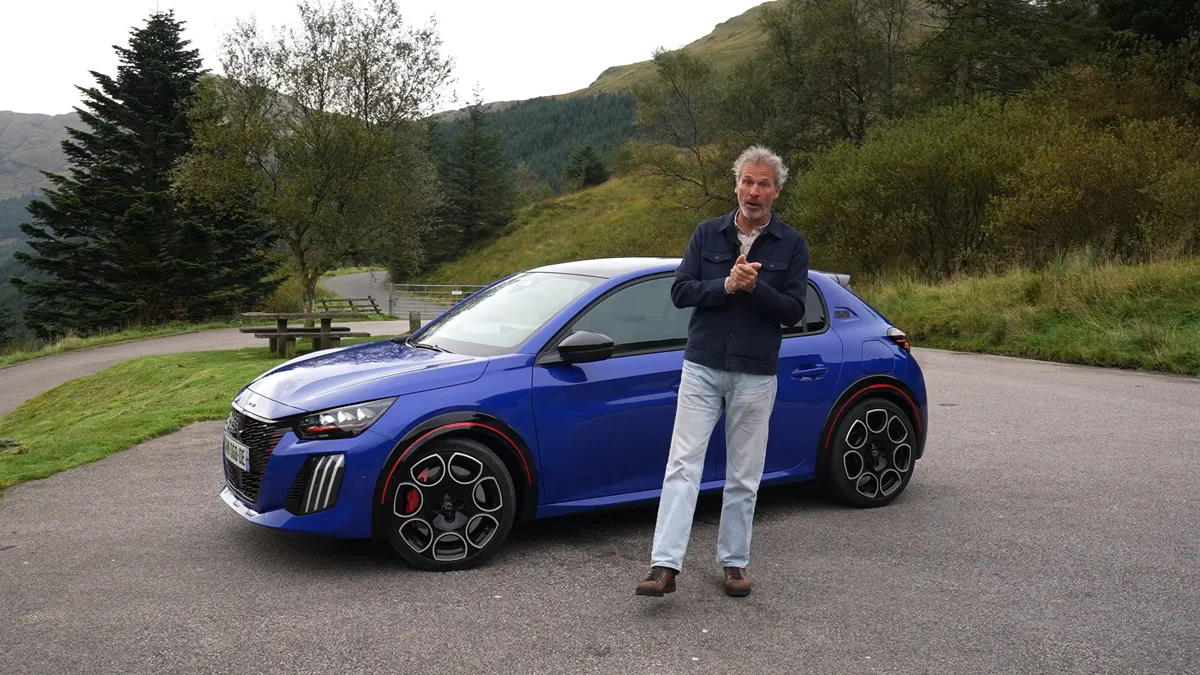
Be honest: did you think those great, fun-to-drive hot hatches would be gone in the EV era? Battery packs, extra weight, sluggish handling, silence—it seemed like the end for iconic hot hatches. But look, here we have another fun compact EV. The question is: is this the best of Stellantis’ six hot hatches, or should you go for the Cupra Raval VZ or Alpine A290 GTS?
The kilt and scenic country roads
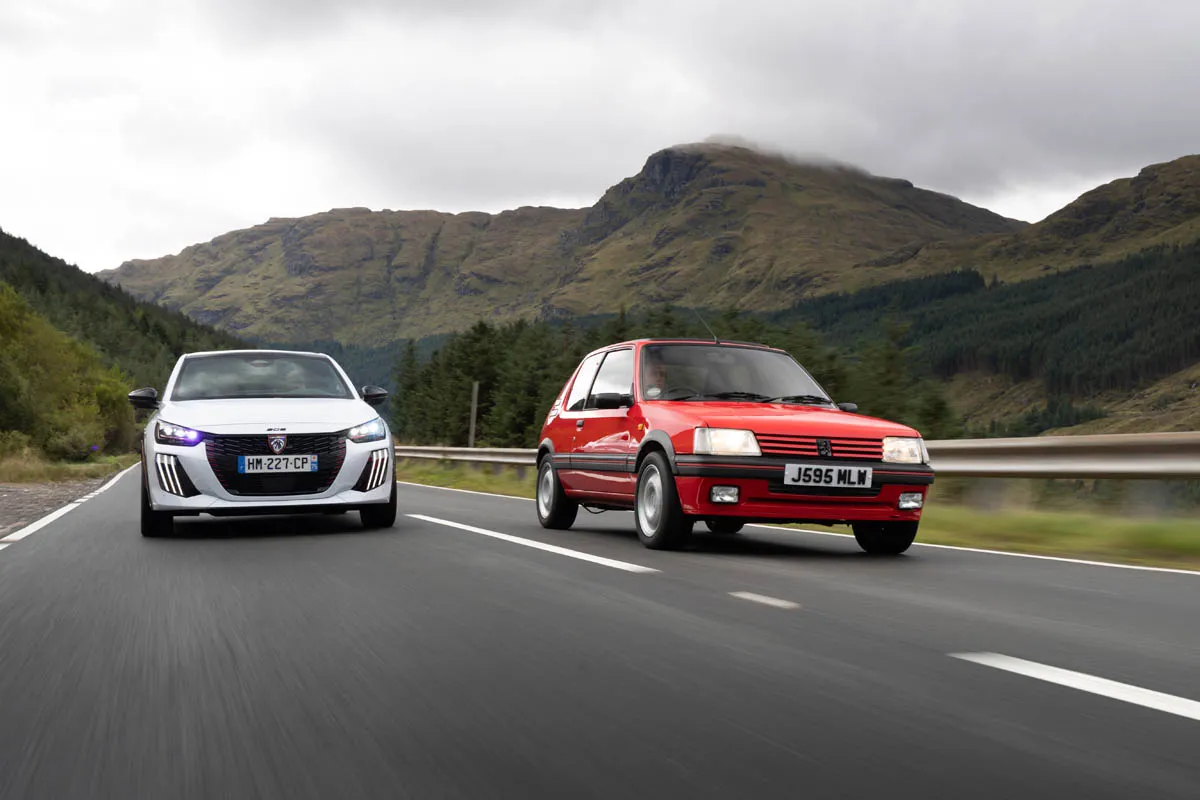
Yes, the heroes are back. With a robust build, historical nods to the legendary 205 GTi, 281 horsepower in the front wheels, and a mechanical Torsen limited-slip differential, the e-208 GTi looks absolutely impressive. Peugeot chose Scotland as its testing ground. It makes sense—a wonderful country full of myths, kilts, bagpipes, and an excellent network of secondary roads. The perfect place to test out a high-performance hatchback.
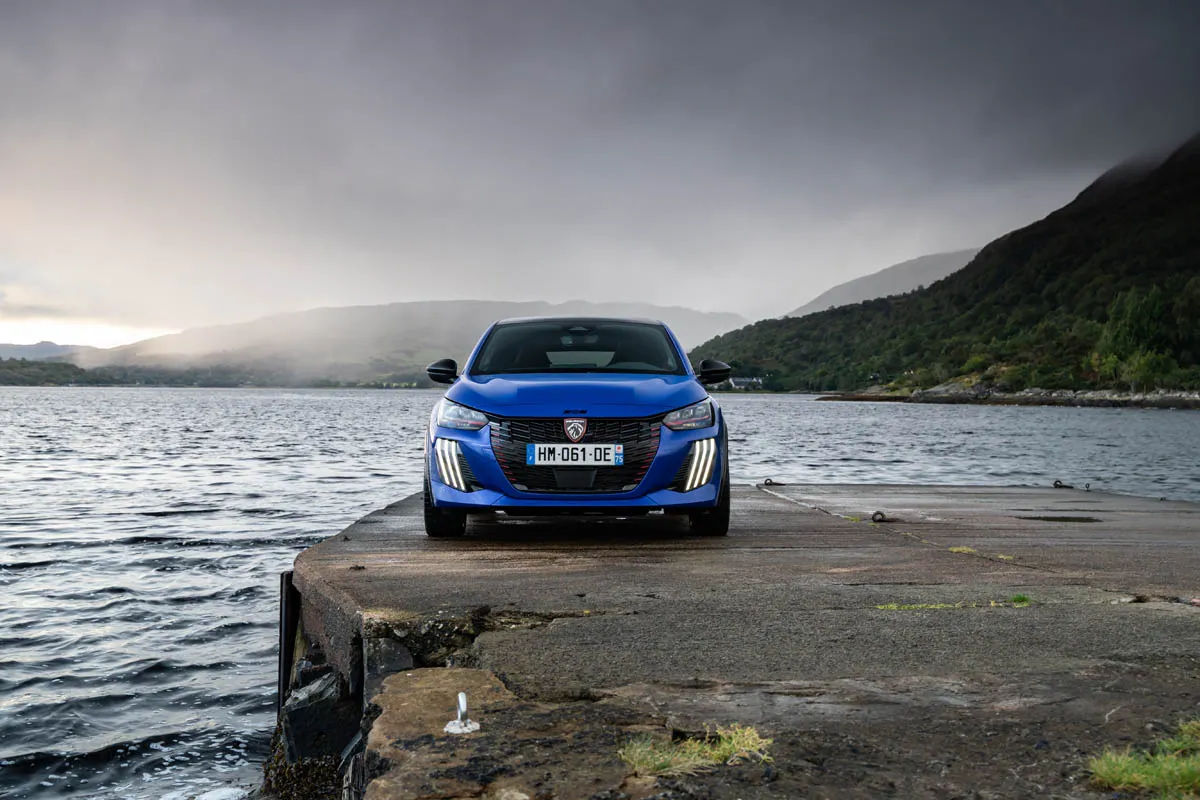
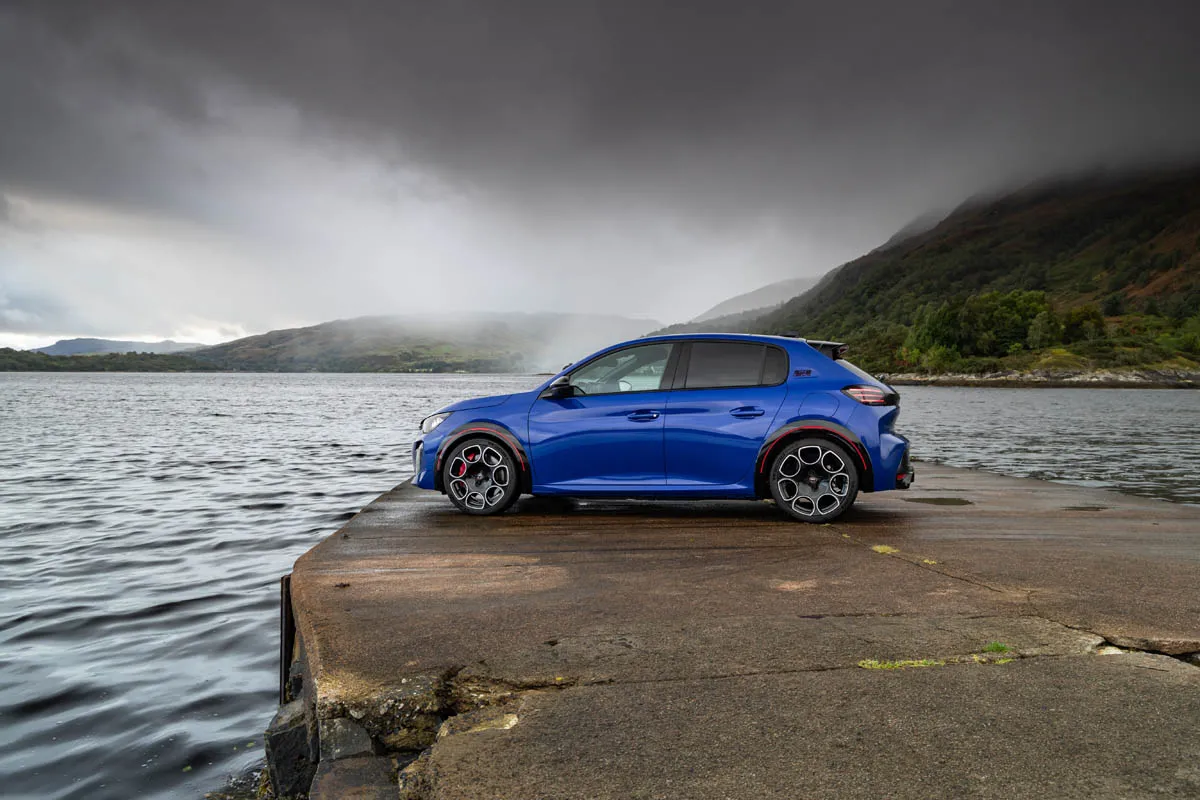
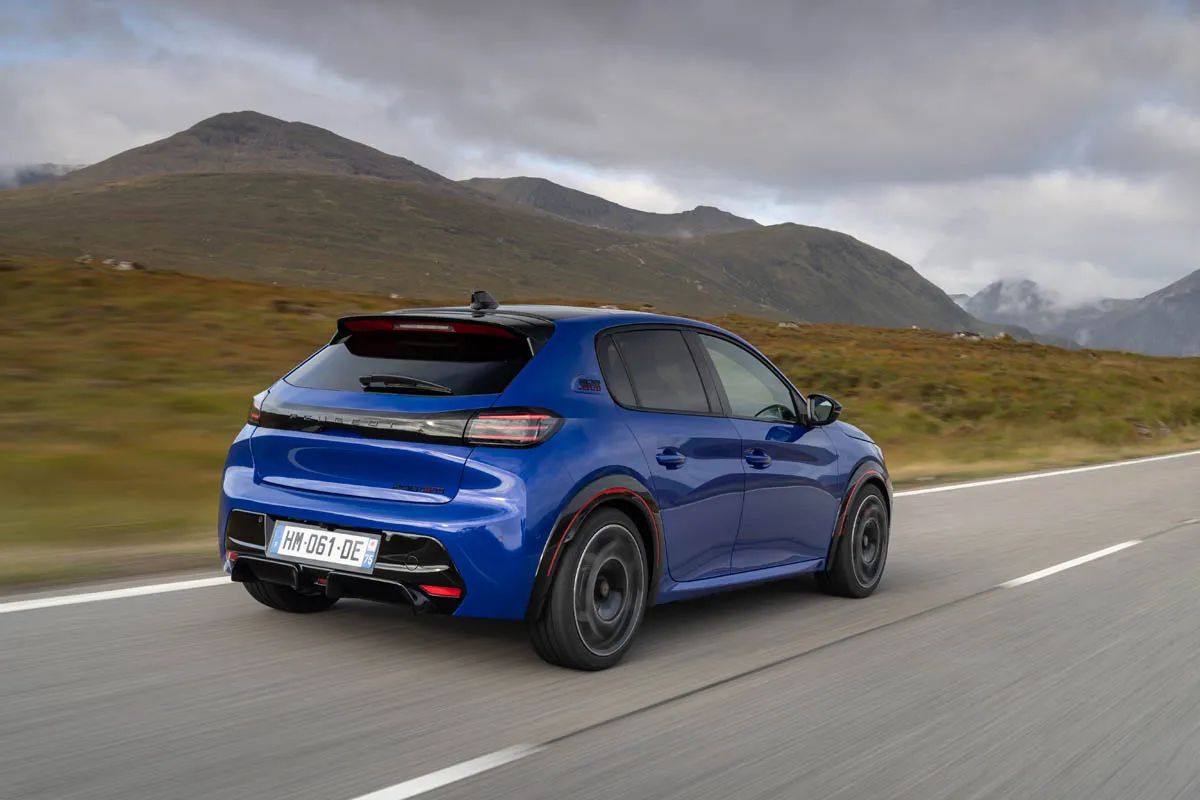
References to the iconic 205 GTi
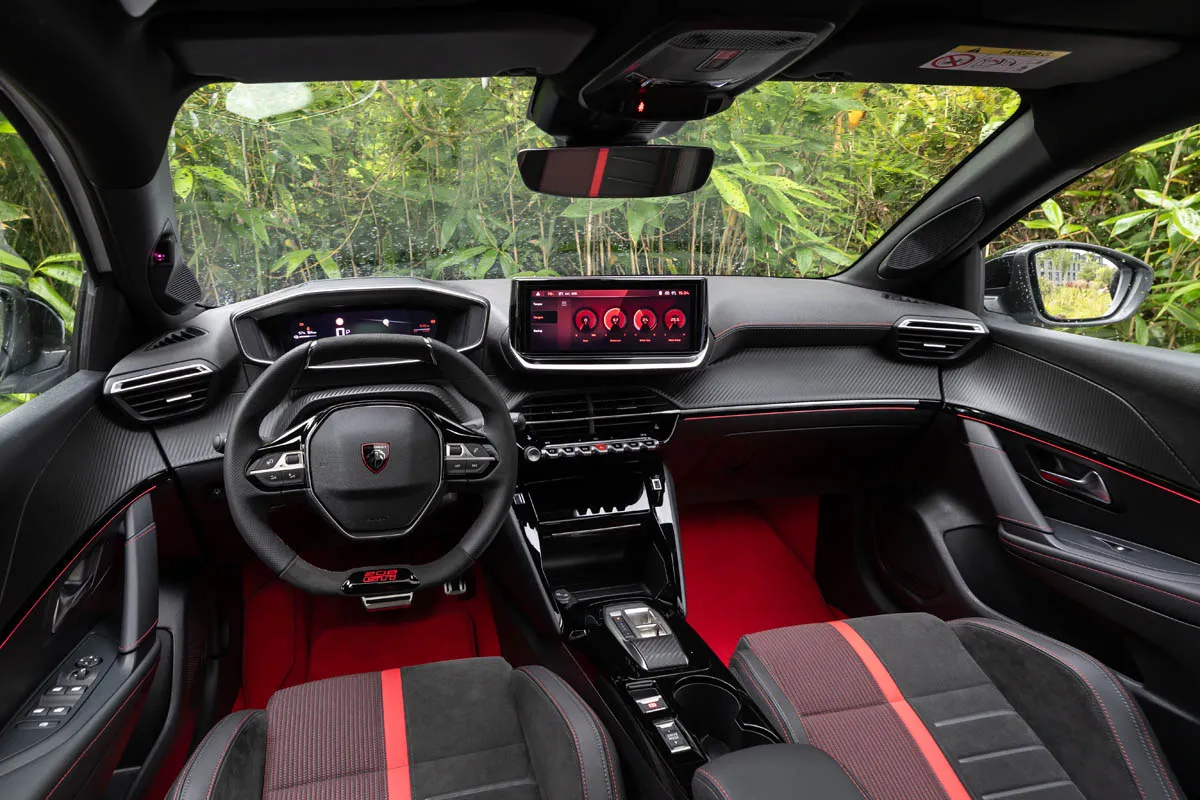
Peugeot Sport was involved in its development, resulting in a striking appearance. There are no cheap stickers or weak spoilers, but rather well-designed wheel arch extensions, an increased track width, a 30 millimeter lowered chassis, and awesome 18-inch perforated wheels that nicely echo those used on the original 205 GTi. In terms of specifications: an electric motor located between the front wheels delivers 281 horsepower and 345 Nm of torque, exactly the same as other models in the group. This enables the GTi to reach 100 km/h in 5.5 seconds. Interestingly, the top speed of 180 km/h is already reached quite early in the acceleration process.
The 280 hp club
GTi, three magical letters that Peugeot dares to use on an electric car. How does it fare when compared to its direct rivals from the Stellantis group and the new competitors from Dieppe and Martorell? Let’s take a look at the competition. Starting with the 280 hp club, where all members use the Perfo-eCMP platform. The Abarth 600e Scorpionissima is more theatrical, in a typical Italian style, and also features a Torsen differential like the rest of the group, but it’s packaged in a taller, more eye-catching crossover body. You either love or hate the infamous Abarth Sound Generator. Is it fun? Absolutely. But those seeking pure dynamics will find that the Abarth’s higher center of gravity puts it at a disadvantage compared to the lower-slung e-208.
Veloce, HF, GSE or GTi
Then there’s the Alfa Romeo Junior Veloce. Alfa has applied exactly the same formula to the Veloce version of the Junior. But the tuning is different: the Alfa has slightly heavier steering response. Like Fiat, Alfa opted for a crossover-like design. Those who prefer the classic “low-slung” hatchback style will still turn to Peugeot. Opel has just launched the Corsa GSE, a model that is best compared to the GTi and the Lancia Ypsilon HF. These are slightly lighter than Alfa and Fiat’s crossovers. And if you’re still unsure, take a look at the prices—there’s a considerable difference, ranging from just over forty thousand to well over fifty thousand.
Or A290 and VZ
There are also challengers from elsewhere. The Alpine A290 and the Cupra Raval VZ. How much praise the Alpine A290 has received, right? I recently drove it in the GTS version. With a maximum of 220 horsepower, it’s not necessarily the fastest, but it’s powerful — you wish for a bit more horsepower. Yet it has an excellent chassis, stunning looks, and is a very enjoyable car to drive. With its square headlights on the front, fantastic retro appearance, and a chassis tuned for agility and lightness. Then there’s the Cupra Raval VZ from Spain. The Raval has sharp cuts and aggressive lines. With around 226 horsepower, the Cupra doesn’t set new standards, but its chassis and handling are extremely refined. To deliver power effectively to the front wheels, the Cupra uses digitally controlled torque vectoring.
Conclusion
No, it weighs a bit more than the 900 kilograms of that era, but it also has more than twice as much power. Peugeot likes to draw comparisons to the 205 GTi, which is logical since that model inspired entire communities to become car enthusiasts. It’s good that the e-208 GTi shares visual similarities with the 205 GTi. In a world where many electric cars feel boring, heavy, and uninspired, the e-208 GTi delivers classic driving pleasure. With a starting price of €41,990, it represents a significant investment for a compact car. But compared to the Alpine and Cupra, it offers considerably more power and circuit-ready hardware with a sport differential. Compared to its internal siblings, it simply has the most stylish and classic hatchback design. Is the GTi dead? Far from it. It’s just been powered up!
Text: Werner Budding
