
Test drive of the Chinese electric limousine: 3,000 km behind the wheel of the Exltantix ES
Chinese cars were supposed to conquer Europe through price. The Exlantix ES tries to do it differently—through features, comfort, and technology. We tested whether this electric limousine from China can truly compete with the Mercedes EQS and BMW i7 on a long journey from Warsaw to the Alps.
Table of Contents
There’s no better time for skiing in the Alps than during May holidays. The days are already long, you can walk around the valley in short sleeves, while it’s still slightly cold on the glaciers with beautiful sunshine. Plus, there are few people, plenty of snow, lower prices, and many available rooms in hotels and guesthouses.
This is also an ideal opportunity for us to test electric cars on long routes. This year, for the first time, we took a car from a Chinese manufacturer on such a trip. Why not earlier? Because initially, Chinese brands entered Poland with cars that were more suited for urban use – crossovers with small batteries, slow charging speeds, and high power consumption on highways (Seres 3, MG4, Omoda E5). These cars perform on long routes more or less like the Kia Picanto. It’s possible, but why bother? Packing skis and other equipment would also be problematic there. Exlantix is one of the first Chinese brands to offer cars suitable for long trips.
Chinese brands aim to dominate Europe with advanced features
The Exlantix ES is equipped with a battery having a net capacity of 98 kWh, which can be charged at up to 290 kW, and features a streamlined design (Cd 0.2). It is an E-class sedan (4.9 meters long, 3 meters wheelbase, and 1.98 meters wide—larger than the Porsche Taycan or Mercedes EQS). The vehicle also comes with all-wheel drive, 480 horsepower, and 663 Nm of torque.
The Chinese manufacturer also offers a pneumatic suspension with terrain selection as standard. This is rare in this segment even as an optional feature, yet here it’s included at no extra cost, similar to the luxury F-class segment. In terms of passenger comfort, this system can confidently compete with those found in the Mercedes EQS.
The ES also boasts good sound insulation, including double-glazed windows. In contrast, the clearly visible wires for the windshield heating are somewhat annoying, a problem even the Skoda Octavia handles better.
The Chinese limousine also comes standard with advanced driving assistance systems, including for example an highway lane change assistant (after selecting the turn signal, the car checks on its own whether it can switch lanes and performs the maneuver). It works fairly well, but on narrow roads in Austrian towns the system gave up without warning, so it’s not yet at the level seen in competing Chinese brands equipped with lidars on Chinese roads (this may also be partly due to the resolution of the available maps). Tesla would fare better in this regard as well.
The Exlantix ES boasts substantial power (480 HP), high regenerative braking capacity, and ventilated disc brakes that performed well even during several hours of testing this model on a track. Thus, it handles dynamic driving through mountainous curves without issue, despite its heavy weight (2230 kg).
The trunk space could be larger, however. This Chinese sedan offers only 480 liters, which is one of the lowest values in this segment.
The Chinese want to attract European customers with standard equipment, just as Koreans did when they entered our market. Standard features include electric adjustment of both front seats with massage, ventilation, and heating. The car also has a three-zone climate control with air ionization, an aroma diffuser, audio system with 23 speakers (which sounds very good), a head-up display on the windshield, and electric opening and closing of all doors. This is essentially a solution that appears only in higher trim levels in the S-Class or BMW Series 7.
Charging at 290 kW
Chery doesn’t advertise the batteries used in the Exlantix, but based on the specifications, it can be inferred that the model with a “100 kWh” battery (with about 98 kWh of usable capacity) uses NMC CATL Qiling cells, which are top-tier. How did this affect its road performance?
Firstly, don’t trust the built-in onboard navigation with route planning. It’s terrible. The car suggested, for example, stopping to charge for 2.5 hours at a station with only 10 times the power capacity that the car can draw. Another time, it told us to use a super-fast charger but stay connected for over an hour to charge the battery to 100%, which makes no sense because it would likely take only half that time to reach the final 10%. Newcomers to the world of electric vehicles will therefore have a hard time using it on long trips. This isn’t Tesla, nor even Volkswagen’s new system, which already handles long distances quite well.
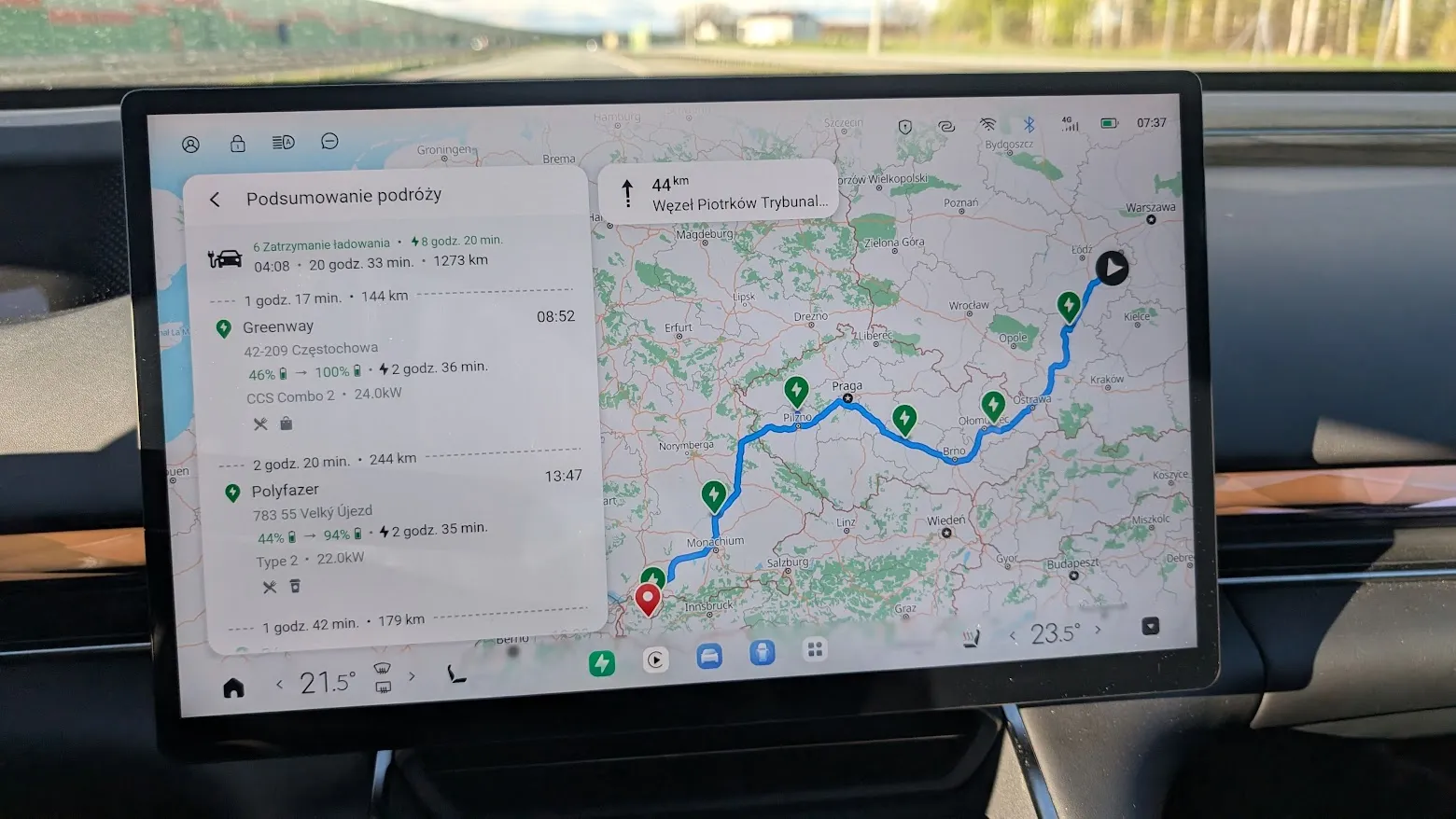
If, however, we already know a bit about cars and learn how to find super-fast chargers (e.g., in the GreenWay app), it will quickly become clear that breaks of 15-25 minutes are more than sufficient.
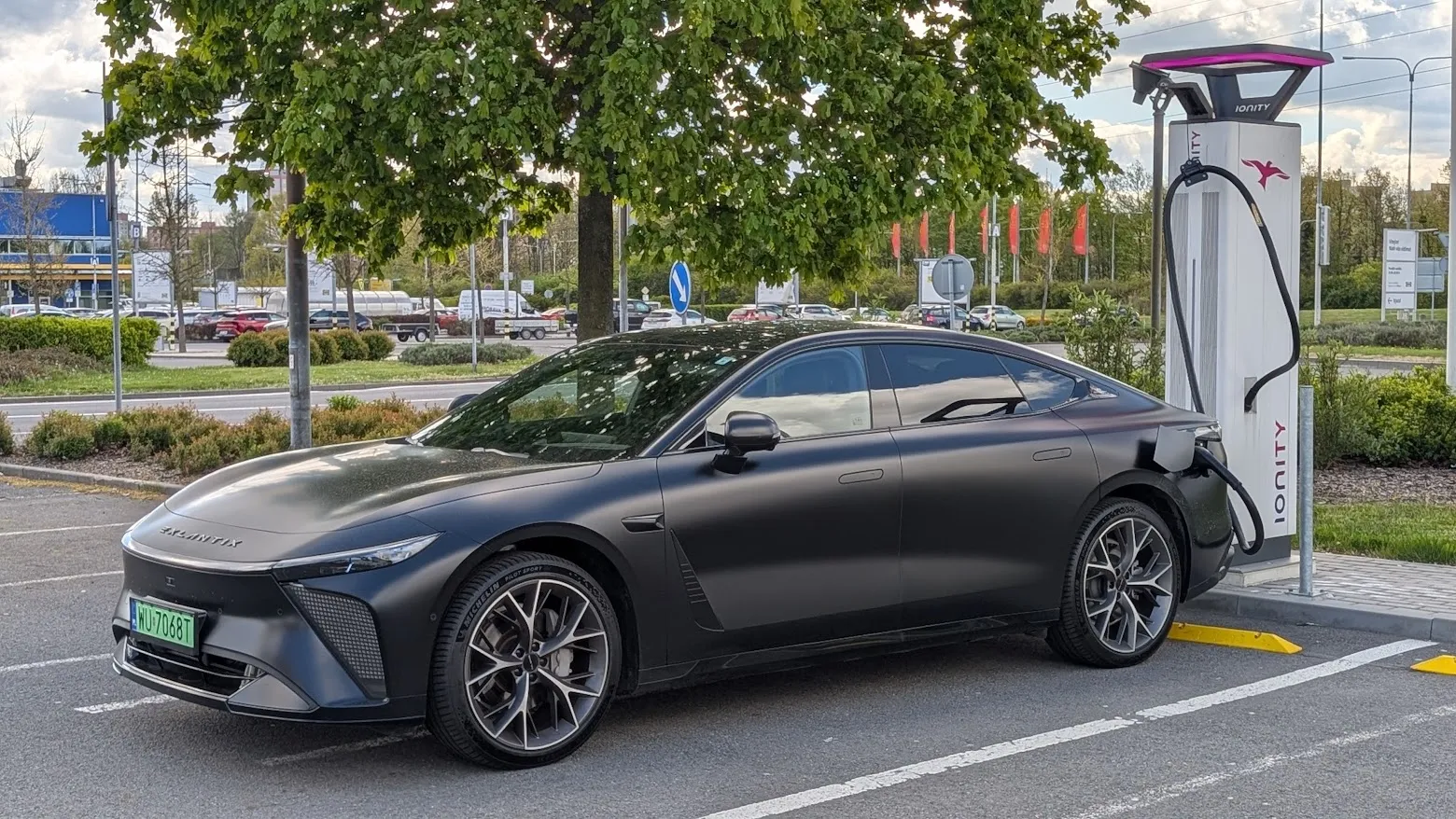
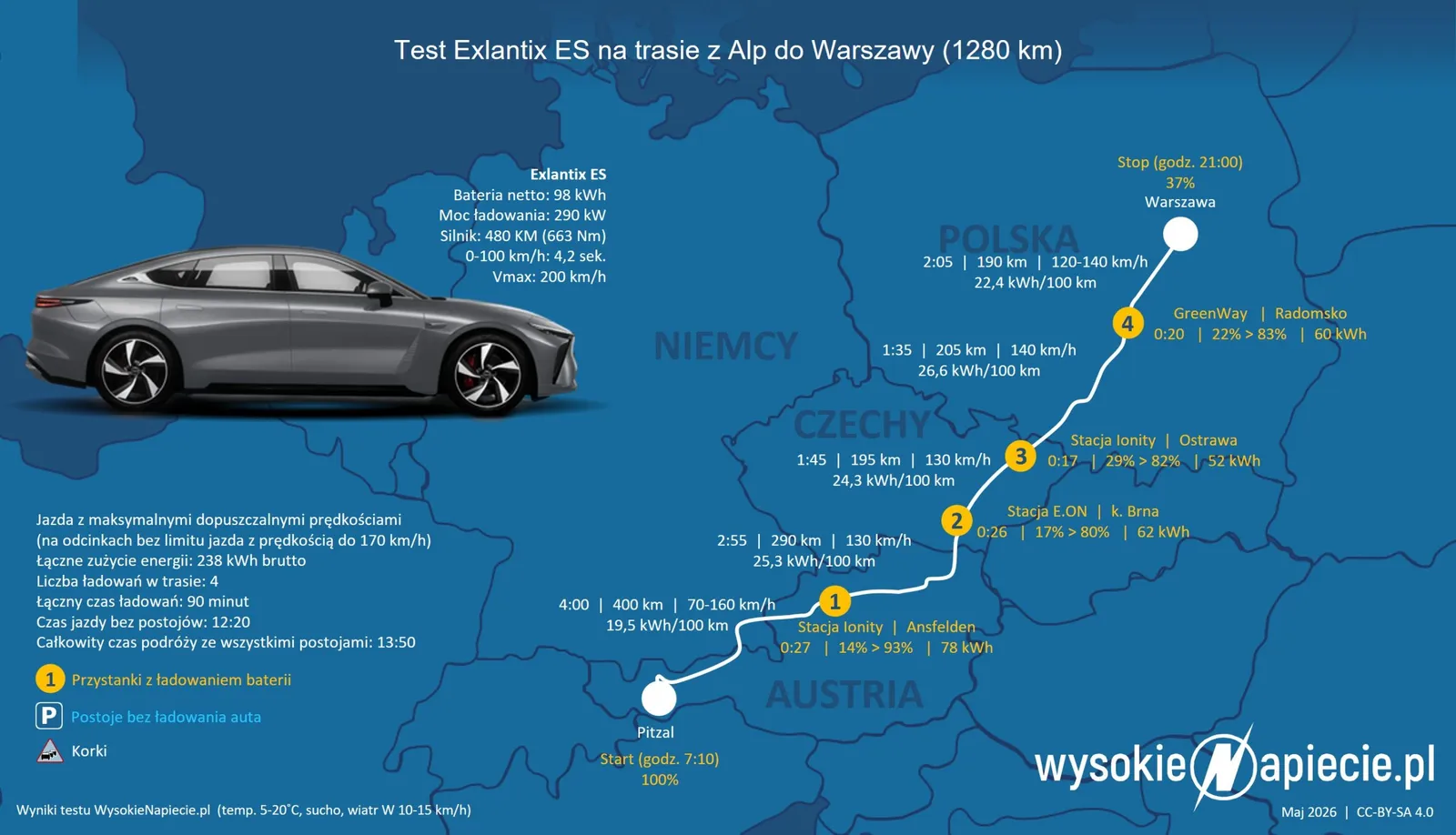
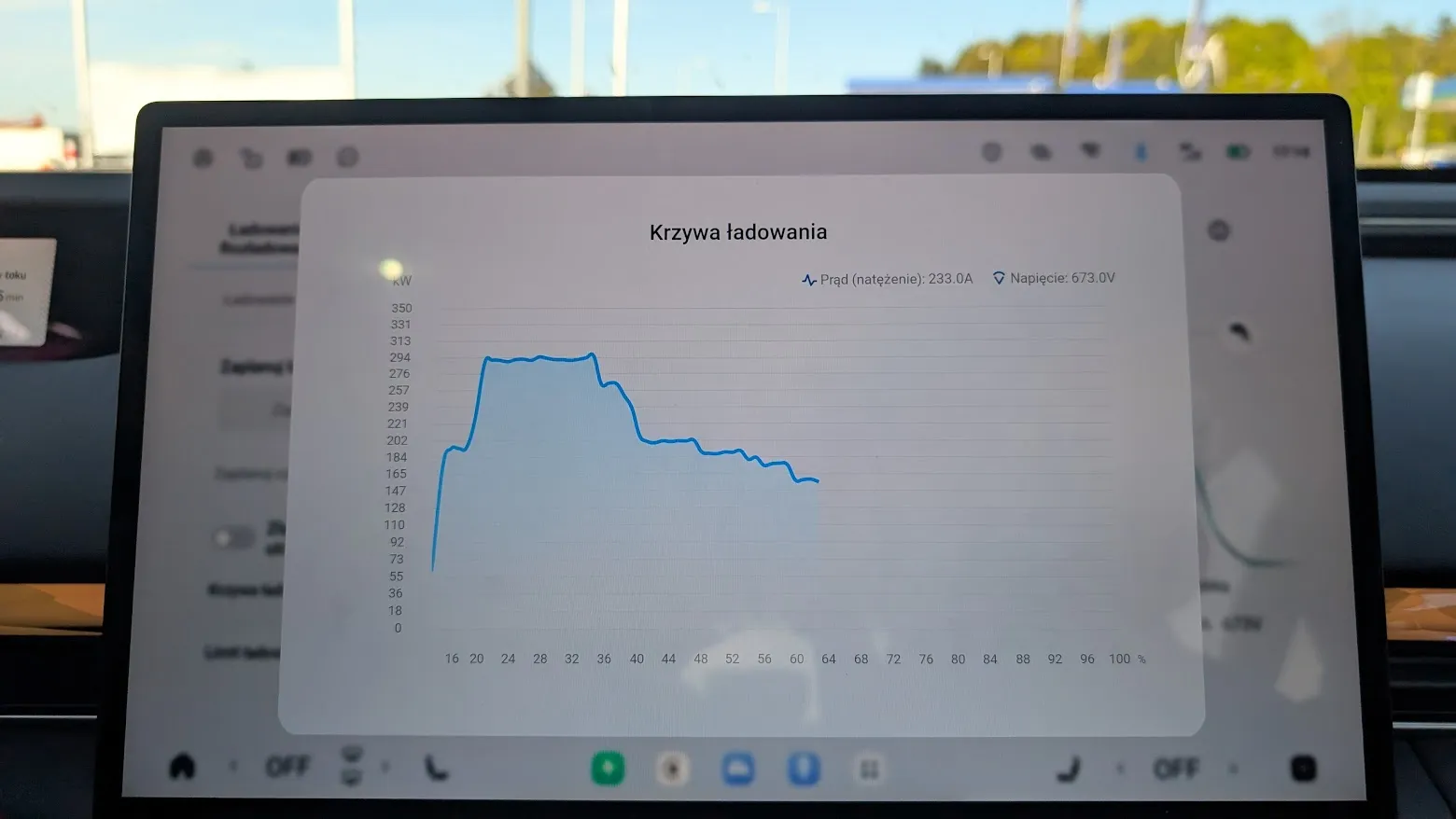
The car not only has a high charging power (290 kW) but also maintains it for a considerable duration (up to about 35%). As a result, charging approximately 50 kWh—enough for 200 kilometers of highway driving—took 13 minutes in our tests. Within 20 minutes, the Exlantix managed to draw 60 kWh (from 22% to 83%), which translates to an average charging power of nearly 180 kW.
How does this compare to the Mercedes EQS 450 4matic, which we were charging alongside at the same time? The German limousine took a bit longer to recharge its battery. In contrast, the new A6 e-tron was slightly faster than the Exlantix (it absorbed 79 kWh in 25 minutes, finishing at 84% charge). The differences are around 2-4 minutes, so it still ranks among the top vehicles available on the Polish market.
Energy Consumption and Range
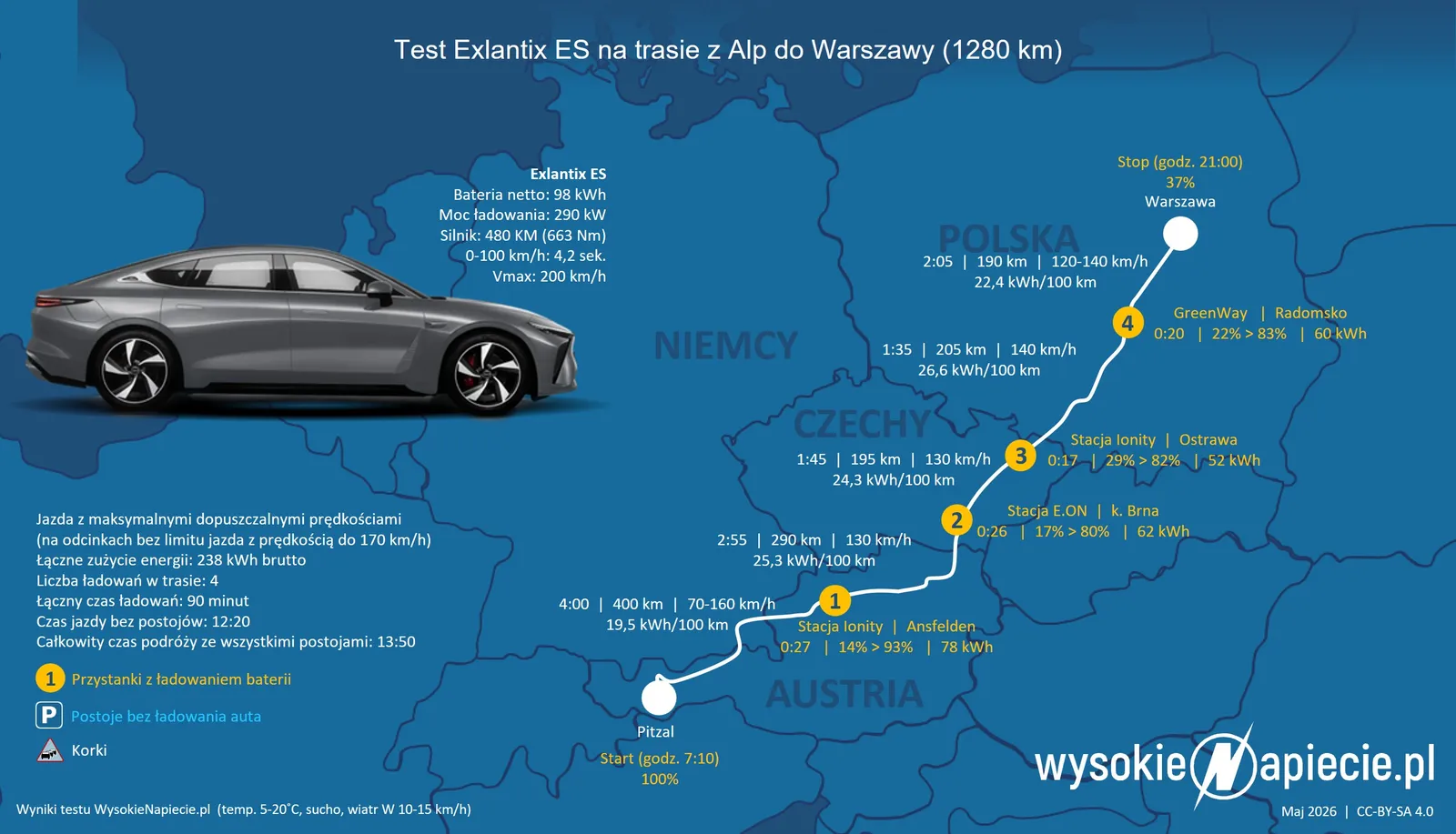
On the route between Warsaw and the Czech city of Olomouc, under similar weather conditions and with a comparable driving style (generally the entire journey at the maximum allowed speeds of 120-140 km/h), we were also able to compare the energy consumption of these three vehicles.
This Chinese sedan disappointed us a bit. The Exlantix consumed as much as 28.8 kWh/100 km on this route, the Mercedes EQS used 24 kWh/100 km, while the Audi A6 e-tron won this competition with a consumption of just 22.2 kWh/100 km.
We can only attribute such high consumption by the ES to the low temperature and an inefficient heat pump. When we set off, the air temperature was only 4°C, and after overnight charging, the battery temperature might have been close to zero.
However, when we tested a pre-production ES in winter, at -6°C outside, the car used less than 27 kWh/100 km on the highway (120 km/h). This is actually a decent figure for such temperatures.
I took this Chinese engineering marvel – the Exlantix ES – on a 100 km journey at -8°C (with the battery at around 10°C since the car had been outside for a week). The power consumption was high due to heating, seat and steering wheel warming, as well as massage functions, while traveling at a constant speed of nearly 120 km/h… pic.twitter.com/zVinXbWmLD
— Bartłomiej Derski (@bderski) January 8, 2026
However, the Exlantix significantly reduced its power demand later on. Over the entire round trip through the Alps (2,8 thousand km), the average power consumption of the ES was 24.4 kWh/100 km (26.3 in the Alps and 22.5 on the way back to Warsaw). In contrast, the EQS averaged 20.9 kWh/100 km over the same route (22.1 in the Alps and 19.6 on the return trip).
The leader of this route, taken under very similar conditions, remains — slightly shorter than the Exlantix version — the Tesla Model 3 LR RWD with a total mileage consumption of 17.3 kWh/100 km (18.3 kWh uphill and 16.3 kWh downhill). On the other hand, the BMW i7, Mercedes’ direct competitor, had the highest consumption on this route. However, unlike the others, it was a trip through Germany with speeds of around 220 km/h on sections without speed limits. The Bavarian limousine consumed 26.1 kWh/100 km during this type of driving on its return from the Alps.
Interestingly, despite the greater distance and shortcomings in Poland’s charging infrastructure (low power capacities), the fastest drive turned out to take the shortest time. We completed the route through Germany in 13:27, while the Mercedes, Exlantix, and Tesla took exactly the same amount of time—13:50—to cover the slower (more fuel-efficient) route through Czechia.
The routes, aside from the direct comparison between the ES and EQS, were not identical—they differed in terms of valleys, but these differences fade away throughout the journey. Nevertheless, the comparison gives some idea of what to expect from these electric vehicles on long trips.
Price of Exlantix ES
When the Chinese manufacturer released the pricing for the ES and ET (its SUV version), the media and commentators were slightly shocked. Here was a Chinese brand wanting to sell a car in Poland with a starting price of 330,000 zł. In reality, the price even ends up around that level because the Exlantix already comes with almost everything standard. For comparison, the base version of the BMW i5 starts at 345,000 zł, but after equipping it similarly to the Exlantix, its price rises by another 100,000 zł, and even then we won’t get full all-wheel drive. We also won’t get electric doors (although in my subjective opinion, this is more form than function).
On the other hand, if we were to compare the ES to the luxury segment, purchasing an EQS would require at least 445,000 zł for the base model (with prices even reaching 594,000 zł), plus an additional subscription fee for maintaining the car in optimal condition...
In practice, despite EU punitive tariffs on electric vehicles from China, the ES costs roughly 100,000 zł less than similarly equipped D-segment cars produced in Germany, while offering even higher standard features than what Europeans can provide in this class.
The discount on the Chinese badge on the dashboard and customers' concerns about whether the brand will remain in the market or offer after-sales service seem reasonable. However, Chery is aware that there is less difference among buyers in the 350,000 to 550,000 zł range compared to the difference between cars priced at 100,000 and 200,000 zł. Therefore, the group’s expectations for sales in this market segment are not overly ambitious.
In Chery’s favor is also the fact that it is one of the Chinese companies with the best prospects for success in Europe. The Wuhu-based group has been China’s largest car exporter for years and, with nearly 30 years of experience in automobile production, already has the established position and capital needed to compete fiercely among Chinese manufacturers, only some of whom will ultimately remain on our continent.
Summary
Exlantix ES turned out to be a truly decent companion for a long trip across Europe. Comparisons to German luxury models, which I wouldn’t have considered before this journey, don’t seem exaggerated at all in hindsight.
Both this test and the winter driving experiences with the ES, as well as track testing I’ve done with it, show that Exlantix is serious about competing in the premium segment by offering better equipment at a lower price. There’s no doubt that, like many other Chinese brands, it will gain more and more customers in Europe.
However, it will be another 10-15 years of solid presence in the market that will show whether not only its rich equipment but, most importantly, its customer service quality, maintenance support, durability and availability of components, along with well-developed software, will allow it to firmly establish itself alongside BMW and Mercedes on the shelves.