
Tesla with a truck charging network in Europe. Over 100 Megachargers at launch, but none in Poland yet
In short:
With the European debut of the Tesla Semi, Tesla will launch its own Megacharger network for heavy-duty vehicles
In the first phase, 21 locations will be established with over 100 charging points capable of delivering up to 1.2 MW of power
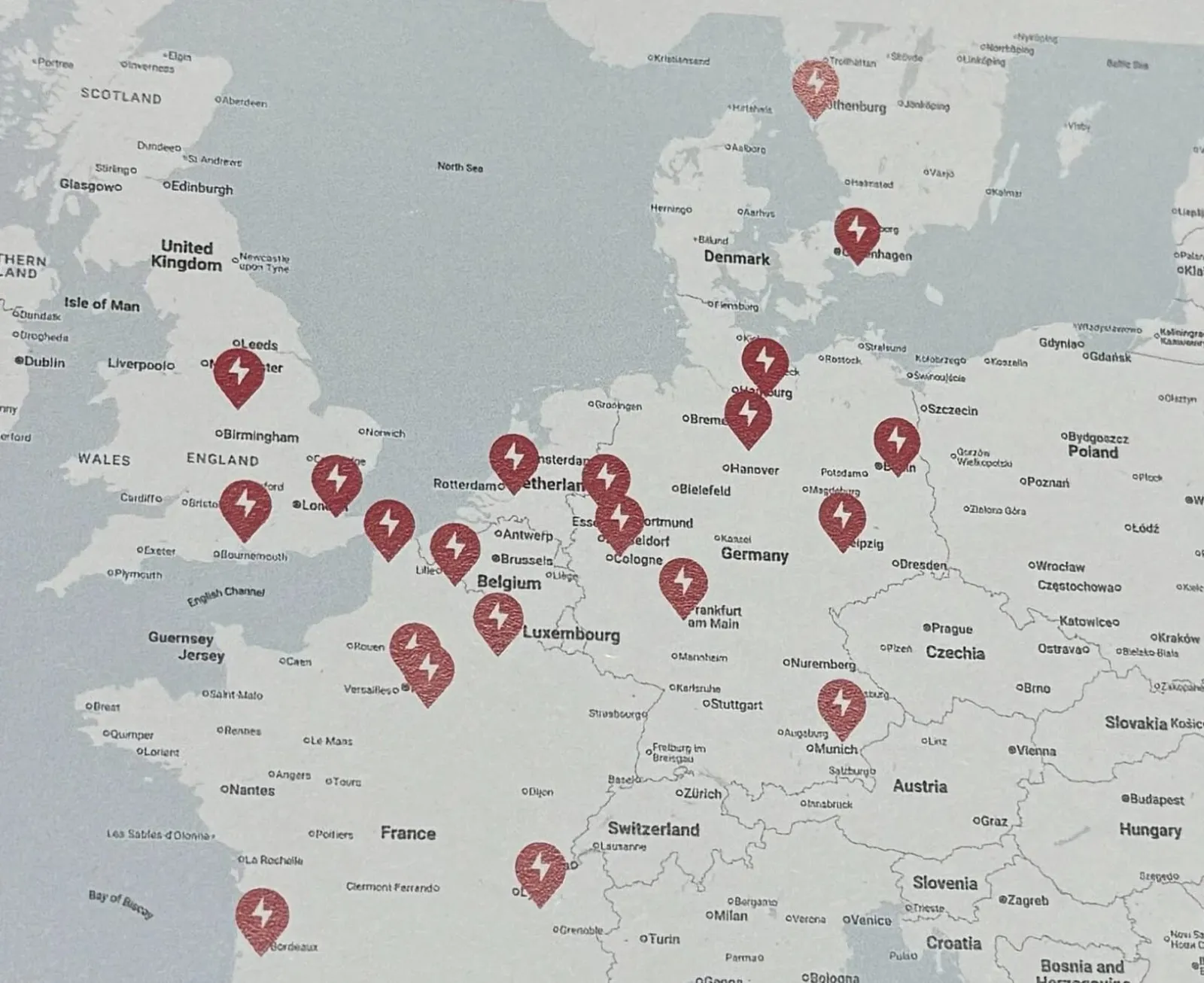
The first locations will primarily be in Germany and France, according to a map provided by the American manufacturer
Poland is not currently included in plans to install ultra-high-power chargers
Tesla is focusing on its own network for trucks
At the IAA Transportation 2026 exhibition in Hanover, Dan Priestley, head of the Tesla Semi program, revealed details about the electric truck’s European expansion and dedicated charging infrastructure. Tesla plans to launch a network of 21 public locations in Europe, equipped with over 100 charging stations using the MCS (Megawatt Charging System) standard.
The network is set to launch alongside the introduction of the Semi model to the European market. Importantly, the Megachargers will not be reserved exclusively for Tesla vehicles. The manufacturer aims to use the Supercharger network model for passenger cars and make the infrastructure available to trucks from other brands as well.
According to the map presented at the conference (below), the first locations will primarily be in Germany and France. Two facilities are planned in the United Kingdom, three in Sweden, with the rest located in the Benelux countries. Unfortunately, Poland is not included in the first phase of the project.
Up to 1.2 MW capacity. More than what the European Tesla Semi needs
The most interesting aspect of the plan is the charging power. The European version of the Tesla Semi is designed to support charging at a maximum power of 800 kW, but the Megachargers currently under construction will be capable of delivering up to 1.2 MW, similar to the solutions already in use in North America.
This may suggest that Tesla is leaving room to introduce a Long Range version equipped with a larger battery for the European market in the future. According to X, the American Standard Range variant has a battery with a capacity of 548 kWh, while the Long Range version will come with a battery pack having a capacity of 822 kWh. These batteries are based on Tesla’s 4680 cells using NCMA chemistry.
Three engines and maneuverability like that of a shorter truck
During the presentation, new technical details regarding the European version of the Semi were also revealed. The tractor features a 6×4 axle configuration and three electric motors. The main drive is located on the rear axle, while two additional motors are placed on the middle axle. These are activated primarily when high power or torque is required. In many situations, especially during highway driving, the truck relies solely on the main motor, which is said to improve energy efficiency.
As Dan Priestley emphasized, despite having three axles, the vehicle is intended to offer “maneuverability comparable to a two-axle truck.” In simpler terms, this means drivers will have access to a vehicle suited for European logistics infrastructure without any compromises in terms of handling – writes TeslaMag.
“Very competitive price”
The German newspaper Bild notes that Tesla has still not revealed the European pricing for the Semi. Nevertheless, Priestley assured during the trade show that the vehicle will be offered at a “very competitive price” compared to other electric trucks available on the market.
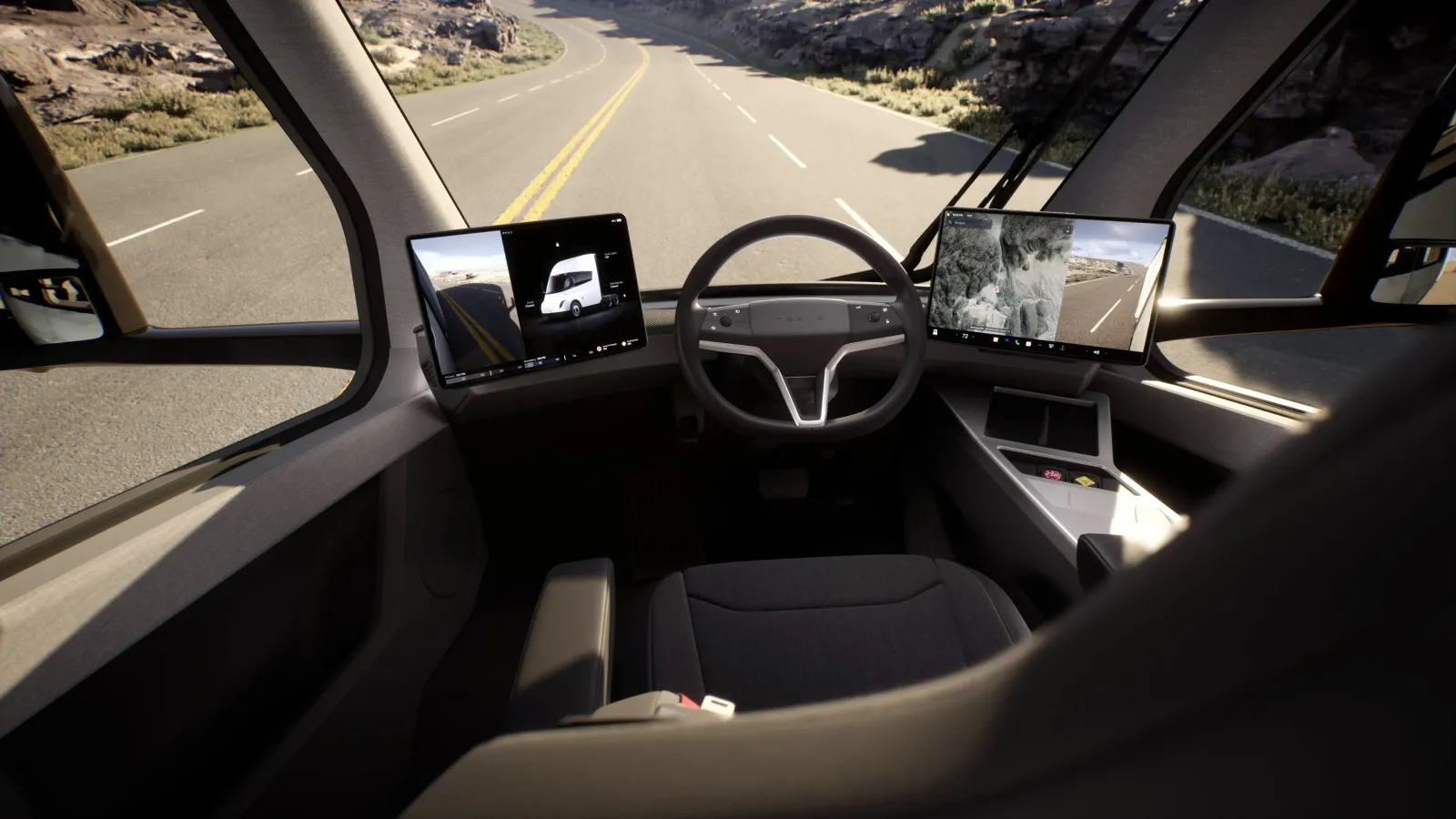
The vehicle itself differs from the designs offered by European manufacturers. The driver sits in the center, the cabin lacks a sleeping area, and it comes with one MCS charging port. Tesla has also provided the option to use CCS infrastructure via an adapter.
Tesla wants to sell chargers to fleets as well
The construction of public infrastructure will be accompanied by the sale of charging stations to private fleet operators. Tesla will offer two solutions. The cheaper Basecharger for overnight charging is expected to cost around 17,000 euros, while the Megacharger setup, consisting of two satellites and a power cabinet, is priced at 163,000 euros. First deliveries are scheduled for mid-2027.
According to data provided by the manufacturer, the central power unit of the Megacharger weighs about 1.1 tons and can deliver up to 1.2 MW of power distributed between two charging stations. The satellites themselves can be placed up to 60 meters away from the central unit.
Poland is behind the first wave, but Tesla is becoming an increasingly important player here
Unfortunately, Poland is not listed on the map of European Megachargers, even though Tesla already plays a significant role in the domestic market for electric vehicle charging infrastructure. This mainly applies to the Supercharger network.
In September, Tesla carried out a major price update for its Superchargers in Poland. Of the 19 stations analyzed, prices increased during peak hours in 14 cases. The biggest increases were seen in Gdańsk and at the location near Poznań on Highway A4, where the price rose from 2.30 to 2.90 zł/kWh. In Warsaw, near Chopin Airport, the price increased from 2.60 to 3.10 zł/kWh, while in Wrocław it rose from 2.40 to 2.90 zł/kWh. Meanwhile, prices dropped at some locations, including in Jasionka and Lublin.
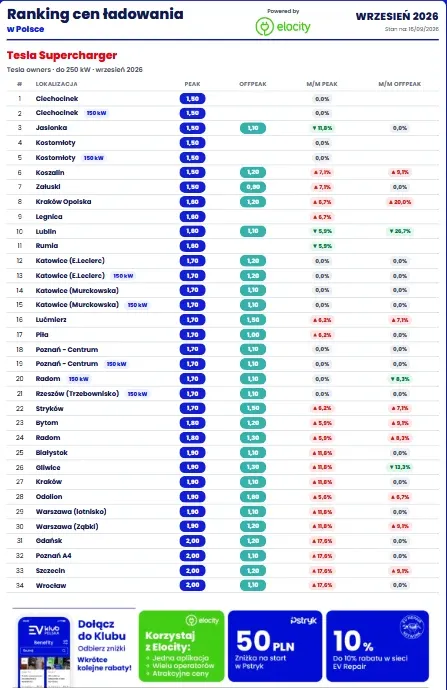
As Maciej Gis from PSNM emphasizes, “Tesla’s pricing policy for Superchargers is much more dynamic than traditional pricing based on station type. The price can depend on location, time of day, or the subscription purchased. That’s why we created a separate ranking for Tesla Supercharger networks. Now users can enter a specific location to see how peak and off-peak prices have changed there, compare them with other stations, and check the differences between Tesla users and those using other electric vehicles. Instead of a single rate, we get a complete picture of how Tesla Supercharger pricing works in Poland.”
Conclusions
It seems the American manufacturer intends to bring a model that has proven successful in passenger cars into the heavy transport segment, meaning instead of relying solely on developing external infrastructure, the company is building its own ecosystem that includes both vehicles and charging networks. The question is whether Megachargers will appear in Poland and how quickly Tesla will consider our market an important route for electric heavy transport. Get to work, Mr. Musk!
Oskar Włostowski