
Tesla will unveil the new Roadster on October 1.
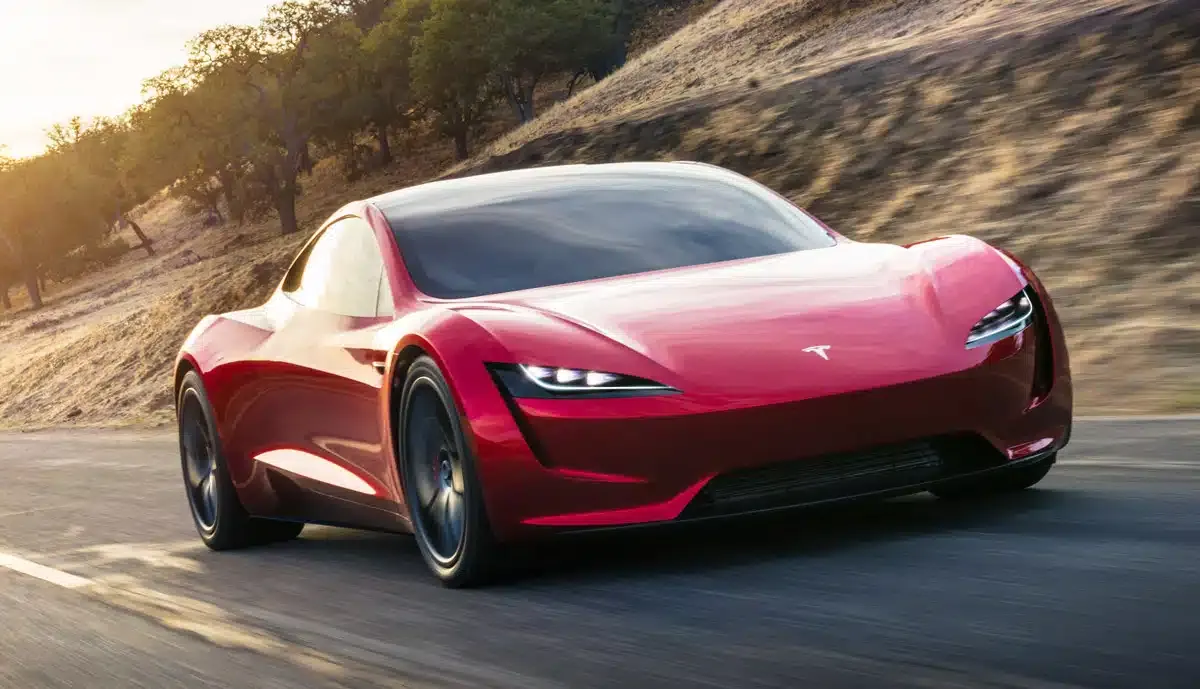
Image: Tesla
Tesla will unveil the long-delayed new Roadster on October 1 this year. Both the U.S. electric vehicle manufacturer and its CEO and major shareholder, Elon Musk, announced this via X. Musk also said through the social media platform now owned by him, “This is simply out of this world.”
If the unveiling does take place in October, it would come nearly nine years after the surprise reveal of the Roadster prototype in November 2017 (image in article). At that time, Tesla had planned to launch the successor to the original Roadster in 2020. However, the company kept delaying the unveiling and missed several delivery deadlines.
According to recent reports, Tesla intends not only to bring the prototype shown in 2017 to production but also to unveil an even further revised version. It is said that a limited edition featuring a nozzle system developed in collaboration with Musk’s aerospace company SpaceX could also be demonstrated at the event.
New Tesla Roadster Unveil 10.01 https://t.co/9J3YPT25fm
— Elon Musk (@elonmusk) September 13, 2026
Tesla still lists on its German Roadster website technical specifications such as 2.1 seconds to accelerate from 0 to 100 km/h, a top speed of over 400 km/h, and a range of 1,000 kilometers per battery charge. These figures are based on the vehicle generation announced years ago. It remains to be seen whether these values will remain unchanged for the production model.
Key questions remain unresolved for Germany and Europe. Tesla has not yet announced a solid European market launch date, current prices, or specific delivery timelines for the revised version. However, interested parties in Germany can already place reservations, requiring an initial deposit of 4,000 euros along with a bank transfer of 39,000 euros within ten days.
Spectacular features such as the thrust system previously announced by Musk himself are likely to face challenges in obtaining EU approval for use on public roads. What matters most is the actual standard equipment installed and its approval under relevant European type-approval regulations.
Also interesting
About the author
Thomas Langenbucher is an expert in electromobility with professional experience in the automotive industry and finance sector. Since 2011, he has been covering electric vehicles, sustainable technologies, and mobility solutions for ecomento.de. Learn more.
Reader interactions