
Tesla showed the Roadster 2’s cockpit. The red interface was inspired by fighter jets.
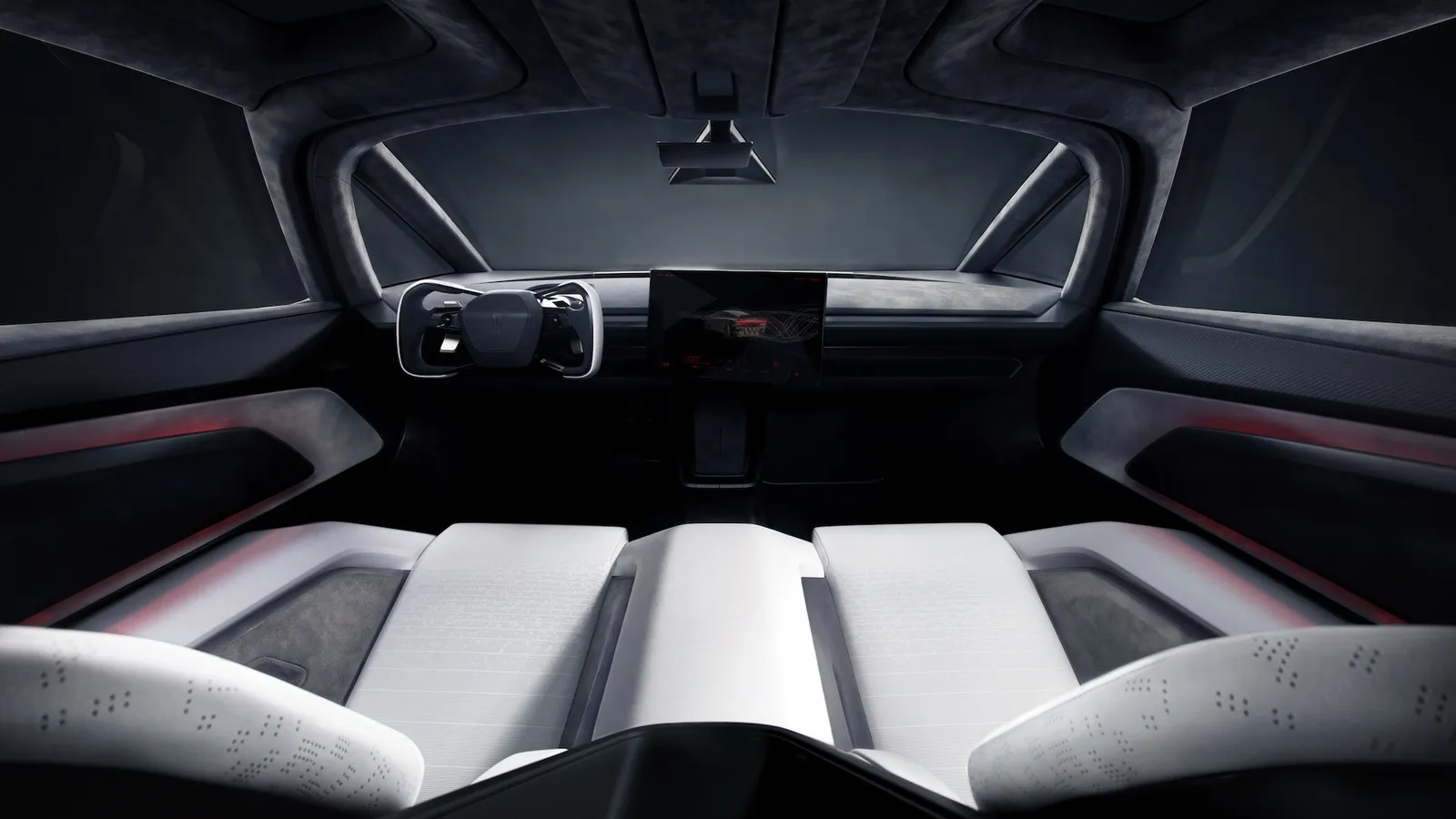
Tesla unveiled the controls for the new second-generation Roadster. Red graphics, an interactive car model, and lap data give its interior a unique character.
The Roadster is sparking interest again
Tesla fans have been waiting years for the new Roadster, repeatedly having to accept delays in its release. The spectacular October unveiling, during which the car actually flew, added more reason for interest. Tesla is now also revealing its unusual user interface.
The automaker posted a half-minute video on social media platform X showing what a Roadster driver will see behind the wheel. Its design, according to Tesla, is inspired by fighter jet cockpits and is focused on the driver’s needs. This represents a huge change compared to the interface in the brand’s current models.
All graphics are red on a black background. The main screen displays information about the selected transmission and battery status. The dominant element is the digital car model located above the checkered grid. A smaller red display near the windshield shows speed and lap times.
Menu, Driving Modes, and Visualizations
The main menu includes Home, Vehicle, Media, Climate Control, and Navigation. The Vehicle section contains settings for driving dynamics, lighting, displays, and charging. The driver can choose between Comfort, Balanced, and Sport modes or customize settings manually. These modes adjust acceleration, suspension characteristics, and ground clearance. A separate option is Track Mode designed for driving on a racetrack.
An interesting feature of the system is the visualization of individual functions. The Roadster has a number of active elements, such as an opening in the hood and tilting headlights. When the Dynamics settings are opened, for example, the suspension is highlighted. In the charging options, the battery pack and a slider for setting the charge limit are displayed. Tapping on the rear wing allows selecting modes like Stowed (retracted), Low Drag (low aerodynamic resistance), or High Downforce (high downforce).
The system provides similar information for other active elements as well. It shows things like aerodynamic fins and rocket motors. In Track Mode, the vehicle’s visualization is replaced by a dashboard displaying data on braking, acceleration, battery and engine temperatures, or tire pressure. Overload measurement, a track map, times for individual sections, and lap recording are also available. The driver can also adjust the aerodynamic and braking balance.
Changes before series production
Despite the different appearance, current Tesla vehicle owners will find some familiar elements in the interface. The climate control is located at the bottom left, volume controls at the bottom right, and media functions along the bottom edge. This suggests that the interface might be a modified version of Tesla’s standard software, similar to that in the Cybertruck.
The Cybertruck’s first prototype had an interface very different from other models, combining the map and vehicle visualization into a single display. Tesla eventually introduced a solution much closer to the rest of its lineup. Looking further back, even the interface elements from the 2016 Model 3 prototype did not make it to the final version.
The production of the Roadster is not set to begin until 2028. Much could still change in the next two years, including technical specifications. If only the user interface were to change, it would be the least of concerns.
Sources:
Original text / Elektrickevozy.cz
Tesla / X network
Not a Tesla app
Don’t miss
They put a gasoline engine in a Tesla. Now companies in the Obrist group are going bankrupt
Alza reduced the price of a great car accessory. It costs only 92 CZK, and Czechs are praising it
It has solar panels on the wheels. The new electric bike promises a range of up to 225 kilometers