
Tesla has revealed the specs for the Semi. The 1000 HP model will arrive in Europe in 2027.

In short:
Tesla revealed the specs for the Semi
Tesla’s truck has over 1000 horsepower and can travel 550 km on a full battery according to the manufacturer
Three independent engines are located at the rear axles
Average energy consumption? Around 1 kWh/km
Deliveries of the Semi to Europe are scheduled for 2027
The European version will be unveiled publicly in a few days in Hanover
Competitors on the Old Continent? Primarily MAN and Mercedes
Tesla Semi with specifications
Tesla officially unveiled the specs for the Semi designed for Europe. The vehicle will be one of the highlights of the manufacturer’s booth at the IAA Transportation exhibition in Hanover, taking place from September 14 to 20. This is another step ahead of the European deliveries scheduled for 2027.
Tesla Semi in Europe. 550 km range and over 1000 HP
The European version of the Semi is expected to offer a range of around 550 km. Tesla estimates the average energy consumption at about 1 kWh/km. The manufacturer did not specify the battery capacity, so based solely on the range and claimed consumption, no simple conclusions can be drawn regarding its nominal capacity.
The propulsion system consists of three independent engines located at the rear axles. Their maximum combined power is 800 kW, which is approximately 1088 HP. The tractor’s own weight is expected to be under 9100 kg, while the allowable total weight of the vehicle combination is 40 tons. The Semi will also come equipped with an electric power take-off (ePTO) capable of up to 25 kW, which can supply additional devices used in trailers and enclosures.
A key parameter in heavy transportation is the speed at which energy can be replenished. Tesla claims a maximum charging power of 800 kW. The Semi is capable of regaining up to 60% of its range within 30 minutes. To achieve this, the company is developing a Megacharger system designed specifically for heavy vehicles.
It took almost a decade to see the Tesla Semi arrive
The history of this project is exceptionally long even by Tesla’s standards. The Semi was first unveiled in 2017, with production originally set to begin in 2019. However, the timeline was postponed several times, partly due to limited availability of batteries that Tesla prioritized for its passenger vehicles.
The first production models reached customers in the United States only at the end of 2022. One of the key buyers was PepsiCo, which ordered 100 units back in 2017. Yet rollout remained slow — as of 2024, PepsiCo had only used 36 of the ordered trucks.

The turning point came in 2026. In April, Tesla announced the production of the first Semi on a new line in Nevada designed for larger-scale manufacturing. The company is still developing a separate factory there specifically for its electric truck.
Entering Europe in 2027 will therefore mean more than just expanding sales for the Semi. Only now does this model have a chance to become a product offered on a much larger scale, rather than primarily being used by a few select fleets.
Tesla Semi already has strong competitors
Tesla’s problem is that over the nine years since its first introduction, competitors have not waited. Electric trucks for long-distance transport are already available in Europe, so Tesla’s claimed range of 550 km sounds good but doesn’t turn the market upside down.
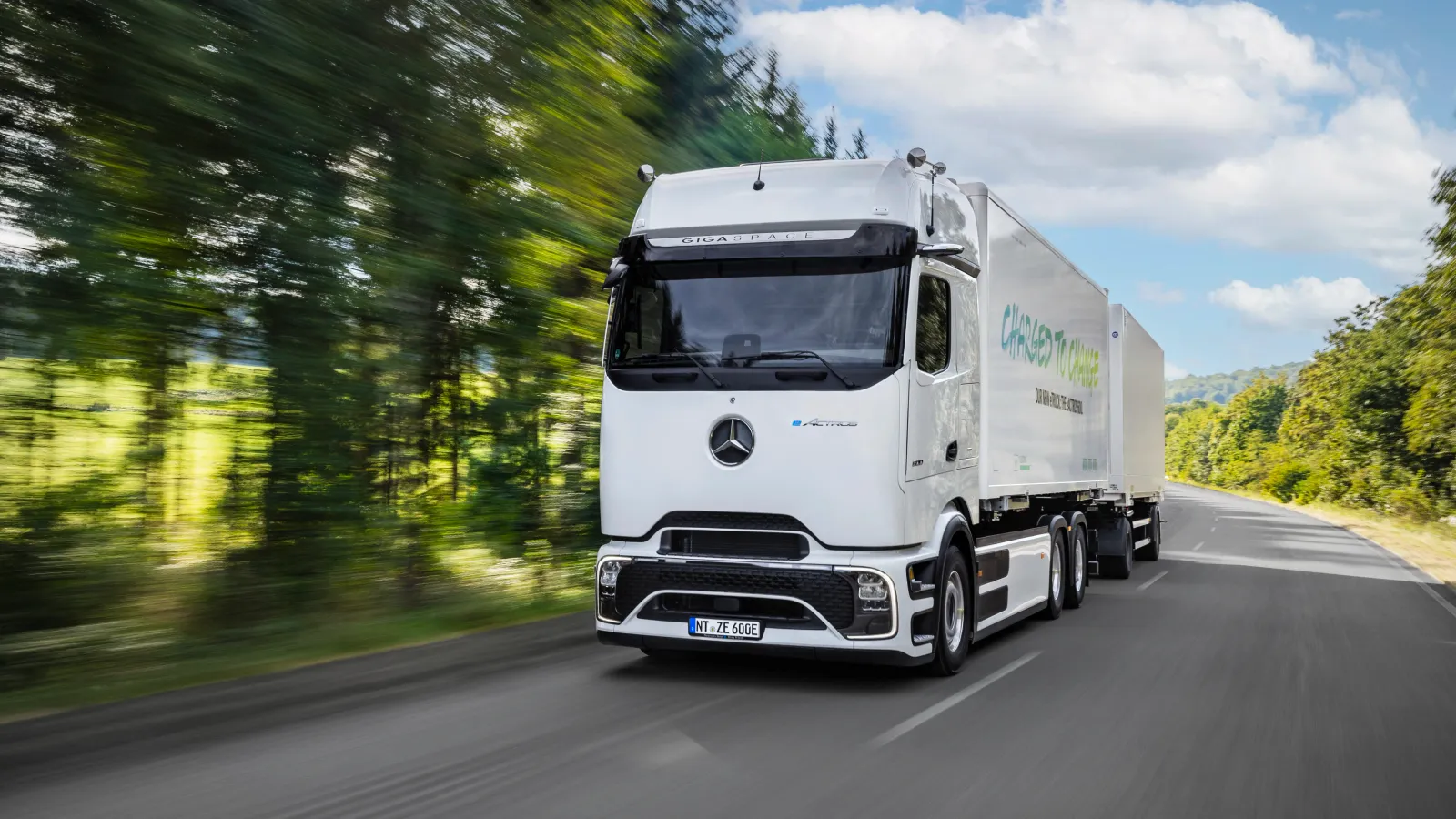
The main competitor will be the Mercedes-Benz eActros 600. Its mass production began at the end of November 2024, with the first vehicles delivered to customers in December of the same year. The battery with a capacity of over 600 kWh allows, according to the manufacturer, the vehicle to travel approximately 500 km with a total weight of 40 tons.
Closer to Tesla in terms of claimed range is the MAN eTGX. In its tractor configuration with six battery packs, it can travel up to 570 km without intermediate charging, according to the manufacturer. MAN also offers MCS charging with a power of up to 750 kW.
Tesla is entering Europe with specifications that place it at the top of its segment, but not with technology that competitors cannot offer. What’s much more interesting to examine is the actual energy consumption, range, prices, and availability of Megacharger infrastructure.
The first European Teslas Semi models will arrive in 2027.
Answers to some of these questions still need to be awaited. Tesla has not yet announced a European price for the Semi or detailed pricing for services and charging. It is known, however, that the European version will be unveiled publicly at the IAA Transportation in Hanover, where demonstration drives are also planned.
Deliveries to European fleets are set to begin in 2027. If the schedule is met this time, it will mark the completion of an exceptionally long development phase for this vehicle, a project first announced when an electric truck with a range of around 500 km sounded almost futuristic. While such a range is still good today, Tesla will need to convince carriers of its product in a market where experienced European manufacturers already offer similar capabilities.
Piotr Sobczyk