
The Tesla Semi will arrive in Europe in September. The IAA in Hanover will show whether Tesla has a full plan or just a teaser.
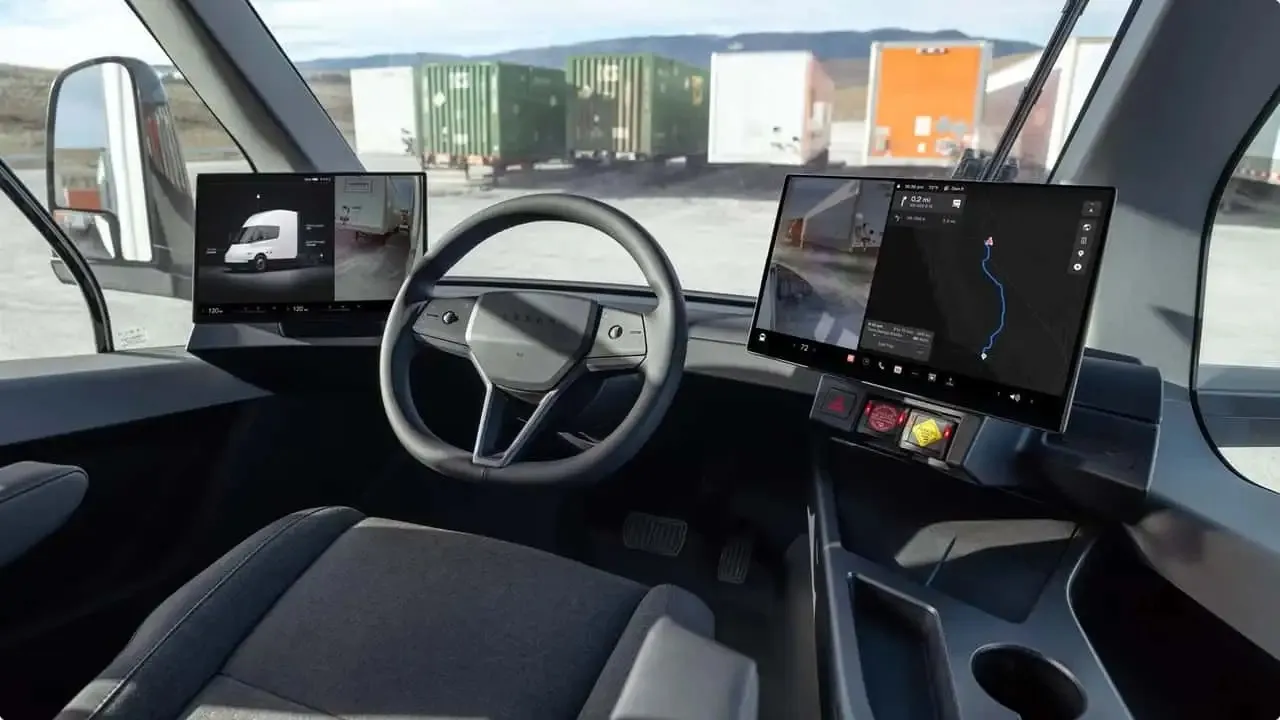
Tesla confirmed that in September 2026 it will reveal the European details for the launch of the Semi truck at the IAA Transportation exhibition in Hanover. This time it’s not just about displaying the vehicle at a booth, but also about specifications for our market, as well as the timing and conditions for going on sale.
Table of Contents
Show
Hide
For the market, this is concrete information. Electric trucks already exist in Europe, but sales remain cautious, with carriers focusing mainly on range under load, charging time, and the availability of MCS infrastructure.
Tesla Semi in Europe. What We Know Ahead of IAA 2026
The announcement was officially made on the Tesla Semi account on X. The company says it will unveil the European technical specifications and details for launching the model in our market during IAA Transportation, which will take place from September 15-20 in Hanover.
This represents a significant change compared to Semi’s previous appearances in Europe. Previously, Tesla presented this project at trade shows somewhat as a promise. Now that details and specifications for Europe are being discussed, we’re at a stage closer to sales than to demonstrations.
The signs were actually visible earlier. Tesla began looking for people to develop Semi sales in Europe, including in France, where a job posting appeared for a Business Development Manager responsible for commercial activities around this model. This doesn’t guarantee quick deliveries, but it usually means the manufacturer is already putting together local resources.
Two battery versions, up to 822 kWh and 1.2 MW charging
The most likely scenario is that an updated version of Semi, previously shown for the North American market, will arrive in Europe. There are two battery options available.
The Standard Range version is said to offer a range of 325 miles, or about 523 kilometers. The Long Range version features a larger battery pack with a capacity of 822 kWh and a claimed range of 500 miles, or roughly 805 kilometers, under full load with the vehicle weighing 82,000 pounds, which is equivalent to about 37.2 tons in U.S. terms.
Tesla also mentions a three-motor drive system at the rear axle with a power output of up to 1,072 horsepower. On paper, this seems extremely powerful. The question is how these figures will translate into European homologations, total weights, axle configurations, and real-world performance on highways with speed limits of 80-90 km/h.
For standard charging, the Semi is supposed to use a 120 kW charger, which allows it to charge 60 percent of its battery in 4 hours. This scenario is more suitable for overnight stops. Much more interesting is fast charging via Megachargers or MCS-compliant megawatt-level stations. Tesla claims a power output of up to 1.2 MW, enabling 60 percent range recovery in just 30 minutes.
It sounds good, but with a caveat. In heavy transportation, peak power alone isn’t enough. What matters are the charging curve, battery temperature, grid load, and whether such stations are located where fleets actually operate.
Europe already has MCS. Tesla isn’t entering a blank market.
The most interesting part is that Tesla isn’t starting from scratch. The Semi uses a 7-pin MCS port, namely the Megawatt Charging System. This is a standard being developed specifically for electric trucks and buses.
In Europe, the MCS network is still growing, but it’s no longer just a concept. Companies like Milence and Iberdrola are investing in it, and locations capable of delivering power above 1 MW are emerging on the market. From a transporter’s perspective, this is good news because it means the possibility of compatibility not only with Tesla’s infrastructure but also with public hubs for heavy transport.
And here we come to one of the key points of the September presentation. Tesla is set to reveal not only the vehicle’s specifications but also its plan for deploying Megachargers in Europe, local prices, and delivery schedules. Without this, the entire showcase will remain just a visually impressive demonstration.
This is particularly important for Europe, as local logistics operators do not buy trucks based on trust alone. They want to know where to load the vehicle, how long it will take, and whether maintenance can keep up with a vehicle that travels several hundred kilometers daily.
Tesla is entering late. The competition is already here.
The Tesla Semi was announced almost a decade ago, so it’s hard to talk about catching up. During that time, European manufacturers have managed to introduce their own battery trucks and begin initial regular deployments in fleets.
A good benchmark is the MAN eTGX, which, according to available announcements, offers a range of about 354 miles, or roughly 570 kilometers. If Tesla brings to Europe only a shorter version of the Semi, it won’t be the leader in range. If it shows off the Long Range version, things will become much more interesting.
But range alone doesn’t determine everything. Europe has different operating conditions than the US. Shorter distances between hubs, stricter regulations, different stresses on axles, tolls, and a more complex network of international freight routes. The Semi needs to prove itself here not with a 1.2 MW meme, but through TCO and availability.
Tesla clearly believes the time is right for this. This is also indicated by the growing production at the Semi plant next to the Nevada Gigafactory, where the company plans to increase output to serve not only North America but also other markets.
The order from Einride shows the scale of ambition
A few days before the European announcement, news emerged of a large order from the Swedish company Einride. It involves 500 Tesla Semi trucks. This is currently the largest known contract for the updated version of the model.
These vehicles are intended for operations in North America, with the first deliveries to customers scheduled for September 2026. The entire rollout is planned over 2 years.
This contract indicates two things. First, there is demand for the Semi, at least among large fleets testing transportation transformation. Second, Tesla will need to prove it can deliver this heavy vehicle on a mass scale, rather than just in limited demonstration batches.
And that’s why the IAA in September will be crucial. If Tesla announces prices, real timelines, European configurations, and infrastructure plans, the Semi will finally become a viable product in Europe. If it ends up just being “soon,” the market will shrug and stick with MAN, Volvo, Mercedes, or Renault Trucks.
In Poland, the topic is currently more about observation than actual purchase, as without a local MCS network and large fleet deployments, the Semi would be considered exotic. But for companies operating in Germany, the Benelux, or Scandinavia, it could already be a viable option. Especially if Tesla doesn’t set the price too high. What do you think? Does the Semi have a chance to become more than just a flashy showcase in Europe?
Order your Tesla and take advantage of purchase bonuses using the referral link!