
Tesla runs out of cars: Model Y deliveries pushed to first quarter of 2027
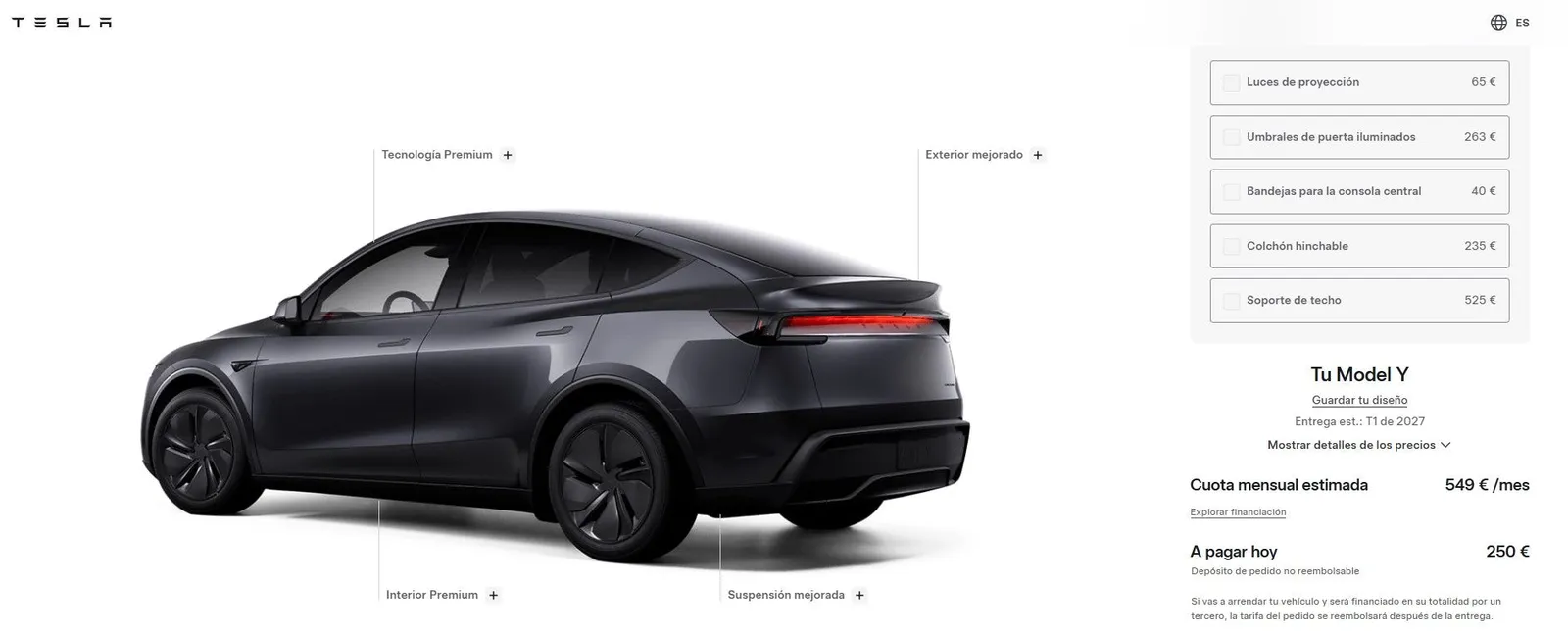
Tesla is facing a situation that many in Europe envy. After several months during which availability and booking delays were among the brand’s main weaknesses, the Model Y has once again seen a surge in orders to such an extent that some versions now require customers to wait until next year for delivery.
This development is particularly notable as it occurs at a time when the European market is undergoing profound changes. While some manufacturers are adjusting production, closing facilities, or reducing staff to cope with lower factory utilization, Tesla is doing the exact opposite at its sole European plant.
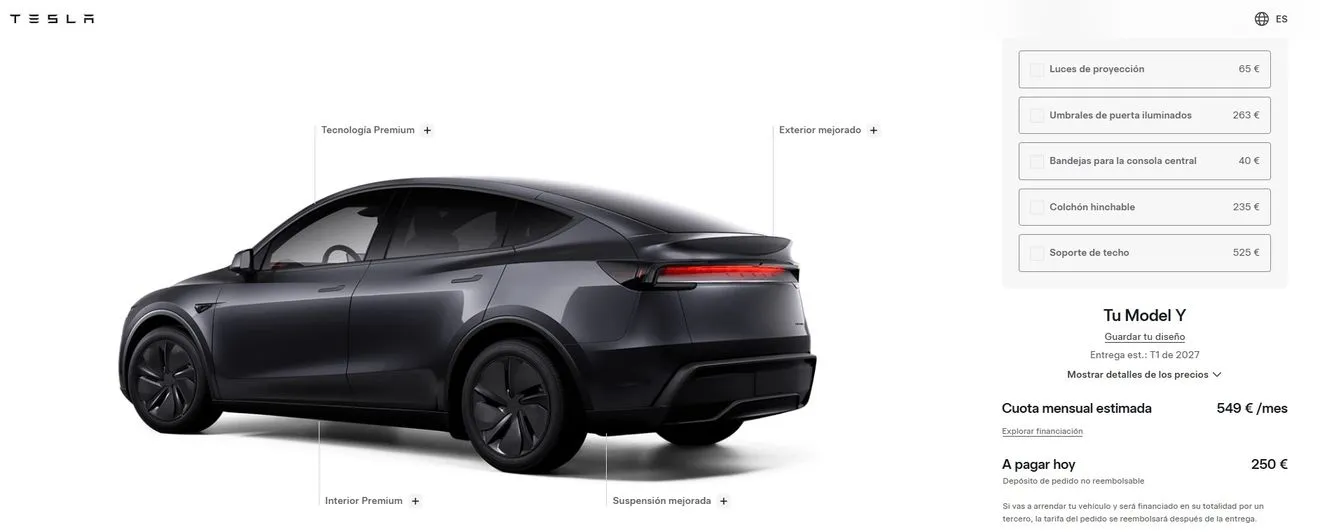
Tesla’s configurator currently shows a delivery date of January-February 2027 for the most affordable Model Y, while the Long Range versions are pushed back to a somewhat more uncertain date, the first quarter of 2027.
There’s also no shortcut available for in-stock units, as there are none in stock at all. Tesla has zero Model Y units available for immediate delivery right now, and the fastest option is to go with the Model 3, which has...two units available. For further information, the two-motor Long Range version is more expensive than if ordered new. It’s insane.
It’s not just a matter of production. Tesla is accelerating manufacturing precisely because it needs more units to meet European orders. And here lies one of the most interesting facts about this situation: Giga Berlin is set to produce 7,500 Model Y vehicles per week, up from the approximately 5,000 units per week it was previously producing.
The increase was initially planned in several stages. The factory raised its target from 5,000 units per week to 6,200 during the summer, with Tesla now aiming to reach 7,500 units per week by October. To achieve this, the company has even resorted to additional shifts and hiring more workers.
On an annual basis, maintaining a weekly output of 7,500 units would imply a theoretical rate of around 390,000 Model Y vehicles per year, although actual production will obviously depend on downtime, maintenance, holidays, and changes in manufacturing pace. Either way, this figure shows just how much Tesla wants to utilize the capacity of its Grünheide plant.
A behind-the-scenes tour of the Berlin Gigafactory helps explain where some of this capacity might come from. According to the report prepared during the visit, the factory was built in just 843 days, from the project announcement in November 2019 to the start of production on March 4, 2022. Inside, large machines and robots with unusual names such as King Kong and Godzilla coexist alongside numerous graffiti artworks scattered throughout the production and rest areas.
The painting process has also become more efficient. The drying step now requires only two ovens instead of three, reducing both the space needed and the time associated with one of the manufacturing stages. These improvements may seem small individually, but they become highly significant when applied thousands of times per week.
The factory’s design itself helps to speed up internal movements. The lower level is mainly occupied by workers and large equipment, while much of the transportation of components takes place above their heads through automated systems. The result is a fairly open plant, where the movement of parts does not constantly depend on forklift traffic in the work areas.
The report also highlights a particularly striking figure: producing a complete Model Y takes about 10 hours. According to the explanation provided during the visit, the Volkswagen ID.3 requires around 30 hours. This comparison should be viewed with caution, as industrial processes and the exact definition of manufacturing time can vary among manufacturers, but it helps illustrate the level of automation and organization at Grünheide.

There are even more curious details. In certain areas of the factory, electronic music is played to create a more pleasant working environment for employees. Numerous signs related to programs involving participation in the local community can also be found throughout the facility, through which Tesla encourages and rewards its workers’ volunteerism.
Another detail of the process becomes apparent at the end of the line. Once quality checks are passed, the Model Y vehicles can move autonomously to the parking and distribution areas. If any issues are detected during the process, the unit is diverted for inspection before proceeding further.
All of this takes on a different dimension when compared to what is happening just a few hundred kilometers away. Volkswagen is moving in a completely different direction, with a significant reduction in capacity and workforce to try to regain competitiveness.
The German manufacturer initially agreed to cut more than 35,000 jobs at its German plants by 2030 and reduce its production capacity by 734,000 units. But the process hasn’t stopped there. The new restructuring plan presented in September calls for another 50,000 jobs to be cut across the group, bringing the total number of positions affected by the adjustment process to around 100,000.
In addition, Volkswagen no longer guarantees future production assignments at its plants in Emden, Zwickau, Hannover, and Neckarsulm from 2031 to 2034. The company acknowledges an excess capacity of over 500,000 units in its European factories as it seeks to cut costs and simplify a lineup it deems too complex.
The contrast is hard to ignore. Tesla is increasing shifts, hiring workers, and boosting production rates in Berlin because it needs more Model Y vehicles, while Volkswagen is reducing industrial capacity and negotiating significant staff cuts. This doesn’t mean the two manufacturers are in identical situations, nor does Tesla’s growing order volume alone guarantee a lasting trend, but it does reflect two radically different industrial strategies for navigating the same European market.
The conclusion is clear. Tesla has been committed to electric cars from the very beginning and has achieved a position that is hard to surpass. Even with Elon Musk’s attempts to sabotage his own company, it has held its ground and is now growing thanks to the demand for electric cars in Europe, where there is little competition from German manufacturers offering products at exorbitant prices with subpar performance, and from Chinese companies that are still establishing themselves and lack sufficient presence on the continent.
