
Tesla is developing Cybercab and seeking interested parties for its fleet. The specifications show cost cuts at every step.
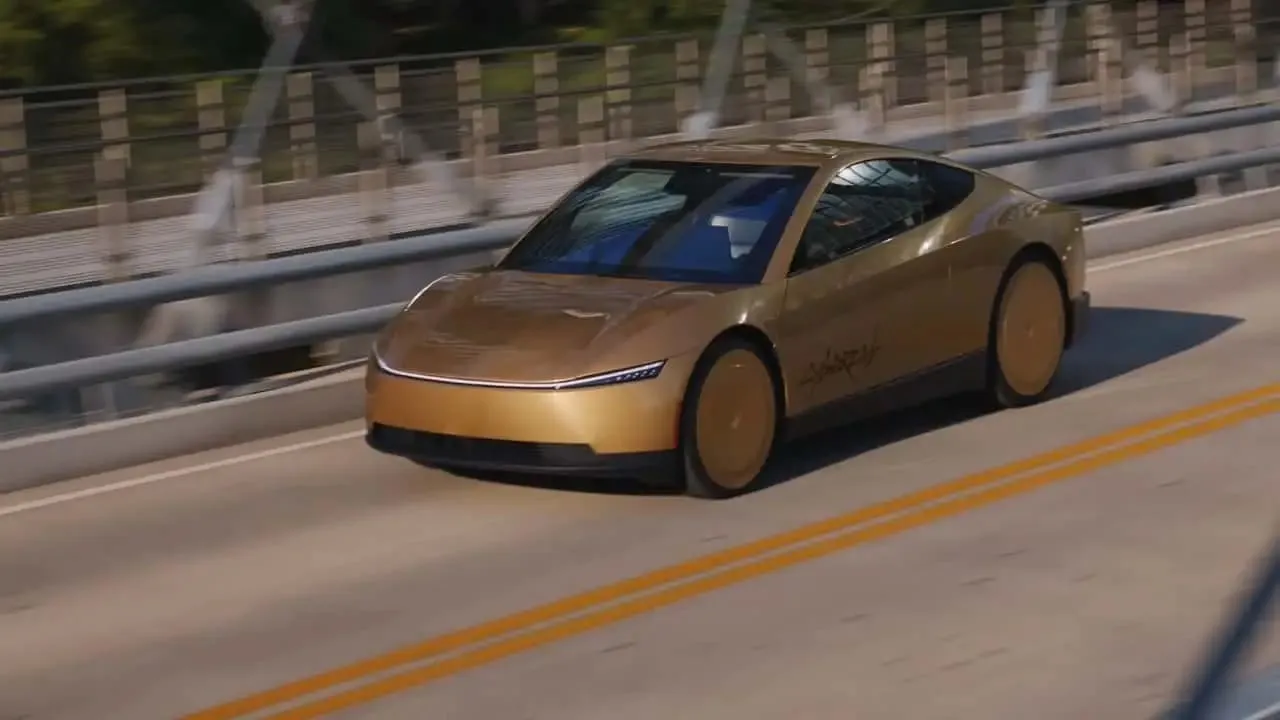
Tesla has launched commercial Cybercab services in Austin and is simultaneously preparing two additional moves: using robotaxis as alternative transportation for service purposes and selling them to fleet operators within its own network. Along the way, we also learned many technical details about the vehicle itself, from its 47.6 kWh battery to a drive system free of rare earth metals.
Table of Contents
Show
Hide
On paper, this appears to be a complete ecosystem. In practice, the most interesting question isn’t about the specifications themselves but rather who will take on the risk of running the entire business.
Cybercab is meant to transport passengers and Tesla service customers
In Tesla’s app code version 4.60.5, references to new alternative transportation options for service visits have appeared. These include Robotaxi, Paid Loaner, E-Bike, and the mysterious Bolt. The latter likely refers to the Bolt transportation platform rather than the Chevrolet Bolt.
The idea is simple. Instead of maintaining a fleet of replacement cars at the service center or paying extra for Uber rides, Tesla can send the customer its own autonomous vehicle. This saves money for the company. For users, it may also be more convenient, as long as the service actually works well and is available in their city.
Austin seems to be the first natural location for implementation. It is there that Tesla tests the most elements of its robotaxi network, and it is also where Cybercab has already joined the commercial fleet. According to these reports, the Robotaxi service is currently operating in seven major U.S. metropolitan areas: Austin, Dallas, Houston, Miami, Orlando, Tampa, and the Bay Area.
This is a logical move from a cost perspective. What is less logical is how widely Tesla intends to open this system up to external partners.
Cybercab’s specifications reveal where Tesla is looking for savings
Cybercab is not simply a small, driverless Tesla. It is a vehicle designed from the start for affordable passenger transportation, high levels of production automation, and as low operating costs as possible.
The most interesting technical aspects are as follows:
Parameter
Tesla Cybercab
Powertrain
1 engine, front-mounted
Power
163 kW
Power in HP
219 HP
Useful Battery Capacity
47.6 kWh
EPA Estimated Range
about 293 miles, or about 471 km
Efficiency
6.16 miles/kWh
Height
55.4 inches
Width
69.0 inches
Ground Clearance
5.7 inches
The heart of the thermal system is the new Supermanifold V3. Tesla claims it has simplified the cooling circuit, removed some valves and coolant pipes, and that the entire system is 38% more efficient than other automotive thermal systems. The production of this module is also said to be 80% automated. It sounds good, but these are obviously the manufacturer’s figures. Only actual use and maintenance can verify the real advantages.
The powertrain features a single motor with permanent magnets delivering 163 kW of power, without using rare earth metals. Elon Musk himself emphasized that achieving this was difficult. It’s an interesting approach, as it reduces reliance on critical raw materials and may simplify the supply chain. If Tesla can prove its durability, others will follow a similar path.
The battery is a structural pack using 4680 cells and a dry cathode. Its usable capacity is 47.6 kWh. Tesla claims the pack is designed for 500,000 miles, or about 805,000 kilometers, of continuous fast DC charging and operation in extreme temperatures. This is a very ambitious claim. Without data from fleets after several years, it should be viewed as an engineers’ promise rather than a final verdict.
According to preliminary cycle tests, the vehicle achieved an unadjusted range of 418.2 miles, which converts to around 293 miles using the typical EPA methodology. That’s approximately 471 kilometers. Given such a small battery, this is an extremely strong result. The low weight, modest power output, and body design focused on aerodynamics rather than Instagram aesthetics help as well.
Brake-by-wire, steer-by-wire, and nine cameras instead of a traditional car
It gets even more interesting underneath. The Cybercab eliminates some features that we would consider obvious in a regular car.
The brakes operate via a brake-by-wire system. Each wheel has its own electromechanical actuator, without any central hydraulic system or traditional brake fluid. Steering is also done through steer-by-wire, with the entire system running on an upgraded 48 V architecture.
This means fewer components, fewer wires, and simpler installation. But it also implies greater reliance on electronics, software, and safety procedures. In private cars, such solutions still face resistance from some drivers. In a driverless vehicle, there is no turning back.
The sensor suite includes 9 cameras. Eight look outward, while one faces the cabin. Tesla did not follow Waymo’s approach of using a lidar and more sensors. Instead, it relies on its own machine vision model and a more powerful autonomy computer, an improvement over the current Hardware 4. Exact specifications have not been disclosed.
In the cabin, the camera is also supposed to check for cleanliness after a ride and detect items left behind. Additionally, radar has been installed above the passengers’ heads to function as a seat occupancy classifier. The system is designed to identify whether a seat is empty, occupied by a child in a car seat, or by an adult, and activate airbags accordingly.
For a small car, the interior space is said to be surprisingly large. Tesla claims 43.4 inches of legroom, 38.3 inches of headroom, and 50.1 inches of width at the hip level. The absence of pedals and a steering column helps as well. The seats slide together like a bench, while the backrests can be adjusted independently.
Tesla wants to sell profit promises again
Alongside launching Cybercab, Tesla is also exploring interest from fleet operators who would use these vehicles in Robotaxi services. The model is familiar: you buy the cars, integrate them into Tesla’s platform, and share the profits.
This sounds familiar because a very similar narrative emerged in 2019 with Tesla Network announcements. At that time, Elon Musk talked about cars that could generate up to $30,000 per year for owners and increase in value as FSD improved. In reality, customers ended up paying $15,000 for FSD without getting actual earnings from autonomous rides.
Here lies a fundamental problem. If the economics of robotaxis are truly as good as Tesla claims, then why give away profits to external operators? The manufacturer has factories, software, an app, a dispatch center, and controls the network rules. It could buy cars directly from itself and keep all the revenue.
Selling a fleet to other entities usually means something simpler. Someone else takes on the investment costs, the risk of vehicle depreciation, and the uncertainty regarding vehicle utilization. Tesla keeps the profit from the cars, software, and part of the revenue from rides. A nice arrangement. For Tesla.
A good example of a failed winter venture is the Dutch company MisterGreen. This leasing firm heavily invested in Teslas and, according to available information, purchased over 4,000 vehicles, hoping in part to preserve their value and generate future revenue from robotaxis. Later, Tesla drastically reduced the prices of new cars, used vehicles lost value faster than the market average, and there was no income from autonomous driving services. MisterGreen went bankrupt in December 2025, with bondholders suffering losses estimated at $40 million.
This doesn’t mean Tesla’s fleet model has to end the same way. It simply means that the story of “making money while you sleep” already has a conclusion, and it’s not particularly positive one.
What this implies
The Cybercab is technically interesting in its own right. With a range of 47.6 kWh, a drive system free from rare earth metals, brake-by-wire and steer-by-wire technology, and significant cost cuts, it shows that Tesla has finally built a vehicle designed strictly for robotaxis, rather than another variant of the Model 3.
However, the real test isn’t just the car itself but the economics of the entire system. One thing is transporting a passenger around Austin. Another is ensuring that someone outside Tesla actually makes a profit from it in the end. Do you think an external fleet of Cybercabs makes sense, or is it just another iteration of the old FSD promise?
Order your Tesla and take advantage of purchase bonuses using the referral link!