
Tesla Q3 results: full order books, but declining figures
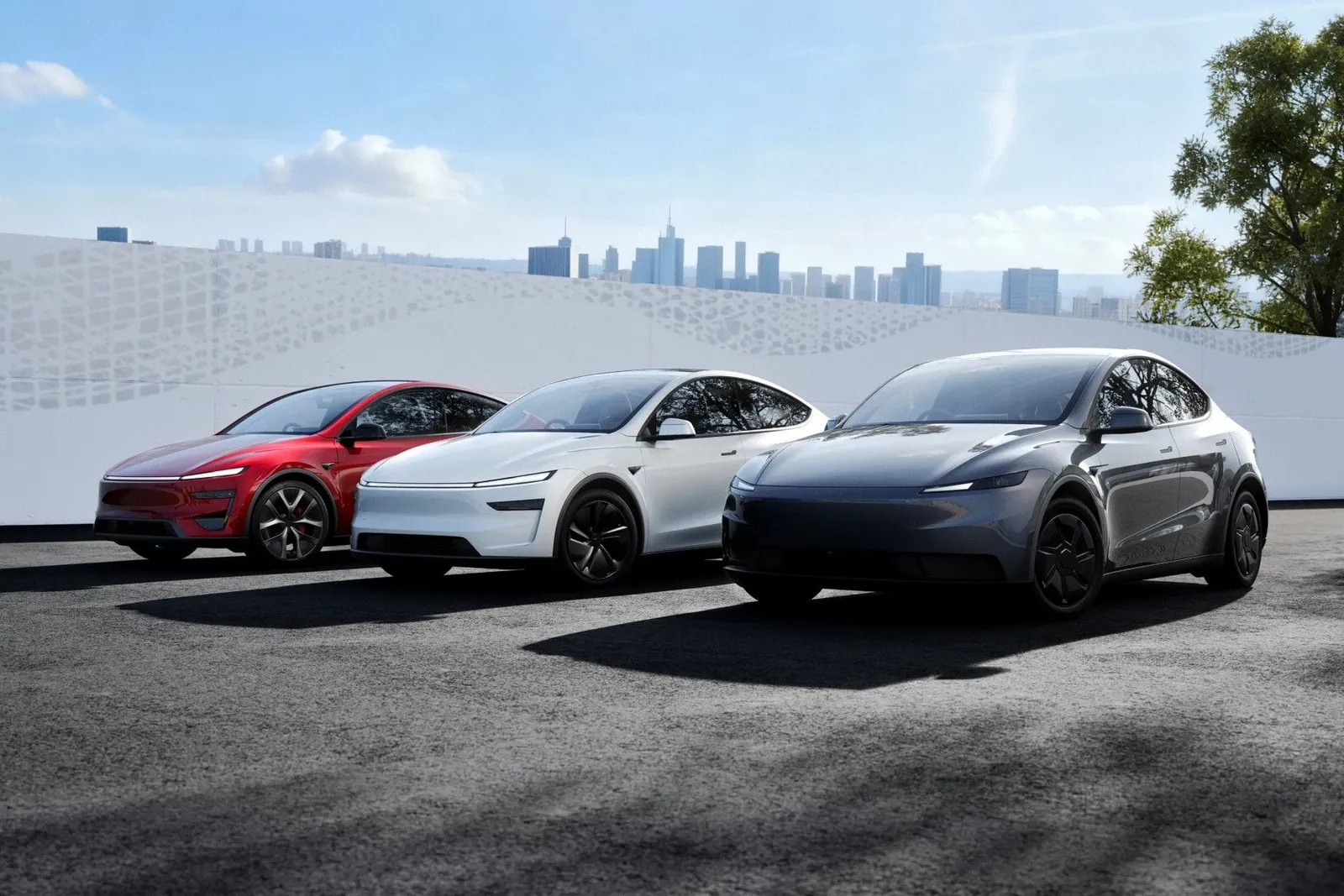
Tesla's revenue is stagnating, with the US electric car manufacturer witnessing a significant drop in profits during the third quarter. However, the Americans' car business is not doing poorly - order books are full. The reasons lie elsewhere.
Image: Tesla
Tesla is currently struggling to grow its automotive business. Revenue from the automotive division fell by three per cent year-over-year between July and September – to $20.56 billion. Only through ancillary business areas has Tesla managed to match last year’s total revenue ($28 billion). The result: zero per cent growth, but no decline either.
Tesla also roughly achieved the $28 billion revenue mark in the second quarter of this year. However, it is notable that in Q3 2025 and Q2 2026, Tesla reported billion-dollar profits at similar revenue levels. This is no longer the case: GAAP net income plummeted to $787 million in the last quarter – a massive decline of 43 per cent compared to the same quarter last year.
A quarter marked by pull-forward purchases
Importantly, Q3 2025 should be treated with caution as a basis for comparison, as it was influenced by a surge in pull-forward purchases ahead of the expiration of US incentives, which artificially inflated vehicle sales. Additionally, revenue from CO2 certificates (“regulatory credits”) – long a lucrative income source for Tesla at the expense of other automakers – has declined. These fell from $417 million in Q3 2025 to just $113 million now, which already explains a significant portion of the profit drop.
Another indication of where things are going wrong is the margin: with an operating margin of 2.6 per cent, Tesla has slipped significantly. Only in Q2 2026 did it dip further to 1.4 per cent. This means the entire company is operating less efficiently. Tesla itself cites the lower average selling price of its vehicles as one of many contributing factors. What is clear is that Tesla is currently far removed from the quarterly profits exceeding $2 or $3 billion – as seen during the peak periods of 2021 and 2022 – or double-digit margins.
Gigafactory Berlin achieves record production
Tesla itself barely addresses these issues in its explanations, instead highlighting the positives: “We achieved record deliveries in several markets – including Canada, Australia, Japan, and Taiwan – compared to the previous quarter. Given the strong demand we observe in various markets, we are focusing on increasing production at our plants and have achieved record production at Gigafactory Berlin.” And: “We have begun series production of the Tesla Semi, our Class 8 heavy-duty truck.”
As for production and deliveries, Tesla has regained its footing: after a mixed year in 2025, the first three quarters of 2026 have shown renewed consistency – evidenced by 464,000 vehicles produced and just over 486,000 delivered in the third quarter. The fact that deliveries exceeded production by more than 22,000 vehicles suggests that inventory levels were reduced.
High activity on the production lines
Additionally, Tesla produced as many EVs between early July and the end of September as it _didn’t_ over the last two years: the 464,000 vehicles now manufactured were last matched with nearly 470,000 units in Q3 2024. Compared to the same quarter last year, the 464,000 cars represent a 3.7 per cent increase, while compared to Q2 2026, the growth is +2.7 per cent.
A closer look at deliveries also reveals an upward trend over the year: 486,000 vehicles represent only a 1.2 per cent increase compared to Q2 2026, but that quarter itself was up by around 25 per cent from the seasonally weaker first quarter. Last year, Tesla nearly reached the 500,000-vehicle mark in Q3 due to the aforementioned pull-forward purchases. However, the US electric vehicle manufacturer has not matched that result this time.
In its current financial report, Tesla addresses its core business with particular brevity. The EV manufacturer only mentions in passing it “ended the quarter with the largest backlog for passenger cars in four years,” without elaborating further. Tesla has also long since stopped providing targets for production or sales.
In any case, the report increasingly focuses on investment-intensive, future business areas. The company emphasises that it “maintained strong momentum on many projects spanning Super Intelligence (SI), robotics and renewable energy that will be critical to building a future of Amazing Abundance.” Notably, Tesla now refers to Super Intelligence (SI) rather than AI (“Artificial Intelligence”).
Reduced capital expenditure for the Current Year
Elsewhere in the report, Tesla announces progress on its FSD (Supervised) advanced driver assistance system and the expansion of its Robotaxi fleet in the US. There is also a brief mention of the recent debut of the flying Roadster prototype. During the earnings call, Tesla CEO Elon Musk also stated that the company could begin delivering its humanoid ‘Optimus’ robot to external companies by the end of 2027.
A key point is the investment plan. Here, Tesla is hitting the brakes: capital expenditures (Capex, in accounting terms) are now expected to amount to around $20 billion for the year.