
Tesla is preparing one of the most anticipated features for FSD: it will finally learn to avoid potholes.
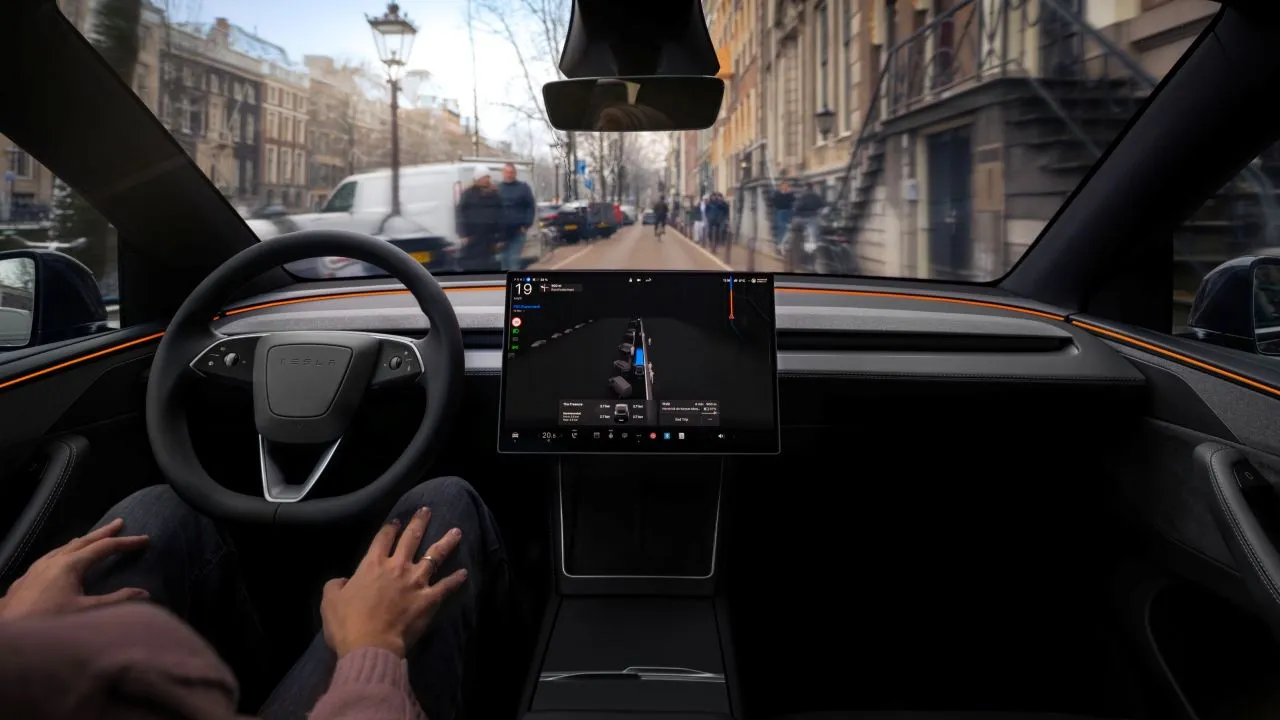
Tesla’s autonomous driving system continues to evolve with new features aimed at making the car’s behavior increasingly natural. After several updates focused on improving environmental perception, maneuvering, and navigation, the company now seems to be working on two more everyday aspects.
These are situations that may seem minor compared to FSD’s advanced capabilities, but they have a direct impact on the driving experience. Choosing a less intuitive route or encountering a pothole that the car fails to avoid are situations that may force the driver to intervene, exactly what Tesla wants to reduce.
Confirmation came from Phil Duan, Tesla’s lead engineer for the artificial intelligence team, after a user posted on X about some of the issues still present in FSD 14.3.10. These included performance on poor road conditions and navigation that sometimes insists on taking routes different from those the driver usually uses. Duan replied that improvements will be made in both areas.
Tesla wants FSD to learn from how each user drives
The approach Tesla is developing goes a step further. Instead of simply offering an alternative route, the system will be able to learn from the decisions the driver typically makes. If a person repeatedly rejects a detour to stay on a certain road, FSD could interpret this as a preference and take it into account for future trips.
This would help reduce one of the behaviors that confuses some users the most: the car deviating from a familiar route to take small side streets or secondary roads that, while logical for navigation calculations, are not those the driver usually uses.
The first features in this direction have already arrived in cars via the 2026.26 updates, featuring navigation that prioritizes previously used routes and an automatic navigation function capable of adapting to the user’s specific habits.
Learning could also extend to maneuvers upon arrival at the destination. Tesla is working on having the system take into account how each driver typically parks, from the chosen spot to the way they enter a garage or approach certain obstacles. In this way, FSD wouldn’t need to behave exactly the same for all users, but rather try to replicate specific learned preferences.
The other major challenge is potholes. It may seem like a simple function, but correctly detecting an irregularity in the road surface and deciding when it’s appropriate to avoid it requires the system to distinguish between a minor imperfection in the road and an obstacle that could cause damage or an unnecessary maneuver.
Tesla has been promising this capability for years, and the notes for various versions of FSD 14.3 explicitly list it among the planned improvements. The company has not yet confirmed in which update it will be widely available.
Some users have already observed occasional instances where the car seems to slightly adjust its trajectory to avoid damaged sections of the road surface. However, these cases do not yet prove that the system is specifically identifying potholes, as a change in trajectory can also occur for other reasons related to road perception.
The difference will appear when this reaction stops being occasional and becomes a consistent behavior. The goal would be for FSD to detect the pothole early enough, determine whether it’s worth changing the trajectory, and make a smooth maneuver without the driver needing to turn off the system to protect the wheels or improve comfort.
More features around FSD
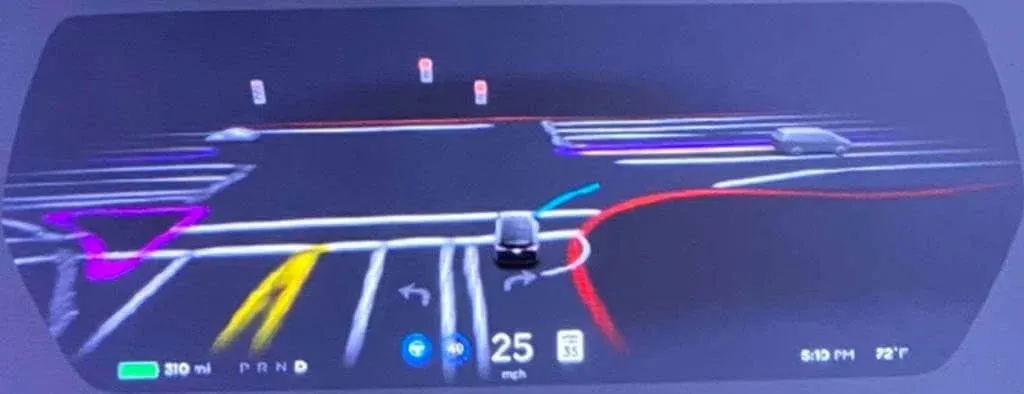
These improvements are part of a broader evolution of FSD. Tesla is aiming to make the system not only follow routes and perform maneuvers but also better interpret context and adapt to each driver’s preferences.
One component of this strategy is Grok. Recent updates have expanded its capabilities within the car, allowing voice commands to be used to perform specific actions such as making calls, playing music, adjusting the climate control, or checking vehicle functions.
The integration between this assistant and FSD could enable much more natural instruction delivery in the future. Instead of navigating through different menus or physically interacting with the screen, drivers could verbally indicate their desire to change the route, alter the destination, or request a specific maneuver.
Tesla has also begun to introduce automatic intervention features for risky situations. FSD 14.3.9 added Automatic Collision Evasion to compatible vehicles, a feature that can intervene during manual driving when it detects an imminent collision.
It seems Tesla’s strategy is to improve both the system’s major capabilities and those small details that arise during normal driving. Choosing a familiar route better, avoiding potholes, or remembering how each user prefers to park may seem like minor advancements, but they are precisely the ones that can make a difference in daily use.
So far, Tesla has not confirmed whether the navigation improvements and pothole detection will come through an update to the current generation of FSD or if they will be part of a future version. What is confirmed, however, is that pothole avoidance remains among the functions under development, while preference-based navigation has already begun to be deployed in certain software versions.
