
Tesla released FSD data for Europe. Poland is once again excluded from the testing map.
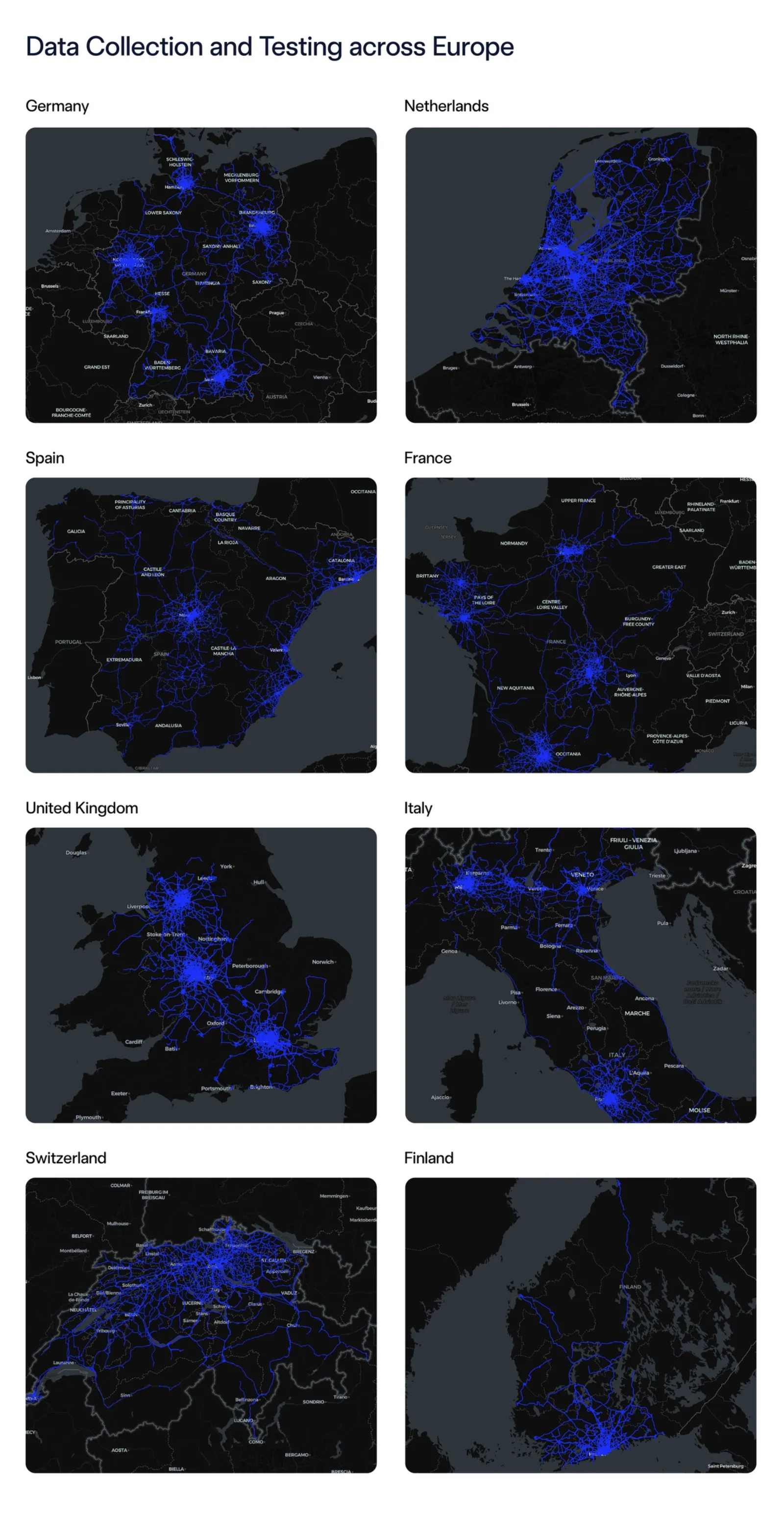
Tesla released the European safety dashboard for FSD Supervised ahead of a potential vote on broader approval in the EU, scheduled for October 6, 2026. The company claims the system is already in use in five EU countries, has over 70,000 users, covers more than 1 million kilometers per day, and has been involved in accidents 4.1 times less frequently over the past five months compared to driving a Tesla manually.
Table of Contents
Show
Hide
That sounds impressive. But alongside the statistics, there’s another image that’s much less pleasing for us: Poland does not appear on the map of European testing locations.
Update on FSD Supervised in Europe
FSD is currently approved in five EU countries (NL, DK, BE, EE, LT), used by >70k customers for over 1 million km per day, and is 4.1x less likely to get into a crash compared to manual driving, measured across 100 million km on public EU roads...
— Tesla Europe, Middle East & Africa (@teslaeurope) September 1, 2026
Tesla is preparing the way for EU approval of FSD
This refers to FSD Supervised, which means driver-assisted driving under supervision, not full autonomy without a human behind the wheel. Tesla notes that it has adapted the system to meet current UN-R-171 DCAS regulations, but it requested exceptions for certain behaviors under Article 39 procedures. The dashboard published is intended to address such exceptions.
According to Tesla, the same set of data was sent to all EU countries as early as April 2026, shortly after approval from the Dutch RDW. Therefore, the data is older than the publication itself and does not reflect the most recent months.
The key figure is straightforward: over 102 million km in five EU countries, FSD Supervised was supposed to perform 4.1 times better than manual driving in terms of collision risk. The company also provides a broader set of statistics for 3 billion km traveled in 2025:
on highways, the number of serious accidents was supposed to drop by 45%,
on arterial roads by 69%,
in urban areas by 50%,
on local roads by 40%.
Tesla claims a reduction in AEB activation of up to 84% and emergency braking by as much as 81% compared to manual driving, depending on road type. With lane changes, FSD was said to reduce minor collisions by 99% on highways and 93% off them, based on 377 million fleet maneuvers.
It sounds good on paper, but there’s one obvious caveat: these are figures prepared by Tesla, using Tesla’s methodology and on Tesla’s fleet. Without full insight into the definitions of incidents, route selection, and driver behavior, one should remain cautious.
Poland outside the tests, even though it’s not a small market
The most interesting part for Polish readers is not the chart but rather the map. Tesla showed where it conducted its European engineering tests, and Poland was left out. The countries currently approved include the Netherlands, Denmark, Belgium, Estonia, and Lithuania. Poland is not on that list, even though our Tesla market is larger than some of the Baltic markets.
This looks poor. Especially considering it’s a country where there are already many Teslas on the roads, and the brand has been selling cars here for a long time without any niche status. If anyone thought Poland would be one of the natural candidates for expanded FSD testing in Europe, nothing so far confirms that.
Tesla adds several more arguments in support of its safety claims. The prototype vehicles were supposed to travel 1.6 million kilometers without any serious or minor collisions caused by human error. FSD was also expected to complete 230,000 scenario tests in various countries and conditions with around 98% accuracy, maintaining a similar performance in rain, fog, day, and night. Additionally, there was a 67% reduction in driver fatigue-related incidents on highways, and the system operated at speeds equal to or lower than those of surrounding traffic 98% of the time.
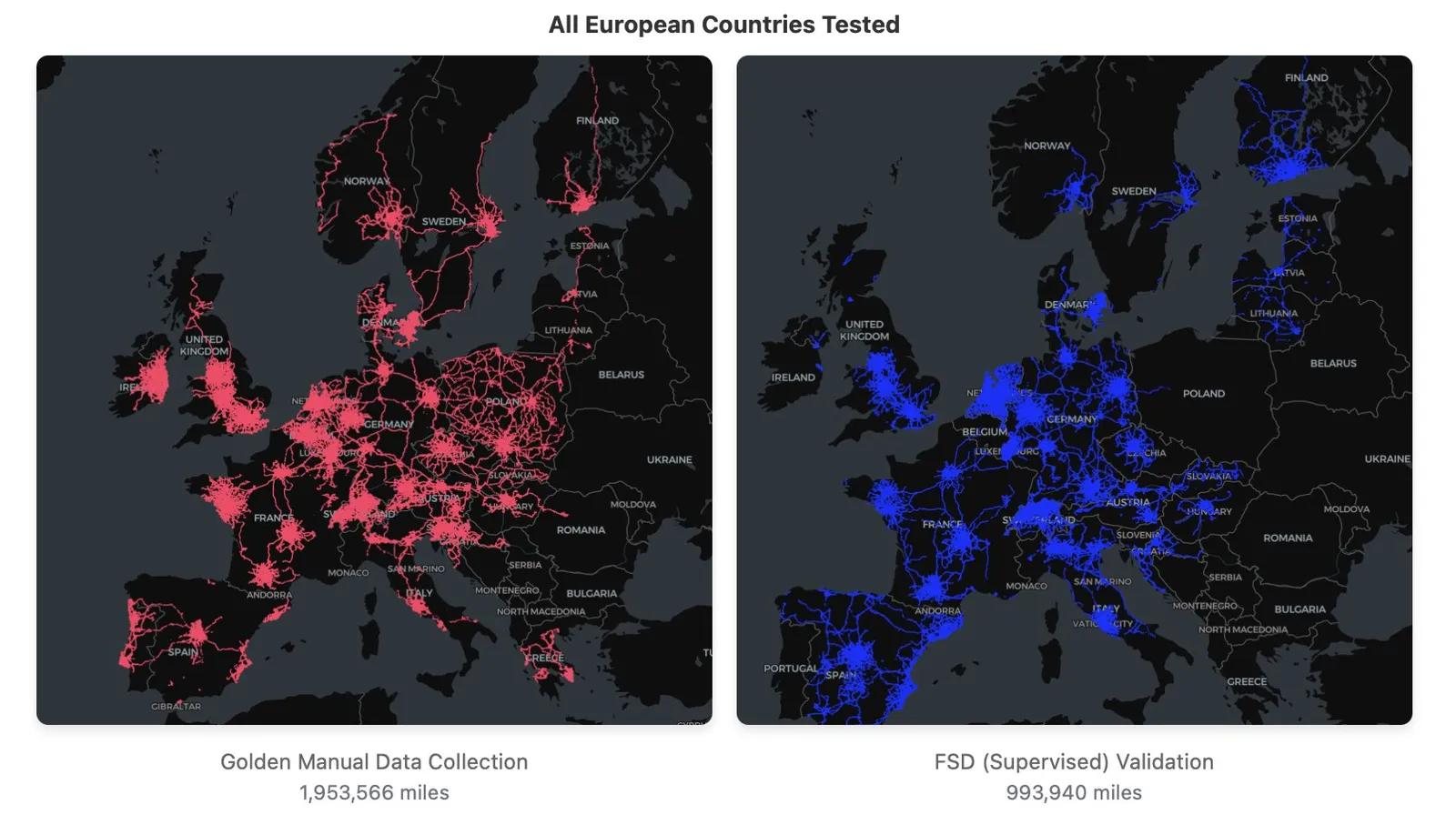
However, this entire presentation serves a clear political and regulatory purpose. It aims to convince officials ahead of the October vote, rather than resolving all disputes regarding FSD in Europe. And that is exactly how it should be interpreted.
If the EU gives broader approval, the issue for Polish drivers may no longer be the homologation itself, but rather whether Tesla will treat our market seriously during implementation and local testing. What do you think? Was Poland overlooked by chance, or is it simply still not Tesla’s top choice for a market?
Order your Tesla and take advantage of purchase bonuses using the referral link!
LovEV Newsletter
Want more content like this?
Sign up — we’ll send you a weekly summary once the newsletter starts.