
The Tesla Model Y Long drove 358 miles in the Edmunds test. The longer version turned out to be more fuel-efficient than the regular Y.
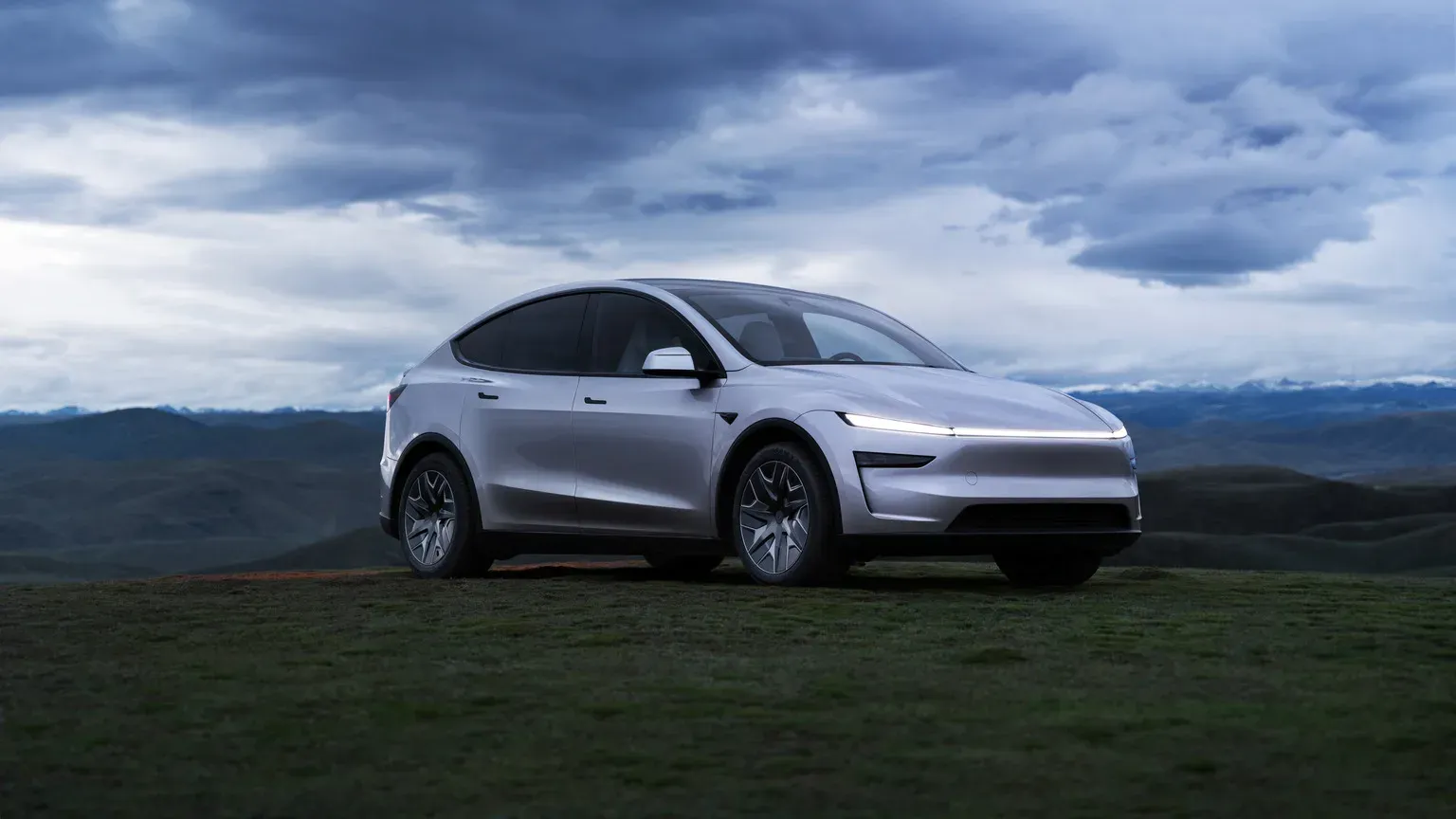
The Tesla Model Y L achieved a score of 358 miles, or about 576 km, in the Edmunds EV Range Test. This is 11.8% higher than Tesla’s benchmark of 320 miles for the version with 20-inch wheels.
Table of Contents
Show
Hide
On paper, this result shouldn’t be possible. The Model Y L is larger, heavier, and more powerful than the regular Long Range AWD model, yet it still went further. For EV drivers, this is another sign that battery capacity alone isn’t enough.
Larger and Heavier, Yet It Still Went Further
Edmunds states that the Model Y L tested weighed 300 pounds, or about 136 kg more, than the Model Y Long Range AWD, now referred to as Premium AWD in the US. Additionally, it uses a more powerful rear motor borrowed from the Performance version.
The basic logic is simple: more mass and more power usually result in worse fuel efficiency. Here, it was the opposite. The Model Y L achieved 25.1 kWh/100 miles, while the regular Model Y Long Range AWD scored 26.8 kWh/100 miles in the same test. When converted, this equals approximately 15.6 kWh/100 km for the Y L and 16.7 kWh/100 km for the Long Range AWD.
For comparison, other versions of the Model Y performed as follows in the Edmunds test:
Version
Powertrain
Edmunds range
Manufacturer’s estimate
Difference
Fuel efficiency
—
—
—:
—:
—:
—:
Tesla Model Y L AWD
AWD, 2 motors
358 miles
320 miles
+11.8%
25.1 kWh/100 miles
Tesla Model Y Long Range AWD
AWD, 2 motors
327 miles
327 miles
0.0%
26.8 kWh/100 miles
Tesla Model Y RWD
RWD, 1 motor
337 miles
321 miles
+5.0%
22.8 kWh/100 miles
Tesla Model Y Performance
AWD, 2 engines
293 miles
306 miles
-4.2%
30.8 kWh/100 miles
In short, this is the farthest-range Model Y Edmunds has measured to date. There’s just one caveat: the service hasn’t yet tested the current single-engine Model Y Premium with smaller wheels, which is claimed to have a range of 357 miles. Theoretically, it could come close to or even exceed the Y L’s range.
Aerodynamics did the work, not just a larger battery
Tesla only slightly increased the battery capacity. The pack in the Model Y L is expected to have around 83 kWh, which is about 4% more than before. This isn’t a huge increase that would by itself explain the additional 31 miles compared to the Long Range AWD version.
The aerodynamics are much more interesting. The drag coefficient here is 0.216, which is lower than that of the regular Model Y. Changes to the body design, an integrated rear spoiler, and 20-inch Uberhelix wheels that better seal the tire helped. According to information provided at the launch, just incorporating the spoiler into the trunk lid was supposed to add 15 miles of range.
The second factor is cabin thermal management. The glass roof is designed to allow 30% less solar energy in, so the air conditioning has less work to do. It might sound like a minor detail, but during long drives in hot weather, such savings actually add up to extra miles. Especially in road tests, rather than on a dyno.
Sam Edmunds tests cars using his own procedure: 60% city driving, 40% highway driving, with an average speed of 40 mph, which is about 64 km/h. The air conditioning is set to 72 degrees F, or around 22.2 degrees C. This isn’t equivalent to Poland’s 140 km/h speed limit on highways, so it doesn’t make sense to blindly apply this figure to the A2 or A4 roads. However, as a comparative test between different versions of the same car, it is quite meaningful.

Against competitors, Tesla wins in efficiency, not just distance
In the class of large electric SUVs with a third row, there are cars that can travel greater distances. Edmunds mentions the Hyundai Ioniq 9, Rivian R1S, and Lucida Gravity among these. The issue is that some of them achieve such results thanks to much larger batteries.
This is where the Model Y L has its strongest advantage. It may not outperform others in absolute range, but it delivers excellent results with a relatively small battery. This usually means lower energy consumption and shorter charging times from 10% to 80%, assuming the charging power remains consistent.
In Poland, we are still waiting for the official launch of the Model Y L, so there is currently no price in zlotys or a release date for it to appear in the configurator. If Tesla brings this variant to Europe with minimal changes to homologation and equipment, it could be the most appealing option for those who want an occasional third row without having to upgrade to the EV9 or EX90 class.
Tesla has shown that lengthening a vehicle doesn’t necessarily mean reducing its range. If the Model Y L were available in Poland, would you prefer it over the regular Long Range version, or is a third row in such a vehicle still only considered a backup option for you?
Order your Tesla and enjoy purchase bonuses using the referral link!
LovEV Newsletter
Want more content like this?
Sign up — we’ll send you a weekly roundup once the newsletter starts.