
Tesla Model Y is the second most popular car in Europe [1st half of 2026]. Globally, among NEVs, old companies are being overwhelmed.
![Tesla Model Y is the second most popular car in Europe [1st half of 2026]. Globally, among NEVs, old companies are being overwhelmed.](https://api.ev-route.com/storage/news/2026-07/tesla-model-y-drugim-najch-tniej-kupowanym-samocho-1.webp)
According to Electric Niska’s analysis based on Dataforce data, in the first half of 2026, the Tesla Model Y was the second most popular car sold in Europe overall, right after the Dacia Sandero. Tesla was the only pure electric vehicle in the TOP10, but several more BEVs made it into the TOP50. Worldwide, there is a clear dominance by older automakers when comparing overall car sales to the most future-oriented category, electric vehicles including plug-in hybrids (=BEV+PHEV).
Most Popular Cars in Europe in the First Half of 2026
Table of Contents
Most Popular Cars in Europe in the First Half of 2026
Automotive Companies Worldwide: Now and Tomorrow
In our TOP10 ranking, the most interesting entry is Tesla Model Y in second place, closely followed by Dacia Sandero with around 110,000 units sold. Skoda Elroq ranks 28th with just under 60,000 units sold; it made its debut last year and offers an excellent balance of features, size, and price [Is Elon Musk listening? – editor]. Tesla Model 3 is in 31st place, while Renault 5 E-Tech occupies 45th position. It’s a beautiful car that evokes nostalgic feelings, but it’s quite expensive outside France, especially in higher trim levels (source).
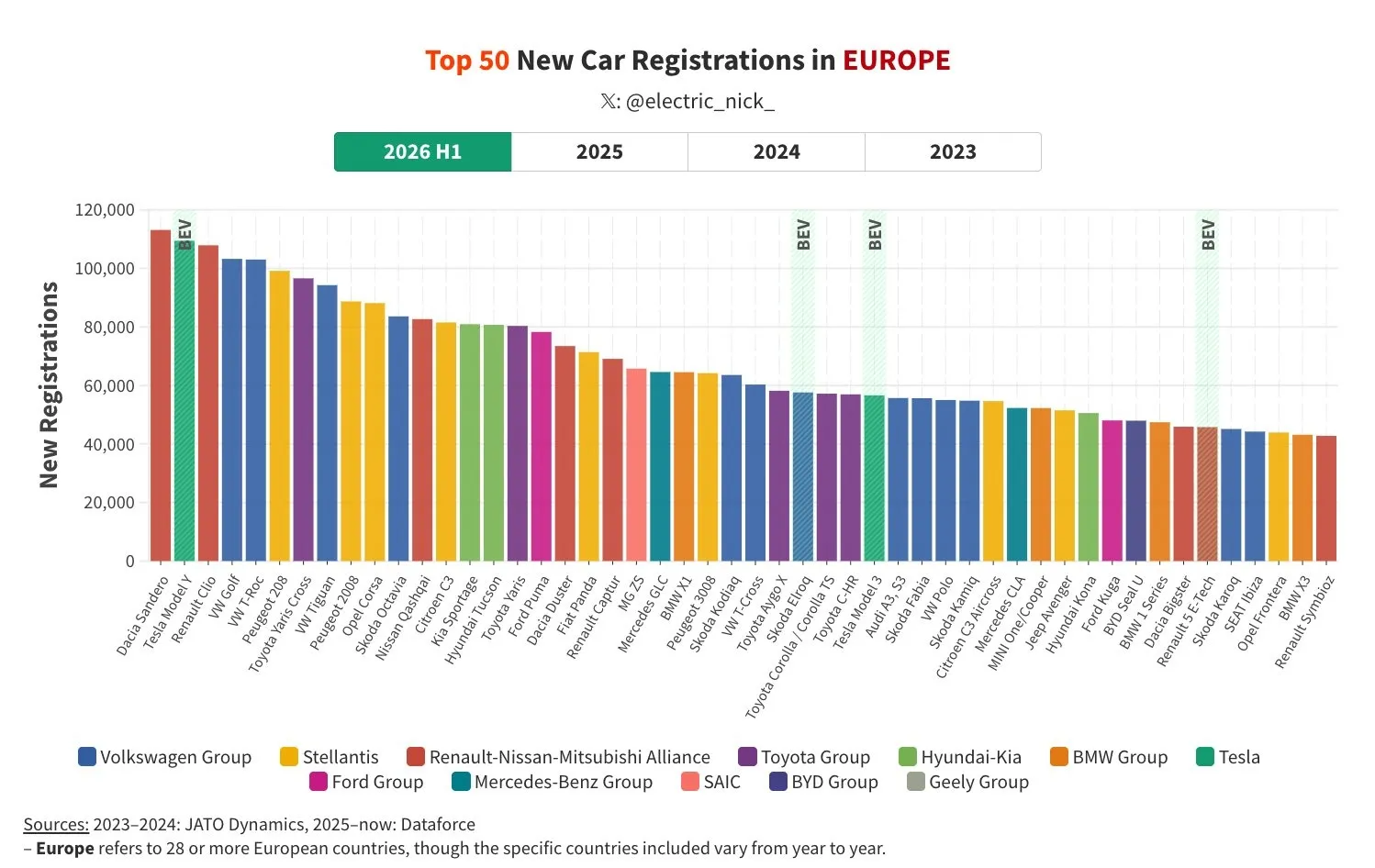
Most Popular Cars in Europe (c) Electric Nick / X, data: Dataforce
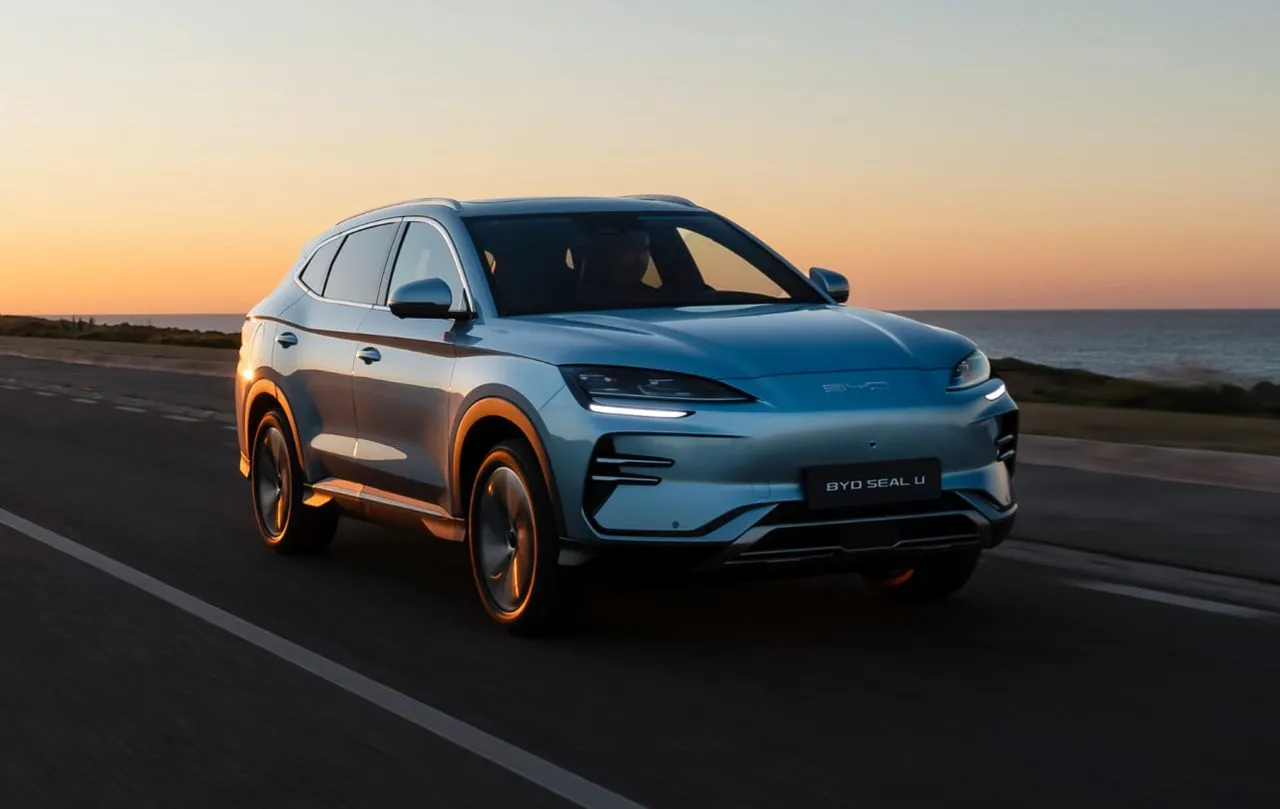
The results are significant because usually only the Tesla Model Y made it into the TOP50, with the Tesla Model 3 occasionally appearing somewhere in the middle or toward the end of the list (Europe isn’t a fan of long sedans, so this is still an excellent result…), and that was the end of electric vehicles in the TOP50. Now, not only do we have four pure electric models, but there are also several additional models that help boost sales of gasoline-powered versions: Peugeot E-208 (6th place, counted and listed alongside the 208), Peugeot E-2008 (9th place, same as above), Opel Corsa Electric (10th), Citroen E-C3 (13th), Ford Puma Gen-E (17th), BMW iX1 (23rd), Peugeot E-3008 (24th), Citroen E-C3 Aircross (36th), Mini Electric (38th), Jeep Avenger (39th), Hyundai Kona (40th), BYD Seal U (42nd), Opel Frontera (48th), and BMW iX3 (49th).
Automotive Conglomerates Around the World: Now and Tomorrow
If we assume that the entire world is moving toward cars with smaller and larger batteries, as people prefer to drive quietly, dynamically, and affordably, then manufacturers that do not invest in electric vehicles should prepare for a faster descent into crisis. This year’s sales and financial performance of traditional conglomerates for the first half of 2026 can essentially be predicted based on the International Energy Agency’s report for 2025:
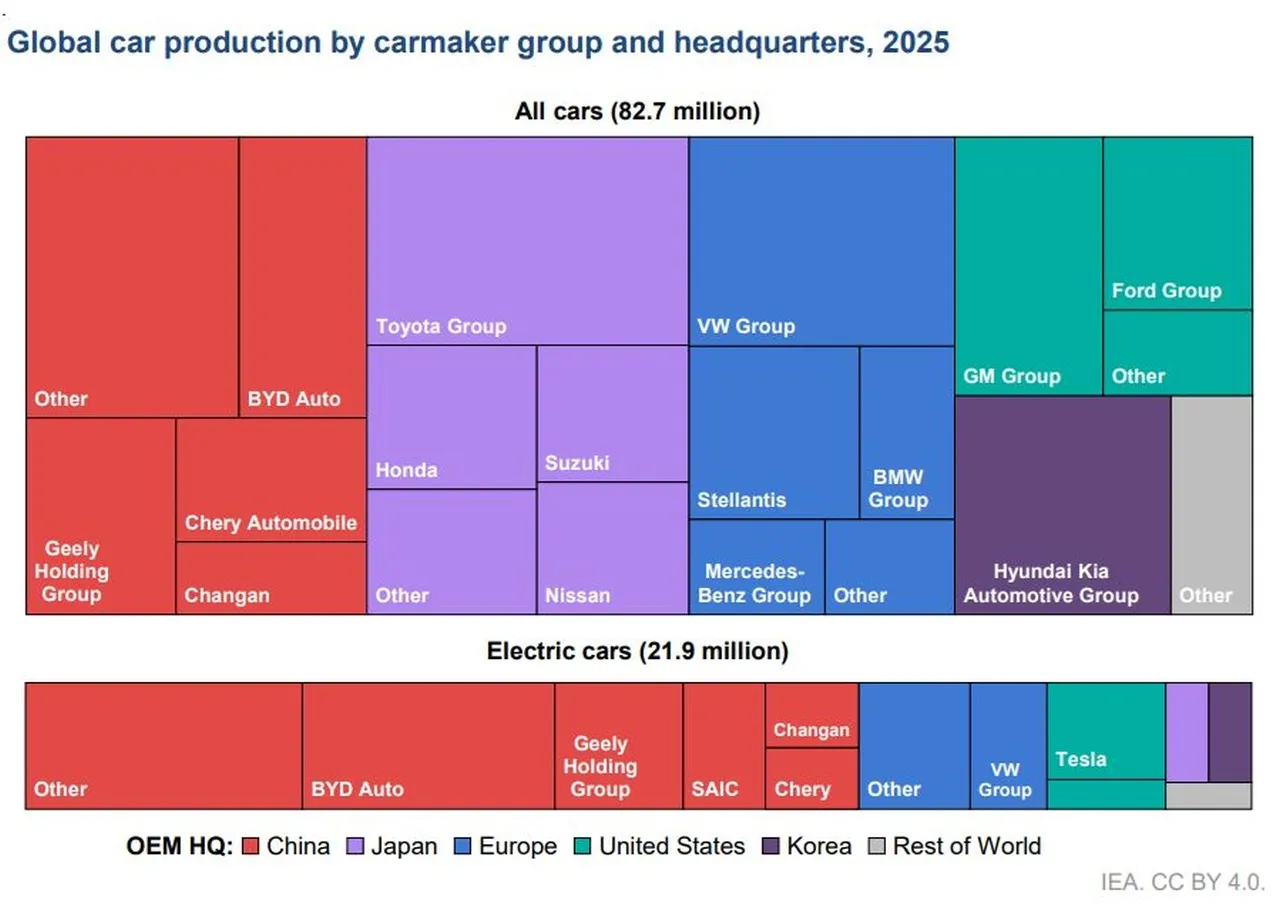
While looking at all powered vehicles combined (the upper rectangle), where electric cars account for “only” a few dozen percent of cars, China (red squares) is indeed large, but traditional brands still play a significant role. However, when we examine the NEV category, including electric and plug-in hybrid cars (mistakenly called electric cars), it suddenly turns out that over half of the market is driven by manufacturers from China. Tesla is larger than Volkswagen Group, while BMW, Mercedes, and Renault fall into the “Others” category, and entire Japan is weaker than Hyundai Group (row at bottom).
Tesla Model Y pulls Tesla upward and… saves the honor of the United States in the world
Article rating
Reader ratings
[Total: 8 votes Average: 3.6]
Don’t miss new content — CLICK and FOLLOW Elektrowoz.pl on Google News. You might also be interested in the following ads: