
A Tesla Model 3 with HW3 received a retrofit to HW4. One owner completed this process faster than Tesla did.
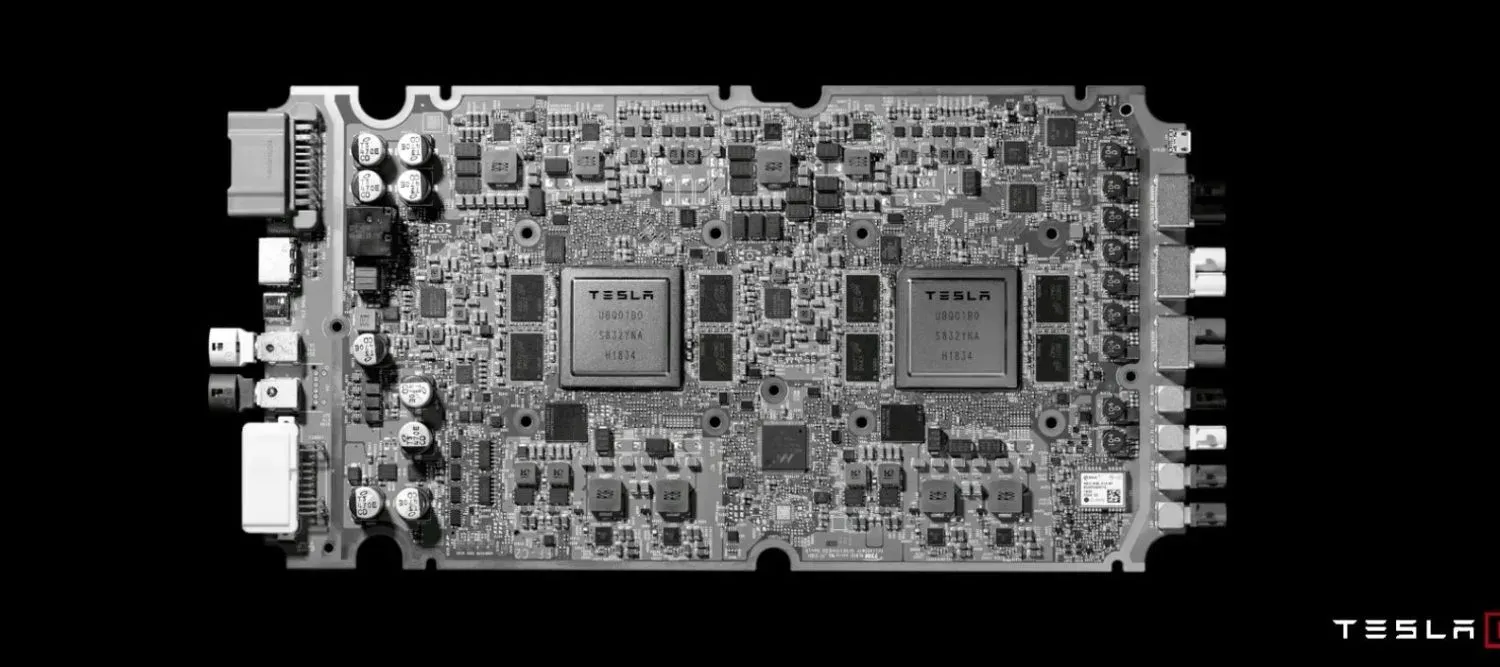
Tesla has not shown a production path for upgrading older cars from HW3 to HW4 in nearly two years, even though this issue affects millions of vehicles sold with the promise of Full Self-Driving. Meanwhile, Michał Gapiński from Poland installed an HW4 computer from a Model Y into his 2022 Model 3 and got the car running.
Table of Contents
Show
Hide
The most interesting part isn’t even that the project succeeded. What’s truly fascinating is that, according to the modifier, the scale of the changes doesn’t seem extremely significant at all.
Polish Man Upgraded Tesla from HW3 to HW4
Michał Gapiński, known for the Tesla Android project (as well as a mod that enabled FSD for a while), demonstrated a functional retrofit in a 2022 Tesla Model 3. The car originally had HW3, but after the modification it was equipped with a autopilot computer from the newer Model Y featuring HW4, along with repeater-type side cameras and minor changes to the ECU.
According to Gapiński, the parts list was surprisingly short. A computer from a donor vehicle, HW4 cameras, and adapters for the factory FAKRA connectors were needed. Importantly, it was possible to keep the existing coaxial cables from the cameras. This reduces the scope of work.
The first camera started working on a Model 3 (2022) equipped with a Hardwaee 4. Yes, we did the retrofit!
It’s not as bad as it seemed—just a computer replacement and some minor ECU hacking. There’s no need to replace the camera cables either; adapters will suffice.
It’s driving, but… pic.twitter.com/9WkmbPM0Yj
— Michał Gapiński (@mikegapinski) August 15, 2026
Installing the computer itself wasn’t entirely plug and play. Epoxy, clamping bands, and a bit of improvisation helped. It sounds like something you’d do in a garage. But that’s exactly what makes it interesting, as Tesla had previously suggested a much larger scale of the operation.
For now, the project isn’t 100 percent complete. There are still diagnostic errors and some functions that need refinement, but according to the creator, the car already runs and functions properly. Also, it’s likely that the computer is assigned to a different VIN than the body does (if that’s even an issue).
Why swapping HW3 for HW4 matters at all
This problem has persisted for years. Tesla announced in 2016 that all cars produced at that time had the hardware needed for full autonomy. Later, subsequent generations of hardware emerged: HW1, HW2, HW3, and now HW4, which is increasingly also referred to as AI4.
It quickly became clear that earlier platforms failed to deliver what they were supposed to. With HW1, this led to replacements with newer solutions. For HW2 and some FSD-equipped cars, Tesla performed retrofits to HW3, though there were also cases where customers had to pay up to $1,000 extra to replace hardware they thought was already included in the FSD package.
Today, the problem has returned, only on a larger scale. Between 2019 and 2023, Tesla sold a huge number of cars with HW3 as being ready or potentially ready for FSD. However, the current software increasingly shows differences between HW3 and HW4.
In practice, owners of older cars end up with a weaker version of the system, often simply referred to by the community as FSD Lite. This isn’t Tesla’s official name, but it accurately describes the issue. The car can do some things, just fewer than the newer version on a better computer.
In addition, there are suspicions that HW3 is already operating near its performance limits and gets overloaded. There have also been reports of autopilot computers overheating during more demanding tasks. There is no firm, conclusive confirmation for all vehicles, but the trend is clear: older hardware is increasingly becoming a bottleneck.
Tesla talked about microfactories. So far, silence.
In spring, Elon Musk proposed building local “microfactories” in major cities to handle the mass replacement of older hardware sets with newer ones. It sounded like an emergency plan for millions of vehicles whose owners are waiting for the fulfillment of a long-standing promise.
Since then, little has come of it. There is no widely implemented program, pricing list, or timeline for customers.
And that’s where the problem arises. Since one owner was able to carry out a retrofit on their own, Tesla already has the necessary service documentation, understands the car’s architecture, and produces the parts, so the question isn’t whether it’s technically possible. The question is whether it’s cost-effective for the company to do this on a large scale.
Because large-scale implementation isn’t just about three parts and a weekend in the garage. It involves logistics, spare parts, camera calibration, responsibility for safety, regulatory nuances, and thousands of hours of work. Simple tools can’t handle this. But the argument that it’s almost impossible now sounds weaker after this project.
Tesla also faces another problem, legal and financial
The dispute over FSD hardware is no longer just an online argument between fans and critics. Owners have begun suing Tesla, ranging from small claims cases to class actions across countries. The potential payout could reach tens of billions of dollars if courts rule that customers paid for a feature the company ultimately failed to deliver on the promised hardware.
Tesla has tried several ways to ease tensions. There were temporary measures allowing FSD to be transferred to a new car when purchasing another Tesla. It also shifted from selling FSD outright for several thousand dollars to offering a monthly subscription. However, this does not resolve the issue for those who paid in advance and still have not received the level of autonomy promised to them.
As of today, Tesla does not offer full Level 5 autonomy in any vehicle. This also needs to be said clearly, because marketing and naming can deviate from reality in this regard.
What this retrofit actually shows
Gapiński’s project does not yet prove that every Tesla owner with HW3 should start ordering parts separately and attempting to transplant the computer system. It remains an unofficial modification, with risks involved, no manufacturer support, and a long list of things still needing improvement.
But it shows two important things.
First, the technical barrier might be lower than Tesla suggested. Although the computer and some cameras need to be replaced along with electronic adjustments, it is still a more difficult task than upgrading from the old HW2 to HW3, but it doesn’t seem like building a whole new car.
Secondly, pressure on Tesla will increase. The more FSD on HW4 differs from HW3, the harder it will be to argue that older cars should simply wait patiently. Especially if they were once sold with the simple message that the hardware was ready.
From a Polish perspective, there’s another interesting aspect here. The creator of the first known functional retrofit is a Pole, someone who has been working with Tesla’s ecosystem for years. That’s great. But for the average user, something else is more important: whether Tesla will turn this garage-based solution into an official service.
As of now, it looks like this: technically it’s possible, but commercially Tesla is still hesitant. And that’s no longer the same problem.
Should Tesla finally launch a paid HW3 to HW4 retrofit for those who want it, or rather close the topic and refund customers for past FSD promises?
Order your Tesla and take advantage of purchase bonuses using the referral link!