
Tesla Model 3 vs Tesla Model Y: Which to buy in 2026
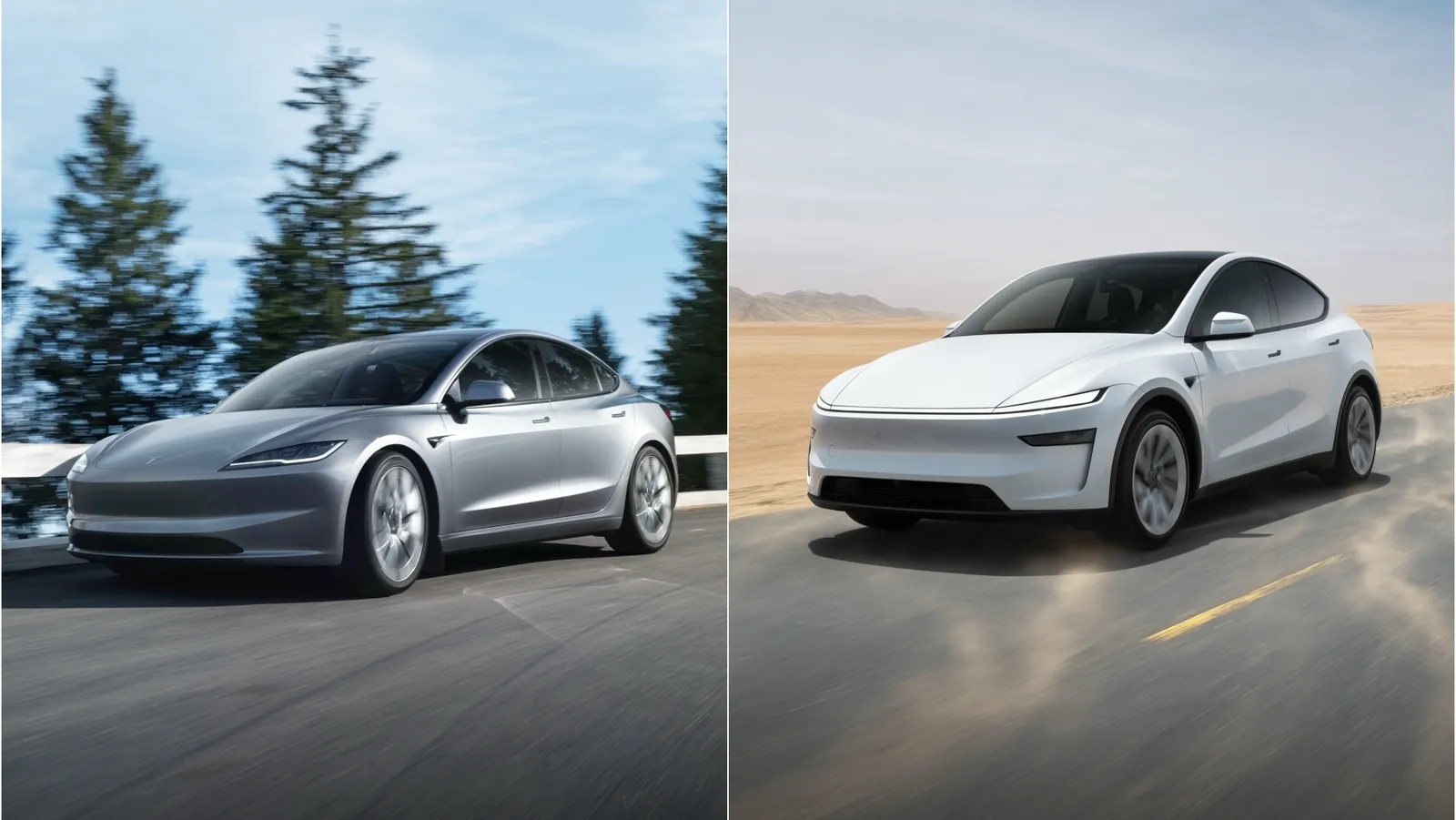
In terms of mobility, Tesla has been demonstrating for over a decade that it’s possible to use an electric car without any problems. Although China has gained prominence over the past five years, Elon Musk’s company remains the absolute benchmark in terms of price, performance, and efficiency. After discontinuing its larger and more expensive models, the Model S and Model X, Tesla is focusing on more competitive segments. The Tesla Model 3 and Model Y continue to be the top choices for purchase.
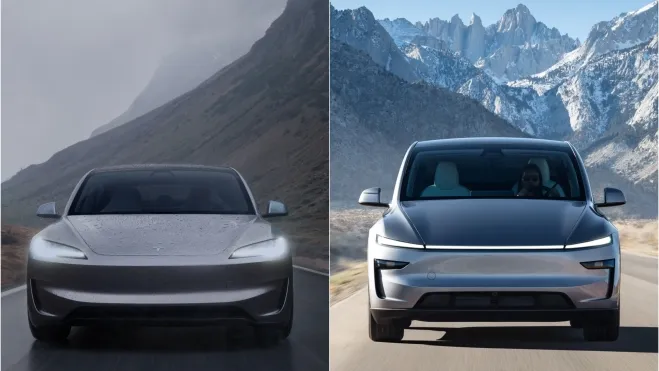
Although they may seem different, many drivers are not entirely sure which option best suits their needs. SUV or sedan? Setting aside preferences for body style, in the next few minutes we will clarify each of the differences between the Model 3 and the Model Y so that it becomes clear which one you should buy. Of course, we will also discuss prices, an increasingly important factor given the costs we face these days.
Comparison Table: Tesla Model 3 vs Model Y
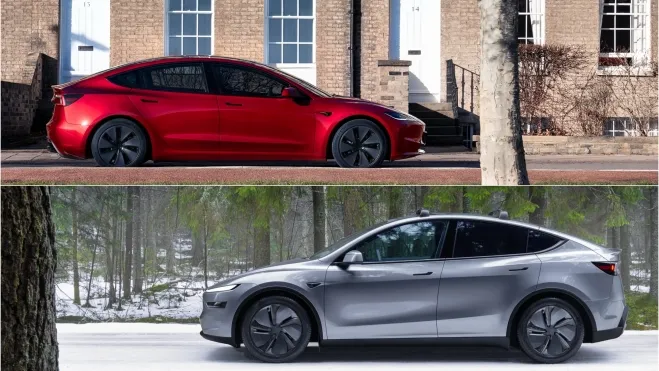
Let’s start by discussing the most basic differences between the two models, although they are quite minimal. In terms of size, the Model 3 and the Model Y differ by only a few centimeters.
Features
Tesla Model 3
Tesla Model Y
Length
4.72 meters
4.79 meters
Width
1.85 meters
1.92 meters
Height
1.44 meters
1.62 meters
Wheelbase
2.875 meters
2.891 meters
Seating capacity
5 seats
5 - 7 seats
Rear trunk space
425 liters
2,022 liters (max.)
Front trunk space
88 liters
116 liters
Weight
1,847 - 1,929 Kg
1,981 - 2,108 Kg
Key differences between Model 3 and Model Y in 30 seconds
Beyond the dimensions, the key features that distinguish the Model 3 from the Model Y are as follows:
Features
Tesla Model 3
Tesla Model Y
Body type
Sedan
SUV
Horsepower
283 - 627 HP
299 - 514 HP
Fuel consumption (WLTP)
13 - 16.5 kWh/100 km
13.1 - 16.2 kWh/100 km
Range (WLTP)
534 - 750 km
525 - 622 km
0 - 100 km/h acceleration
3.1 - 6.2 seconds
3.5 - 7.2 seconds
Top speed
201 - 262 km/h
201 - 250 km/h
Battery size
60 - 75 kWh
60 - 75 kWh
Range after 15 minutes of charging
237 - 311 km
243 - 267 km
Charging power
Between 175 and 250 kW
Between 170 and 250 kW
Price and current range in Spain
As we have already mentioned, price is an increasingly important factor. Various studies confirm that drivers are looking for high-quality products at competitive prices. Much of Tesla’s success lies in its pricing strategy. Its electric cars not only offer outstanding performance but also have very competitive sales figures. Their quality-price ratio is practically unmatched. The figures for this comparison are as follows:
Tesla Model 3
Tesla Model Y
MSRP
Between 36,990 and 57,490 euros
Between 40,990 and 62,990 euros
These rates, for August 2026, may change due to the brand’s occasional offers or government subsidies. Both models are eligible for the new public subsidy package promoted by the authorities, Plan Auto+. It offers up to 4,500 euros in direct assistance, along with other tax benefits such as a deduction of up to 15% on next year’s IRPF. The final amount depends in each case on individual factors like income.
Charging times and capacities at home and on the road
In alternating current (home charging), Tesla offers up to 11 kW of power in any of its cars and across all configurations. Depending on the available outlet, charging times range from 30.5 hours (with a 2.3 kW home outlet) to 6.4 hours (with a 11 kW fast charger). In the most common scenario, using a 7.4 kW charger, Tesla’s 60 kWh LFP battery is fully charged in about 9.5 hours. The waiting time extends to 8.6 hours (at 11 kW) when using the high-capacity lithium-ion battery with 75 kWh of net capacity.
If we choose to charge at any of Tesla’s public charging stations, the company claims that under ideal conditions, the Model 3 can regain between 237 and 311 kilometers of range in just 15 minutes. Again, these figures vary depending on the chosen station and the battery installed. The numbers for the Model Y are significantly worse: between 243 and 267 kilometers depending on the selected combination.
Range and Real-World Consumption
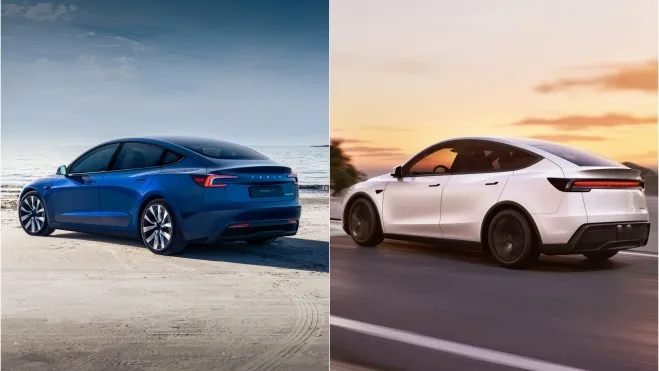
Traveling in an electric car is possible these days, though the experience depends heavily on the vehicle we use. Tesla undoubtedly offers the best guarantees and the most superior experience.
The certified data shows that the Tesla Model 3 has a WLTP-certified range of between 534 kilometers (Rear-Wheel Drive) and 750 kilometers (Long Range). To achieve such figures, Tesla reports an average fuel consumption of between 13 and 16.5 kWh per 100 kilometers. In real-world conditions, these figures are affected by road type, speed, weather, and battery charge. Our personal experience indicates that with the Model 3, it’s possible to cover distances of up to 550 kilometers at legal speeds without experiencing range anxiety.
If we apply this experience to the Tesla Model Y, the certification data indicates an WLTP range of between 525 kilometers (Rear-Wheel Drive) and 622 kilometers (Long Range), with official fuel consumption ranging from 13.1 to 16.2 kWh per 100 kilometers. In personal tests, the actual range of the Model Y is significantly worse than that of its sibling model, with it being difficult to exceed 500 kilometers under normal conditions. The SUV is limited by its greater weight and lower aerodynamic coefficient.
Space, trunk capacity, and comfort
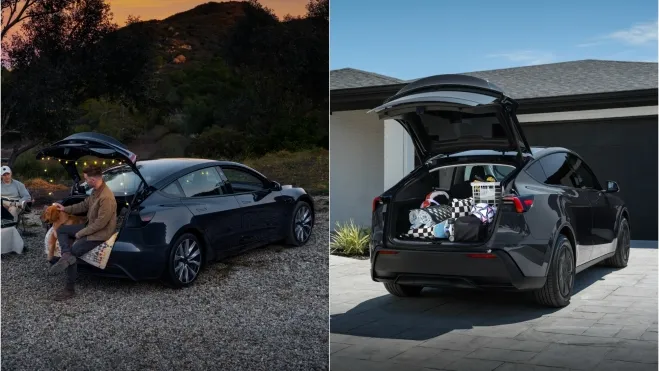
In terms of comfort and available space, the comparison clearly has a winner: the Tesla Model Y. Although there is only a few centimeters of difference compared to the sedan, the SUV offers better interior space along with larger trunk capacity. Getting in and out is much more convenient due to its chassis being higher off the ground. Another advantage for the Model Y is that it comes in 7-seater versions with seats arranged in three rows (2+2+2). The third row is hidden under the trunk floor without affecting its volume. When it comes to space, the Model Y is the most functional of the two models in this comparison.
Driving, Comfort, and Noise
When it comes to driving, certain differences are also easy to notice. After testing both models, we prefer the tuning of the Model 3. We were truly surprised by the performance of Tesla’s smaller sedan. Dynamically speaking, it is excellent—it handles very well and offers better driving sensations than its SUV sibling. The updates introduced at the beginning of 2025 did it a great deal of good; it is now much more refined than before. The same can be said for the latest version of the Model Y (Juniper): more comfortable and refined, but worse in terms of dynamics. Its greater weight and higher center of gravity reduce the driving sensations. Still, it remains a very pleasant car for daily use and travel.
Which one suits you based on your profile
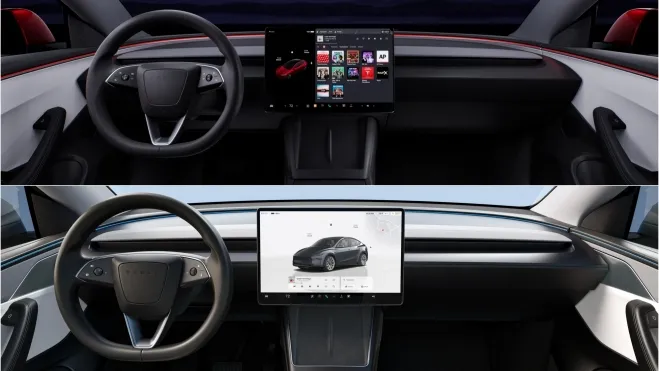
Choose the Model 3 if you don’t want to go with the SUV trend. If you don’t need an SUV in your life and if you don’t require more than five seats. The trunk space is quite large. Choose the Model 3 if you’re looking for better driving performance, longer range, and lower costs at the dealership. The Model 3 is the option we recommend as it offers the best value for money in our opinion.
Choose the Model Y if you have a family and need plenty of space. The only competitive advantage the Model Y has over its sibling is interior volume. If trunk space or seating capacity isn’t a concern for you, you should opt for its rival. Additionally, it has shorter range, higher fuel consumption, and is more expensive—about 4,000 euros pricier in any of its versions.
Alternatives to consider
Both fit easily into the D-segment. The Tesla Model 3 belongs among sedans in this category, while the Model Y is part of the SUV segment. Over the years, this category has become one of the most important in the electric vehicle market. As a result, the American sedan faces competitors like the BYD Seal. The SUV lineup is even larger, including models such as the BYD Seal U, Ford Capri, Mazda CX-6e, and Toyota bZ4X, among many others. All of them compete on size and price.
And that’s all for now on the Tesla Model 3 vs Model Y.