
Tesla Model 3 vs Mercedes CLA Electric: Which is more recommended to buy in 2026
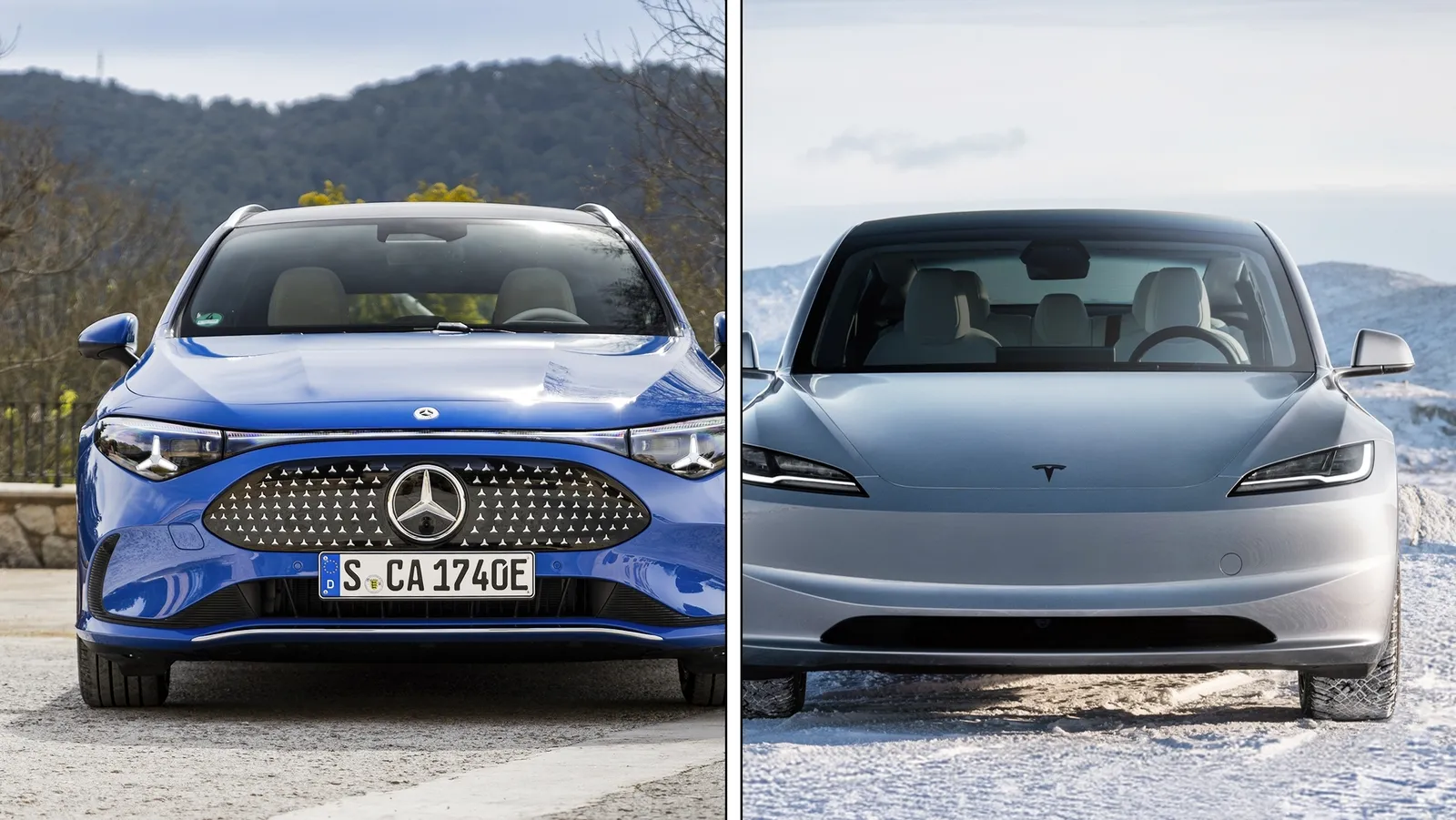
The electric car market is experiencing one of its most exciting phases, with models that are increasingly efficient, charge quickly, and can travel long distances without needing to stop. In this context, the Tesla Model 3 and the electric Mercedes-Benz CLA represent two very different approaches to a modern electric sedan, but both share a common goal: to become the benchmark in their respective categories.
The Tesla Model 3 has been a major contributor to popularizing electric cars worldwide. Since its launch, it has stood out for its range, performance, charging network, and an unbeatable price-to-tech ratio. Its success is also evident in Spain, where it remains the best-selling electric car of 2026 and one of the top choices for those looking for a vehicle suitable for both daily use and travel.
Opposite it stands the new Mercedes-Benz CLA electric, a sedan developed on a next-generation platform with standout features such as its high efficiency, long range, and 800-volt architecture. Numerous analyses, tests, and expert studies already rank it as one of the best electric cars available today, especially for its long-distance driving capability, fast charging speed, and balanced combination of comfort, technology, and fuel efficiency.
Comparison: Tesla Model 3 vs Mercedes CLA Electric
Tesla Model 3
Mercedes CLA EV
Vehicle Type
Sedan
Sedan
Dimensions
4,720 / 1,849 / 1,441 mm
4,723 / 1,855 / 1,468 mm
Weight
1,828 kg
2,045 kg
Battery Capacity
75 kWh
85 kWh
Total Power/Torque
283 HP / 450 Nm
272 HP / 335 Nm
WLTP Fuel Consumption
12.5 kWh/100 km
12.2 kWh/100 km
DGT Rating
Zero
Zero
0 to 100 km/h Acceleration
6.2 seconds
7.5 seconds
Emissions
0 g/km
0 g/km
WLTP Electric Range
534 km
541 km
Trunk Space
Front: 88 liters
Rear: 594 liters
Front: 101 liters
Rear: 405 liters
Information & Entertainment
Multimedia: 15.4 inches
Dashboard: 10.25 inches
Central Multimedia: 14 inches
Passenger Side Multimedia: 14 inches
Apple CarPlay / Android Auto
Price in Spain
Starting at 36,990 euros
Starting at 48,286 euros
Key Differences Between Tesla Model 3 vs Mercedes CLA Electric
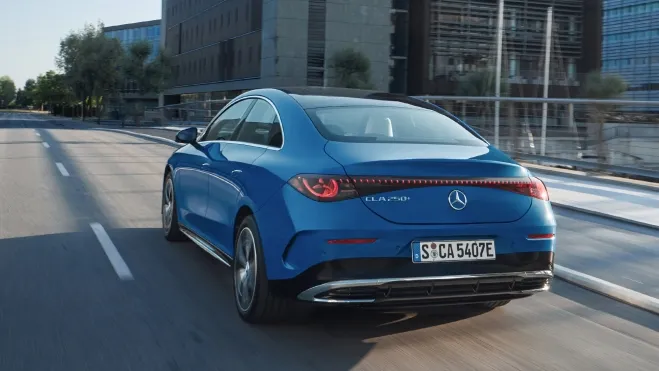
The Tesla Model 3 and the electric Mercedes CLA have virtually the same length, both feature a sedan-style body, and stand out for offering some of the best efficiency and range figures among current electric cars. However, behind these similarities lie two quite different approaches. Tesla focuses on simplicity, software, and an excellent price-to-performance ratio. Mercedes, on the other hand, offers a more premium feel along with a technically advanced electric architecture.
There are also significant differences in the philosophy of each manufacturer. As is well known, Tesla concentrates almost all functions on a large central screen, minimizes physical controls, and offers a digital ecosystem tightly linked to its app and the Supercharger network. Mercedes adopts a more conventional approach in some aspects, but combines it with the new MB.OS operating system, MBUX, independent instrumentation, and a higher perceived quality. Therefore, choosing between the two goes far beyond deciding which one has greater range.
Price and current lineup in Spain
The price remains one of Tesla Model 3’s biggest advantages. Its Spanish pricing starts at 36,990 euros for the base rear-wheel-drive version, before any discounts or incentives are applied. Above that are the Premium Long Range variants, available in both rear-wheel-drive and all-wheel-drive configurations. The former costs around 44,990 euros, while the latter is priced at 48,990 euros. Finally, the Performance version, with 627 horsepower and performance traits typical of a sports car, has a price tag of approximately 57,490 euros.
This range allows the Model 3 to handle very different driving scenarios. The base version already offers sufficient range to be used as a sole vehicle, while the Premium Long Range RWD is likely the most appealing option in the lineup for those who travel frequently. The Performance version targets a different market segment, clearly prioritizing performance over efficiency.
The electric Mercedes CLA starts at a much higher price point. The electric CLA 200 begins at 48,250 euros and delivers 224 horsepower along with a range of 541 km. The next tier is the CLA 250+, which costs 54,710 euros, produces 272 horsepower, and boosts the certified range to an impressive 789 km. Above that is the electric CLA 350 4MATIC, featuring two motors, all-wheel drive, 354 horsepower, and a range of 768 km.
Therefore, the price difference is significant, especially among the entry-level versions. The CLA 200 costs about 15,000 euros more than the cheapest Model 3, while the gap narrows when comparing long-range versions, but it still favors Tesla. Mercedes tries to justify this higher price with a more luxurious interior, greater customization options, superior charging technology, and a build quality that meets the traditional expectations for a premium sedan.
Charging times and speeds
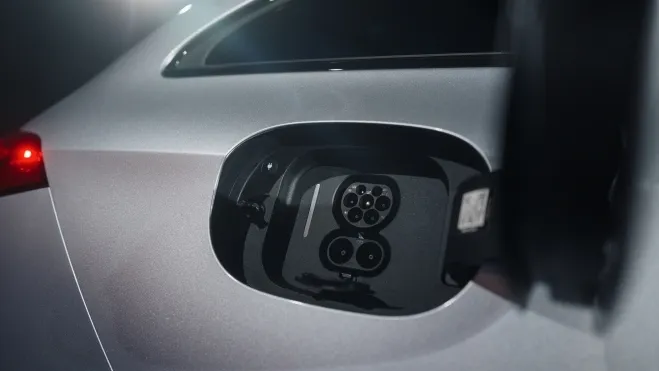
This is where the electric Mercedes CLA demonstrates one of its greatest technical advantages. The CLA 250+ and CLA 350 4MATIC models use an 800-volt architecture and can handle up to 320 kW of DC power. Mercedes claims that both can go from 10% to 80% charge in 22 minutes, with the 250+ model able to recover between 285 and 325 km of WLTP range in just 10 minutes. The CLA 200, equipped with a smaller battery, takes about 20 minutes to achieve the same 10-80% charge level.
The Tesla Model 3 uses a less sophisticated electrical architecture, with the long-range versions achieving up to 250 kW at Superchargers. Its charging curve allows for short stops, and Tesla claims range extensions of several hundred kilometers in about 15 minutes depending on the version. The Model 3’s advantage lies in the exceptional integration between the car, navigation system, and Supercharger network. Simply enter the destination, and the vehicle will calculate the stops and automatically prepare the battery before arrival.
In terms of maximum power and pure speed, the CLA is superior. For ease of use on the road, Tesla still has one of the best integrated charging ecosystems in the market. For a driver who regularly uses third-party ultra-fast chargers capable of delivering over 300 kW, the Mercedes architecture can make a significant difference.
Range and Real-World Fuel Consumption
On paper, the Mercedes CLA 250+ wins this battle. It boasts a range of 789 km compared to the Tesla Model 3 Premium Long Range RWD’s 750 km, with an official fuel consumption of 12.3 kWh/100 km versus 13.6 kWh/100 km. These are exceptional figures in both cases, especially considering they pertain to sedans capable of driving on highways with ease.
In real-world conditions, these ranges decrease, especially when driving at highway speeds. Tests conducted by numerous experts using the Model 3 Premium Long Range RWD confirm that it is easy to exceed 450 km between charges under such usage patterns, placing it among the most efficient electric vehicles available. The CLA has also demonstrated outstanding efficiency in various independent tests, although temperature, speed, wind, tires, and climate control usage can significantly affect any results.
The key takeaway isn’t so much about determining which one exactly meets its WLTP figure, since neither will always cover that distance under any conditions, but rather confirming that both belong to the small group of electric vehicles capable of handling long trips with reasonably spaced stops. The Mercedes has an advantage on paper in terms of both fuel consumption and range, and it also takes less time to recharge when it finds a sufficiently powerful charger.
Interior and trunk
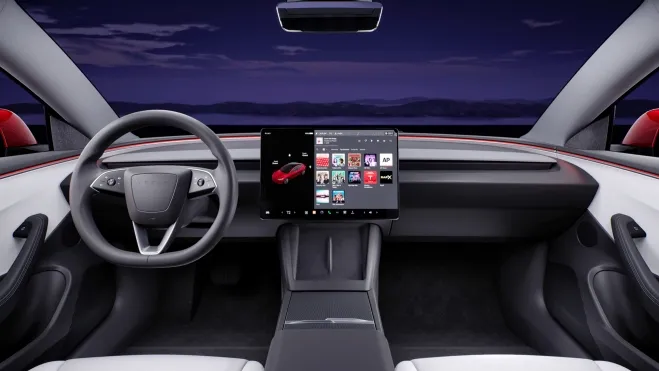
The interior of the Tesla Model 3 takes minimalism to almost extreme levels. The dashboard is dominated by a central 15.4-inch touchscreen from which navigation, climate control, multimedia, and virtually all car settings are controlled. There isn’t even a conventional instrument panel in front of the driver. The design is clean and modern, though it requires getting used to performing operations via the screen that would otherwise be handled with a dedicated control in other cars.
The update introduced with the Highland generation significantly improved one of the Model 3’s long-standing weaknesses: perceived quality. The materials, trim, and insulation are better than before, and Premium versions add features such as an upgraded sound system and an 8-inch rear screen that allows passengers to control the climate and various multimedia functions. Tesla still does not offer Android Auto or Apple CarPlay, as it relies exclusively on its own ecosystem.
In terms of space, the Tesla makes excellent use of its electric platform. The rear seats offer good longitudinal space, though the battery’s location requires passengers to keep their legs slightly elevated. One of its biggest advantages is the cargo capacity in the trunk. However, the sedan-style hatchback opening is less practical than a five-door liftgate.
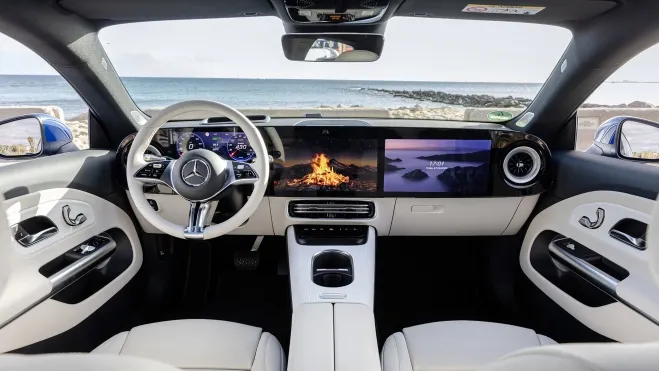
The Mercedes CLA offers a quite different experience. The quality of materials and interior design are closer to those of a traditional premium sedan, but with a high level of technology. The 10.25-inch digital instrument cluster is complemented by a 14-inch central multimedia screen, and optionally, a third 14-inch screen can be added in front of the passenger to create what’s known as MBUX Superscreen.
MB.OS and the latest version of MBUX provide connected navigation, wireless updates, and numerous online features, in addition to Android Auto and Apple CarPlay. Unlike Tesla’s extremely minimalist approach, Mercedes offers more customization options and an interface that will feel more familiar to those coming from conventional cars.
The CLA is 4,723 mm long, virtually the same as Tesla’s 4,720 mm, although space utilization differs. It has a rear trunk of 405 liters, plus an excellent front compartment of 101 liters. Tesla offers greater total luggage capacity, while Mercedes partially compensates for this difference with one of the largest frunks in its class.
Driving and Comfort
The Model 3 remains one of the most enjoyable electric cars to drive within its price range. Its low center of gravity, quick steering response, and immediate reactions provide a much more sporty feel than its family-oriented design might suggest. Even the rear-wheel-drive versions offer performance more than sufficient for almost any situation.
Tesla also significantly improved comfort with the Highland update. The suspension handles irregularities better, there is less aerodynamic and rolling noise, and the car is considerably more pleasant on the highway compared to the first models sold in Europe. Still, it maintains a relatively firm ride feel and a slightly more direct handling style than the Mercedes.
The CLA focuses primarily on refinement. The noise from rolling is better isolated, and the suspension seeks a balance between body control and comfort, which is especially noticeable during long trips. It also gives off a more conventional car feel from the driver’s seat, with instruments positioned in front of the driver and an ergonomics design that relies less on the central screen.
The difference in performance will depend heavily on the versions compared. The Tesla has a lineup clearly focused on delivering strong acceleration, with the Performance model being in a completely different class, while the CLA prioritizes efficiency and refinement. However, the Mercedes 350 4MATIC can reach 100 km/h in 4.9 seconds, so it certainly cannot be considered slow either.
Which one should you choose based on your preferences
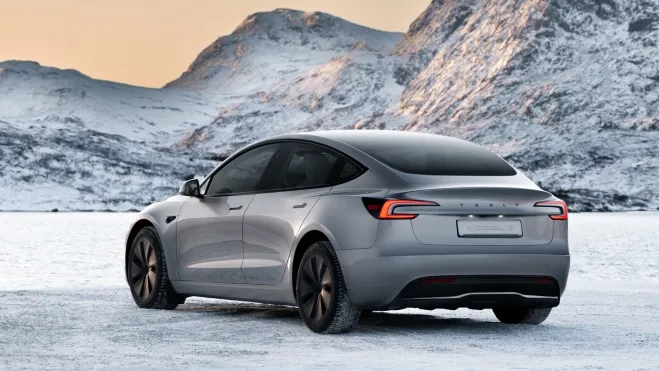
Choose the Tesla Model 3 if you’re looking to get the most electric car performance per euro spent. It’s especially recommended if it will be the only car in a family, you need high charging capacity, travel frequently, and value an extremely simple charging ecosystem. It’s also more attractive for those who prioritize performance or simply have a budget under 50,000 euros.
Choose the electric Mercedes CLA if you place more emphasis on comfort, interior quality, customization, and the driving experience of a premium vehicle. For someone who drives mostly on highways, the CLA 250+ is particularly compelling: its 789 km WLTP range, low fuel consumption, and 320 kW charging capability reduce both the frequency and duration of stops.
For small cities and garages, neither has a decisive advantage in length, as there is barely 3 mm between them. Here, visibility, cameras, and familiarity with their controls may carry more weight. For a family with just one vehicle, however, the greater luggage space and lower price tip the scales in Tesla’s favor; for a couple or family that prioritizes long trips, quiet operation, and interior finishes, the Mercedes justifies its higher price better.
In summary, the Model 3 remains the most rational choice that’s hard to beat, while the CLA 250+ is likely the most sophisticated option. Tesla excels especially in value for money and practicality; Mercedes counters with efficiency, charging speed, quality, and refinement.
Key Rivals for Tesla Model 3 vs Mercedes CLA Electric
The Tesla Model 3 faces an increasing number of competitors. The Hyundai IONIQ 6 is likely one of its most direct rivals in terms of concept and efficiency, while the BYD Seal offers a particularly competitive alternative if performance and features are prioritized. The KIA EV4 also enters the competition in terms of price, range, and approach, although its design and body style follow a different philosophy.
For the electric Mercedes CLA, the list of rivals is somewhat different due to its premium positioning. The new electric BMW i3 is probably its natural competitor, both in terms of brand image as well as technology and price. Larger models like the Audi A6 e-tron can also be considered alternatives when the budget allows, though it operates in a higher category.
There is also a curious situation, and that is the Tesla Model 3 itself being one of Mercedes’ most dangerous rivals. The CLA offers more refinement and a more advanced electric technology, but Tesla forces one to consider how much a buyer is willing to pay for those advantages. And that is precisely where the key to this entire comparison lies.