
Tesla Model 3 vs BYD Seal: Which to Buy in 2026
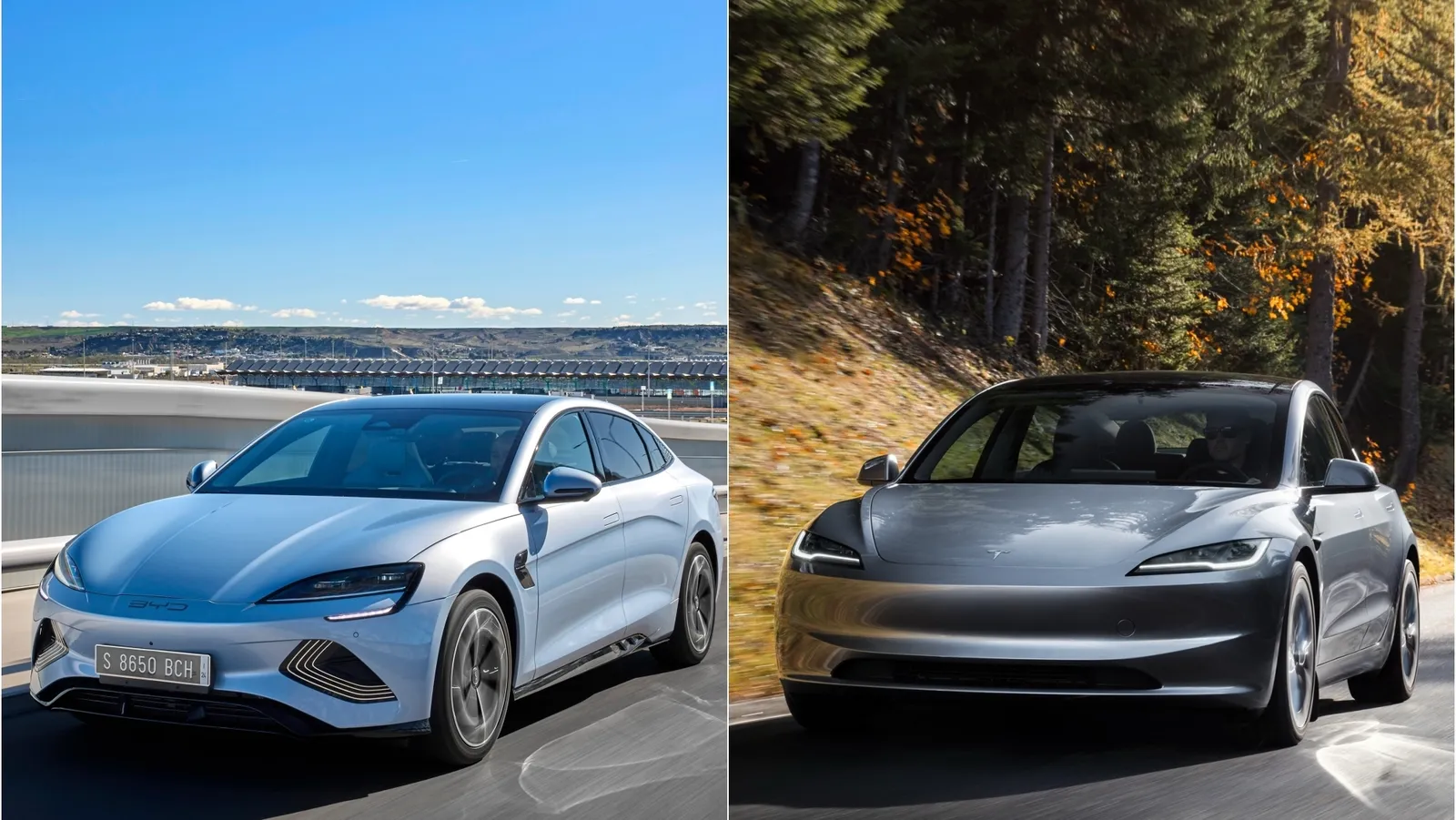
China, the United States, Japan, South Korea, and Europe are competing for global dominance. The arrival of electric cars has changed the status quo that the industry had maintained for over 100 years. Nissan was the first manufacturer to develop an electric car for the mass market. Tesla transformed our way of thinking (and moving) while China has pursued expansion through companies like BYD. Tesla and BYD are the world’s top sellers of electric cars. Together they dominate the market, but they also compete with each other to offer the best vehicles. We compare two of them: the Tesla Model 3 vs the BYD Seal.
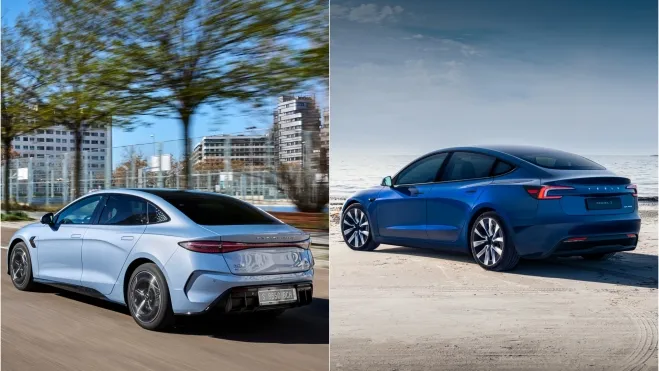
Not much more can be said about the Model 3 that hasn’t already been said. This American sedan truly changed the game in terms of range, performance, and price. Produced on a global scale, it, along with its SUV sibling, the Tesla Model Y, tops various bestseller lists. However, in recent years many competitors have tried to challenge it with varying degrees of success. The BYD Seal is one of them. Designed as its rival, this Chinese vehicle boasts more than enough qualities to at least raise significant doubts among customers. We analyzed both models to determine which one is worth buying.
Comparison Table: Tesla Model 3 vs BYD Seal
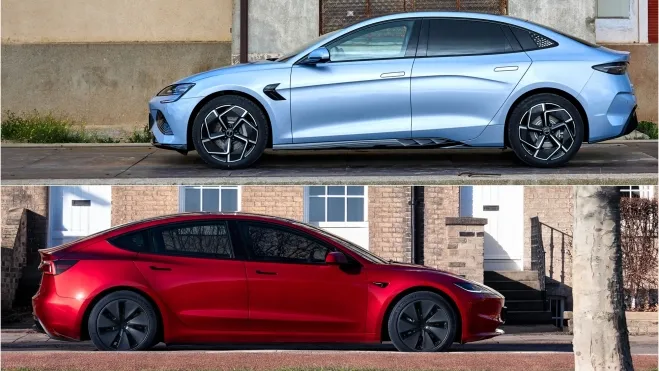
Let’s start by discussing the most basic differences between the two models, although as we’ve already said, they are essentially identical cars. The discrepancies, if any, are minimal. In terms of size, the Model 3 and Model Y differ by only a few centimeters.
Features
Tesla Model 3
Tesla Model Y
Length
4.72 meters
4.80 meters
Width
1.85 meters
1.875 meters
Height
1.44 meters
1.46 meters
Wheelbase
2.875 meters
2.91 meters
Seats
5 seats
5 seats
Rear trunk space
425 liters
485 liters
Front trunk space
88 liters
72 liters
Weight
1,847 - 1,929 Kg
2,045 - 2,260 Kg
Key differences between Model 3 and Model Y in 30 seconds
Beyond the dimensions, the key differences between the Model 3 and the Seal are as follows:
Features
Tesla Model 3
Tesla Model Y
Body Style
Sedan
Sedan
Horsepower
283 - 627 HP
231 - 530 HP
Consumption (WLTP)
13 - 16.5 kWh/100 km
15.4 - 18.2 kWh/100 km
Range (WLTP)
534 - 750 km
460 - 570 km
0 - 100 km/h acceleration
3.1 - 6.2 seconds
3.8 - 7.5 seconds
Top Speed
201 - 262 km/h
180 - 220 km/h
Battery Size
60 - 75 kWh
61.4 - 82.5 kWh
Time to go from 10% to 80% SoC
26 minutes (approx)
37 minutes
Charging Power
Between 175 and 250 kW
Between 110 and 150 kW
Price and current range in Spain
Today, price is the main factor considered when purchasing a new or used car. In the case of electric vehicles, lower pricing will boost their adoption among drivers, as evidenced by the two models competing here today. Both offer very attractive pricing strategies that make them leaders in their category. It’s possible to buy either of these models for less than 40,000 euros before discounts, although the Model 3 becomes more expensive in its higher-performance versions.
Tesla Model 3
BYD Seal
MSRP
Between 36,990 and 57,490 euros
Between 41,990 and 52,490 euros
These rates, for August 2026, may change due to the brand’s occasional offers or government subsidies. Both models are eligible for the new public subsidy package promoted by authorities, Plan Auto+. It offers up to 4,500 euros in direct assistance, along with other tax benefits such as a deduction of up to 15% on next year’s IRPF. The final amount depends in each case on individual factors like income.
Charging times and capacities at home and on the road
If the autonomy of an electric car is important, the charging process is just as crucial. It plays a vital role in creating a great user experience. In addition to producing excellent electric cars, Tesla has developed the best public charging network in the market. Its network of superchargers inspires complete trust, making it the preferred choice for millions of electric car users worldwide. An infrastructure that is perfectly integrated with its vehicle ecosystem.
BYD has also aimed to develop its own charging network, but for now, the Seal is not among its next-generation electric vehicles equipped with Blade 2.0 batteries. This means it cannot leverage its full charging potential. In fact, it comes out as a clear loser in this comparison. While Tesla offers charging systems ranging from 175 to 250 kW, the Seal never exceeds 150 kW. As a result, its charging speeds are slower. Tesla claims that under ideal conditions, the Model 3 can regain up to 311 kilometers of range in 15 minutes. In contrast, BYD estimates it takes 37 minutes to charge the battery from 10% to 80%, assuming ideal conditions are met.
In alternating current (home charging), Tesla and BYD offer up to 11 kW of power in any of their cars across all configurations. During slow charging, the type of connection makes a significant difference in energy recovery. The BYD Seal is capable of regenerating 100% of the battery in a time range of 6.5 to 8.6 hours (charging at 11 kW), depending on the battery. The Model 3, on the other hand, takes between 6.4 and 8.6 hours (charging at 11 kW) to complete the same process. These are standard figures that allow users to take advantage of the night as a charging period.
Range and Actual Consumption
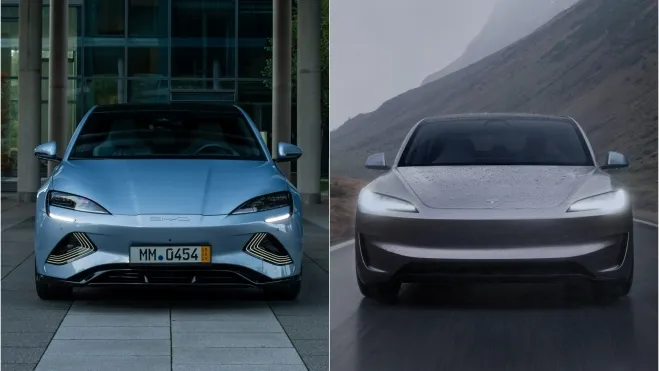
The experience with the BYD Seal has also been positive, but its figures in no way come close to those of its American rival. The specifications indicate homologated ranges of between 460 and 570 kilometers (WLTP). However, the Chinese vehicle’s energy consumption is significantly higher due to two main reasons: poorer electrical management and considerable excess weight. The BYD’s LFP batteries are much heavier. All this means that when traveling in a Seal, we can expect actual ranges of between 350 and 420 kilometers. Again, these figures will depend on driving style, battery charge level, weather conditions, and route.
Space, trunk capacity, and comfort
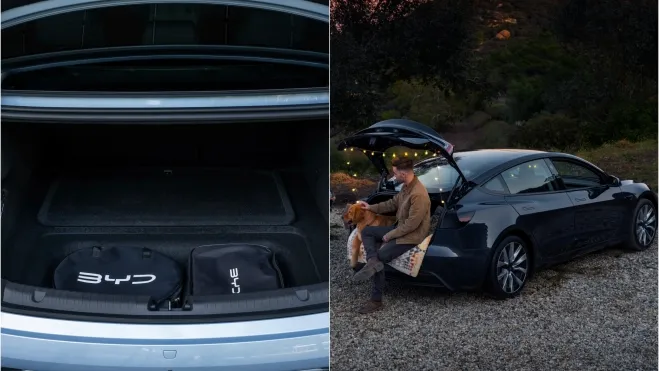
The two models in this comparison fit seamlessly into the European D segment. This means they offer excellent living conditions in all five of their seats. However, upon closer inspection, we can declare the Seal as the model with the best living conditions in this comparison. Its greater wheelbase provides more space in the rear seats. The trunk is also larger, by 60 liters, although the front trunk is significantly smaller, by 16 liters. This difference is negligible considering the usual use of the front trunk for carrying small items like charging cables.
Driving, comfort, and noise
In terms of driving performance, we have always regarded the Tesla Model 3 as an absolute benchmark. We still do today. Its handling has few weak points. It features a perfectly balanced and lightweight chassis with excellent tuning that delivers great driving sensations whether used casually or in sporty mode. The Seal, on the other hand, has a setup focused more on comfort. Its softer suspension tends to bounce slightly. For road trips, both offer excellent conditions, but we believe the Model 3’s superior tuning makes it the winner in this regard.
Which one suits you based on your profile
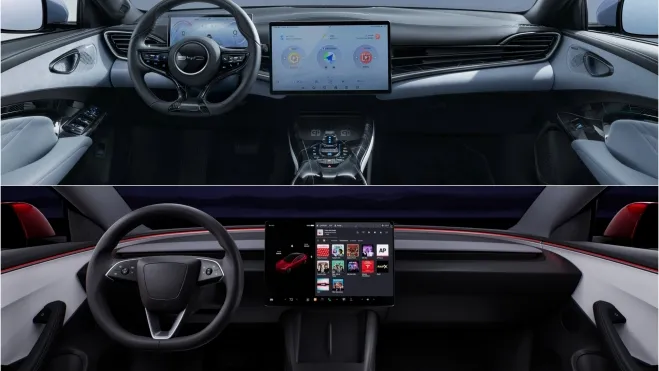
Choose the Model 3 if you want the best electric sedan on the market. It’s an absolutely well-balanced car from start to finish. It has a very competitive price and offers ideal electric performance for all types of use, including stress-free commuting. It’s comfortable, dynamically superb, spacious, and efficient. On the other hand, it overuses digital features, making basic tasks like adjusting mirrors or shifting gears overly complicated. A conventional dashboard would be very helpful for it.
Choose the Seal if you don’t want to fall into Tesla’s grip. Although it is a good electric car, it cannot match the standards of the market leader. It offers solid advantages such as quality, interior space, and comfort, but falls short in key areas like range, energy consumption, and charging speed. In no case can the BYD match these standards, making it a clear loser in this comparison.
Alternatives to consider
Although it might seem like there are many alternatives to the Tesla Model 3 and the BYD Seal, the truth is that there aren’t that many. A quick glance at the market reveals that the list of similar models is quite limited. We find the Mercedes CLA coupé and the BMW i4 as the main premium alternatives. While they are similar in size, they are significantly more expensive. The KIA EV4 Fastback is another option to consider, though its body style doesn’t resemble that of any of these competitors. In the near future, BYD will release a major update for the Seal that will, this time, make it a worthy alternative to the Model 3’s dominance.
And that concludes our comparison of the Tesla Model 3 vs BYD Seal.