
Tesla Model 3 vs BMW i3: which one to buy in 2026
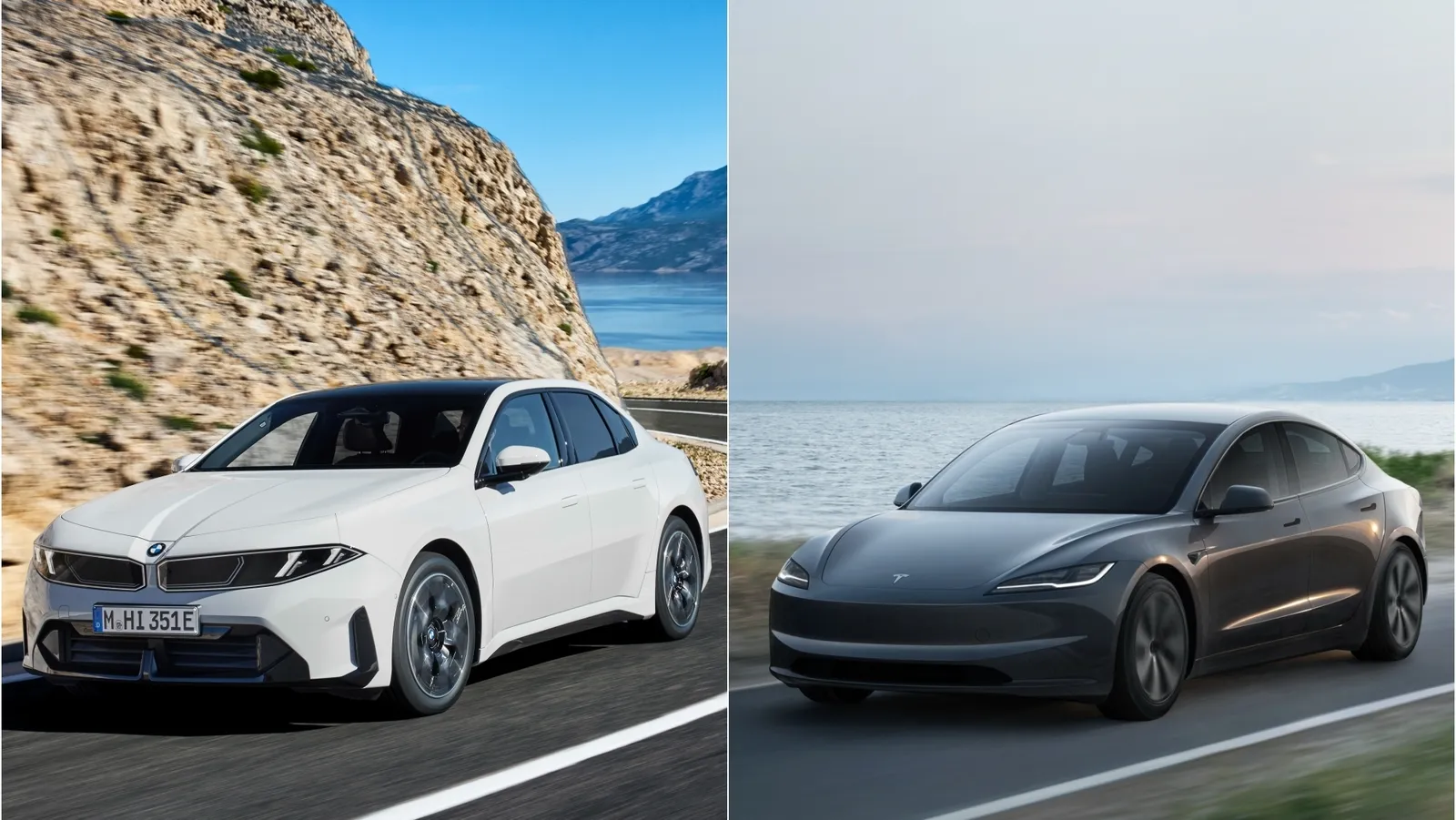
China, the United States, Japan, South Korea, and Europe are competing for global dominance. The arrival of electric cars has changed the status quo that the industry had maintained for over 100 years. BMW was one of the first brands to enter the electric car market, but it was Tesla that forever changed the way we think (and move). BMW and Tesla are two of the most important electric car manufacturers in the world, with products that can compete against each other. We compare two of them: the Tesla Model 3 vs the BMW i3.
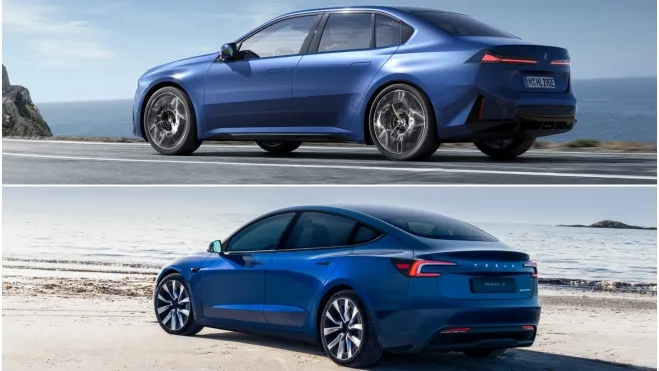
Not much more can be said about the Model 3 that hasn’t already been said. This American sedan truly changed the rules of the game in terms of range, performance, and price. Produced on a global scale, it, along with its SUV sibling, the Tesla Model Y, tops the charts in terms of sales success. However, in recent years many competitors have tried to challenge it with varying degrees of success. The new BMW i3 is undoubtedly one of its strongest rivals. We analyzed both models to determine which one is worth buying.
Comparison Table: BMW i3 vs Tesla Model 3
Let’s start by discussing the most basic differences between the two models, although as we’ve already mentioned, they are essentially identical cars. The discrepancies, if any, are minimal. In terms of size, the Model 3 and the i3 sedan differ by only a few centimeters.
Features
Tesla Model 3
BMW i3
Length
4.72 meters
4.76 meters
Width
1.85 meters
1.865 meters
Height
1.44 meters
1.48 meters
Wheelbase
2.875 meters
2.987 meters
Seating capacity
5 seats
5 seats
Rear trunk space
425 liters
420 liters
Front trunk space
88 liters
31 liters
Weight
1,847 - 1,929 Kg
2,165 - 2,280 Kg
Key differences between BMW i3 and Tesla Model 3 in 30 seconds
Beyond the dimensions, the key qualities that distinguish the Model 3 from the i3 are as follows:
Features
Tesla Model 3
BMW i3
Body type
Sedan
Sedan
Horsepower
283 - 627 HP
374 - 469 HP
Fuel consumption (WLTP)
13 - 16.5 kWh/100 km
13.4 - 14.3 kWh/100 km
Range (WLTP)
534 - 750 km
710 - 912 km
0 - 100 km/h acceleration
3.1 - 6.2 seconds
4.7 - 5.4 seconds
Top speed
201 - 262 km/h
200 km/h
Battery size
60 - 75 kWh
108.7 kWh (net)
Time to go from 10% to 80% SoC
26 minutes (approx)
21 minutes
Charging power
Between 175 and 250 kW
Between 300 and 400 kW
Price and current range in Spain
Techinally speaking, the BMW i3 has nothing to envy the American model. In fact, the Germans offer better figures in key areas such as range and charging speed, though the Model 3 still holds a slight edge in terms of efficiency. However, the main difference between these competitors lies in price. The figures vary greatly—the Model 3 is significantly cheaper than its German counterpart, costing almost 20,000 euros less in the base version. The gap narrows in higher trims, although Tesla still offers better pricing.
Tesla Model 3
BMW i3
MSRP
Between 36,990 and 57,490 euros
Between 58,400 and 63,900 euros
These rates are for October 2026. The figures may change, especially for the BMW given its relatively new market presence and the likely introduction of new variants. Unfortunately, only the Tesla Model 3 is eligible for the government subsidy package promoted by authorities, Plan Auto+. It offers up to 4,500 euros in direct assistance, along with other tax benefits such as a 15% deduction on income tax for the following year. This is another reason to choose the American model over the German one.
Charging times and capacities at home and on the road
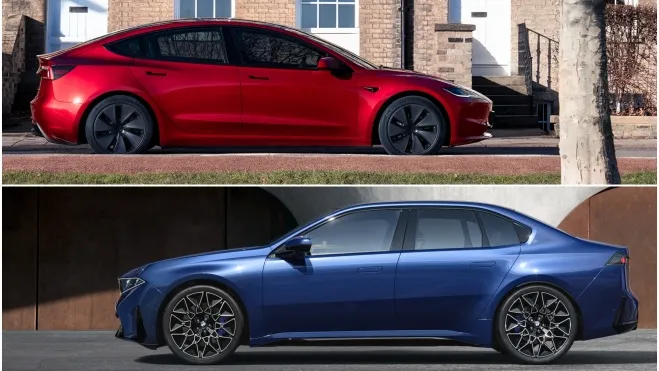
If the autonomy of an electric car is important, the charging process is just as crucial. It plays a vital role in creating a great user experience. In addition to producing excellent electric cars, Tesla has developed the best public charging network in the market. Its network of superchargers inspires complete trust, making it the preferred destination for millions of electric car users worldwide. An infrastructure that is perfectly integrated with its cars’ ecosystem.
Charging has never been a problem for Tesla, nor is it an issue for the BMW. In the worst case, under direct current conditions, the new BMW i3 offers a charging power of between 300 kW and 400 kW. Under ideal conditions, it can restore 10% to 80% of its total range in 21 minutes. Meanwhile, Tesla offers charging systems ranging from 175 to 250 kW. This means its range recovery rates are slower. Tesla claims that under ideal conditions, the Model 3 can restore up to 311 kilometers of range in 15 minutes.
In alternating current (home charging), the Tesla Model 3 offers up to 11 kW of power in any of its configurations. In contrast, the BMW i3 boosts this rate to 22 kW. When charging slowly, the type of connection makes a significant difference in energy recovery. The BMW i3 can recharge 100% of its battery in just 5.5 hours (charging at 22 kW). On the other hand, the Model 3 takes between 6.4 and 8.6 hours (charging at 11 kW) to complete the same process. These are standard figures that allow users to take advantage of the night as a charging period.
Range and Real-World Consumption
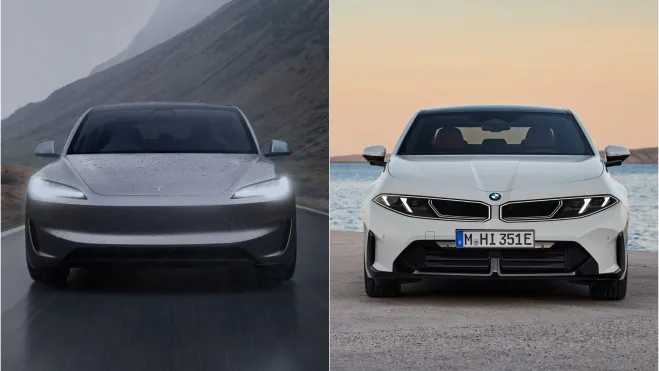
The experience aboard the BMW i3 has been even more positive. Officially, BMW claims a range of 710 to 912 kilometers, with fuel consumption ranging from 13.4 to 14.3 kWh/100 Km. However, in real-world use, the German car shows a lower level of efficiency. When traveling with an i3, we can cover distances of up to 700 kilometers under normal conditions. In the worst case, driving according to regulations, it’s possible to travel about 550 kilometers without stopping. This is the same figure as the Tesla, but considering its much larger battery, it shows that its efficiency is lower.
Space, trunk, and comfort
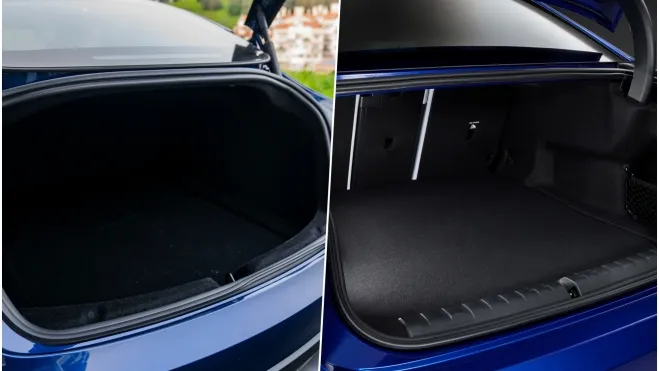
The two models in this comparison fit seamlessly into the European D segment. This means they offer excellent living conditions in all five of their seats. However, upon closer inspection, the Model 3 can be considered the model with the best living space in this comparison. While the comfort for rear passengers is very similar, the American model has an advantage when it comes to cargo space. The Model 3’s rear trunk is only about 5 liters larger than that of the German model. Nevertheless, its front trunk is significantly bigger—88 liters compared to BMW’s 31 liters.
Driving, comfort, and noise
In terms of driving, we have always regarded the Tesla Model 3 as an absolute benchmark. We still do today. Its performance has few flaws worth mentioning. It features a perfectly balanced and lightweight chassis with excellent tuning that delivers great handling both in relaxed driving conditions and in sporty scenarios. As expected, BMW, with its long history in sports performance, is capable of matching or even surpassing its American rival in dynamic capabilities. The i3 offers better ride quality, improved cabin insulation, and superior dynamic performance. The steering and braking feel stand out particularly well. The differences between the two aren’t very significant, but we must acknowledge the BMW i3 as the winner in this category.
Which one suits you based on your profile
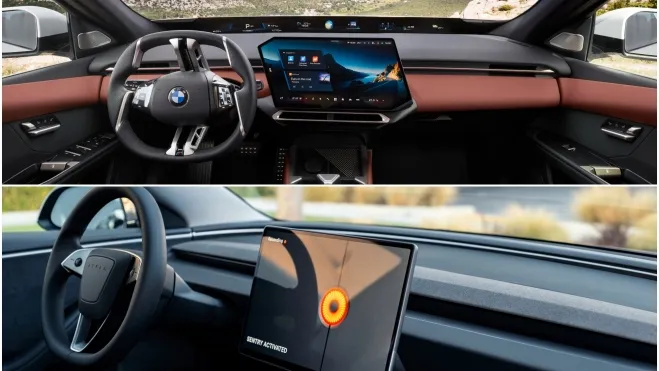
Choose the Model 3 if you want the electric sedan with the best value for money on the market. It’s an absolutely well-balanced car from start to finish. It has a very competitive price and offers ideal electric performance for all types of use, including stress-free commuting. It’s comfortable, dynamically superb, spacious, and efficient. On the other hand, it overuses digital features, making basic tasks like adjusting mirrors or shifting gears overly complicated. A conventional dashboard would be very helpful for it.
Choose the BMW i3 if you want to move beyond Tesla’s dominance. Although Americans remain the benchmark, models like the new i3 show that other manufacturers already offer products equal to or better than Tesla’s. In many aspects, the BMW is superior to the Model 3—when it comes to key factors such as range, driving performance, build quality, and standard features. It is a more mature product, even though it’s newer. The main issue with the BMW i3 is its price. That’s all. Its high cost isn’t accessible to everyone, which represents a significant commercial drawback.
Alternatives to consider
Gradually, the segment of electric sedans has seen an increase in both quantity and popularity. There are now more alternatives to the Tesla Model 3 and BMW i3. A quick glance at the market reveals models like the Mercedes CLA coupé and BMW i4 as the main premium alternatives. While they are similar in some aspects, the key difference lies in their body style. The KIA EV4 Fastback and BYD Seal are other options to consider, though their quality, performance, and range are lower. In the near future, additional models from East Asia, such as those from Zeekr or Geely, will join the market.
And that concludes our comparison of the Tesla Model 3 vs BMW i3.