
Tesla between growth and decline. Europe shows how difficult the EV market is today

The latest Tesla sales data in Europe reveals a picture full of contrasts, featuring dramatic growth in France and Denmark alongside sharp declines in Norway, Portugal, and Poland. Experts note that Tesla is entering a period where each market operates under its own rules, and recovering sales after a difficult 2025 will not be easy.
In short:
August sales data in the European market show a contrast-filled picture
Tesla is seeing strong growth in France and Denmark
Meanwhile, Norwegians are already saturated with Elon Musk’s products, as are Spaniards and Italians
Recovering from a tough past year will not be simple, as every EU market follows its own patterns
Tesla is struggling with its sales performance
In August, the European electric vehicle market once again demonstrated just how uneven and, to some extent, unpredictable it can be. Tesla — a brand that not long ago set the pace for electrification — delivered results that are difficult to interpret clearly. On one hand, there were impressive growth rates in France and Denmark, while on the other hand, there were sharp declines in Norway (we covered this in more detail here), Spain, Sweden, Portugal, and Italy. The picture that emerges from the analytical data is full of contrasts and shows that Tesla now must compete not only with its rivals but also with its own sales history.
According to August data cited by Reuters, new Tesla registrations in France rose by as much as 279 percent year-on-year, while in Denmark they increased by 104 percent. These figures, note France’s PFA association and Denmark’s bilstatistik.dk website, are unprecedented in recent months. “It remains an impressive growth rate, as the range of electric models continues to expand and new Chinese players play an increasingly important role,” comments Rico Luman, senior economist at ING Research, to the agency. He believes Tesla is benefiting from rising demand for electric vehicles and more affordable prices, which have become one of the pillars of the company’s strategy in recent quarters.
At the same time, the situation looks quite different in many countries. Reuters reports that Tesla registrations dropped by 79 percent in Norway and Spain, 41 percent in Sweden, 37 percent in Portugal, and 36 percent in Italy. In Norway’s case, as Matthias Schmidt from Schmidt Automotive explains, the decline is due to “difficult year-on-year comparisons,” as late 2025 was a period of accelerated purchases ahead of a change in fiscal policy. In other words, Tesla is now facing the impact of a high baseline that distorts current results.
Tesla aims to restore its previous momentum
Portugal deserves a separate discussion. According to the Global Banking & Finance Review, Tesla registrations there dropped by 36.5 percent to 148 units in August, despite the entire light electric vehicle market growing by over 65 percent. Meanwhile, from January to August, Tesla increased sales by 41.4 percent, reaching 6,512 registrations. This shows that a single month does not always reflect the true trend, and analysts believe the trend in Portugal remains favorable for Tesla.
In a broader context, Elon Musk’s brand continues to strive to regain momentum after two years of decline in the Old Continent. Higher fuel prices, government subsidies, and growing interest in electric vehicles are helping it. However, data from early 2026 shows that the recovery is uneven and market-dependent. In February, Tesla registered 17,425 vehicles in Europe’s 15 largest countries—10 percent more than the previous year. This marks the first clear increase in over a year, though—as Electrek, an industry news site analyzing registration data, notes—the comparison is made relative to “a quarter that was a total disaster for Tesla.”
Unstable European Market
The February figures also reflect how volatile the European market was. France recorded 3,715 registrations (+55 percent), Germany 2,276 (+59 percent), Spain 1,595 (+74 percent), and Portugal 1,160 (+112 percent). Meanwhile, the United Kingdom saw a 37 percent decline, the Netherlands a 45 percent drop, Denmark an 18 percent fall, and Sweden a 10 percent decline. Norway, traditionally Tesla’s strongest market per capita, recovered by 32 percent, but the poor performance in January kept overall year-to-date results weak.
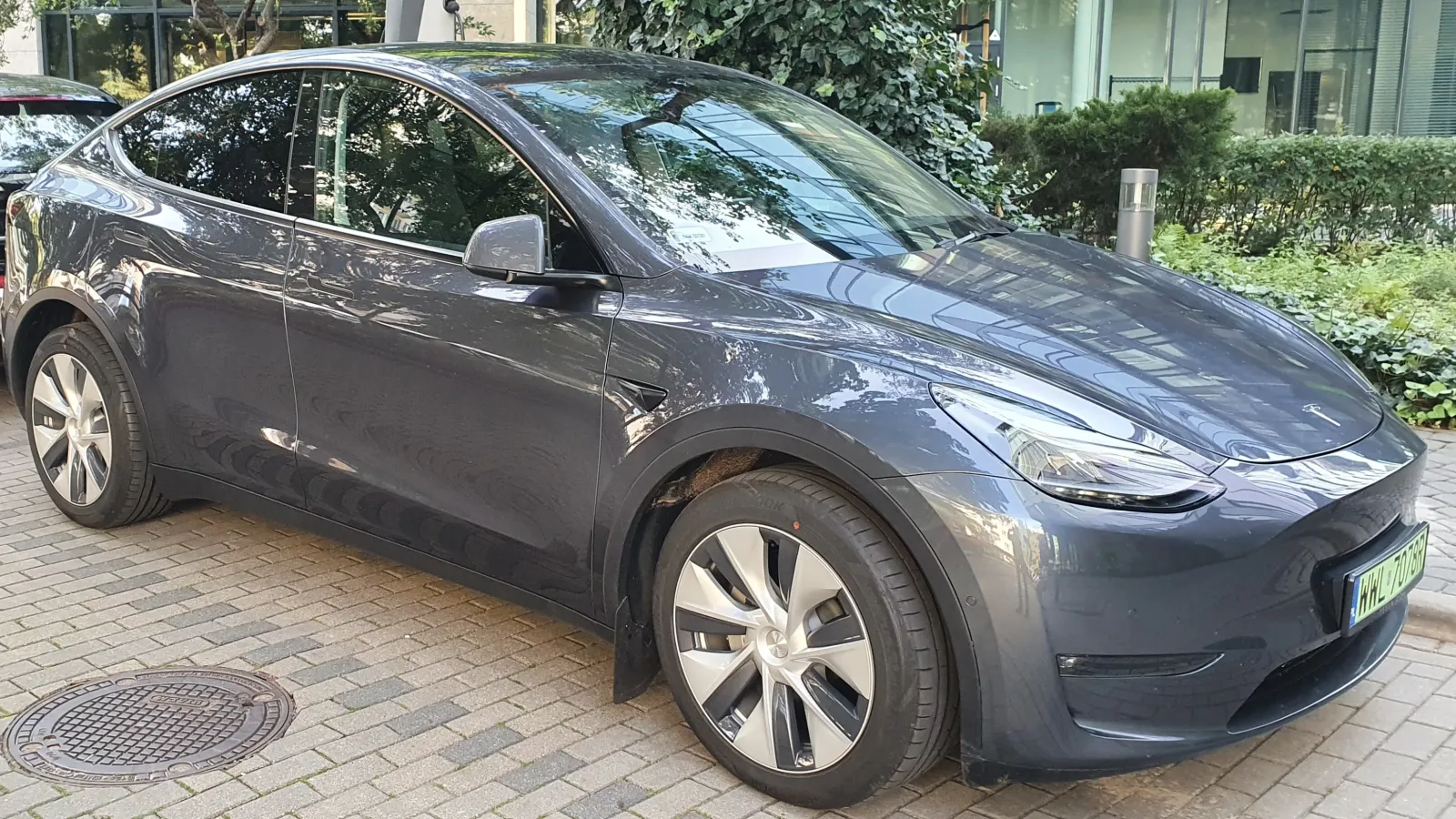
In light of the above, it is also worth mentioning the brand’s results for Europe in the second quarter, which we recently published – between April and June, the manufacturer delivered 480,126 vehicles to customers, compared to 384,122 during the same period last year. This represents a precise 25 percent year-on-year increase.
The coming months will bring extreme results
In this European panorama, it is also worth looking at Poland. Data for February 2026 show that Tesla registered 195 vehicles in our country – 34.3 percent fewer than the previous year. This figure fits within a broader trend of stagnation in Poland’s BEV market, where Tesla’s momentum has clearly weakened after a record-breaking 2024. According to ACEA data, the American brand remains one of the most popular electric vehicle manufacturers in Poland, and although its performance is weaker, it still constitutes an important part of the domestic market.
In summary, everything suggests that Tesla in Europe will continue to face extreme sales performance, with gains in some countries being offset by declines in others.
Oskar Włostowski