
Tesla has a new problem with FSD. Drivers are themselves uploading proof of breaking the law and blaming each other
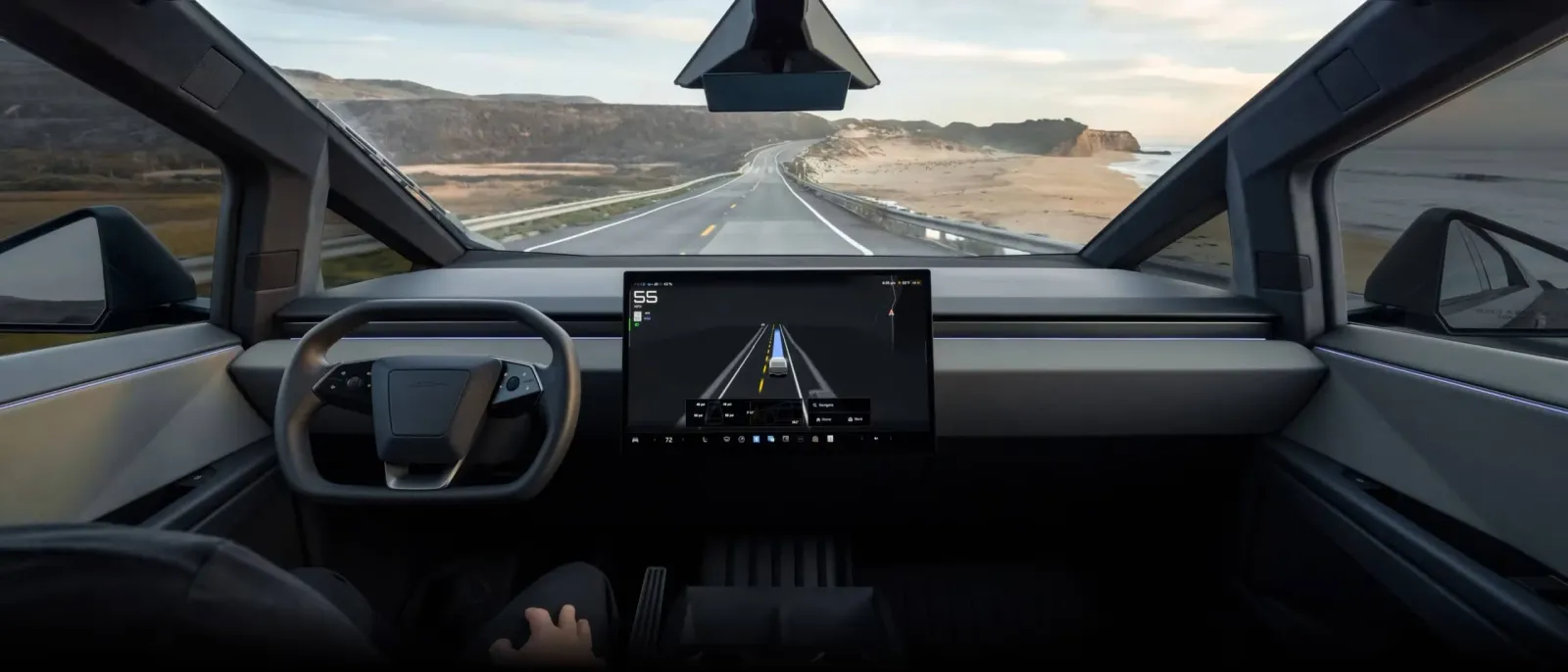
Tesla is facing a wave of videos showing drivers sleeping, playing games, or working while driving with FSD enabled. Fred Lambert’s article from August 26, 2026, depicts not just individual incidents but an entire online genre that has emerged around bypassing Tesla’s safety features.
One thing is clear for drivers: even if the car is functioning properly, FSD still requires constant human supervision, and the driver remains legally responsible for everything.
FSD as content for algorithms
The most prominent video from recent days shows a driver sleeping at highway speeds, with FSD visuals on the screen and the caption: “The life of a Tesla owner with FSD.” This is not an exception. Instagram, TikTok, and X are also filled with videos of people playing games on controllers while driving, watching live TV on the central screen, or working on laptops inside a Cybertruck.
The common denominator is simple: “Look at what Tesla allows me to do.” The problem is that in practice we’re talking about illegal behaviors. Driving while drowsy, playing games, looking at screens, or texting on a computer all fall under distracted driving or simple carelessness behind the wheel. This is prohibited almost everywhere in the U.S., as well as in most countries where these videos are filmed.
Tesla itself sells this package as FSD (Supervised) and states outright: “Currently enabled features require active driver supervision and do not make the vehicle autonomous.” In short, the name sounds bold, but the rules are much more practical.
Bypassing camera surveillance and increasingly costly consequences
The second topic is probably even more interesting. Tesla has tightened driver monitoring through 2026. The system uses force detection on the steering wheel and a camera in the cabin that tracks eye movement, issuing warnings, and after accumulating a certain number of “strikes,” it blocks FSD for a week. The company has also started moving toward verifying the driver’s identity via camera even before activating FSD.
Users responded in their own ways. Once, a weight on the steering wheel was the classic solution. Now, the internet shows things like a complex $20 bill hung on the camera to make the car think the driver is looking ahead. There are also apps and dongles sold specifically to unlock video playback while driving. There’s even a whole genre of tutorials on how to disable the “video in motion” restriction. Weak.
Tesla can no longer pretend this is a minor issue. The company now has $14.5 billion in exposure from lawsuits related to driver assistance systems, lost a $243 million verdict following a fatal accident involving Autopilot, and NHTSA is conducting an in-depth analysis of FSD across 3.2 million vehicles. Additionally, Tesla’s own data shows a record 207 accidents in one month involving Autopilot and FSD. In the U.S., over 50 deaths have also been reported to NHTSA in accidents involving these systems.
This is where the biggest contradiction lies. For years, Tesla has promoted the car’s “autonomy,” yet in court it relies on fine print and attributing responsibility to the driver. These two messages cannot be maintained simultaneously for long.
In the end, it is still the human behind the wheel who pays the price, not the algorithm. Do you think the main problem here is the drivers, or is it also the name and marketing of FSD itself?
Order your Tesla and enjoy purchase bonuses using the referral link!
LovEV Newsletter
Want more content like this?
Sign up — we’ll send you a weekly roundup once the newsletter starts.