
Tesla FSD will take over the steering wheel even in manual mode. Rescue from a collision or a new problem
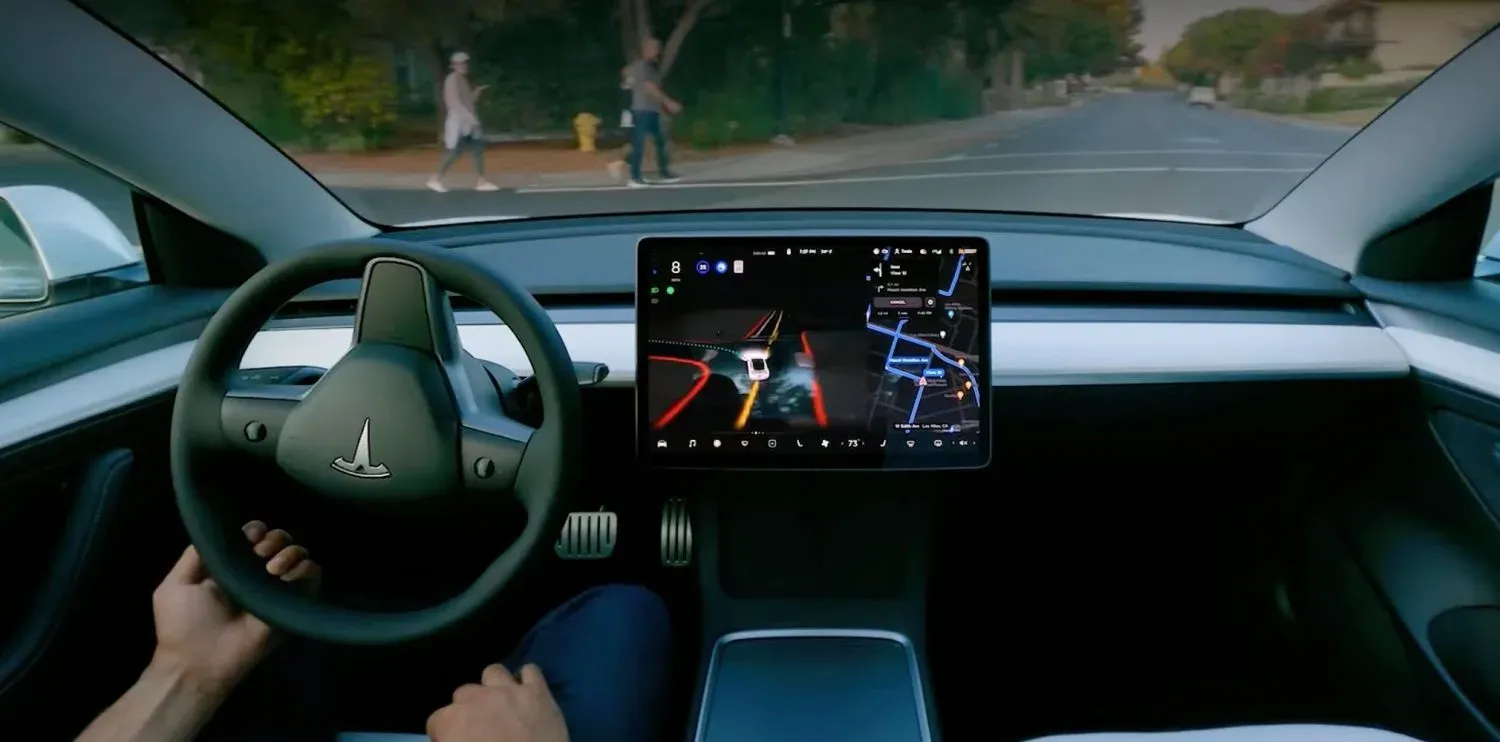
Tesla is beginning to roll out FSD Supervised v14.3.9. This update will allow the system to take control of the car even when the driver is driving manually, if a collision threat is detected and Automatic Emergency Braking (AEB) may not be sufficient.
The Tesla AI team announced this feature on September 4, 2026. It represents a significant change for users, as FSD has previously only worked when manually activated.
What exactly does FSD v14.3.9 do?
Tesla states explicitly that in the new version, “FSD Supervised can now activate on your behalf when an imminent collision is detected and Automatic Emergency Braking (AEB) may not be enough.” In other words, if the car determines that emergency braking is insufficient, it can not only apply brakes but also steer around obstacles on its own.
This is an important distinction. Traditional AEB simply applies brakes. Here, there is directional intervention in the driving path, allowing the car to turn to avoid a collision.
Tesla added another activation scenario. The system “may also engage if we detect you’re heavily distracted or have accidentally disengaged FSD”. In other words, FSD can also step in when it determines the driver is highly distracted or detects an accidental shutdown of the system.
According to the company, a part of the same v14 software stack, which has been under development since April 2026, now operates in the background even during manual driving. It doesn’t wait for a “turn on FSD” click but monitors the situation continuously.
FSD Supervised v14.3.9 starting to roll out shortly
This release includes a new active safety feature set: FSD Supervised can now activate on your behalf when an imminent collision is detected and Automatic Emergency Braking (AEB) may not be sufficient.
It may also engage if we…
— Tesla AI (@Tesla_AI) September 4, 2026
A good idea, but with a huge question mark
On paper, it seems logical. Collision avoidance systems have existed for years, and some manufacturers also develop evasive maneuvers beyond just braking. The problem is that Tesla hasn’t provided two key details.
First, it’s unclear whether the feature can be disabled. Second, the company hasn’t explained exactly how it decides that swerving is safer than braking.
And this is where the trust issue arises. It’s still the same v14 stack, which has already shown unwarranted dives into ditches and the well-known problem of so-called phantom braking, or braking in front of an imaginary obstacle. A false brake alarm is unpleasant, but a false swerve alarm represents a different level of risk.
Tesla aims to give FSD the role of a backup safety net even when the driver is driving alone. This approach can be justified if the car truly saves situations that a human cannot handle with braking alone. But with a system that has already had issues with faulty reactions, taking over steering in manual mode sounds much more serious than just another “improved ADAS” feature.
For European drivers, this is for now more of a directional signal than a feature for the future, as we’re talking about Tesla’s FSD Supervised in the U.S. market. Still, it shows where the industry is heading: from automatic braking to automatic avoidance.
The most interesting aspect isn’t that Tesla wants to save drivers, but whether drivers will be able to tell the system: “Thank you, but leave the steering to me.” Would you agree to such an emergency maneuver if it couldn’t be disabled?
Order your Tesla and enjoy purchase bonuses using the referral link!
LovEV Newsletter
Want more content like this?
Sign up — we’ll send you a weekly roundup once the newsletter starts.