
Tesla FSD gains collision avoidance feature during manual driving
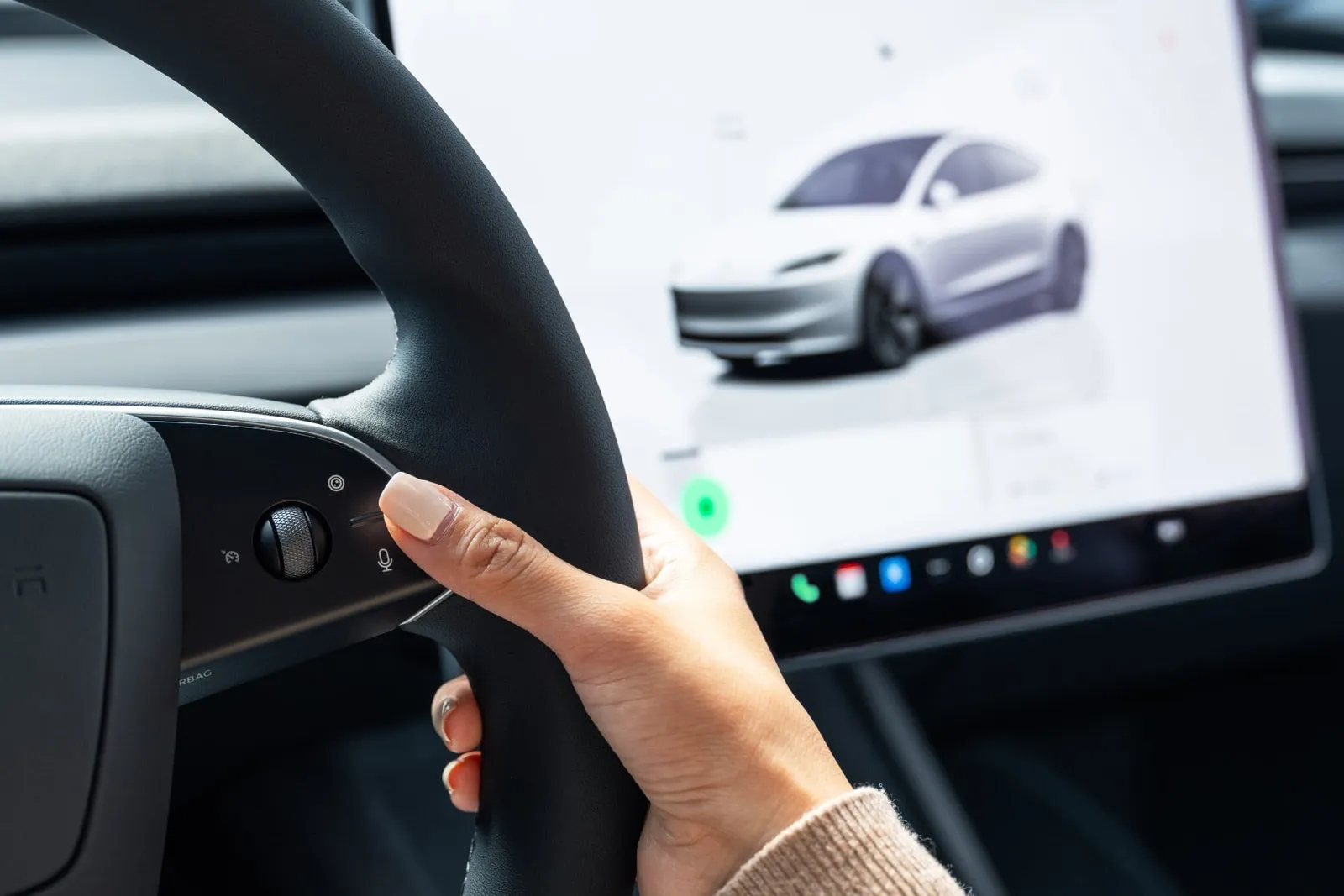
With an update to FSD (Supervised), Tesla is introducing a feature that turns the tables: While drivers must always monitor automated drives with FSD, FSD can now, conversely, monitor manual driving and, according to Tesla, intervene if a collision is imminent. Meanwhile, Slovenia has also approved FSD.
With version 14.3.9, Tesla has enhanced its Full Self-Driving (Supervised) advanced driver assistance system – referred to in Germany as Full Self-Driving (Überwacht) or FSD (Überwacht) – with a new safety feature. It can now intervene autonomously if it detects an imminent collision and automatic emergency braking may not be sufficient, even when the vehicle is being manually driven. According to Tesla, the system can also intervene if it detects significant driver distraction or if FSD has been accidentally deactivated.
In its update description, Tesla provides further details: “The feature activates FSD (Supervised) to ensure the safety of your vehicle and then continues the journey. It intervenes in the following situations while you are manually driving the vehicle:
Scenario 1: A head-on collision is imminent, and braking alone may not be sufficient to prevent it.
Scenario 2: Your vehicle detects that you are not paying sufficient attention to the traffic situation (e.g., if you are reaching for something on the rear seat) or that FSD (Supervised) may have been unintentionally deactivated.”
The new feature comes as a surprise. After all, Tesla had marketed FSD as a solution for autonomous driving until authorities intervened. Fully autonomous driving without the driver’s attention – ‘hands-off, eyes-off’ – is not possible with FSD. Hence, the system now carries the ‘Supervised’ or ‘Überwacht’ designation.
In the past, some drivers may have developed a false sense of security, as FSD fundamentally enables automated door-to-door navigation – but with the caveat that the driver may still need to intervene. However, as the system has evolved, the number of required driver interventions has decreased. Recently, there have been reports of more than 800 miles (1,287 km) without any driver intervention, potentially leading some drivers to believe that they no longer need to remain attentive.
FSD monitors the driver – instead of the driver monitoring FSD
Tesla has now turned the tables, enabling FSD to assist in situations where a human is driving the vehicle and may be at risk of an accident. This is a fundamentally different approach from before and also suggests that some FSD users do not consistently use the system.
Meanwhile, Tesla has announced further progress in the rollout of FSD (Supervised) in Europe: Slovenia has approved the driver assistance system for use on its roads. This makes Slovenia the sixth European country to take this step, following the Netherlands, Denmark, Belgium, Estonia and Lithuania.
Tesla publishes FSD data set
Ahead of a potential vote on EU-wide approval on 6 October 2026, Tesla has also decided to make a key component of the evidence submitted for type approval by the Dutch authority RDW publicly available.
To this end, Tesla has launched an online dashboard for FSD (Supervised), which includes data on distances already covered using the assistance system and accidents. The core message of Tesla’s press release is: “FSD (Supervised) is already saving lives where it is approved—yet in large parts of Europe, this safety benefit remains blocked by bureaucratic hurdles.”