
Tesla FSD gets accident prevention features when driving manually
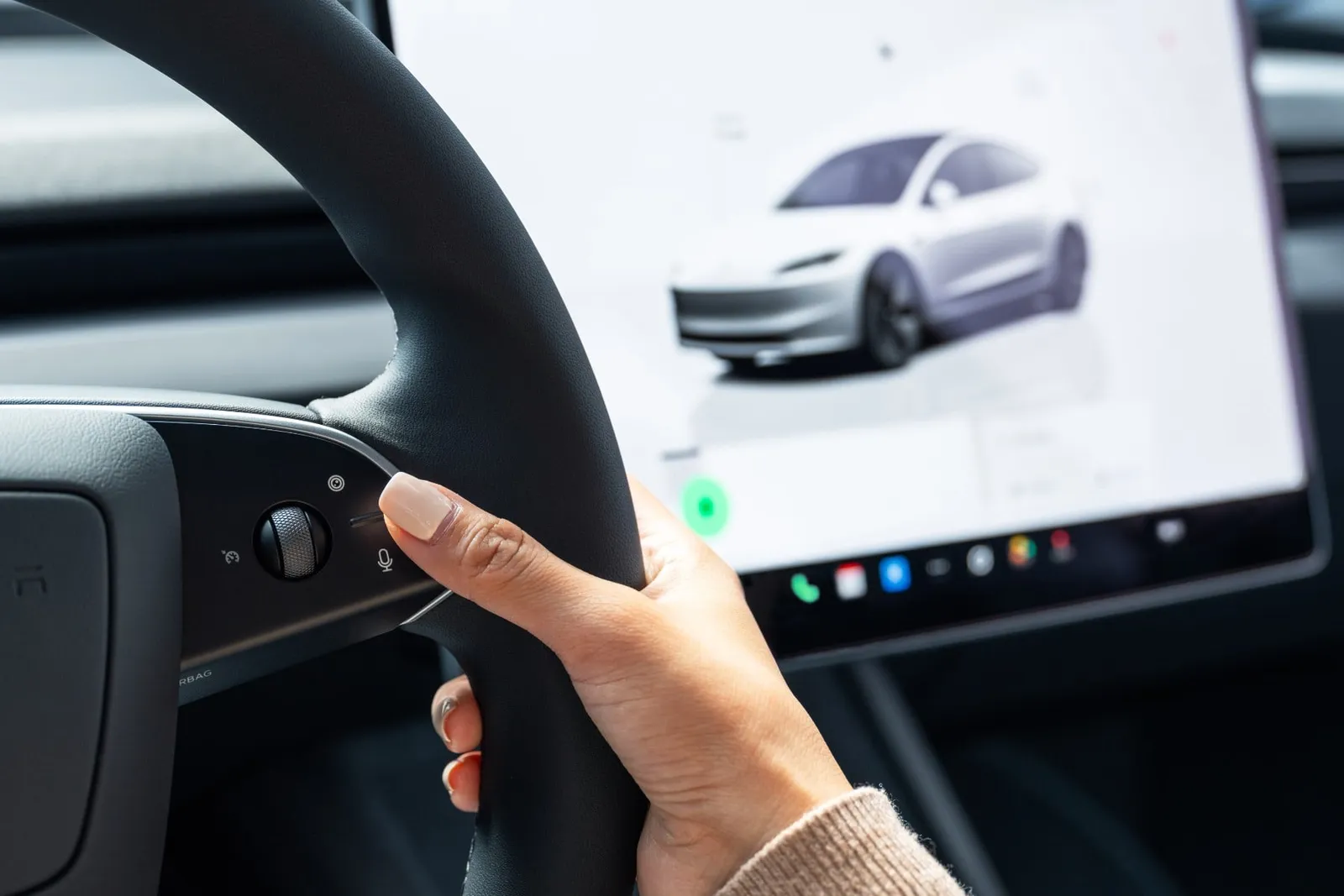
With an update to FSD (Supervised), Tesla is introducing a feature that reverses the role: while drivers must always monitor automated driving with FSD, FSD can now monitor manual driving instead — and is supposed to intervene in case of an impending accident, according to Tesla. Meanwhile, Slovenia has also approved FSD.
Image: Tesla
With version number 14.3.9, Tesla is adding a useful safety feature to its Full Self-Driving (Supervised) assistance system — referred to in Germany as Full Self-Driving (Überwacht) or FSD (Überwacht). It can now intervene independently when an imminent collision is detected and automatic emergency braking (AEB) may not be sufficient — specifically in situations where the electric vehicle is being driven by the driver themselves. The system can also activate if it detects strong driver distraction or if FSD was accidentally disabled, according to the electric vehicle manufacturer.
In the update description, Tesla specifies further: “This feature activates FSD (Supervised) to ensure your vehicle’s safety and then continue driving. It intervenes in the following situations while you are manually steering the vehicle:
- Senario 1: A frontal collision is imminent, and braking alone may not be sufficient to prevent it.
- Senario 2: Your vehicle detects that you are not paying enough attention to traffic (for example, if you reach for something in the back seat) or that FSD (Supervised) may have been unintentionally disabled.”
The new feature arrives unexpectedly — after all, Tesla had marketed its FSD as a solution for autonomous driving until authorities stepped in. Fully autonomous driving without any attention from the driver behind the wheel (“hands-off, eyes-off”) is not possible with FSD. That’s why FSD now also includes the term “supervised” or “monitored.”
In the past, some drivers felt a false sense of security, as FSD generally allows for automated door-to-door navigation — but with the caveat that the driver might need to intervene. However, as the number of required driver interventions decreases with the system’s development — recently reports mentioned over 800 miles (1,287 km) without any driver input — FSD can make some drivers think they don’t need to do anything at all.
FSD Monitors the Driver – Instead of the Driver Monitoring FSD
Tesla has now reversed the role, aiming to ensure that FSD also assists in situations where a human is driving and faces potential accident risks. This represents a completely different approach from before and also shows that some FSD users do not use the system constantly.
In the meantime, Tesla reports further progress in deploying FSD (Supervised) in Europe: Slovenia has approved the driver assistance system for use on its roads. This makes Slovenia the sixth European country to take this step, following the Netherlands, Denmark, Belgium, Estonia, and Lithuania.
Tesla Releases FSD Dataset
Ahead of a potential vote on a pan-European approval on October 6, 2026, Tesla has also decided to make a key part of the evidence for type approval by the Dutch authority RDW publicly available.
To this end, Tesla has now released a dashboard for FSD (Supervised) online, which includes data such as the distances traveled and accidents involving the assisted driving system. Tesla’s press release states: “FSD(Supervised) is already saving lives where it is approved — but in large parts of Europe, this safety advantage remains blocked by bureaucratic hurdles.”