
Tesla drops out of the top 10 most innovative electric car manufacturers, while Mercedes gains ground.
Jump to content
- Newsletter
- Podcast
- Conference
- Media details
- electrive global
The leading publication on electromobility
[](https://www.electrive.net/suche/)
All categoriesAll categories
- Fuel cells
- Off-Highway
- Bicycles
- Politics
- Air transport
- Data
- Water
- Careers
- Autonomous driving
- Ride reports
- Automobiles
- Infrastructure
- Batteries
- Vehicles
- Fleets
- Paris Motor Show
- Job market
- Calendar
- Studies
[](https://www.electrive.net/2026/10/21/tesla-faellt-aus-top-10-der-innovativsten-e-auto-hersteller-mercedes-legt-zu/#overlay)
[](https://www.electrive.net/2026/10/21/tesla-faellt-aus-top-10-der-innovativsten-e-auto-hersteller-mercedes-legt-zu/#)
- Automobile
- Infrastructure
- Batteries
- Vehicles
- Fleets
- Paris Auto Show
All CategoriesAll Categories
- Fuel Cells
- Off-Highway
- Bicycles
- Politics
- Air Transport
- Data
- Water
- Careers
- Autonomous Driving
- Ride Reviews
- Job Market
- Calendar
- Studies
- Newsletter
- Podcast
- Conferences
- Media Info
- electrive Global
Automobiles
Tesla drops out of top 10 most innovative EV makers, Mercedes climbs up
The ranking of the world’s most innovative electric vehicle manufacturers remains dominated by Chinese and German companies. The Center of Automotive Management (CAM) lists Geely Group, Volkswagen Group, BYD, Mercedes-Benz, and BMW at the top, while Tesla has fallen out of the top 10.
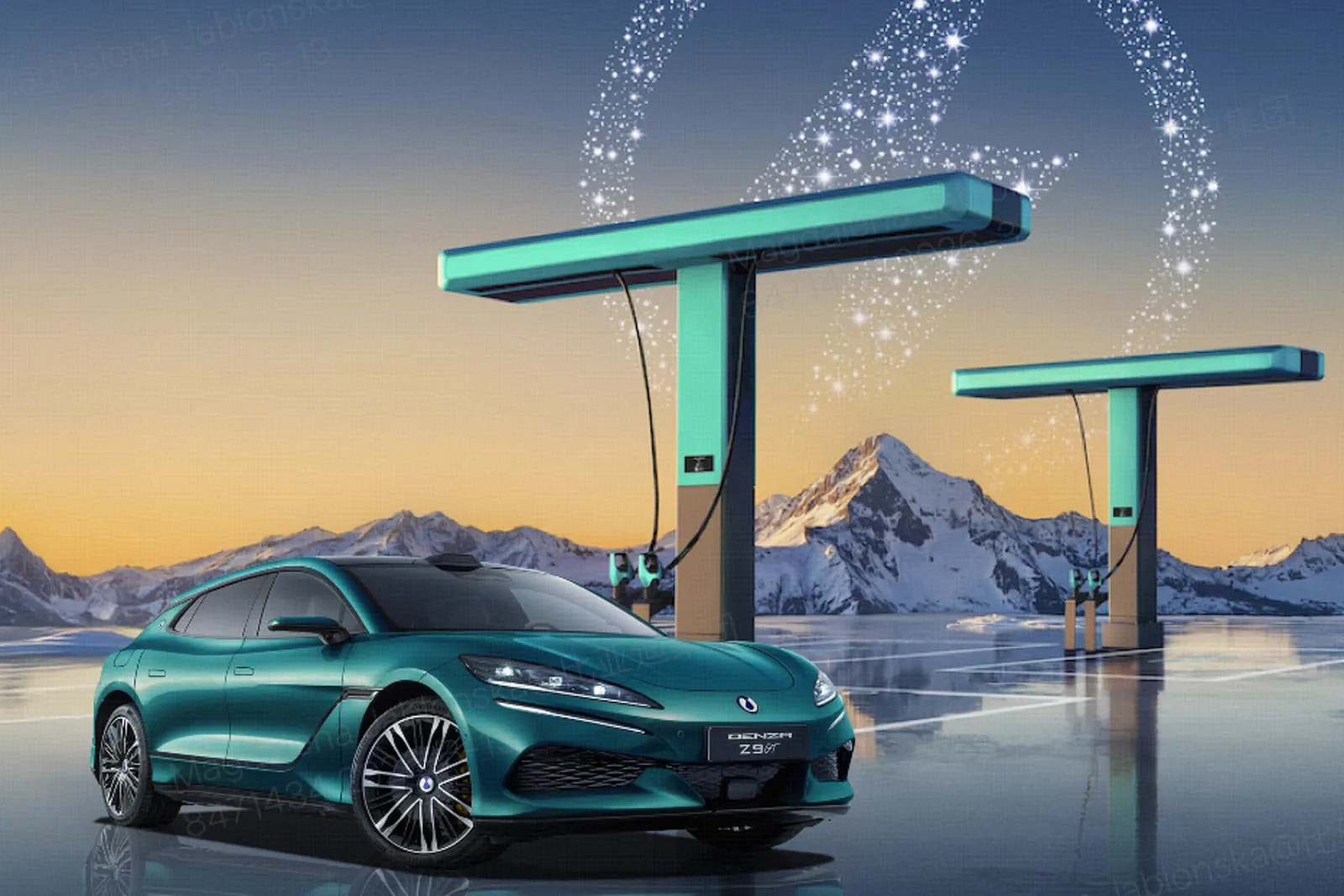
BYD’s Flash Charger is one of the innovations mentioned.
Image: BYD
By Florian Treiß
21.10.2026 - 11:30 AM
- [CAM](https://www.electrive.net/tag/cam/ "CAM")
- [Stefan Bratzel](https://www.electrive.net/tag/stefan-bratzel/ "Stefan Bratzel")
- [BEV](https://www.electrive.net/tag/bev/ "BEV")
The CAM based in Bergisch Gladbach, led by Prof. Dr. Stefan Bratzel, publishes two series of studies at regular intervals: While the most recent “Automotive Innovations” report, released in April, focuses on innovations for vehicles of all propulsion types — with BYD taking the lead for the first time in this series — the newly released “Electromobility Report” deals exclusively with innovations in battery electric vehicles (BEVs).
In advance: Compared to the last ranking from January, there’s little change at the top three positions. Once again, China’s Geely Group with 207 Index Points (IP), Volkswagen Group (204 IP), and BYD (192 IP) topped the list. More movement was seen in the positions behind them: Mercedes-Benz Group rose by three places, ending up in 4th place with 147 IP. Following behind are BMW, SAIC, Hyundai, Renault, GM, and Stellantis, which complete the top 10.
Tesla not in Top 10 for the first time in ten years
Tesla, on the other hand, saw a sharp decline: the U.S.-based electric vehicle manufacturer dropped from 6th to 11th place, scoring 78 index points. While this still represented a gain of 3.4 index points, other manufacturers were able to overtake Tesla because they introduced significantly more innovations in electric vehicles recently. As a result, Tesla is for the first time since the ranking was introduced in 2016—when the company topped the list—no longer among the top 10.
The CAM highlights various series innovations from the first half of 2026, focusing particularly on range, charging speed and efficiency, as well as the electric ecosystem (V2H, V2G). Mercedes stands out for its high range in various segments (EQS, VLE) and offers bidirectional charging functions (Vehicle-to-Grid, Vehicle-to-Home), similar to BMW. BYD leads in fast charging with Flash Charging, achieving a charging speed of up to 1,500 kW through a single port with the Denza Z9 GT. The European version can charge from 10% to 97% in about nine minutes, even at minus 30 degrees Celsius. In terms of efficiency, the VW ID.3 Neo excels thanks to its new APP350 electric motor, more efficient powertrain, and intelligent thermal management, along with a 79-kWh battery that provides the best-in-class range of 629 kilometers.
(WLTP) Range is achieved with a consumption of 14.3 kWh/100 km or higher.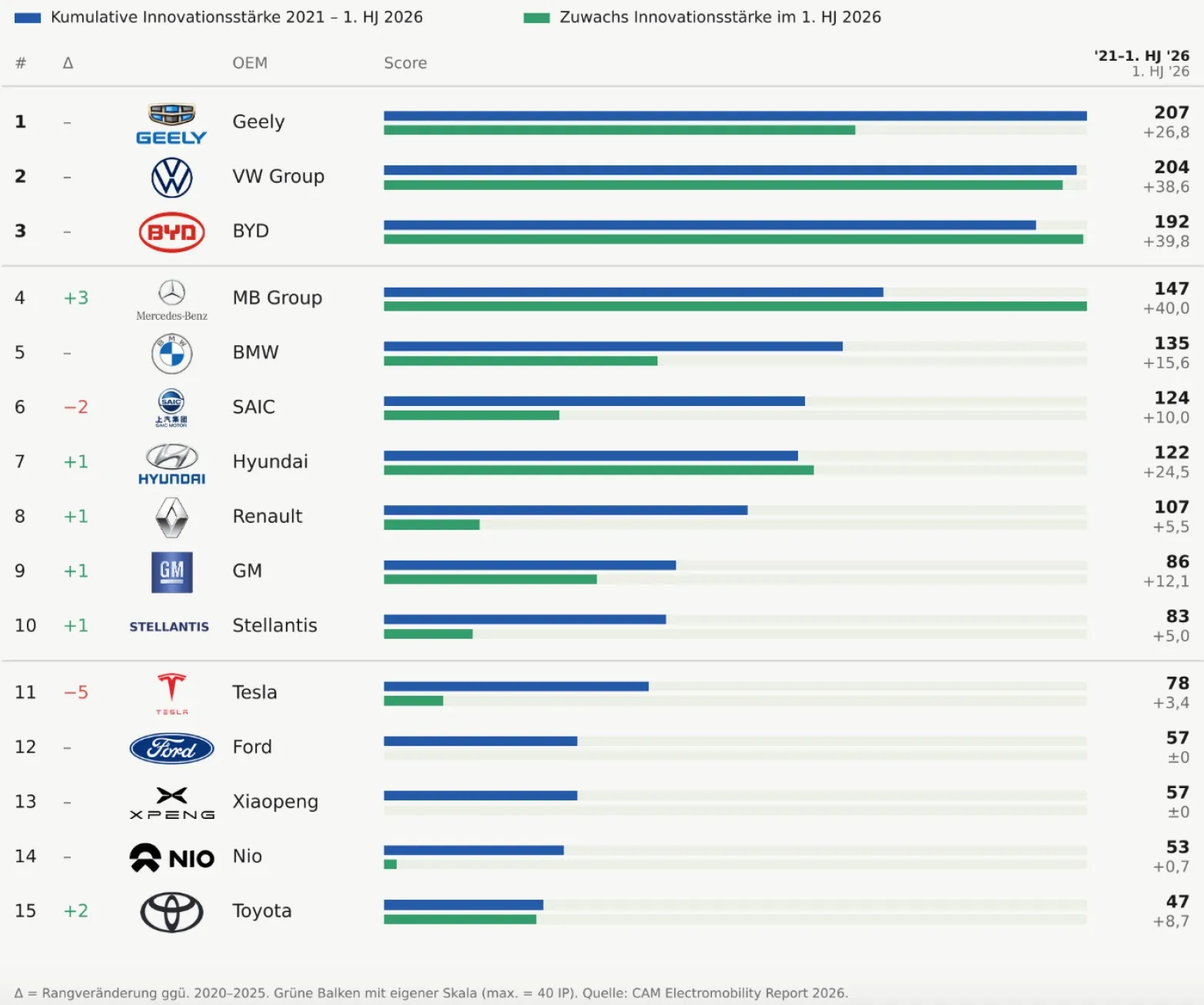
Ranking of the most innovative electric vehicle manufacturers
Chart: CAM
Study leader Stefan Bratzel says, “Innovation leadership in electric mobility will continue to be shaped significantly by Chinese and German manufacturers. Particularly noteworthy is Mercedes-Benz’s catch-up effort, while Geely and BYD have demonstrated strong innovation capabilities over an extended period. Tesla, on the other hand, is falling far behind in the innovation race. What matters now is not just who offers electric cars, but who brings the most convincing overall packages to market in terms of range, charging speed, efficiency, and cost. Chinese manufacturers are increasingly showing that they can translate their technological strengths into market share, even in Germany. A doubling of their new electric car registrations is a clear warning sign for established manufacturers.”
Methodology: During the current research period from 2021 to the first half of 2026, the Center of Automotive Management (CAM) identified and evaluated a total of 910 series innovations from 38 automobile manufacturer groups in the field of electromobility. The evaluation of innovations in electromobility focuses on the CAM Triad, which consists of range, power consumption, and charging speed—parameters considered central to customer relevance in electromobility. Additionally, market segment penetration (such as the first introduction of electric drives in specific vehicle segments) and other innovation-related developments in electromobility are taken into account. These include advancements in battery technology, charging control, or related system components.
_Source: via email_
Keywords
- CAM
28 comments
on “Tesla drops out of Top 10 most innovative EV makers, Mercedes rises”
Gregor
21.10.2026 at 11:53
This would be reading material for those who don’t understand why the purchasing behavior of some customers in the field of electric mobility, especially in China where all competitors, including Western manufacturers, are actually better, is problematic: innovations fall behind. And customers pay too much for a worse product, which from a customer perspective cannot be approved either. Moreover, the money flows, at least from a German perspective, to the wrong companies. It is therefore logical to demand that market realities be recognized finally, from an economic perspective, a social perspective, in terms of fairness, and from a technological innovation standpoint. Only in this way can electric mobility continue to develop. In the area of private cars, development of mass-market vehicles that we as customers can drive has for years been driven solely by German and Chinese companies. It has truly taken hold.
It seems this isn’t the case even after years.Answers
Joachim Schäfer
10/21/2026 at 12:22
I don’t think the study is objective. The Tesla Model 3 and Y have topped global sales rankings for years. If German automakers are as innovative as claimed, why is car sales continuing to decline?
Answers
David
10/21/2026 at 8:28 PM
Please always read the article before commenting. It primarily evaluates propulsion technology, charging technology, and resulting range. Regarding Tesla, while other vehicles are efficient too—some even more so—they have clearly fallen behind in charging speed. Range is another area where they lag. Additionally, their systems aren’t designed to be bidirectional.
Answers
Guentsch Alexander
21.10.2026 at 14:47
For several reasons: 1. The study clearly focuses mainly on innovations in the powertrain (in a broad sense). In my view, Tesla isn’t making much progress in this area. 2. The study looks at trends rather than the status quo: Even though I’m not a Tesla fan, they are already as efficient as others aim to be. There’s simply less room for improvement. 3. The scope of the study doesn’t perfectly correlate with product attractiveness: Other manufacturers are further ahead in areas like infotainment and autonomy, or they offer lower prices, which are certainly also key factors.
Replies
Jul
21.10.2026 at 13:52
If you consider all the different VW models, they are ahead of Tesla; sales in the electric vehicle segment have risen significantly especially in 2025 (also in Europe in 2026, but the rest of the world performed poorly).
Answers
Gregor
10/21/2026 at 12:57
Because many people have no idea about the technical details or market offerings. Additionally, for many first-time buyers—whether it’s their first car, often young drivers, or newcomers to electric mobility—the brand and how they are perceived among friends often matter more. Hype and social media play a big role in this, as toxic comments on blogs, YouTube, etc., don’t appear out of nowhere from some random group. Many people don’t want to “experiment” with their first electric car; when thinking of electric cars, Tesla often comes to mind, so it’s natural to follow that initial thought, especially when fueled by hype on YouTube or among friends. This often has little to do with technical realities, comfort, or features. Those who look around the market are surprised by how much luxury is available in Chinese cars, from interior fittings like zero-gravity seats.
Sophisticated seating, refrigerators, large retractable screens in the vehicle’s roof, along with advanced technologies such as LIDAR, air suspension, charging capacities of 1000kW and more, and engine powers of 1000HP and more. This is just a brief list; there’s also a lot going on with software, battery technology, electric motors (such as the axial flux motors used by Mercedes), and so on.Replies
Michael
10/21/2026 at 1:06 PM
Flying cars or self-driving cars aren’t innovative enough.... the study is definitely very unbiased.... :-)
Replies
Markus
10/21/2026 at 3:41 PM
These are dreams for the future; none of these are available on the market yet (in 2026). FSD isn’t fully autonomous because a driver must constantly monitor it. And the Roadster will arrive (if at all) in 2028.
Replies
RF
10/21/2026 at 3:24 PM
Neither cold gas nozzles that can make a car fly nor driver-assistance systems have anything to do with electric propulsion.
Answers
David
10/21/2026 at 3:20 PM
Tesla does not have autonomous vehicles. They want to create that impression. That’s why they were recently banned in Europe from using the misleading term FSD for their assistance systems. Flying cars have already existed—even 60 years ago and with road approval. The nozzle was also invented a long time ago. So you could even make a wardrobe in the living room fly. That wouldn’t be an innovation then. Most importantly, this technology will never make it onto the roads. Many manufacturers already have prototypes.
Answers
PH
10/21/2026 at 2:30 PM
How could Tesla’s latest PR stunt have any connection to actually purchasable cars? Musk showed a prototype that, first, is never eligible for approval in this form, and second, might only become available by 2028 at the earliest (Tesla has been promising a new Roadster since 2017…). The emphasis is on “might.”
Answers
Gregor
10/21/2026 at 2:25 PM
They aren’t flying, they’re not production models, and they probably never will be. So obviously this nonsense has no impact at all. Tesla also doesn’t have fully autonomous cars yet. The only product that could even be considered in this regard is the Robotaxi, but it’s not a private car and can’t be purchased. They include backup systems in these vehicles because autonomous driving isn’t error-free or truly safe, and currently they’re not even considered fully road-legal as regulatory authorities are still investigating them. So where is the innovation, especially for customers? I’m not sure what you’re talking about.
Answers
David
21.10.2026 at 15:09
I must state upfront that I have no respect for those two so-called institutes, CAM and CAR. However, regarding Tesla, CAM is not wrong. It’s just a simplistic view though. These vehicles have remained technically almost unchanged for years and are constantly compared in tests. This can be confirmed by facts: one only needs to compare the battery size and average charging speed of the Model 3 with that of the similarly sized BMW i3. The BMW offers 50% more battery capacity in the same space, and its average charging speed is even twice as high. The same can be said about Mercedes, as their oil-cooled cells and axial flux motors represent absolute cutting-edge technology.
Answers
Tea Jay
10/21/2026 at 4:25 PM
A key factor is cost-performance ratio. After all, the BMW also costs almost twice as much...
Answers
David
10/21/2026 at 7:30 PM
We’re not here for shopping advice; this topic is about technological advancement. If you compare the two “3 Series” models technically, even a layperson can see there’s a huge difference. In terms of price as well, the cars aren’t significantly different. The Tesla costs 51 with all-wheel drive, while the BMW costs 65,500 with APL. I think a 15k premium for a car with 246 more kilometers of range is fair. And let’s not even talk about Tesla’s reputation in Germany.
Answers
Gregor
10/21/2026 at 6:44 PM
And it’s twice as good. So same price-performance ratio.
Answers
Markus
10/21/2026 at 3:40 PM
This ranking makes sense — Tesla was extremely innovative, and their cars are still good (even though I find them ugly). But nothing new has been added in years. However, I wonder why Stellantis is ranked 10th in terms of innovation. Like with Tesla, I can’t think of any innovations Stellantis introduced to the market over the past year.
Answers
Gregor
10/21/2026 at 4:02 PM
Quite a bit is happening. I can’t say much about the current models, but the new Peugeot e-208 is supposed to come with steer-by-wire, which is a first for the compact car class. The engineers must have introduced innovations in series before as well, even if only in minor details. However, the biggest advancements are happening only with German and Chinese manufacturers.
Answers
Jürgen
10/21/2026 at 4:19 PM
Can someone help me out here. Why is VW considered innovative? Because they can finally offer a charging power of over 100KW? I don’t get it. It’s good that there are enough buyers who aren’t misled by such misleading studies. For me, the only issue with electric mobility these days is the overcharging at charging stations; everything else is perfect, and I’ll never switch back to internal combustion engines. Moreover, I’m happy every morning when I get to drive my electric car, which is now considered outdated according to this “study.” And I’m not affected by the overcharging at charging stations because the manufacturer was innovative enough years ago to build its own charging network.
Answers
David
21.10.2026 at 20:05
The VW Group is a pioneer in 800 V technology for mass production. They also introduced the first multi-speed transmission in a passenger car. Moreover, they are the only ones to use a power-saving variable switching frequency strategy in inverters. To reduce weight, their engines no longer have oil pumps. They have delved deeply into fluid dynamics and designed the transmission so that the gears also transport oil. Another unique feature is their ability to offer air conditioning/heat pumps using CO2 instead of the usual toxic, hazardous, and environmentally damaging refrigerants — for those who take the environment seriously. Speaking of this topic: Everyone likes solutions to remove plastic from the oceans. But only at VW can you buy an attractive premium seat cover made from it: Seaqual. They are also the first manufacturer to offer an inductive charging solution as standard equipment.
. And they are currently rolling out the Zone Architecture, an E/E architecture that refers to zones in terms of space rather than theme, which significantly reduces cables and costs, virtualizes control units, and adds redundancy as a result. Similarly, Benchmark’s capabilities in standardization and thus cost reduction, such as with the unit cell, are notable, and they have established the first pure, extremely flexible scaling platform for electric vehicles at an absolute mass production scale worldwide.Answers
Uwe
21.10.2026 at 19:19
I would guess this is some kind of “commissioned study.” It could also be considered marketing material. The content is absolutely ridiculous.
Answers
Gregor
21.10.2026 at 19:00
Car2X, Driver Assistant 3.0, pre-crash detection and protection, efficient and compact APP350 in small cars equipped with SiC converters, oil-water cooled and lubricated super efficient APP550 engine, in-house cell manufacturing, MOIA autonomous shuttle buses; with Rivian, efforts are underway on spatial architecture to determine how car components communicate and process data. There are also projects involving Audi and Porsche. This is the VW Group. Porsche has excellent battery and cooling technology, as well as an active ride suspension directly connected to the 800V high-voltage system that can eliminate all swaying, pitching, and rolling movements within milliseconds. The air suspension is so powerful that the car could theoretically even jump (I believe NIO demonstrated this later with a similar product). Porsche features a flexible and curved display, while Audi has the most advanced lasers and OLED lighting.
so that they can even communicate this danger to the environment. An innovation with OLED taillights was, for example, the ability of individual light fields to “move” and dynamically change across the light strip without reducing the overall lighting power of the taillight. This allows Audi to now display wave patterns or similar on the taillight. And there is so much more like that.Answers
Gunnar
21.10.2026 at 16:46
I can only agree. I drive a TM3P and a VW.ID Buzz. In the latter case, the innovation might lie in the floor mats, but not in software or anything similar. I’d rather not even talk about charging and its planning.
Answers
David
21.10.2026 at 20:14
But only if one knows nothing about the technology of the ID.Buzz. It operates quietly and reliably, after all. And VW doesn’t always loudly proclaim its unique features. For example, the ID.Buzz with APP550 doesn’t have an oil pump and features a variable frequency inverter. It’s available with an eco-friendly air conditioning/heat pump that runs on CO2. There’s also a version with seat covers made from marine plastic. Additionally, it charges faster than the Tesla, and unlike the Tesla, it allows electricity to be drawn from the battery. As for software, it’s unfair to criticize VW in this regard. In the ID.Buzz, one has always been able to adjust settings like Dogmode or night heating through the regular display in the settings menu. Wireless CarPlay is standard.
Answers
Matthias
21.10.2026 at 17:32
I drive an ID.3 myself and can only advise everyone to stay away from it. This car is the best proof that VW has completely neglected the topic of electric mobility and software for years. For over-the-air updates, I had to go to the dealership multiple times for days on end (including replacing the 12V battery); the infotainment system keeps freezing and crashing, the unlit touch sliders annoy me every night, and the app connection is purely luck-based. I won’t even start talking about charging in winter: without proper pre-conditioning of the battery, you end up at the HPC charger in sub-zero temperatures, charging at a mere 45 kW. As a first-time buyer, you feel like an expensive beta tester left in the rain with outdated hardware by VW. And those who think everything is fine with newer models and facelift versions only need to look at the recall campaigns due to faulty battery cells and fires.
It’s dangerous to even look at them (model years up to 2025!). You buy a new car, and as an “immediate solution,” the charging capacity is first reduced to 80% via software, or you’re forced to stick a warning sticker in the cockpit until the dealership finally finds time to check the battery modules. It’s simply embarrassing — never again for me!Answers
MYP
10/21/2026 at 18:47
The innovation lies in the gap dimensions! TAD or what was once called FSD probably doesn’t count as innovation. Funny!
Answers
Uwe
10/21/2026 at 19:18
It’s quite amusing that something like this can be called a “study.” It’s a marketing product for European automakers. Is VW innovative? Is Stellantis innovative? XPeng in 13th place? It’s as ridiculous as it is absurd. It’s extremely embarrassing when an “electric vehicle news portal” publishes such obvious marketing nonsense without any comment.
Answers
Tomtom
10/21/2026 at 9:38 PM
Interesting to see what half-knowledge and half-truths the VW supporters are spouting here again. The keyword is 800 volts. It was Porsche, not VW, and in the mass market it was Hyundai. And to top it off, they have to bring up the brand-new I3 to show that technology keeps evolving. No one’s using that outdated ID Buzz anymore.
Answers
Write a comment Cancel reply
Your email address will not be published. Required fields are marked with *
Name *
Email *
I agree to the privacy policy - [x]
Website
Also read
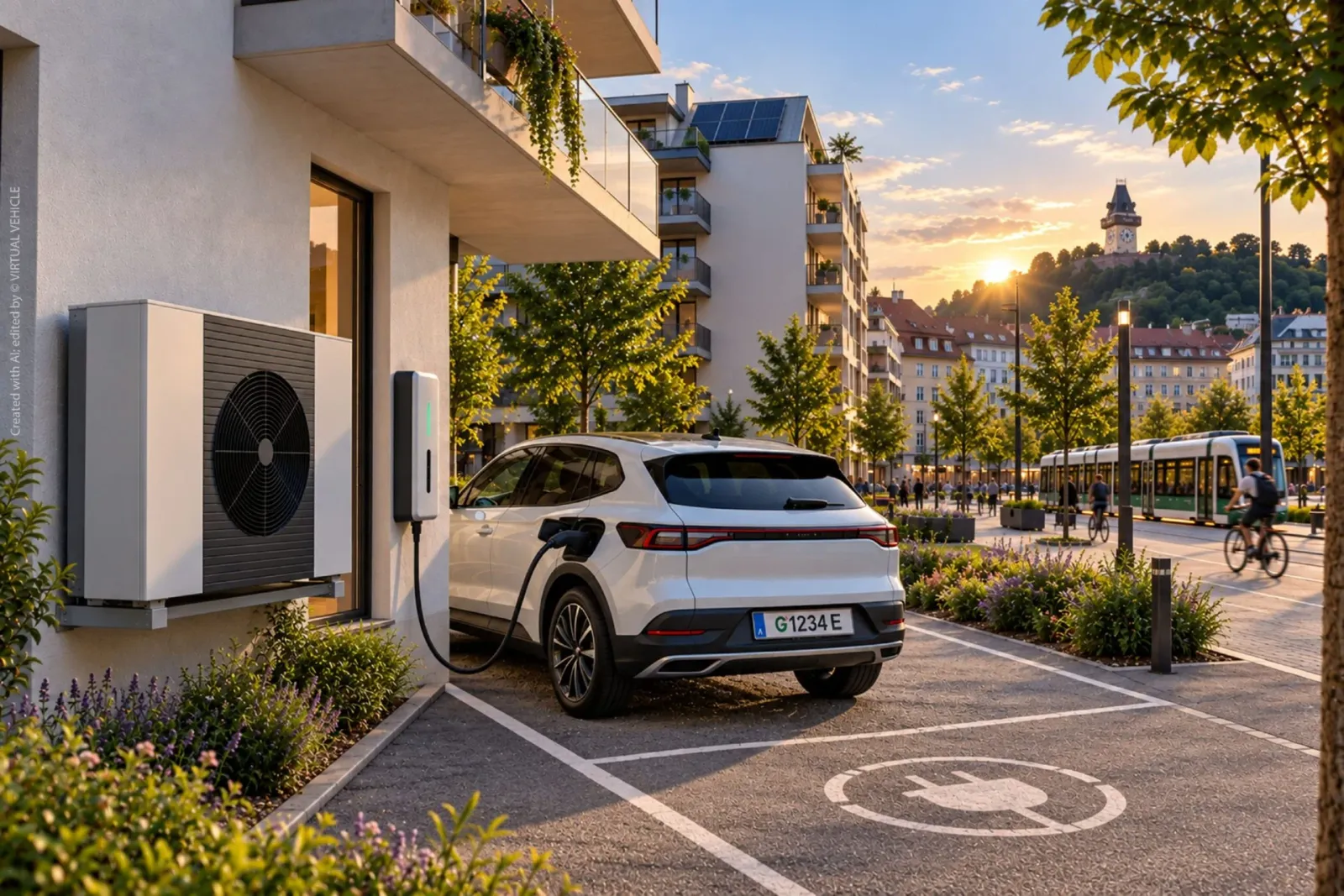
[Infrastructure ## CREED Project: How Electric Vehicles Can Benefit Power Grids Published 6 hours ago](https://www.electrive.net/2026/10/21/creed-projekt-wie-e-fahrzeuge-ein-gewinn-fuers-stromnetz-werden/ "CREED Project: How Electric Vehicles Can Benefit Power Grids")
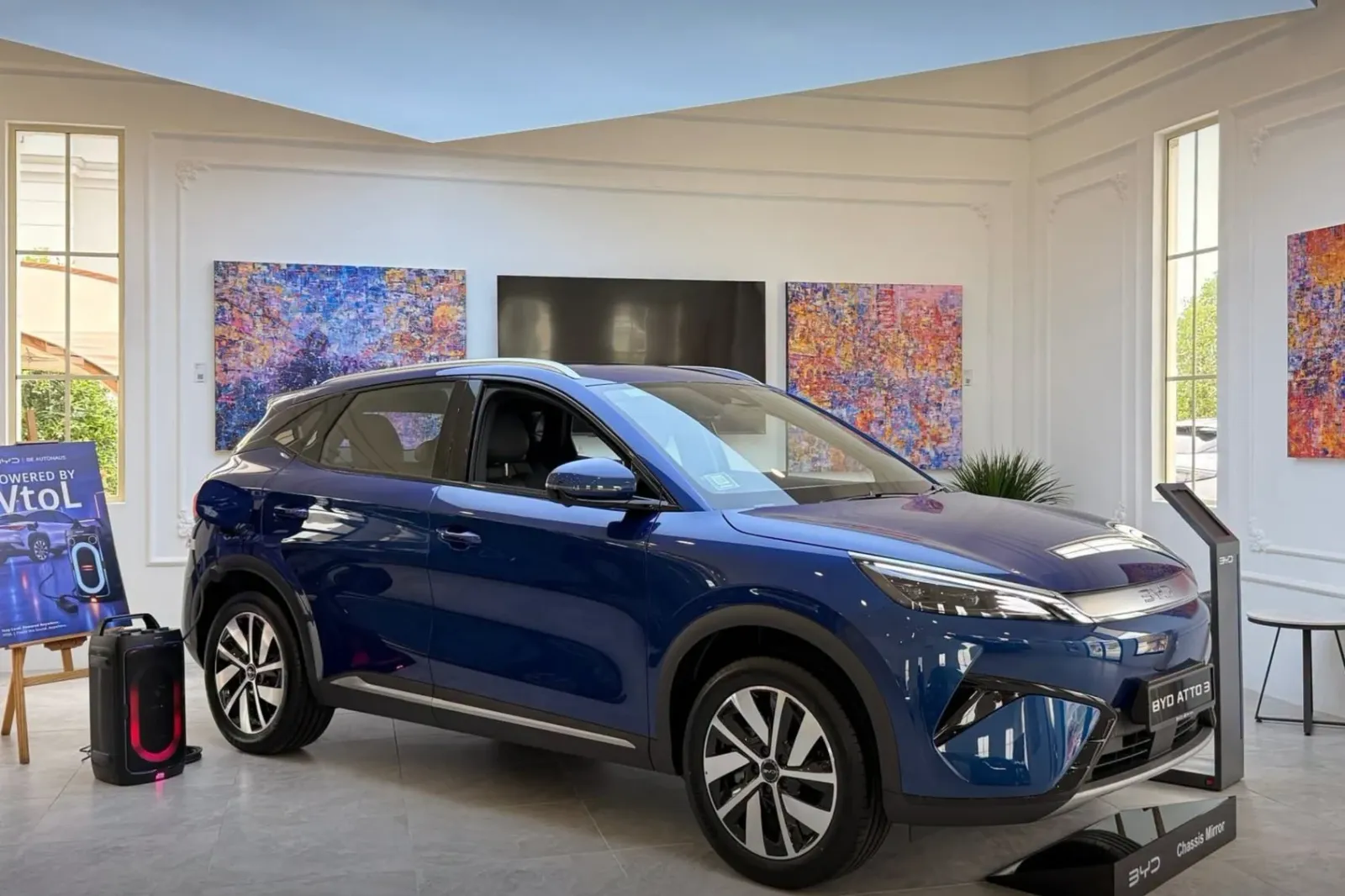
[ Automotive ## BYD Uses Same Partner as BMW for CKD Assembly in Malaysia Published 7 Hours Ago](https://www.electrive.net/2026/10/21/byd-bmw-montagepartner-malaysia/ "BYD Uses Same Partner as BMW for CKD Assembly in Malaysia")

[ Video - 28:59 min Automotive ## “How Non-Contact Measuring Technology Improves the Quality of Electric Drivetrains” – Erwin Enns, Marposs 15.07.2026](https://www.electrive.net/2026/07/15/wie-beruehrungslose-messtechnik-die-qualitaet-von-e-antrieben-verbessert-erwin-enns-marposs/ "“How Non-Contact Measuring Technology Improves the Quality of Electric Drivetrains” – Erwin Enns, Marposs")
electrive – The Leading Media Outlet for Electrification
Since 2011, we have been following the development of electric mobility with journalistic passion and expertise. As a leading digital industry publication, we deliver comprehensive coverage of the highest quality. With news, background reports, interviews, test drives, videos, podcasts, as well as advertisements and job listings, we provide the central platform for the rapid growth of this technology.
- Automotive
- Air Transport
- Infrastructure
- Water
- Batteries
- Off-Highway
- Commercial Vehicles
- Politics
- Fleets
- Data
- Fuel Cells
- Careers
- Bicycles
- Job Market
- Newsletter
- Media Information
- Contact
- Team
- Legal Notice
- Terms of Service
- Data Protection
- Cookie Settings
© 2026 electrive.net
[electrive global](https://www.electrive.com/ "electrive global")