
Tesla begins delivering the Semi: 805 km of range and a technology that completely transforms electric trucks
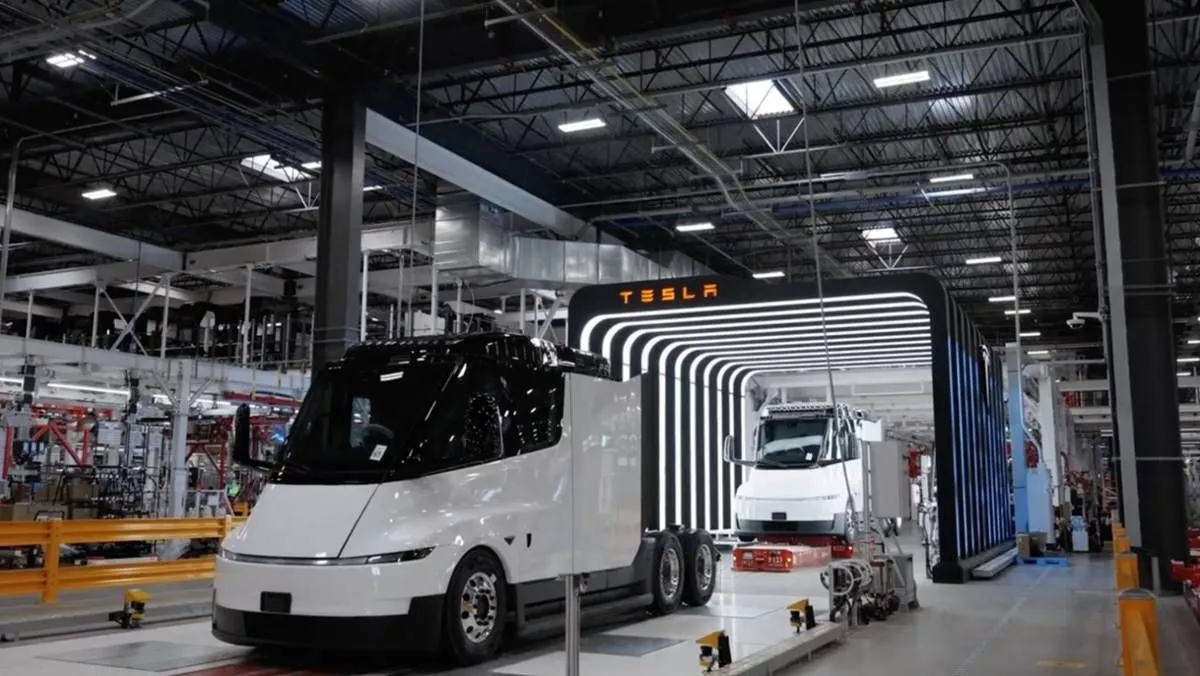
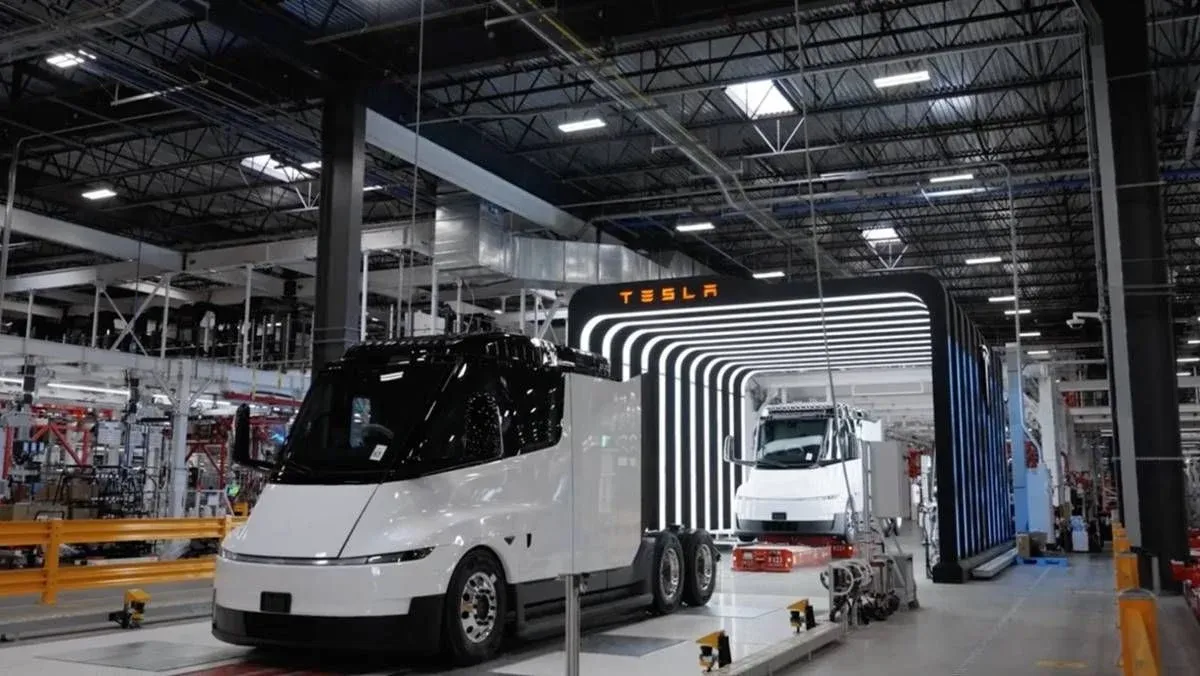
Tesla has begun delivering its Semi electric truck almost nine years after introducing it, but there is a significant difference this time: these are no longer the initial test units the company had been using with select customers for years. The manufacturer has launched mass production in Nevada and this week started delivering the first units of the final version to companies such as PepsiCo, DHL, and US Foods.
And the arrival couldn’t come at a better time, with diesel prices reaching record highs in the United States as well, its primary market for the Semi.
The truck has been one of Tesla’s long-awaited promises for years. It was introduced in 2017 with the aim of revolutionizing heavy-duty road transportation, but difficulties in bringing it to production meant that the first deliveries, still very limited, did not arrive until late 2022. Now the company claims that its factory in Sparks, Nevada, is ready to reach a capacity of 50,000 units per year, although this represents the planned capacity of the facility rather than the current production rate.
Among the first customers of this new phase are well-known names in transportation and distribution. PepsiCo, DHL, and US Foods were present at the event held in Nevada, while Tesla has also confirmed other operators interested in adding the Semi to their fleets. In fact, according to Reuters, a order for 2,500 units was placed this same week by a group of large companies that own transportation fleets, including Microsoft and PepsiCo.
The arrival of these units coincides with a time when the cost of transporting goods using diesel trucks has become an increasingly important issue for operators. The Tesla Semi aims to compete not only on performance but also on energy and maintenance costs over hundreds of thousands of kilometers. And that’s where some of the technical decisions made by Tesla in recent years start to make sense.
A completely revised Semi to reduce costs
Tesla offers two configurations of the Semi in the United States. The Standard Range version claims 325 miles, or about 523 kilometers, while the Long Range model reaches 500 miles, equivalent to roughly 805 kilometers, all under Tesla’s specified conditions and with a maximum combined weight of 82,000 pounds, or about 37,195 kilograms. The company reports an energy consumption of 105 kWh per 100 kilometers.
Obviously, this isn’t a small figure, but it needs to be put in context. We’re talking about a Class 8 truck capable of traveling with a combined weight of up to 37 tons. Tesla also claims that the 500-mile range of the Long Range model isn’t achieved with an empty truck. Dan Priestley, head of Semi engineering, stated during the launch that this range has been validated by customers in real-world usage conditions.
The battery has also changed compared to the initial test units. The production Semi uses Tesla-made 4680 cells, rather than the 2170 cells used in the first prototype units. The efficiency improvements across the rest of the vehicle have allowed for a reduction in the amount of battery needed to maintain the advertised range.
The architecture consists of two packs in the Standard Range and three in the Long Range. Each pack has a capacity of around 274 kWh, so the total capacities are approximately 548 kWh and 822 kWh respectively, according to the known data for the production version. The batteries use 4680 cells and NCMA chemistry.
This structure also has an interesting consequence for Tesla: it doesn’t need to develop all components of the system from scratch. The company is reusing technologies and parts from other models so that the Semi can benefit from the scale economies of its car production.
One of the clearest examples is the engine. The Semi moves away from the carbon fiber-cased rotor used in earlier models and now uses a steel cage rotor, which is simpler to manufacture and designed for greater durability. It also features a stator with shared windings from the Cybertruck, allowing it to leverage technology that Tesla already produces in large quantities. The new powertrain weighs about 80 kg less than the previous one.
Tesla has also simplified the lubrication system for the drive shaft. The previous design used three different types of oil, whereas the new Semi eliminates bearing oil and uses a single type of oil shared by both the engine and the transmission. The company claims this lubricant is designed to last over 400,000 kilometers before needing replacement.
Another significant change is in the steering system. The new Semi replaces hydraulic assistance with a redundant electric assist system. In addition to reducing components, Tesla states that the new configuration allows for a significantly increased turning angle, resulting in a turning radius similar to that of the Model Y. For a truck that must frequently enter warehouses, logistics centers, and loading areas, this improvement can be more important than it appears.
Thermal management has also undergone a thorough review. Tesla has introduced its Megamanifold for the Semi, an advancement in thermal architecture that integrates cabin climate control with the propulsion system’s thermal management within a single system. The idea is to utilize the heat generated by the engines and other components to warm the cabin when it’s cold, rather than wasting it.
This is a particularly interesting solution for a vehicle of this size. In a passenger car, heating may have a relatively limited impact on overall fuel consumption. In a truck that can travel hundreds of kilometers with a heavy load, any improvement in efficiency ultimately has a direct effect on operating costs.
And then there’s the charging time. Tesla claims a maximum power of 1.2 MW for its Megachargers and states that the Semi can regain up to 60% of its range in about 30 minutes. For the Long Range version, it can recover roughly 480 kilometers of estimated range during that time, though the actual figure will depend on temperature, battery charge level, and operating conditions.
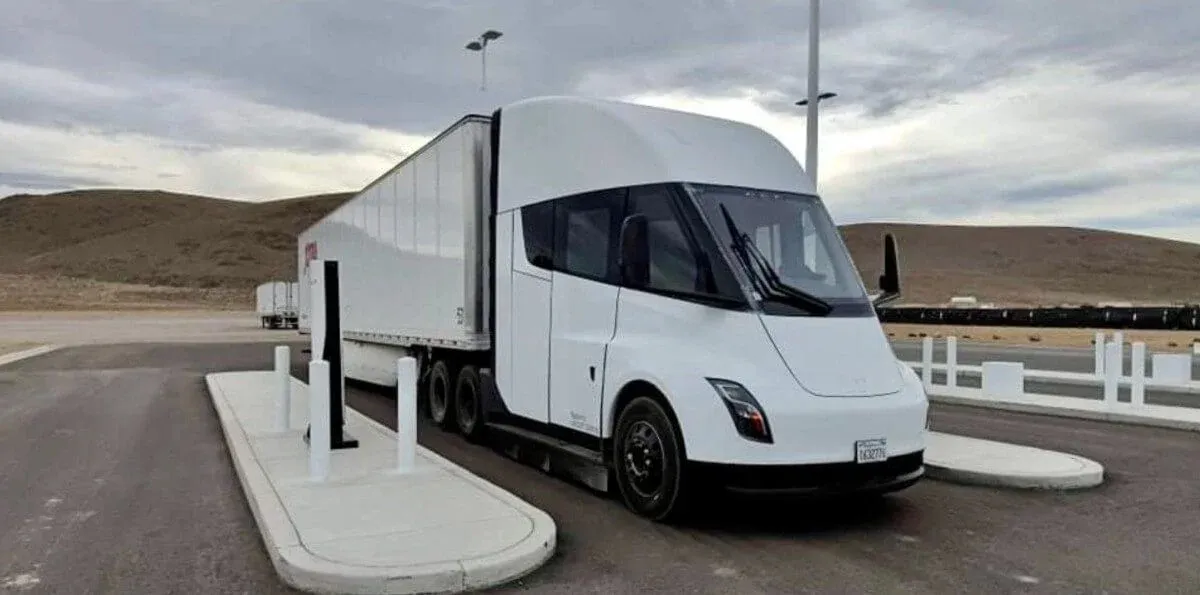
Tesla is also accelerating the deployment of these chargers. In mid-September, it announced the first prefabricated Megachargers, featuring two poles capable of delivering up to 1.2 MW each. The goal is to reduce the time needed to build the installations required by the Semi as production increases.
In Europe, Tesla has already unveiled the approved version of the Semi and begun offering charging equipment for fleets in several markets, though it has not yet announced the European price for the truck. The known European version uses a different configuration and is initially aimed at meeting the needs of heavy freight transport on the continent.
The other major advantage of the Semi lies in its operating cost. Tesla claims the truck’s energy consumption is 1.7 kWh per mile. Using the company’s stated price of $0.20 per kWh in the provided scenario, along with the exchange rate of 0.879 euros per dollar as of September 25, 2026, the energy cost would be around 18.55 euros per 100 kilometers.
The equivalent scenario for a diesel truck with 7 miles per gallon implies around 33.6 liters per 100 kilometers. At the stated price of $7 per gallon, the fuel cost would be approximately 54.65 euros per 100 kilometers. Thus, the difference amounts to about 36 euros per 100 kilometers traveled.
Using the assumptions made by Tesla, the annual savings can be substantial. The company cites up to $65,000 in fuel savings per year as an example. Converting this at 0.879 euros per dollar, it amounts to approximately 57,100 euros annually, though this figure depends directly on the mileage driven, electricity and diesel prices, as well as the usage conditions of each fleet.
With costs of $0.34 per mile for the Semi and $1 per mile for the diesel truck you mentioned, achieving that $65,000 savings difference would require driving around 98,500 miles per year, or approximately 158,500 kilometers.
This must be added to the maintenance costs. The Semi doesn’t have a diesel engine, conventional transmission, or exhaust system, while regenerative braking helps reduce the use of mechanical brakes. Tesla also favors using components it already produces in large quantities for other vehicles, from 4680 cells to certain elements of the thermal management and propulsion system.
The result is a truck that enters the market almost a decade later than originally planned, but with an architecture very different from that of the first Semi. Tesla has turned this project into an extension of its production platform, reusing technology from the Cybertruck and other models while reducing specialized components.
The most important aspect remaining to be tested is how the Semi will perform after accumulating hundreds of thousands of kilometers under maximum loads and in various weather conditions. The company already has experience with pilot units at clients like PepsiCo, but the real breakthrough will come when deliveries move beyond demonstration purposes and the truck becomes part of large fleets.
Tesla claims it can produce up to 50,000 units per year in Nevada. If it can reach that volume, the Semi will stop being a technological demonstration and become one of the first heavy electric trucks manufactured in large quantities. It will then be possible to genuinely compare its fuel consumption, range, maintenance needs, and cost per kilometer with those of diesel trucks that have dominated road transportation for decades.