
Tesla Cybercab is testing RGB on the front strip. The idea is clever, but regulations will quickly restrict it.
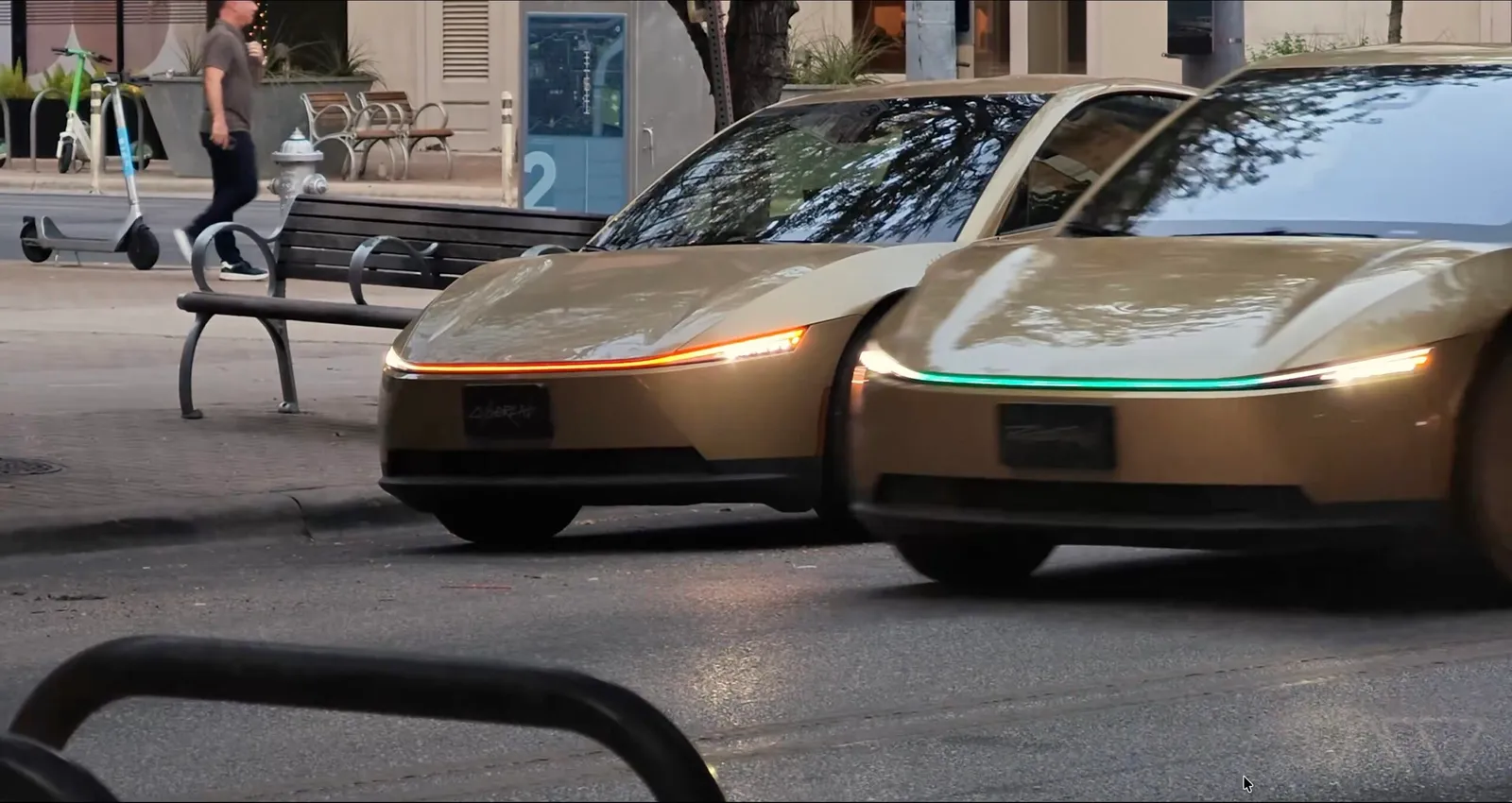
Tesla is increasingly showing the Cybercab on the streets of Austin ahead of its launch on September 3. New videos feature prototypes with a multi-colored RGB light strip at the front, along with reflective markings on the sides and rear window.
For passengers, this might be more convenient than trying to find the license plate in a crowd of identical cars. For regulators, it’s not necessarily so.
The RGB strip at the front makes sense, but not in every situation
A video posted on X by @artsimage shows several Cybercabs driving through the city. One vehicle emits an orange-brown light across its entire front fascia, while another following behind has a green color.
This isn’t the first such case. Previously, Cybercab already displayed red, white, and blue lighting during a tech demo, so the use of RGB had already been confirmed. Recent observations also provided a glimpse at the split-screen interface in the car.
The idea itself is quite practical. If Tesla actually puts hundreds or thousands of nearly identical Cybercabs on the roads, the app can simply tell the passenger to look for a car with a turquoise or purple strip. This is faster than staring at the dashboard or a sticker on the windshield.
Additionally, such a light strip can signal the vehicle’s status. Green for an available car, red for a occupied one, and even a progress bar while charging, if the LEDs are controlled individually. On paper, it sounds good.
The problem is simple: lighting regulations
This is where the less impressive part begins. On public roads, a car’s front lighting is heavily regulated and usually limited to white and amber colors. Red or blue lights at the front might be associated with vehicles with special privileges, so full RGB effects likely won’t work during normal driving.
In practice, Tesla can only utilize this feature mainly when the Cybercab is stationary, picking up a passenger, stopping to let them in, or moving around a private pickup area. So it’s a cool feature, but with a big caveat.
The second detail is also practical, not just for show. Photos posted by @AdanGuajardo show that the “Cybercab” markings on the side doors and rear window are made of reflective material. They shine brightly in the headlights at night.
This might actually work better than just RGB. The golden two-seater Cybercab is already hard to mistake for anything else, but on poorly lit streets, reflective markings help identify the right vehicle more quickly.
The launch is just a few days away, so Tesla is clearly finalizing the details related to operating robotaxis in real cities, not just the driverless driving itself. The question is how many of these lighting features will survive regulatory challenges even outside Texas.
Order your Tesla and take advantage of purchase bonuses using the referral link!
LovEV Newsletter
Want more content like this?
Sign up — we’ll send you a weekly roundup once the newsletter starts.