
Tesla Cybercab without wire brakes and fluid. Tesla is going for a brake-by-wire system without fluids
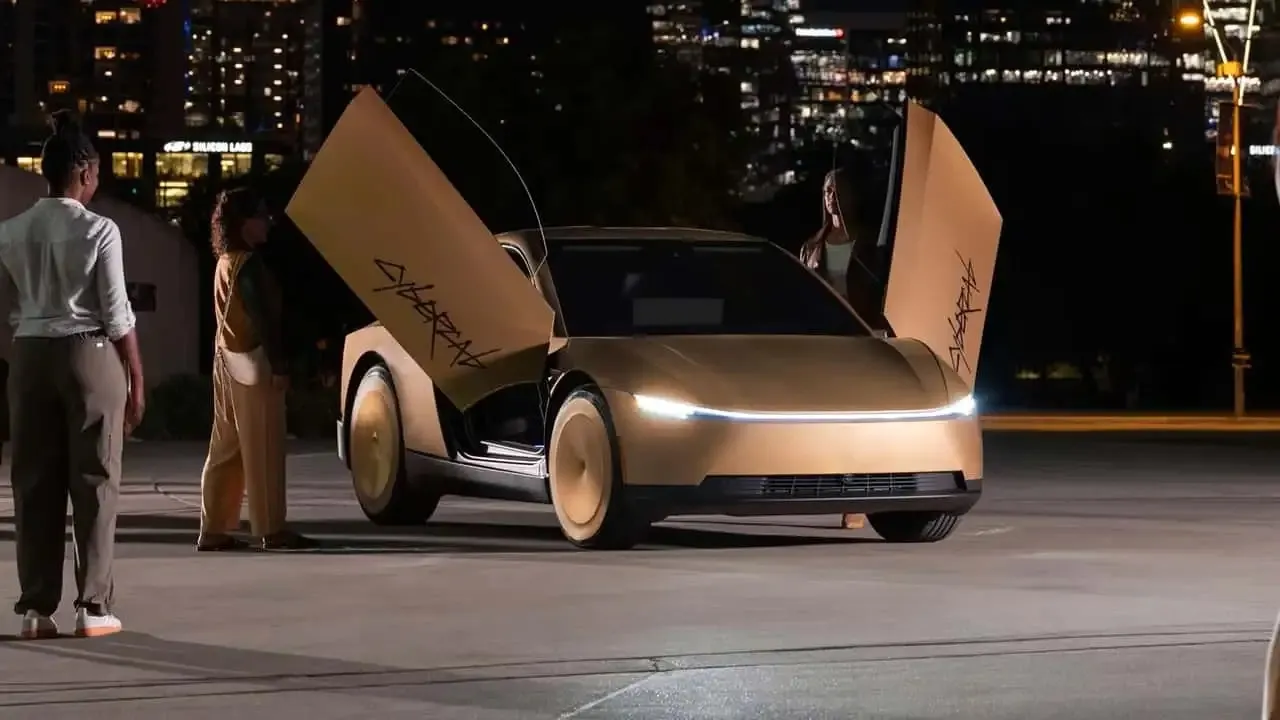
Tesla unveiled the production version of the Cybercab, a two-seater robotaxi set to hit the streets of Austin as early as today, September 4. However, the most interesting detail isn’t related to design but rather to braking, as the vehicle lacks brake fluid, brake lines, or a central pump.
The Cybercab also has no steering wheel or pedals, so Tesla had to redesign two systems at once: braking and steering. This is no longer just “fewer parts” but a full transition to a by-wire system.
How the Cybercab brakes without hydraulics
According to reports from a closed Tesla presentation, the company used what’s known as dry brake-by-wire in the Cybercab. Instead of a traditional hydraulic system, each caliper has its own electronically controlled actuator that presses the rotor against the brake disc.
In practice, this means the absence of several components found in regular cars: a fluid reservoir, brake lines, and a hydraulic master cylinder. Elon Musk explained that such a design simplifies the structure because there’s no need to run hydraulic lines throughout the vehicle. Cables still need to be installed, so it’s not a miracle, but there are indeed fewer parts.
This solution remains rare. In April, the Chery Exceed EX7 was equipped with a similar system, making it one of the first mass-produced cars to adopt this approach. Many other vehicles already feature brake-by-wire, but usually as a hybrid system with electronic control and a hydraulic backup underneath. Tesla went a step further.
Steering is also electronic
Since the Cybercab has no steering wheel, it also lacks a steering column. The steering system therefore operates as steer-by-wire, with the control module located behind the front electric motor.
For the manufacturer, this brings several advantages at once. First, fewer mechanical components and potentially lower assembly costs. Second, the computer can independently adjust braking force for each wheel. In traditional hydraulics, pressure is applied in a similar manner to all calipers. Here, there is more room for control.
The question, of course, is safety and redundancy. Tesla has not provided much detail on this yet, but it is precisely here that the core of the issue lies. In a car without a steering wheel or pedals, electronics cannot simply “work well.” They must work every time.
Tesla has not revealed its brake system supplier. Only a few large companies operate in this market today, including Brembo, ZF, and Bosch. An interesting lead points to Brembo, as the company has previously showcased its electronic Sensify system on Tesla vehicles. However, there is no confirmation yet.
For European drivers, this is for now more of a hint about future directions than an announcement of a car available for purchase. If the Cybercab is to enter other markets and comply with various regulations, it will be the brake-by-wire and steer-by-wire systems without mechanical backups that are under closer scrutiny than range or the app.
Tesla is once again testing the balance between simplifying the car and relying on software. Would you buy a vehicle without hydraulic brakes and no steering wheel?
Order your Tesla and take advantage of purchase bonuses using the referral link!
LovEV Newsletter
Want more content like this?
Sign up — we’ll send you a weekly summary once the newsletter starts.