
Tesla wants to send robots to the chargers. Optimus will replace humans in operating robotaxis.
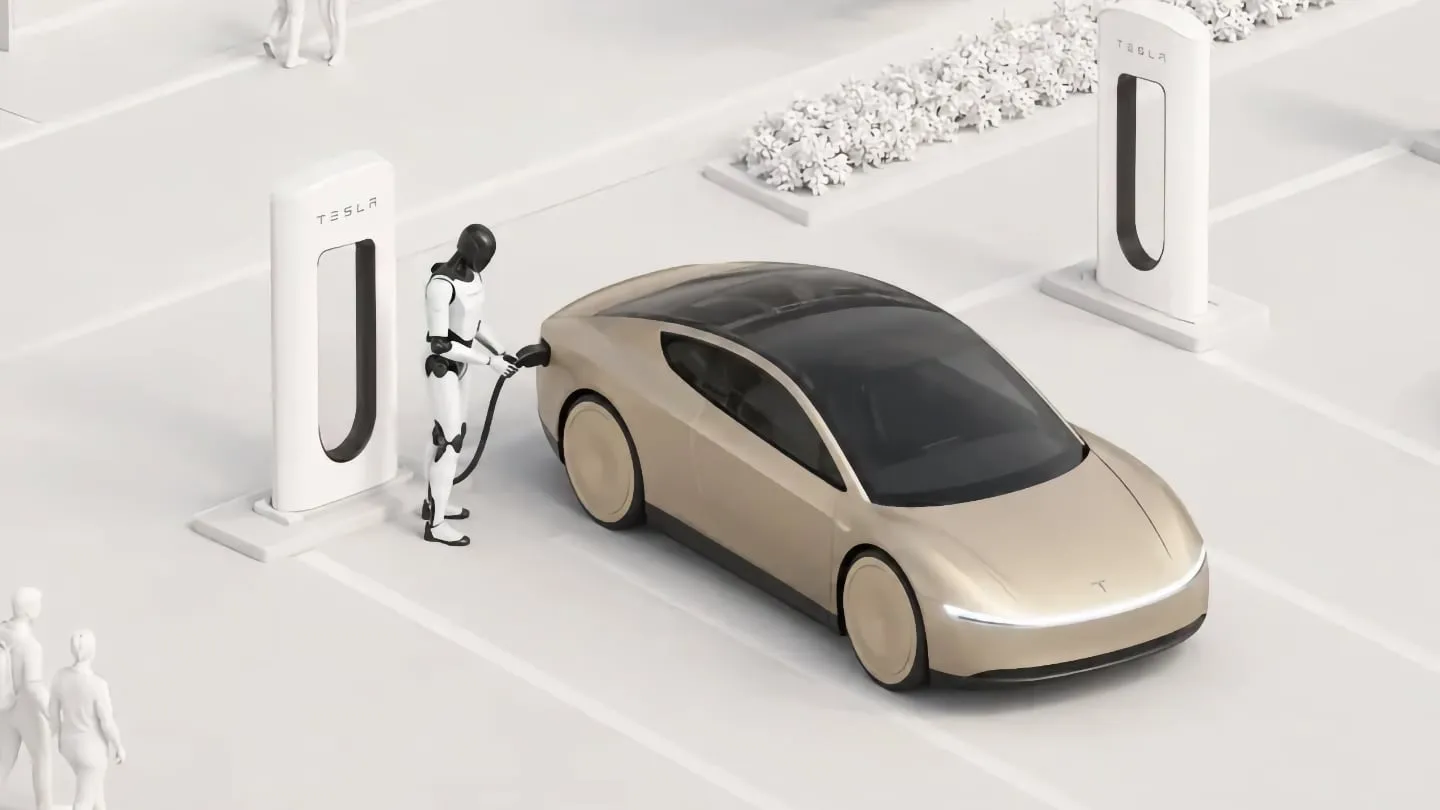
Tesla plans to assign the task of connecting robotaxis to chargers to the humanoid robot Optimus. Currently, employees handle the wiring, but the company is also developing a wireless solution.
They drive to the charger, then a human assists
Tesla’s robotaxis can drive to Superchargers, but currently employees are responsible for connecting the charging cables. The automaker wants to delegate this task to the humanoid robot Optimus to advance automation in the fleet’s operational infrastructure as well.
Vice President of Vehicle Development Lars Moravy and Cybercab project lead Eric Earley described this plan in an interview with Munro Live. They expressed hope that Optimus will soon assist with charging. No specific timeline for its deployment was given.
Footage from a Supercharger in Austin, Texas, showed the current practice. An employee was connecting Cybercabs and robotaxis built on the Model Y. For some vehicles, he had to adjust their position because they stopped too far away from the charging station.
Cybercab has a charging port in the bumper
Tesla retained the NACS connector hidden in the rear bumper of the Cybercab. This allows the vehicle to use the existing Supercharger network. Charging infrastructure is a crucial part of operating the service to get it up and running.
According to statements from the interview, the Cybercab does not support AC charging. It currently recharges through fast charging stations. Therefore, connecting cables remains one of the tasks Tesla must handle when operating the fleet.
The integration of Optimus could free up employees who are currently responsible for charging. The robot would need to handle the cable reliably and insert the connector into the vehicle. Successfully performing this task in regular operations will be a crucial test.
Tesla Continues to Develop Wireless Charging
Tesla’s long-term goal is wireless energy replenishment. In this approach, Cybercab would park above a charging pad, eliminating the need to handle cables. The automaker plans to incorporate this method into the construction of new facilities.
In Austin, it plans to establish a robotaxi center with 80 wireless chargers. It has already received approval for its technology from the U.S. FCC. However, the fleet also needs the necessary equipment and infrastructure to operate in regular service.
Optimus is meant to assist during the transition to automated charging. The timeline for its deployment at Superchargers remains unclear. The announced plans also do not specify when Tesla will begin using wireless charging on a larger scale.
Optimus May Take On Additional Tasks
Production of Optimus is currently in its early stages in Fremont, California. Tesla plans to deliver the first units to corporate customers in 2027. To use them in its own fleet, it will need enough robots capable of reliably performing assigned tasks.
The automaker has previously demonstrated robotic vehicle cleaning and has started installing this equipment in robotaxi facilities. It is there that vehicles recharge between trips and undergo routine maintenance to be ready for the next passengers.
Moravy and Earley also mentioned other possible uses for Optimus in vehicle maintenance or delivery services. Charging is thus one of the tasks it could handle. For Superchargers, employees will continue to be in charge for now, with Tesla planning further steps.
Sources:
original text / Elektrickevozy.cz
Munro Live / YouTube
Not a Tesla App