
Tesla changes the name of FSD in Europe, but for Italy...
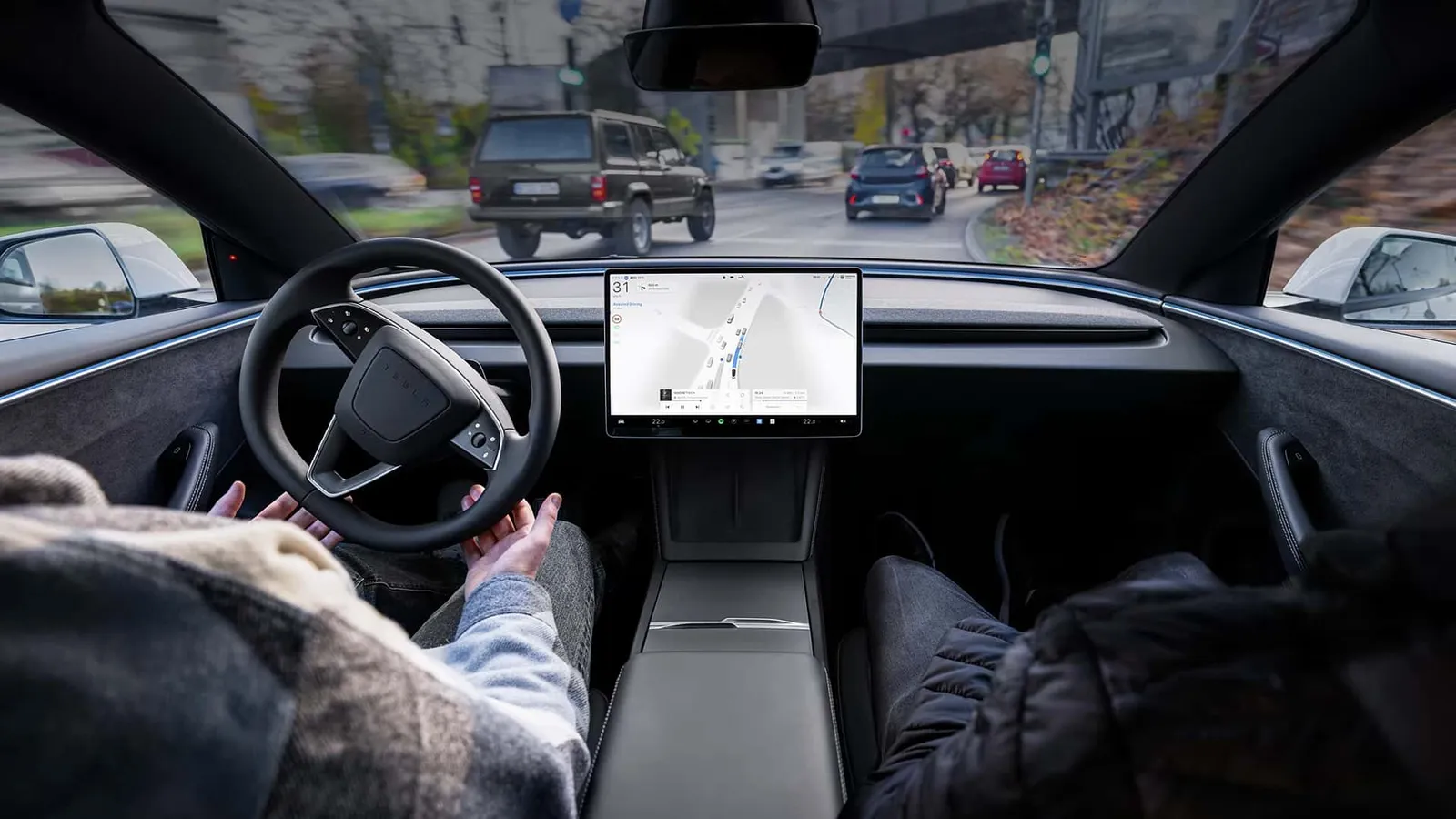
Tesla has renamed its most advanced driver assistance system. In Europe, it is no longer called “Full Self-Driving (Supervised)” or FSD, but Tesla Assisted Driving.
The change came after discussions with authorities regarding the system’s actual capabilities and the driver’s responsibilities.
The new name is already available on Tesla’s Italian website, but the functionality remains unchanged: the system assists with acceleration, braking, and steering without replacing human oversight. In Italy, however, this technology is not yet available.
From Full Self-Driving to Tesla Assisted Driving: What Changes
The most immediate change is the name, chosen to avoid the impression that the car can drive itself. “Full Self-Driving,” or FSD for short, promised more than what the system could actually do.
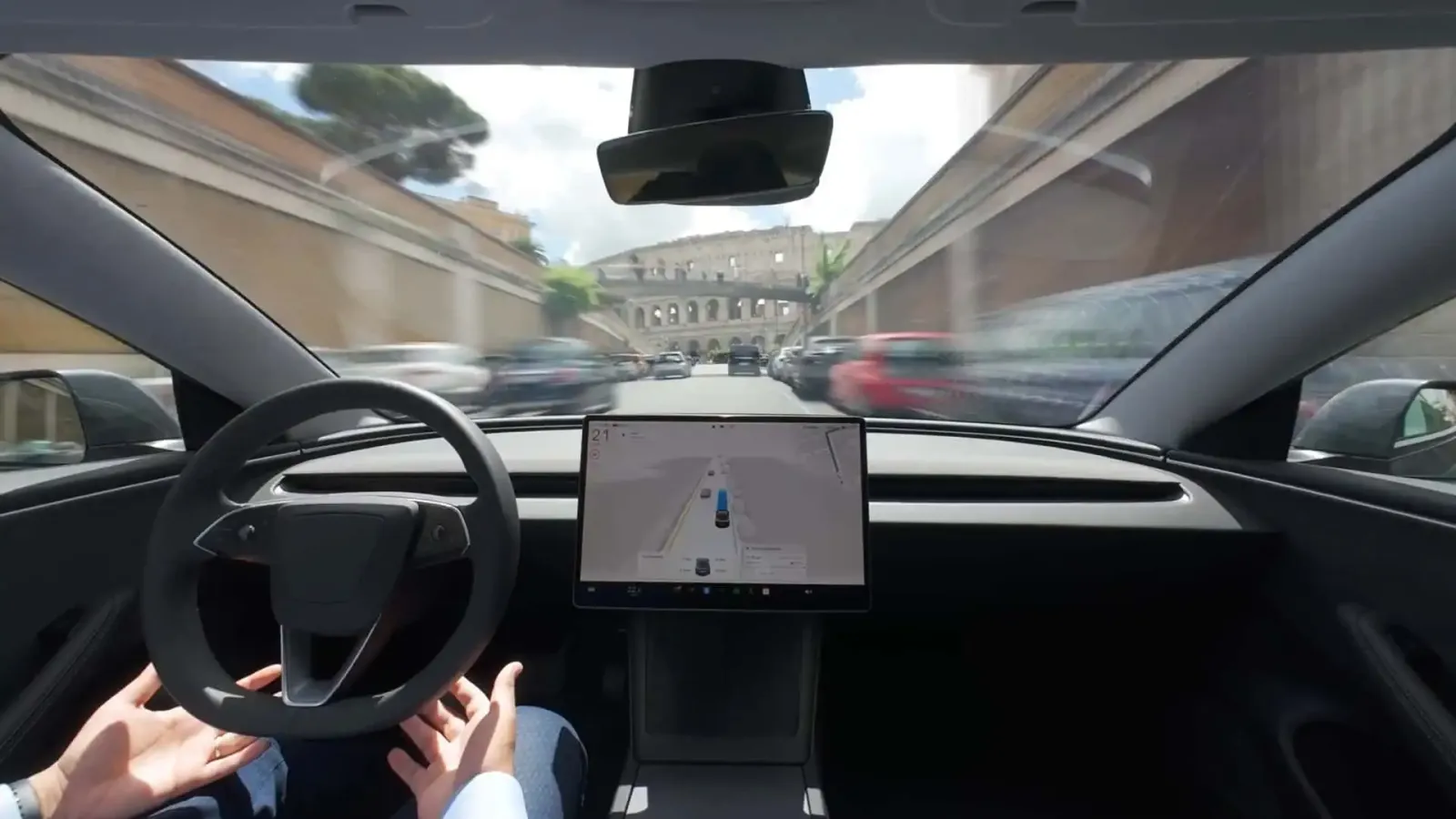
Tesla FSD in Rome
Photo by: Tesla
Tesla Assisted Driving, as it is also called on Tesla’s Italian website, better describes a level 2 system in which the driver remains in control and must intervene when necessary.
The technical features remain the same as those seen on the roads, including those in the recently tested version on Brussels streets. What changes is the way it is communicated, not the car’s behavior.
Those who expected a leap toward fully autonomous driving will be disappointed. Such a leap has not yet occurred in any European country.
What the law says and what the Italian ministry has said
The relevant European regulatory framework is Regulation (EU) 2019/2144, which sets the approval requirements for vehicles and driving safety and assistance systems. The Dutch authority RDW has already issued a European type approval for the system, with provisional validity in the Netherlands. The European type approval has been in effect since April 10, 2026, and can be recognized by other member states.
The technical procedure at the European level involves a formal vote by the Motor Vehicles Committee. This step has been postponed several times, and current estimates suggest a possible vote in December 2026.
Transport Minister Matteo Salvini spoke on the topic on October 29. He stated that Italy is interested in autonomous driving technologies due to their potential for innovation and road safety, and he called for a rapid European approval.
Transport Minister Matteo Salvini during the presentation of the DEKRA 2026 Report in the Chamber
Photo by: DEKRA
His remarks remain a political aspiration rather than an authorization. To date, the system has not received approval from Italian authorities, who are waiting for the outcome of the European process to decide on its approval for use on roads.
What’s the situation in other European countries?
In European countries, the situation varies widely. The RDW approval has already been accepted by Belgium, Croatia, the Czech Republic, Denmark, Estonia, Latvia, Lithuania, Slovakia, and Slovenia, allowing Tesla Assisted Driving to be used in their territories. In the Netherlands, the system can be used under the same approval, which holds temporary validity there, so ten countries currently permit its use.
Italy, along with other states that participated in the consultation, has not yet granted the necessary national approval for the system to be legally used on roads. However, the government has expressed political support for rapid European approval.
On Tesla’s autonomous driving