
Tesla is building Cybercabs faster than it can deploy them. 463 cars have been registered in Texas.
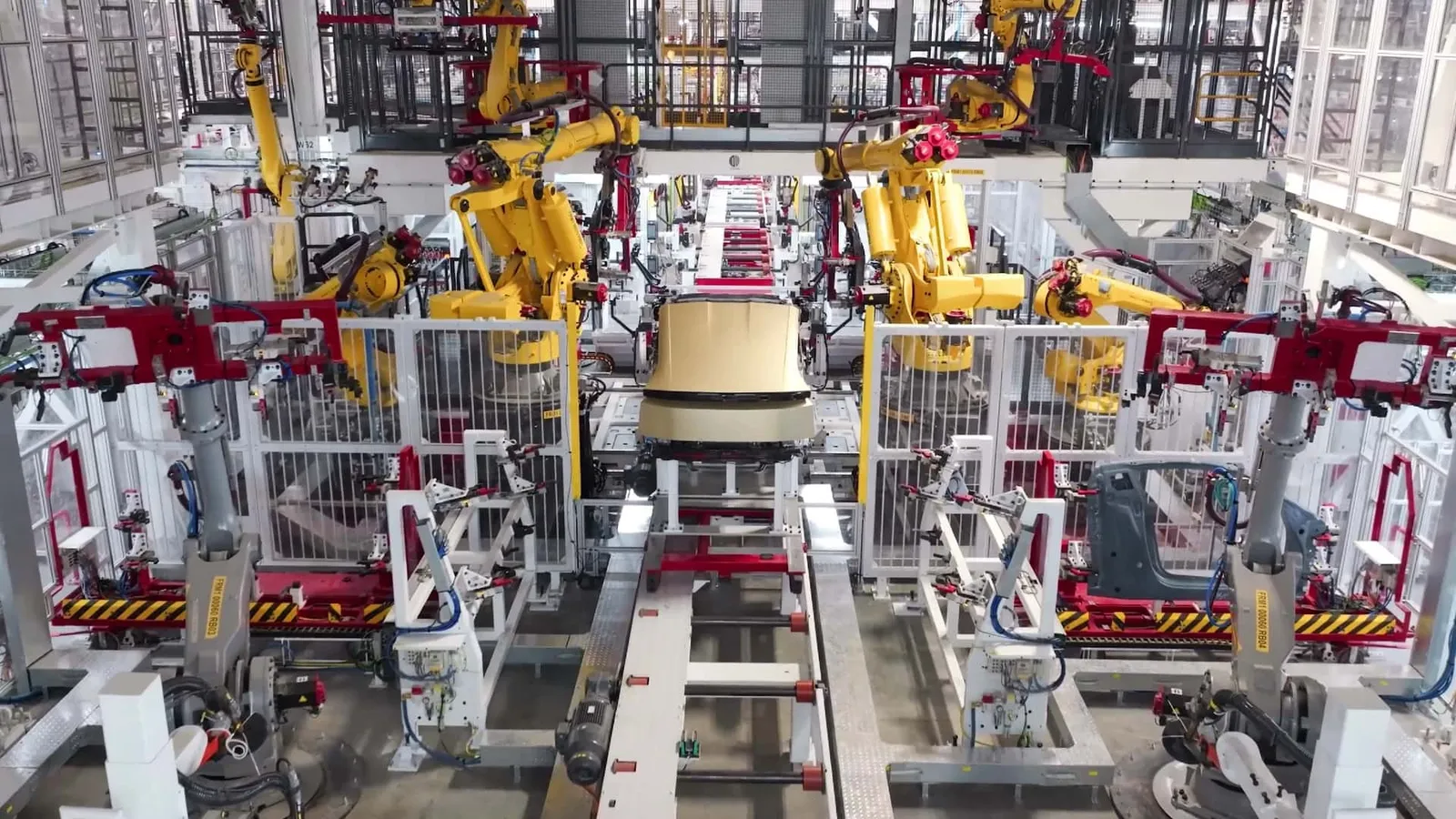
The Cybercab production line in Texas is building two-seater robotaxis faster than Tesla can deploy them as a service. This was stated by Lars Moravy, Tesla’s vice president of vehicle engineering, in a Munro Live segment. “We don’t work every day because the line can move that quickly. For now, it’s ahead of our deployment plans,” says Moravy. He adds that it’s a race in which the factory is currently ahead.
One week earlier, during a discussion with analysts after the third-quarter results, Moravy said that the line’s claimed capacity (over 125,000 cars per year) understates what it can actually handle. Records in Texas show 463 Cybercabs so far.
A line with 25 stations and no paint shop
Tesla is building the Cybercab using an “unboxed” approach. The front, rear, side, and central modules are created and tested separately before being assembled on a short final assembly line. This line has only 25 fully automated stations. Tesla’s team estimates this is one-fifth to one-tenth of what’s needed for the Model Y.
The entire line is automated at about 78%, with the framing section already being 100% automated. It takes roughly half as much space per vehicle. The stated goal is “100% automation in a 10-second cycle,” meaning one finished Cybercab every 10 seconds.
Tesla has also eliminated the painting process. Only the side modules are painted, while the exterior panels receive their color during the forming machine stage. Engineers say the vehicle is designed for at least 500,000 miles, or about 800,000 kilometers. This is a design assumption, not a test result.
Battery: steel, separate modules, and no pyrotechnic fuse
The pack is a 88S6P configuration using 4680 cells, totaling 528 cells. For the first time in Teslas, it is enclosed in a steel casing. Each module is individually sealed, allowing damaged ones to be replaced without affecting the entire pack.
The wire harness has been replaced by wireless battery management boards. The new connectors are fast enough that Tesla eliminated the need for a pyrotechnic fuse. The battery director rated the pack an A minus. For comparison, the Model Y’s structural pack received a D rating from him, while the Cybertruck got a B minus. This is Tesla’s own assessment, so take it with a grain of salt.
The front drive has a 11:1 gear ratio, compared to around 9:1 in most Teslas. The Cybercab does not require a high top speed.
Nico DeMattia of InsideEVs writes that Tesla designed the package with future LFP cells in mind. For now, this is a statement of intent without a date or supplier specified. LFP is usually cheaper and can withstand more charging cycles, which makes sense for a vehicle that needs to carry passengers almost all day.
The bottleneck is deployment
Tesla had over 50 Cybercabs at the Formula 1 weekend in Austin. In talks with analysts, the company announced that the service would launch in Dallas in November. Moravy says the goal is to deliver cars to customers by the end of 2026. Every unit built since April, when the production line started mass manufacturing, went to Tesla’s own fleet.
The difference is clear. 463 registered cars are just a fraction of the claimed 125,000 per year, so the factory is currently producing in bulk for inventory rather than at full volume yet.
Munro Live also asked when the Cybercab would be available for disassembly. Tesla’s response was, “Not yet.” Until then, everything we know about the car’s interior comes from Tesla itself.
Order your Tesla and take advantage of purchase bonuses using the referral link!
LovEV Newsletter
Want more content like this?
Sign up — we’ll send you a weekly summary once the newsletter starts.