
Did Tesla launch the most important car in recent years amid general indifference?
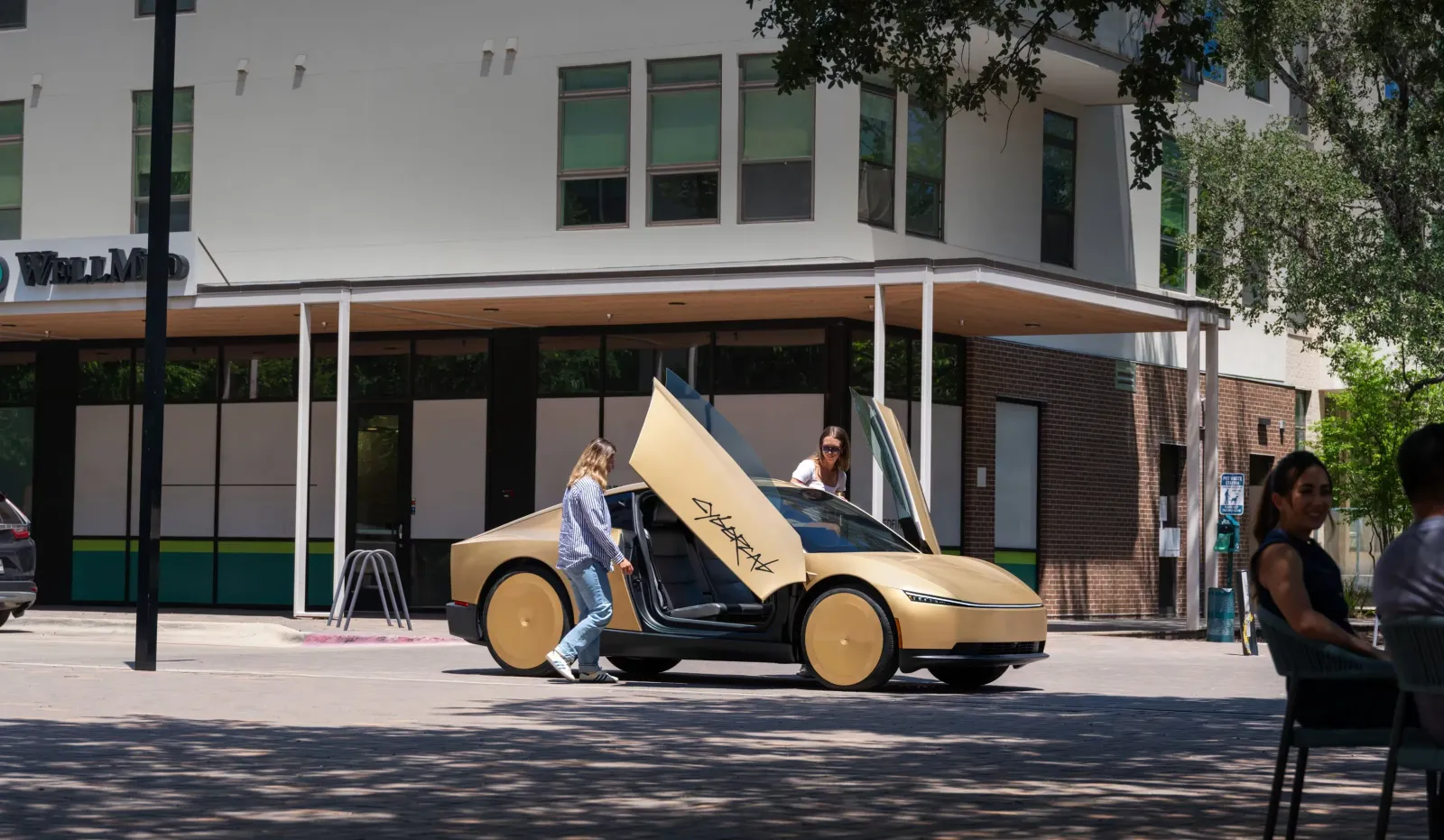
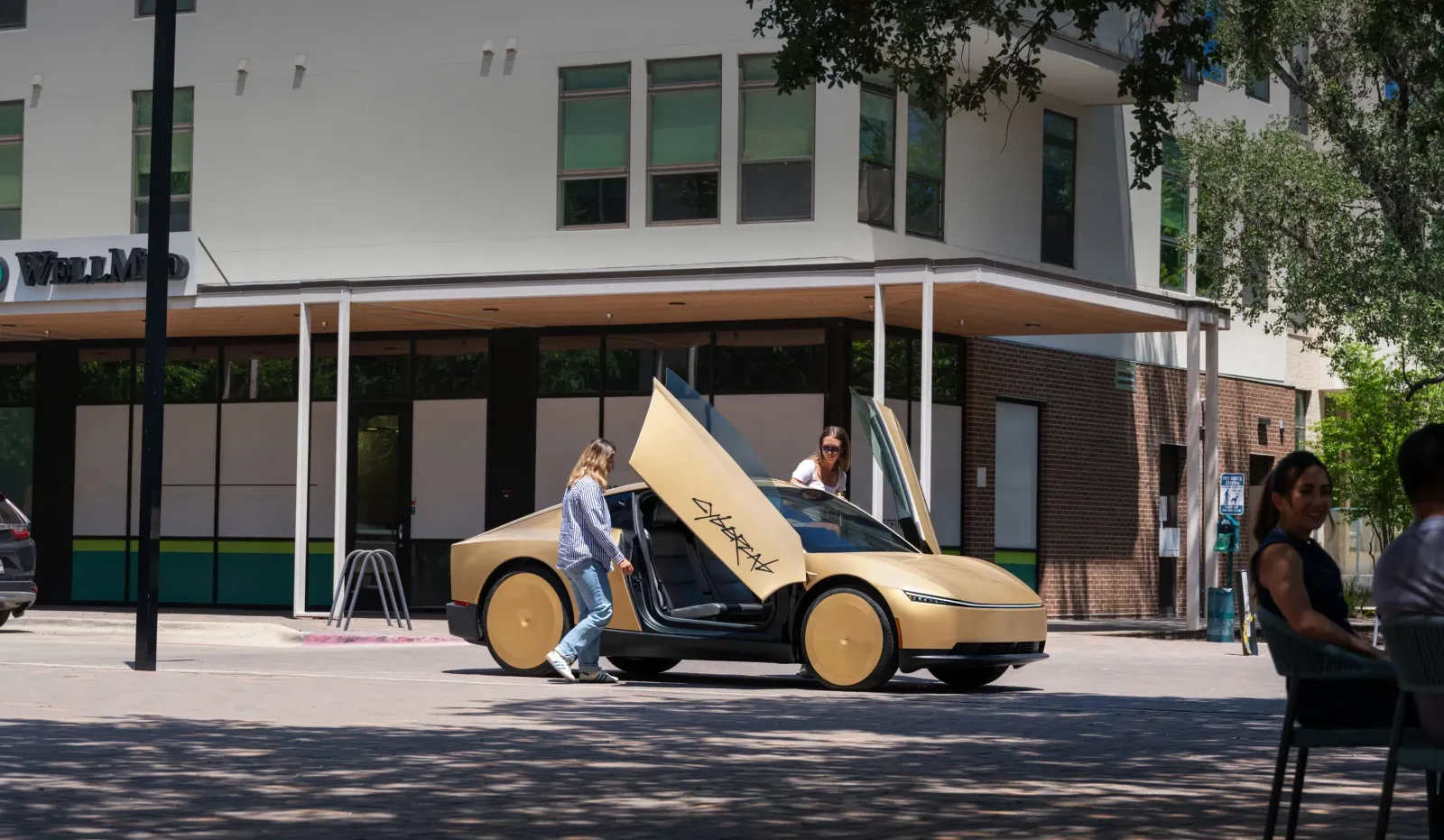
The Tesla Cybercab has officially begun its journey in Austin, Texas. Yet, unlike the grand spectacle held during its introduction in 2024, this launch took place almost quietly. Behind this subdued rollout lies a vehicle that raises a crucial question: what will a car look like when it no longer requires a driver at all?
It’s hard to speak of a media frenzy... On September 3, 2026, Tesla began offering rides in its brand-new electric vehicle, the Cybercab, in certain areas of Austin. Interestingly, Elon Musk didn’t even show up in person, and the remarks made by the executives present lasted only about fifteen minutes. At the time of launch, there were only 45 Tesla Cybercabs registered in Texas.
The contrast is striking compared to the spectacle organized two years earlier. In October 2024, Tesla privatized Warner Bros. studios near Los Angeles for its “We, Robot” event. Elon Musk arrived in a Cybercab in front of several million connected viewers, with Robovan and Optimus robots accompanying him. It was there that the company truly unveiled to the world its famous driverless, pedal-free taxi.
In short, the big launch had already taken place. The one in September 2026 is more of a difficult transition from promise to reality.
Also read
The director of “I, Robot” accuses Tesla of copying his designs
Tesla has played a major role in this indifference
It must be said that Tesla’s autonomous driving is a story filled with numerous promises and regularly delayed timelines. Elon Musk claimed as early as 2019 that Tesla could have operational robotaxis by the following year. The introduction of the Cybercab in 2024 was supposed to mark a new phase. Two years later, its commercial rollout remains extremely gradual.
Tesla’s robotaxi network is far from achieving the expansion it had announced. In the summer of 2025, Musk suggested it would be available to half of the U.S. population by the end of the year. This goal has not been reached at all. Tesla currently has only a few hundred autonomous vehicles registered in Texas. Moreover, its service is quite imperfect: there are long wait times and sometimes troublesome unforeseen issues.
Under these circumstances, enthusiasm is inevitably less pronounced than in 2024. Tesla can no longer simply present a prototype and promise a revolution—it must now prove that it actually works.
The Cybercab did not invent the robotaxi
It would also be misleading to present the Cybercab as the first autonomous vehicle. In the United States, Waymo has already been transporting passengerless rides for several years. In Texas, its registered fleet is even more than twice that of Tesla. In China, robotaxis are also very common.
Tesla is not the first manufacturer to eliminate physical driving controls either. Zoox, an Amazon subsidiary, is already operating its own robotaxi designed specifically to function without a driver. The vehicle has no steering wheel or pedals and features a radical interior layout with passengers seated face to face. The company claimed to have transported nearly 350,000 passengers by spring.
Also read
Tesla Cybercab sets a record that is unlikely to be broken soon
The launch of the Tesla Cybercab is therefore not a technological breakthrough that appeared out of nowhere. One could even argue that the removal of the steering wheel is partly a marketing tactic or a staged move, as its competitors also know how to design vehicles without traditional controls, but many have preferred to proceed step by step, especially to meet safety and regulatory requirements.
And yet…
But this Cybercab still has a distinct flavor to it. Because beyond autonomous driving itself, Tesla takes the idea even further—that a car no longer necessarily needs to be designed around its driver. For over a century, the architecture of a car has relied on the same constraints: a seat facing the road, a steering wheel, pedals, instruments, and visibility designed to allow a human to control the machine. Even the most modern electric vehicles are still organized in this way.
In the Cybercab, all of this disappears. Two seats, a screen, and butterfly doors: the driver simply no longer exists. Some may say it’s primarily symbolic, but if autonomous driving truly becomes widely available, its consequences could be much more profound. Why keep a traditional dashboard? Why position the seats forward? Why design the cabin around the ergonomic needs of a person who must drive?
The Cybercab thus offers a glimpse of a world without drivers.
A challenge to the personal car?
Elon Musk believes the Cybercab could eventually become Tesla’s most produced vehicle. The issue goes far beyond just the elimination of the steering wheel. If an autonomous car can pick you up in minutes, drive you to your destination, and then go back to pick someone else up, the appeal of owning a personal vehicle may decline for some drivers, especially in urban areas.
Also read
What if Tesla is preparing an autonomous vehicle that sits between the Cybercab and the Robovan?
This does not mean the imminent disappearance of the individual car. Habits, geography, the availability of services, and the simple desire to own a vehicle all act as barriers to such a shift. But Cybercab embodies the idea of a car that has become more of a “service” than a “personal item.”
For now, the revolution consists of 45 cars
Yet Cybercab still needs to prove itself. The lack of a steering wheel and pedals poses regulatory challenges. American standards were designed for vehicles with controls that allow a human to intervene. Just days after its launch, the NHTSA opened an investigation to understand how Tesla certified its Cybercabs and ensured they complied with federal regulations.
The American manufacturer must also prove the reliability of its technological choice. Unlike Waymo and other companies in this field, Tesla relies primarily on cameras and artificial intelligence rather than LiDAR sensors. This strategy is potentially less costly and easier to industrialize, but it remains controversial among experts.
In short, we won’t consider this launch as the day Tesla invented the autonomous car. But perhaps it can be seen as a small milestone in a much longer transformation. The Cybercab is just another robotaxi in an industry where Tesla is even falling behind. Its significance lies elsewhere: it gives a very concrete form to a vehicle that no longer views humans as drivers but as passengers.
It remains to be seen whether this vision will truly become part of our daily lives or if the Cybercab will join the long list of future technologies announced too early.