
Testimonial – This is why this owner of a BYD Seal won’t buy another Chinese electric car
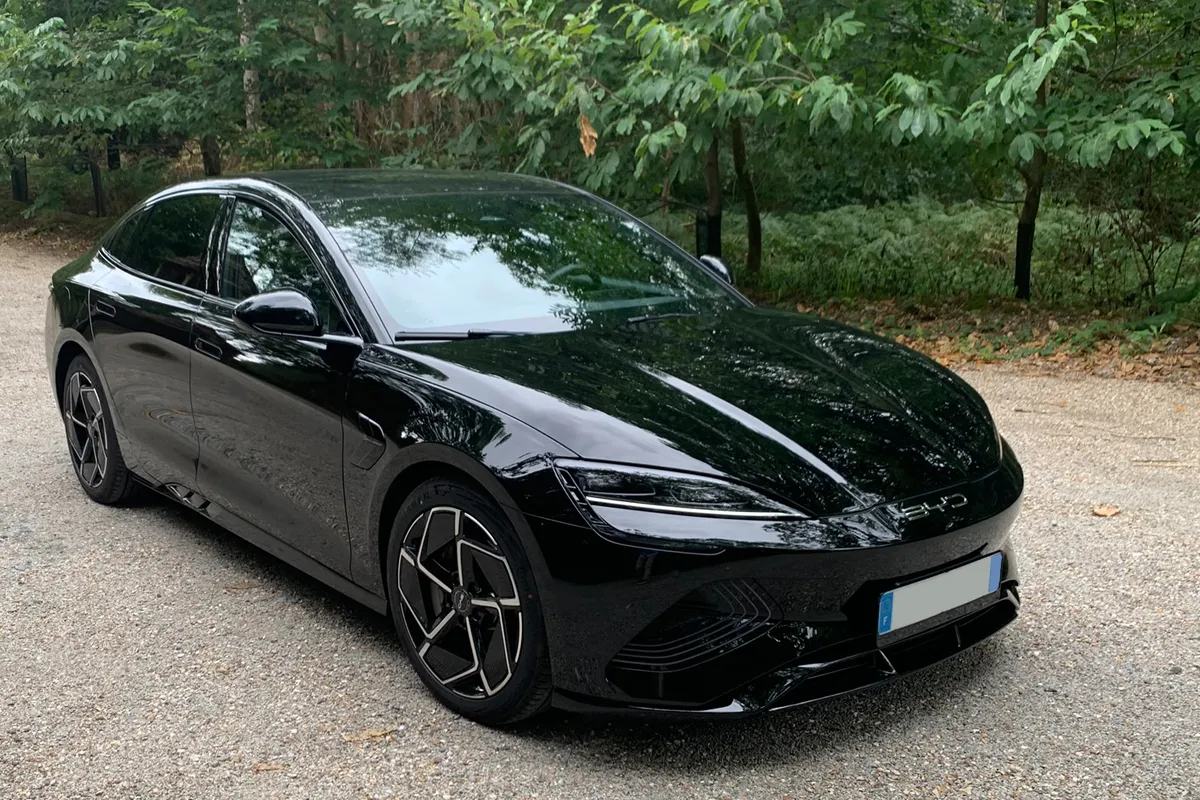
Despite personal and professional needs that support electric vehicles, Christian initially opted cautiously for a rechargeable hybrid by choosing a Toyota Prius, which he kept for just under a year. He later switched to a BYD Seal RWD. Generally satisfied with this Chinese car and the brand’s customer service, he now wishes to adopt a European model. It is this series of considerations that are helping this new electric vehicle owner, surrounded by those who prefer traditional vehicles, move toward more sustainable transportation.
Transition to Rechargeable Hybrid
For 15 years, our reader from Normandy has used diesel cars: “I drive 30,000 kilometers per year. Part of my job involves preparing carbon audits for clients, so I’m somewhat sensitive to environmental issues. But there are people around me who are opposed to electric vehicles. My father worked in the automotive industry as well. People told me that electric cars weren’t ready yet and that I wouldn’t have enough range. It seemed complicated to me to use an electric car to get to appointments in the Parisian region, or in the north or east of France.”
This led to the decision to choose a rechargeable Toyota Prius hybrid: “In the Design trim, I received it new at the end of April 2025. With smooth driving, I could achieve between 60 and 70 kilometers of electric range. This allowed me to cover all my trips between my home and office, as well as longer distances, using the internal combustion engine. There is no fast charging option on this model, as Toyota views electric driving mode only as a supplement to the gasoline engine.”
This Prius PHEV transformed Christian internally: “Before, I liked conventional cars that made pleasant noises as they drove by. That feeling faded quickly, and I soon appreciated the silence of an electric vehicle, along with its smooth and comfortable driving experience. To the point where I wanted to maximize time in EV mode, especially when going to see my mother by traveling through much of Normandy. However, it was impossible for me to stop and recharge when I had early morning appointments at 9 o’clock with clients. I wouldn’t do it either on the return trip at night.”
20,000 euros less than the Mercedes CLA 250+
Christian reflected on his decision: “I was always aware of the carbon footprint of plug-in hybrid cars. Then I realized I couldn’t live without driving an electric vehicle. What impressed me most about EVs right away was the instant response to the accelerator. Even before considering climate issues, my switch to electric was mainly driven by convenience, as well as performance and responsiveness. Now I think I should have switched to an EV in 2025, and my transition period with a PHEV wasn’t necessary.”
Also read
Testimonial – Between the Renault Megane and the Volvo EX30, the dealership experience shaped Andrea’s choice
Initially, our 39-year-old reader wasn’t planning to buy a BYD Seal: “The car I wanted was a Mercedes CLA, which was only available in the 250+ version. With options, the price difference compared to a similarly equipped BYD Seal was over 20,000 euros. How much could I add to the resale value of a Toyota Prius PHEV to switch to an electric car? Beyond the dilemma of buying a Chinese car, price was the key factor in my decision.”
The two cars were tested: “Excluding the country of manufacture, I felt most comfortable in the BYD Seal. It’s better built — I heard plastic noises in the CLA. Granted, the Chinese car is more flashy and not everything about it has great taste, but I wasn’t ready to pay an extra 20,000 euros for equivalent quality. I spent a long time thinking before making a decision, negotiating for two months. I went to BYD four or five times and tested the Seal two or three times.”
Reasons to be convinced
Christian found no other competitors: “Focusing on aerodynamics, I didn’t want a SUV and have never had one. A station wagon, sure, why not? Since the P7 wasn’t available yet, I ruled out Xpeng. I also eliminated Volkswagen due to its poor reputation on forums. What really helped me make my decision was the Facebook community of BYD users who assisted each other in 2024 when official support was unavailable. They are enthusiasts who explain things clearly: it really piqued my interest.”
In 2026, our reader was “pleasantly surprised” by BYD’s staff: “I had worked at Volvo before, and then Toyota. I didn’t expect such attentiveness from BYD’s teams. At no point did I feel pressured, nor did I ever think I was bothering them. Since the brand isn’t very well-known yet, perhaps the sales staff take more time with potential customers. As for after-sales service, it’s a bit special—there isn’t one everywhere.”
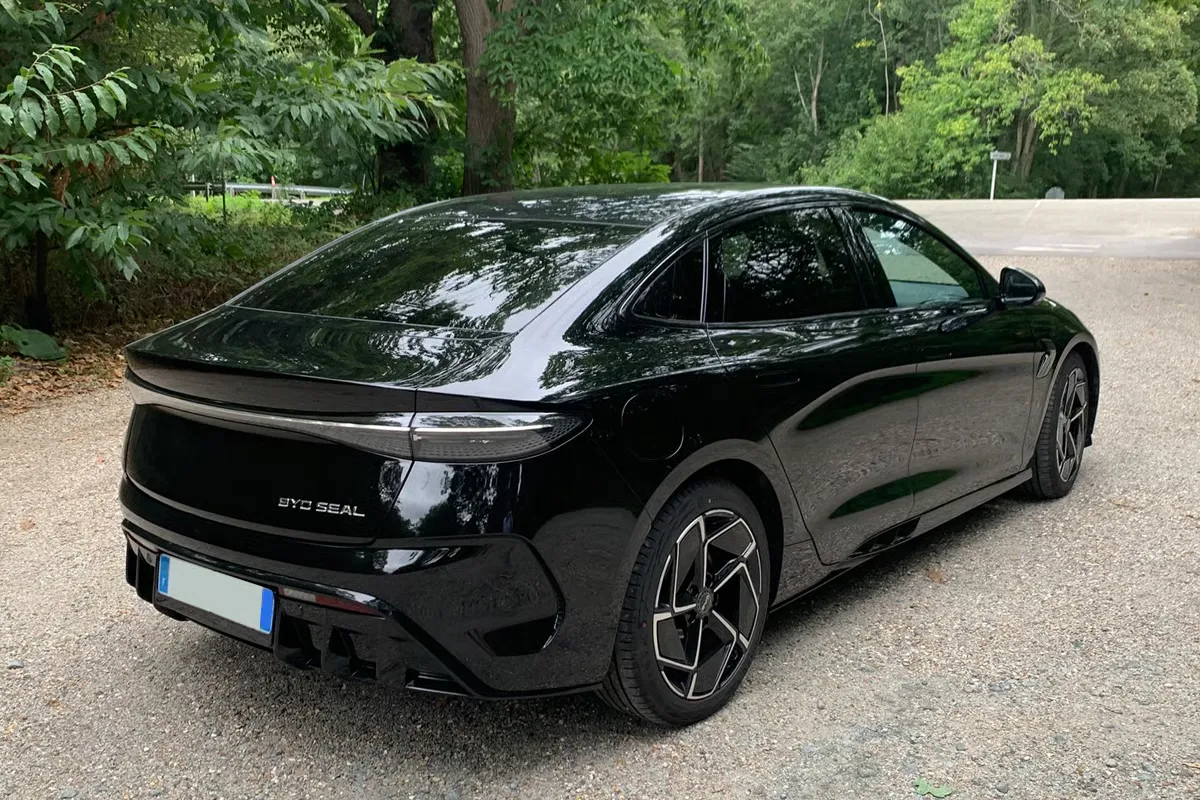
This results in an unusual process: “The relationship is a bit strange; you have to go through a sales representative or send a text message. However, requests are handled very well, and I didn’t expect such a high level of service from BYD. I contacted them due to an issue with the coupling, as the electronic unit was faulty. Technical support had some trouble identifying the cause, but from there it only took three days to receive the part. They strive to be responsive and are very attentive.”
Different Stops
The BYD Seal that Christian received about four months ago already has over 10,000 km on the odometer: “In addition to trips to the office and visiting clients, this electric car is also used for weekends and holidays. With our three-year-old child, we traveled to eastern France in the Seal. The longest distance covered in a single day was 650 km, and it went well. For me, the journey itself is already part of the adventure. Even with a conventional car, I used to drive at 120 km/h: it’s less tiring, and I need my driver’s license to keep my job.”
A habit that continues with the electric version: “I stop after driving for two to three hours. Driving at 115 km/h on the highway, it’s no problem thanks to the battery’s 83 kWh raw capacity. Under these driving conditions and with favorable weather, I observe an average consumption of 19 kWh/100 km. Starting with a fully charged battery at home, I easily get a range of 350 km. Using the app, I record an average consumption of 15.5 kWh over 10,000 km. On the dashboard, I only see the consumption for the last 50 kilometers.”
The stops are a bit different with an electric vehicle: “The breaks are a little longer, but with my daughter it’s not a problem. When I drove a gasoline car, I could schedule them based on the little one’s sleep patterns, but now I stop when I need to recharge. It’s not really a concern for me though. On long routes, when my battery drops below 20% charge, I feel a bit anxious. I rarely let it get that low.”
Choosing Charging Locations
There’s also a change in habits when making long trips to visit clients who are far away: “About 90% of my clients are within my area, and in those cases, plugging in at home is sufficient. For those further away, I’ve gotten into the habit of turning charging time into working time. I check my emails—this reduces the workload when I’m at home in the evening. For my stops, I don’t use a planner.”
On this topic, Christian hasn’t really changed his habits: “Just like with my electric vehicles, I look for convenient stops myself, such as those with toilets, a place to get coffee, and an opportunity to stretch my legs. As for charging, I don’t rule out any particular provider, but I pay attention to the prices. That’s why I prefer the networks of ChargeLeague [NDLR: Atlante, Electra, Fastned, and Ionity]. I really like the covered Fastned stations that allowed me to find shade during this summer’s heatwaves.”
Regarding electric vehicles in general, “I have no intention of going back, and I’m even trying to convince my partner to switch as well. I’ve completely forgotten about that warm-up time I used to have to wait for with diesel engines after a cold start. I’ve never been heavy on the accelerator, but I really enjoy driving an electric vehicle in areas with elevation changes and curves.”
A new European EV?
Christian notices significant differences in his BYD Seal’s road behavior: “It’s a car that weighs over two tons. Its driving precision isn’t on par with European gasoline cars. The Seal’s style is more like that of a ship, tilting slightly to one side or the other. The Mercedes CLA behaves very differently, being more precise. Under certain conditions, I’m a bit worried about the Seal’s reactions and have to be more careful with my driving.”
Also read
Testimonial – At 70, Gilles switches from diesel to electric and charges his Mazda 6e using the sun
Our reader plans to keep his first electric car for a few years: “Three to five years, probably. In the world of cars, as in many other areas, there’s no one-size-fits-all perfect product. Instead, there’s a good product for a specific use and for a particular person. More and more people think it’s either all good or all bad. I’m not an extremist in either direction. One needs to consider the approach of taking small steps. Some people, when faced with a wall, simply choose to ignore it.”
In saying all this, this Norman electric vehicle owner is thinking particularly about the origin of his electric car: “For political reasons, I don’t necessarily see myself choosing a Chinese model. I don’t want to give the impression that I’m dismissing the issues raised by the arrival of Chinese products here. By prioritizing a greater or lesser proportion of European, French, and even locally produced vehicles, I’m already being mindful of what I consume. For my next electric car, I’d like to be able to choose one with a European origin.”
Automobile Propre and I would like to express our sincere gratitude to Christian for his excellent hospitality, responsiveness, and very interesting insights shared after we asked our readers for their experiences.
For your reference, any offensive comments directed at our interviewees, their lives, choices, and/or ideas will be removed. Thank you for your understanding.
Author’s Note
Due to his open and tolerant views on rechargeable hybrids and Chinese electric cars, this testimony differs significantly from those we usually publish. These are two very sensitive topics, but Christian managed to find the right words to avoid extreme positions and explain why they can ultimately be harmful. The image on the wall...
Aside from the controversies, this Norman electric vehicle enthusiast highlights that BYD’s staff are welcoming, helpful, and committed to resolving issues with the brand’s vehicles. At least that is the impression he got from the dealership he visited.
The comments from our reader condensed many questions that arise when purchasing an electric vehicle in complex geopolitical situations and amid urgent climate challenges into a single article: Should it be a rechargeable hybrid? Or not? Chinese-made electric vehicle or not? How much weight should be given to considerations regarding policy, pricing, cost-performance ratio, customer service quality, after-sales support efficiency, and so on? The answers will ultimately vary greatly depending on individual perspectives. Without flexibility or openness, groups can only push their own agendas, resulting in delays that will inevitably be detrimental in the end.
Philippe SCHWOERER