
Testimony – Here’s how David makes money with his Renault 5 electric car when it’s not in use
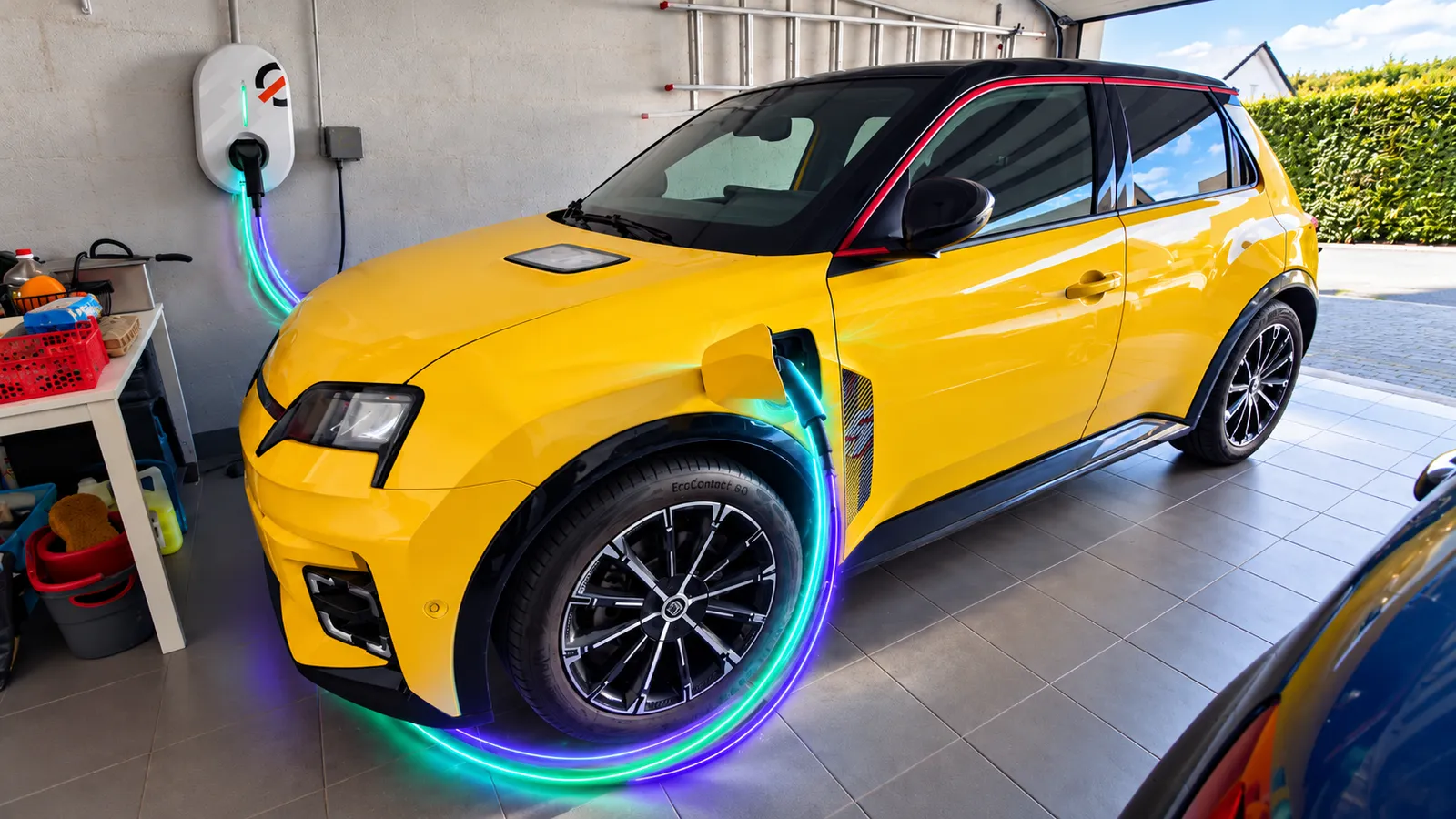
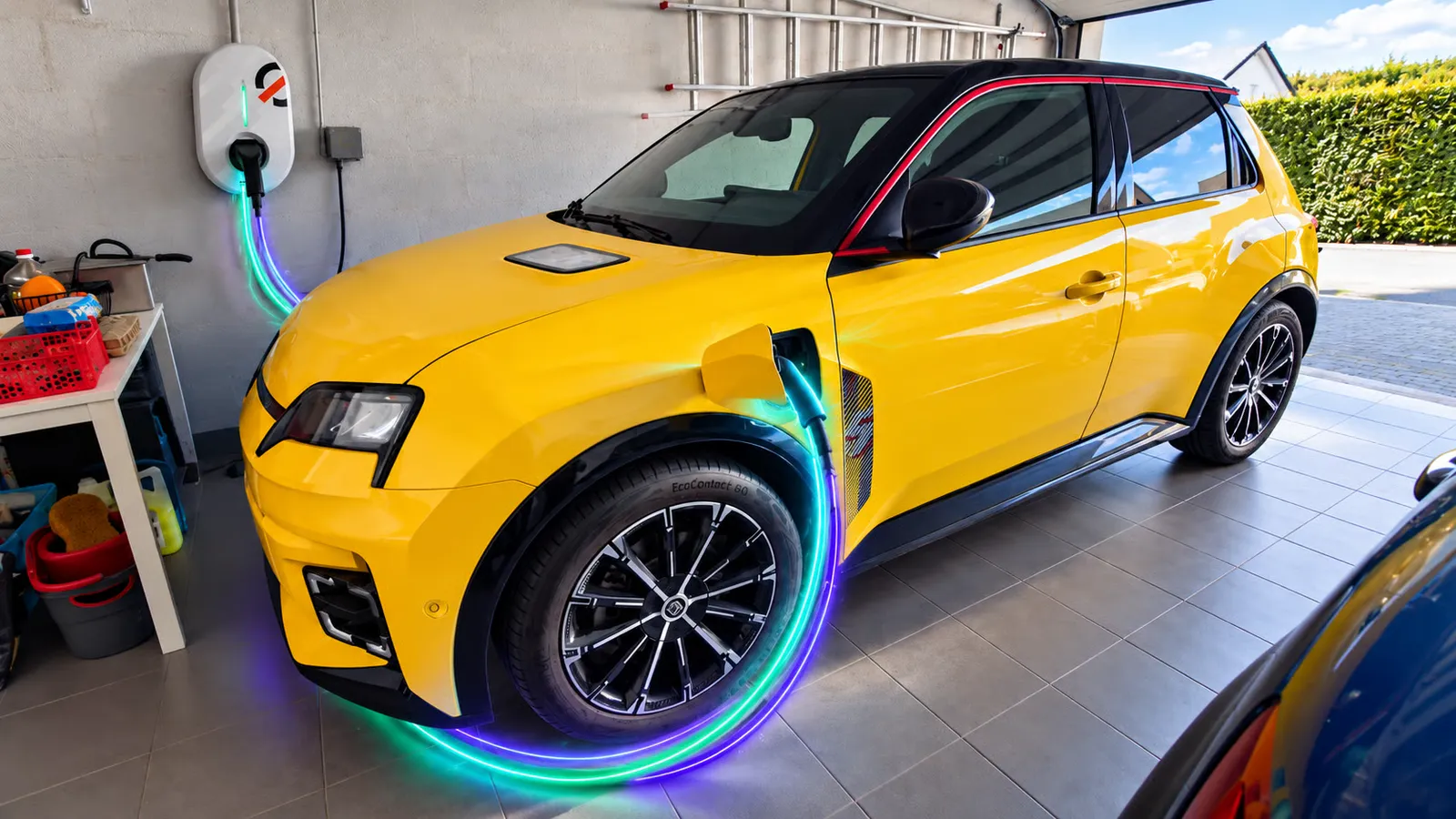
A few kilometers from Rouen, David has found an original way to make use of his electric Renault 5, even when it’s parked in front of his house. Thanks to two-way charging, specifically V2G (Vehicle-to-Grid), his car can feed electricity back into the grid while connected to his home. This setup allows him to earn between 35 and 50 euros per month. We spoke with him to understand how this works in practice.
A lot is said about the potential of electric cars to support the power grid. Thanks to V2G technology (Vehicle-to-Grid), they no longer just consume energy; they can also supply it when parked. On paper, the promise is interesting. But what’s the reality?
To find out, we spoke with the owner of an electric Renault 5 (the version equipped with a 52 kWh battery). Since February 2025, David has been using the Mobilize Power service at his home. Specifically, he uses his car’s battery to power the electrical grid at specific times. He makes no secret of it: his goal wasn’t necessarily to contribute to the energy transition but rather “to save money.” After several months of use, he has valuable insights into this technology, which is still not widely adopted by private individuals.
A setup costing 1,100 euros
It all started in November 2024. While waiting for his Renault 5 to be delivered, David decided to order a Mobilize two-way charging station. He wanted to take advantage of having his car at home to reduce his electricity bill. “The financial aspect of the device was my main motivation,” he explains to us. He got in touch with Mobilize at the end of November 2024 to get things started.
The installation isn’t complicated in principle. A simple video created via WhatsApp is used to show the location, while a measurement is taken between the Linky meter and the future site for the charging station. The company ZeBorne was then hired to carry out the work. By late December 2024, everything is ready. The station initially functions as a regular charging device. One will have to wait for the delivery of the Renault 5 and then the activation of the V2G service in February to take advantage of two-way charging.
Also read
Electric cars: Renault partners with EDF to reduce French people’s electricity bills through V2G
A pleasant surprise for this homeowner: no major changes to his electrical installation were necessary. “I was on 9 kVA and I stayed on 9 kVA,” he explains. The charging station has a load-shedding function that can automatically reduce the charging power when other electrical appliances are in use in the house.
In terms of cost, the installation totaled 1,100 euros, including setup. He says he reported this expense to claim the tax credit available at the time for controllable charging stations. He also had to leave EDF to sign a Mobilize electricity contract, which is essential for the service to function. Overall, he encountered no major technical or administrative difficulties during installation. This is reassuring for a technology that might seem complex at first glance.
"I plug in the car just like I plug in my phone."
Once the system is installed, daily use is surprisingly simple. David doesn’t need to monitor electricity prices or decide when his Renault 5 should recharge. "I plug in the car just like I plug in my phone," he explains. Everything is handled through the My Renault app. The driver sets a desired battery level for their next departure, which in his case ranges from 55 to 100%, as well as a minimum threshold that must not be crossed. For example, he can request to have 80% battery left by 7 a.m. the next morning, while preventing the system from dropping below 20%.
Once these preferences are saved, energy management becomes automated. The car can charge or supply electricity based on the grid’s needs, while adhering to limits set by its owner. And it works quite well. “I’ve never found my car with less battery than expected when I set off,” he says. The charging station also has a light indicator that shows the direction of electricity flow. But our interlocutor admits he doesn’t pay special attention to it. He lets the system handle it.
He encountered only a few issues during Wi-Fi disconnections, especially after a power outage. At first, he tried to restore the connection manually through the app. He eventually found that it usually took just an hour or two to get everything working again.
Who is behind Renault and Mobilize?
Behind the service offered by Renault and Mobilize is the German company The Mobility House Energy. This firm, specialized in smart energy management, provides the Mobilize electricity contract and the technology that enables the utilization of energy stored in electric vehicle batteries. Its role is not merely to trigger charging or discharging of a car. Thanks to its aggregation platform, The Mobility House Energy can virtually combine the storage capacity of numerous electric vehicles and put it to use in electricity markets.
Also read
Bidirectional charging: Europe finally demonstrates the potential of V2G with concrete results
The principle involves prioritizing charging when electricity is abundant and utilizing the flexibility of batteries when the grid needs more power. The exchanges are automatically managed by software that takes into account drivers’ constraints. For our owner of a Renault 5, this technology is completely invisible. He enters his needs in the app, plugs in his vehicle, and lets the system handle everything. It couldn’t be simpler!
This approach is also interesting on a broader electricity grid scale. Indeed, with enough connected vehicles, batteries can help absorb some of the fluctuations between production and consumption, particularly those related to renewable energy. But this requires electric vehicle owners to agree to keep their cars plugged in for sufficient periods of time...
A reduction of 45 to 55 euros on the bill
Let’s address what you’re probably most interested in: how much does V2G actually generate? For David, the savings are real, though they require some explanation. With his Mobilize contract, he says he receives a payment of 0.1076 € per hour the V2G service is in use. This amount is deducted from his electricity bill, so he doesn’t receive a direct transfer to his bank account.
"I get back between 45 and 55 euros per month on my electricity bill," he explains. But this amount does not represent a net savings. In fact, feeding electricity back into the grid involves energy losses. Part of the energy drawn from the battery is lost during conversions and must be compensated for during the next charge. Taking these losses into account, he estimates his actual gain is around 30 euros per month. He says this means he recovers approximately 30 to 40% of the cost of his home charging.
To achieve these amounts, he usually keeps his Renault 5 plugged in for 13 hours a day during weekdays. On weekends, the duration ranges from 13 to 20 hours. In other words, his car spends much of its parked time connected to the grid.
However, it is necessary to distinguish between the charging time and the actual energy reinserted. Under the Mobilize Power offering, the “V2G Hours” savings depend on the duration during which the vehicle is available for the service, according to the terms specified in the contract.
Therefore, it is not required that the battery be continuously discharged to achieve a reduction on the bill.
What about the battery in all this?
Another important question: Could additional cycles of charging and discharging accelerate battery aging? The man from Rouen doesn’t seem particularly worried. “I consider it not to be fast charging, and I regularly limit it to 80%,” he explains. Indeed, recent studies show that slow charging hardly reduces the battery’s initial capacity, unlike fast charging, which can have a more significant impact (although it is limited).
After over a year and a half of use, he has not noticed any significant decline in battery life. “I really don’t feel any loss between summer 2025 and summer 2026.” Of course, this personal perception does not replace a measurement of the battery’s health status (SOH). It also does not allow us to conclude that V2G has no impact on its aging. Nevertheless, Renault states that the system operates with moderate charging and discharging powers to minimize this impact.
The manufacturer also clarifies that using the Mobilize Power service does not affect the standard battery warranty, which is 8 years or 160,000 kilometers.
Is V2G beneficial for everyone?
David readily recommends V2G technology. But he adds an interesting nuance. According to him, it’s important to “take into account the overall household consumption and the distribution between off-peak and peak hours.” Before switching to Mobilize, he had an EDF contract with a relatively balanced split between the two tariff periods. About half of his consumption occurred during off-peak hours, and the other half during peak hours. Therefore, switching to a single tariff didn’t pose any particular difficulty for him. For a household that already consumes a large portion of its electricity during off-peak hours, the calculation might be different.
It goes without saying, but you also need a car compatible with a bidirectional charging station and the corresponding electricity contract. The presence of solar panels can also complicate things: the resident of Rouen notes that Mobilize explicitly informed him that his installation is incompatible with this setup. Ultimately, it depends on one’s commuting habits. A car that stays parked at home for long periods offers greater flexibility than a vehicle that is constantly on the road. For now, Renault and Mobilize are the only ones offering such a service in the French market. But others will soon follow!
To clarify, under this offer, the cost per kWh is charged to customers at 0.1793 € VAT included, while the 9 kVA subscription costs 18.26 € per month VAT included as part of the Base option.
A Positive Review for David
In retrospect, David says he is very satisfied with his choice. The system is simple to use, and he can see savings on his bills. He never had to sacrifice the autonomy of his R5 just to participate in this program. This testimony shows that V2G is beginning to move beyond the stage of technological demonstration. While it doesn’t promise free charging for everyone, two-way charging already allows some electric vehicle owners to significantly reduce their energy costs.
And perhaps that’s its main advantage: turning the long periods when a car remains unused into a source of savings. What about you? Would you be willing to do the same? Feel free to share your thoughts in the comments section below this article.
Automobile Propre and I would like to express our sincere gratitude to David for his testimony and prompt response after we reached out to our readers for their experiences. For your reference, any offensive comments directed at our interviewees, their lives, choices, and/or ideas will be removed. Thank you for your understanding.