
Testimony – To travel long distances electrically, this engineer prefers low consumption over high range.
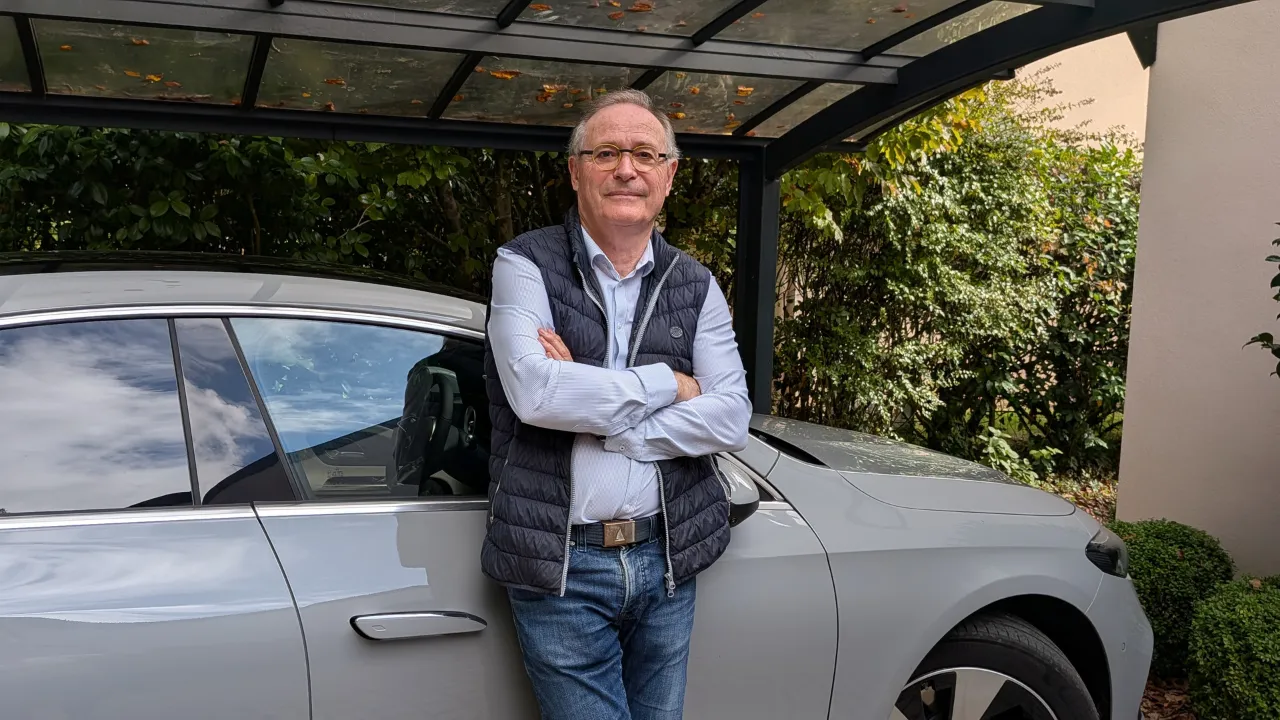
Didier is 71 years old. A trained engineer, he spent his entire career in construction, overseeing the design and construction of several thousand homes that always exceeded standards for insulation and energy efficiency. He enjoys collecting and analyzing data and doesn’t rely solely on brochures: “There are sometimes small differences between what manufacturers promise and reality, and generally not in a positive way.”
He and his wife have been thinking about electric vehicles for a long time. About fifteen years ago, they drove a Toyota Prius, but weren’t convinced due to its limited range and limited options. That was followed by two conventional cars. Then, three years ago, they began their active search: Hyundai Ioniq 6, Volkswagen ID.7, BYD Seal, Tesla Model 3... None of them met all their requirements.
The need is clear. Their daughter lives at the foot of the Pyrenees, their son in Saint-Brieuc, and their daily routines are split between Auray and Vannes via RN165, a four-lane road they use almost every day. It serves both personal and regular long-distance travel purposes.
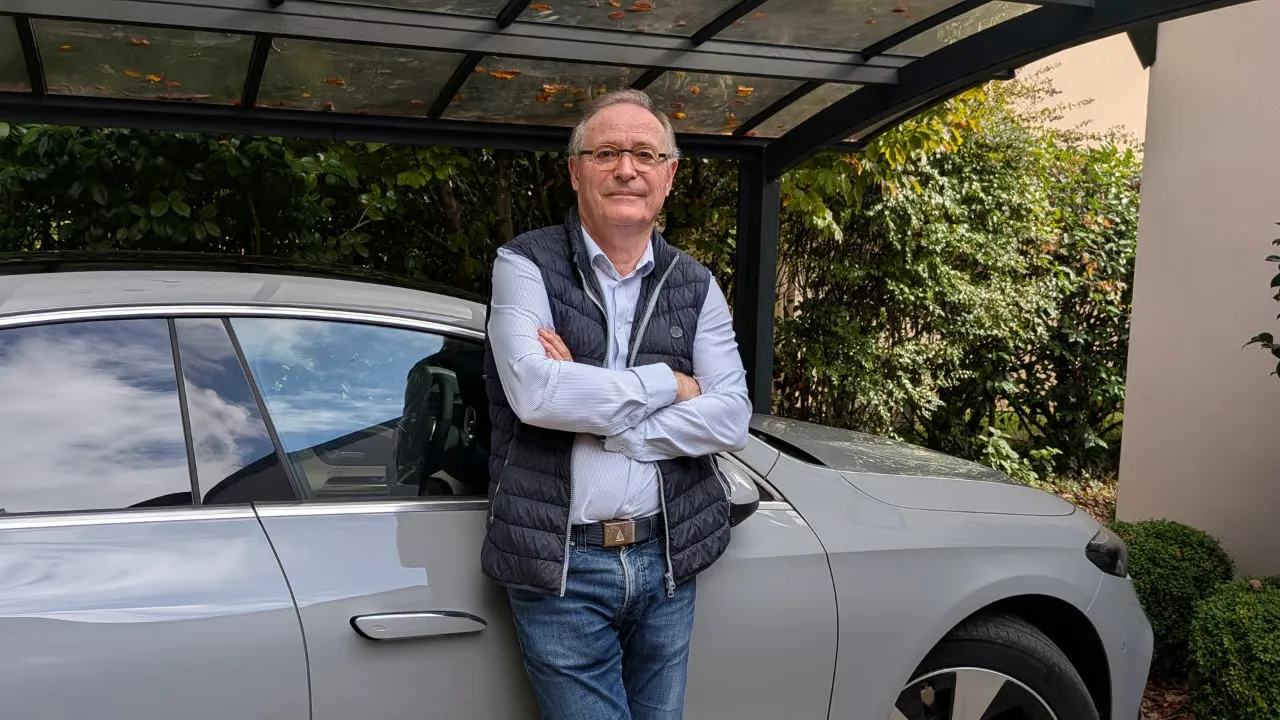
Didier has set out a set of requirements in three points. First, very low consumption, especially on the highway. Second, a battery with a capacity of up to about 60 kWh: he follows the recommendations of ADEME, which highlights the carbon footprint associated with manufacturing large batteries. Finally, fast charging that can reach 15 to 80% in about twenty minutes, so it lasts long enough for a short break.
His definition of range is equally practical: “The good criterion is being able to drive at least two hours on the highway. That’s the time recommended by road safety guidelines before taking a break.” This amounts to roughly 240 km with 65% battery remaining between charges.
The Mercedes CLA 250+ with its two-speed gearbox might work, but its battery is too large for it. The Tesla Model 3 was ruled out, especially due to its fully digital cockpit without any physical buttons, “which troubled us greatly.” He was therefore waiting for the CLA 200 with its 58 kWh LFP (lithium-iron-phosphate) battery. To justify choosing this version, he relies on the two aspects of the Supertest published by Automobile Propre in January. The first measures the actual fuel consumption and range of the CLA, while the second evaluates its charging times.
What convinces him is the richness of the data: consumption readings taken at multiple speeds, enough to plot a curve. These measurements are taken according to a detailed protocol: same routes, dry conditions, light wind, and recorded temperatures. This type of test remains rare in mainstream media. “It allowed me to confirm that it’s reliable, that we can go with a smaller battery without any risk.”
Also read
Mercedes CLA 200 vs CLA 250+: Which version of the German sedan should you choose?
At the dealership, the couple already had a good understanding of the CLA 200’s performance. The sales staff was excellent, and the seller, sometimes surprised, made an effort to answer even the most detailed questions with the support of their technical team. There was one issue, however: priced at 48,050 euros, the car exceeded the 47,000 euro threshold that qualifies it for the energy savings certificate subsidy. The dealership agreed to bring the price below this limit “without any discussion.” After deducting the subsidy, the couple ended up paying approximately 42,000 euros for their CLA 200, which was delivered to them on June 10, 2026.
In four months, the sedan covered nearly 8,000 km. Didier’s calculated average fuel consumption is 12.4 kWh/100 km under mixed driving conditions, slightly above the approved WLTP figure of 12.3 kWh/100 km. This result is even more notable given that there were five heatwaves during the summer with the air conditioning running. He jokes about a comparison: on paper, only the Renault Twingo electric model performs better, weighing 800 kg less and being a meter shorter.
Charging takes place at home using a 7 kW charger, limited to 6 kW by a 6 kVA subscription he hasn’t changed. One night is sufficient. Thanks to the LFP chemistry, Didier can charge to 100% without concern. This gives him about 50 kWh of usable energy with 15% reserve, covering roughly 400 km. At an average of 40 km per day, this means three charges per month.
Regarding the bill, the couple switched from the regulated rate of 21 cents per kWh to an alternative supplier. They pay around 15.5 cents during off-peak hours and 19 cents during peak hours. Their contract uses 100% wind power, certified as VertVolt by ADEME, and relies on a wind farm located 60 km from their home. “We drive an electric car, but one powered by wind,” he says with a smile. According to his calculations, 100 kilometers costs them about 2 euros, compared to 14 euros with their previous gas-powered car.
While driving, the surprises come from elsewhere. Marie-Christine, who drives just as much as her husband, ranks it at the top of their list: “Of all the cars we’ve had, this one has the best performance and the best comfort.” The couple has fully embraced one-pedal driving until complete stop, where the regenerative braking slows the car as soon as the foot is lifted. “It completely changes the way you drive. You need to anticipate, and you feel much more at ease.”
The next challenge was the highway trip. At the beginning of October, the couple drove from Auray to Nay, near Pau: 712 kilometers, two-thirds of which were on highways at 130 km/h, with the rest on expressways and ring roads. They returned six days later via the same route. Didier keeps track of everything in a spreadsheet: battery level, average speed, and fuel consumption displayed at each stop, as well as temperature, wind strength and direction, and rainfall.
Route
Distance
Average speed
Consumption
Going (October 6)
712 km
95 km/h
14.1 kWh/100 km
Returning (October 12)
715 km
90 km/h
13.7 kWh/100 km
Total round trip
1,427 km
13.9 kWh/100 km
The onboard planner initially indicated a consumption that was 15% higher. Why such detailed weather tracking? “Wind is an extremely important factor. Wind head-on or in the back completely changes the results.” On the way, between Niort and Bordeaux, a 20 km/h wind from the south was enough to raise the consumption for that leg to 14.6 kWh/100 km.
The pace of the journey remains unchanged: three stops, just like during normal driving, two of which involve charging. The 25% to 90% charge sessions took 26 and 27 minutes respectively, without any battery preconditioning, during lunch and a coffee break. Didier calculated that by arriving at each charging station with 10% battery remaining and charging only what’s necessary, 22 minutes in total would suffice. However, he isn’t trying to optimize further. “Doing preconditioning to save three or four minutes, when the car will be waiting for you anyway, doesn’t make much sense. It’s wasting energy for nothing.”
On the 800 V highway charging stations with Plug & Charge, there are no issues: you plug in, the car identifies itself, and charging starts. According to his calculations, the CLA 200 could thus cover 900 km in three stops on the same day, equivalent to a trip from Lorient to Geneva. “The concept of range loses all meaning: you recharge at every stop, and the car is barely recharged before you set off again.”
These figures need to be put in context, and Didier is the first to do so. His 14.7 kWh/100 km figure on the highway is significantly lower than the 17.0 kWh/100 km measured by Automobile Propre on the same CLA 200 during a 500 km trip from Lyon to Paris. The difference mainly comes from driving style. “In real life, you average 100 km/h on long trips. You only drive at 130 km/h occasionally.” He also admits to having a “light touch” on the accelerator, and his October readings were taken between 17 and 29 °C.
Winter still needs to be tested. In his own assessment, Didier lists the factors that increase battery consumption: temperatures below 5 °C, strong headwinds, Sport mode, trailers, or bike racks. Charging times also lengthen in cold weather without preheating.
The experience wasn’t perfect even off the highway. The couple encountered charging stations that couldn’t read their recharge card. This explains Marie-Christine’s caution; she prefers to keep a buffer rather than reaching 10% charge. Along the way, they charge to 90% “so as not to arrive with 0 or 10% charge at our children’s place.”
Finally, Didier regrets that the battery in his Mercedes, assembled in Germany, is not of European origin, which would have allowed him to claim the additional 1,500 € bonus. He also admits that if the new Renault Mégane with a European LFP battery had been available at the time of purchase, it could have been a financially attractive alternative. Moreover, unlike the CLA, this car comes equipped with V2L and V2G functions out of the box.
After four months, the couple is completely satisfied. Nothing has changed in their travel habits, and their energy costs have dropped significantly. Over eight years and approximately 200,000 kilometers, Didier calculated that the difference of about 12 euros per 100 kilometers amounts to roughly 24,000 euros saved, which is more than half of the purchase price. He also emphasizes the improvement in his carbon footprint: according to his estimates, his previous vehicle emitted about 40 tons of CO2 over its lifetime (200,000 kilometers), compared to only 3 tons for the small battery in the CLA 200.
He also makes a comment to our editorial team. In January, Automobile Propre updated its list of the best cars for long trips. Didier fell in the middle ground: 83 kWh battery and 62,000 euros. “This isn’t necessarily good news for people who are hesitant, who might think they can’t afford it.” He suggests instead creating a list of models that can travel 240 km on the highway and recharge in 20 minutes, along with their prices. The message was received.
His advice to those who are hesitant stems from this reasoning: start with one’s actual travel distances rather than the longest trip of the year. With fast charging and low consumption, a medium-sized battery can perform like a large one designed for long trips.
Also read
Electric car: how to prepare for a long trip?
And you, have you opted for a smaller battery for your long trips? Do you track your fuel consumption? Share your figures in the comments.
Automobile Propre and I would like to thank Didier very much for sharing his experience with us.
To avoid discouraging our readers from sharing their experiences in the future, any offensive comments directed at our interviewees, their lives, their choices, and/or their ideas will be removed. Thank you for your understanding.