
Testimonial – They have three! Here’s why this Belgian family only trusts the Hyundai Ioniq
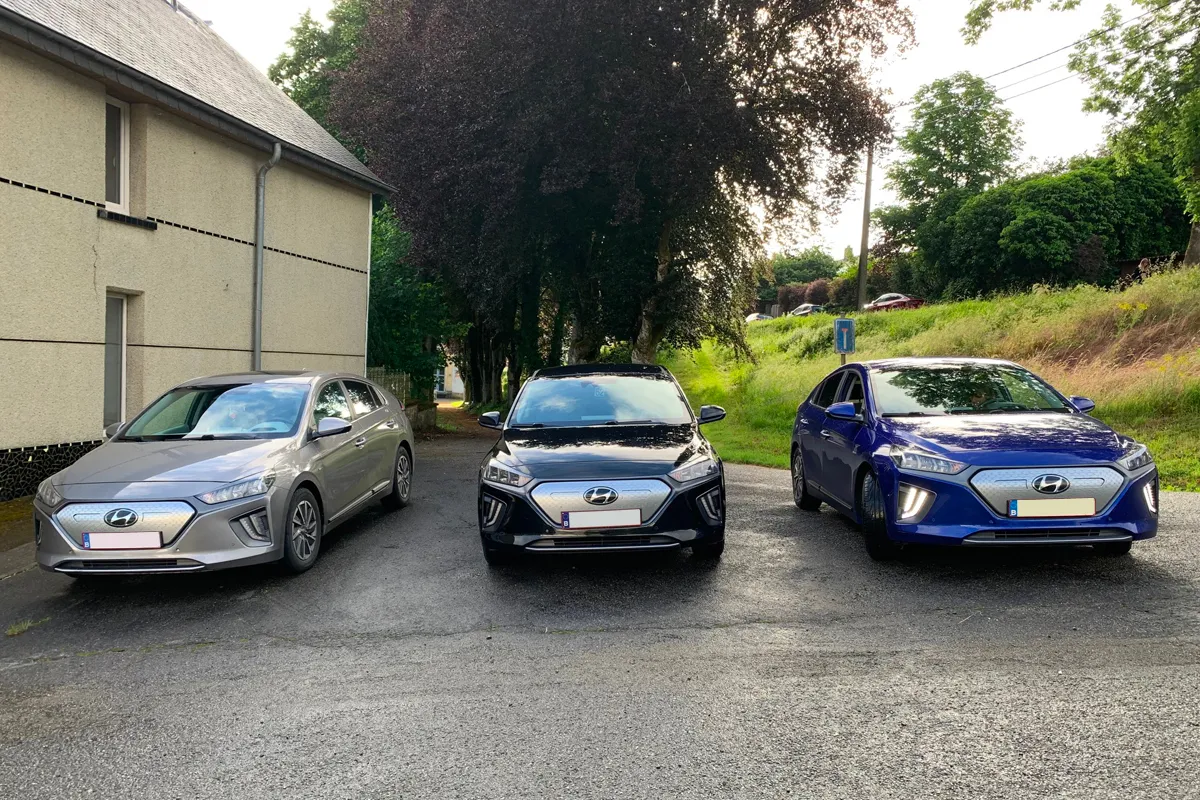
Among electric vehicle owners who prioritize efficiency are those who favor the Hyundai Ioniq models with 28 or 38 kWh batteries. For years, Pierre has acted guided by his environmental consciousness. After trying an electric vehicle in 2011 with a Nissan Leaf 24 kWh, he tried a few other models before settling on the powerful Ioniq 38 sedan. Testimony from five voices: Pierre, his ex-wife Gene, their younger daughter Isabelle, and their two granddaughters Elise (20 years old) and Célestine (18 years old), all of whom drive this model.
Multiple actions for climate and the environment
For Pierre, who lives in southern Belgium, driving an electric car is part of a broader effort to reduce the impact of his activities: “Sustainability has been around for a long time. I don’t participate in climate marches, but I take action at my own level. I use a bike, bus, or train whenever possible, never a plane. In my last years as a teacher, I rode 80,000 kilometers to get to work, which earned me a compensation of 12,000 euros—enough to buy my first electric car in 2020.”
These figures seem so high that one might think there’s a mistake. But no! Until 2023, the bike allowance for Belgian teachers was 0.15 euros per kilometer traveled: “I hope to be an example for the people around me. A life without oil is great! Jean-Marc Jancovici will rightly point out that there’s oil in my clothes, the insulation in my house, the production of solar panels, my bike, etc. Oil is essential for many things, but we need to stop burning it when there are alternative options.”
Also read
Testimonial – Two electric Renault Megane at the same price: here’s why Fabrice chose the one with 22,000 more kilometers
Many more efforts for the environment and climate: “I have a 10,000-liter rainwater tank, eat very little meat, use an electric lawn mower, and regulate my home’s temperature with a heat pump. On the roof, I have 36 solar panels that produce roughly 8,000 kWh of electricity per year, half of which goes to power my electric car. In Belgium, we can benefit from a somewhat unique compensation system. If there’s excess production beyond consumption, the meter runs backward. This way, energy is saved for winter.”
Pierre’s Transition to Electric Vehicles
Pierre was inclined to switch to electric mobility: “I once met a Tesla owner who told me, ‘People drive electric vehicles either because they’re environmentally conscious or because they know how to do the math.’ As someone who’s both frugal and eco-conscious, I totally relate. I drove a Volkswagen Passat TDI converted to use canola oil. When I discovered Automobile Propre and its forum, I started fantasizing about electric cars. In 2011, at the age of 55, I got to drive a Nissan Leaf 24 during an open house event.”
This model, however, was not the first electric car in his household: “This experience was a revelation, but as it had just been released, the car was too expensive for me who only bought used vehicles. I had to wait until 2020 to purchase a first-generation Volkswagen e-Up! with my 12,000 euros in bike compensation funds. It had a range of 180 km and came from Germany. That was fine because during the peak of Covid, we drove relatively little. I sold it for 11,000 euros after two years, having racked up an additional 40,000 km.”
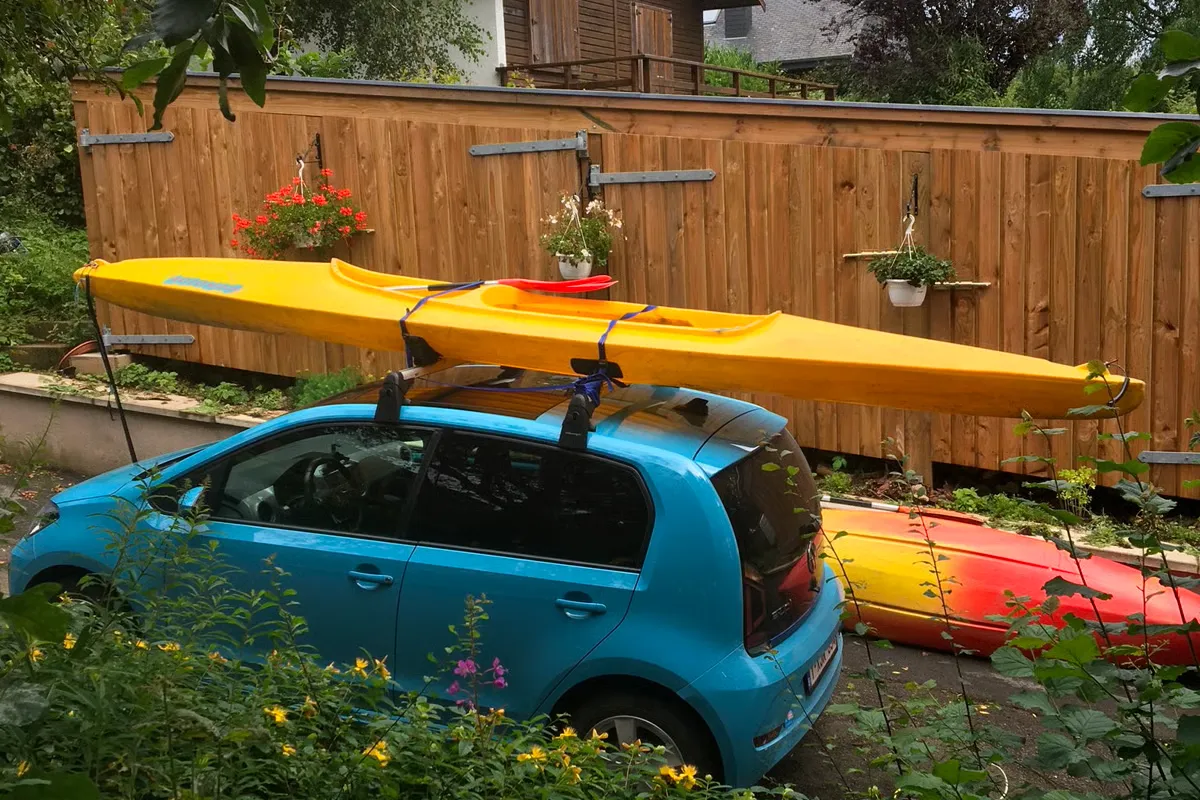
Our reviewer then moved on to the Kia Soul EV 30 kWh: “Purchased in Montpellier [NDLR: about 900 km away] for 14,000 euros, it had a panoramic roof. I left from Belgium by Blablabus. I returned using the Soul EV, making two stops along the way. It was 2022, and there weren’t many charging stations yet, let alone those with CHAdeMO ports. I really enjoyed driving it, and eventually this vehicle became a shared car between Gene—my ex-wife—and one of our granddaughters. Until the day in 2026 when…”.
The first Ioniq was for Isabelle
For Gene, this Soul EV was “like taking a leap into the future. I went from a spartan Skoda Fabia (without air conditioning or radio) to a powerful electric vehicle equipped with everything that can make driving easier, safer, and more comfortable. Aaaah, the heated seats! The 200 km range was a source of intense stress despite my ex-husband’s reassuring words. But after a year of good and loyal service, the Cube—as we called it—was involved in an accident for which I was not at all responsible. Unfortunately, it was downgraded in status.

Pierre wasn’t the first in his family to own a Hyundai Ioniq; it was his younger daughter: “Due to life’s uncertainties, I found myself without a car. Sometimes I drove his e-Up!. Making the switch to a vehicle with limited range was difficult for me, as I already got worried when my SUV’s fuel gauge reached half full—quickly, a pump to refuel! That first experience was negative. Then I followed my father’s excellent advice and bought a Hyundai Ioniq 28 in early 2021.”
Isabelle left “generally quite satisfied with this beautiful car, which I’ve driven thousands of kilometers in over four years. I loved its classic, elegant, and versatile design. With a white body, its interior was well-finished and quite feminine, featuring gold and pink accents. Compared to the e-Up!, its range was still too limited. Being an active mom with two teenage children and all the unexpected challenges makes things complicated. You need to plan ahead—have a blanket as a backup if heating can’t be used, and carry maps and apps for charging.”
The Hyundai Ioniq Shuffle
Pierre did not come out unscathed from this experience: “Since there were very few used models of this type in Belgium, I went to Alsace to find this Ioniq 28. I was jealous of it. So in 2024, I bought an Ioniq 38 in the Executive trim with a sunroof to replace my Kia Soul EV. It was in Brest. This car is now 6 years old with 177,000 km on it. Pure happiness! Except when I encountered the notorious problem with the engine and transmission rolling noise. Since no one in Belgium could fix it, I had to take the car to Revolte in Paris.”
Something similar happened with Isabelle as well, according to her father: “At 170,000 kilometers, she sold her Ioniq 28 and bought an Ioniq 38. Since it didn’t have a heated steering wheel, she only kept it for a few months. No problem—this new car replaced the damaged Soul in my ex-wife’s and our granddaughters’ vehicles. This time, we found an Ioniq 38 Full Option in Belgium for Isabelle. Are you still following? The result: there are now three Hyundai Ioniq 38s in the family.”
For the younger daughter, the lack of a heated steering wheel is by no means a minor issue: “I would even say this feature is essential. On the e-Up!, I also appreciated the heated windshield, which prevents fogging. The comfort, the silence, the driving experience — I wouldn’t want to go back to a gasoline car. Even though at least with a gasoline car I could turn up the heating to full and avoid constant fogging. My partner was skeptical about electric cars. Eventually, he bought a BMW i5 two years ago. He wouldn’t go back either.”
A Highly Praised Electric Car
At Gene, Elise, and Célestine’s place, the Hyundai Ioniq 38 without a heated steering wheel is highly appreciated. Here’s what Pierre’s ex-wife has to say: “With it, my stress levels dropped dramatically thanks to its 400 km range. I learned to consider the various factors that affect it, such as elevation, temperature, average speed, and climate control. And now there are more charging stations available. I’ve become a confident electric vehicle driver. Aside from its disappointing turning radius, driving this electric car is a pleasure.”
Elise, 20 years old, adds: “I really like electric cars. Among all the ones Grandpa has had, I prefer the Hyundai Ioniqs. I find them quite nice and even appreciate them more than regular cars I’ve driven before. They are pleasant, quiet, and comfortable. The only downside, in my opinion, is range. The kilometers go by quite fast, which can be stressful sometimes. You really need to think about the routes you’ll take, plan where to charge, and always keep an eye on the remaining kilometers.”
Her sister, Célestine, 18 years old, is currently obtaining her driver’s license: “I particularly like the Ioniq models because I find them very attractive both on the outside and inside, as well as highly functional. Overall, I think electric cars are very pleasant to drive due to their low noise level and numerous features. Their main drawback is limited range, along with a lack of standardization for charging compared to gas stations.”
“The more you drive, the more you save.”
The fuel efficiency that electric vehicle enthusiasts achieve with their Hyundai Ioniqs is hard to replicate with today’s electric cars. Especially if one wants to match Pierre’s figures: “It’s a very economical model; I knew that before buying one. In hypermiling mode, my consumption over the last 8,000 km was 10.5 kWh/100 km. Other modes show 11.5 kWh/100 km for normal driving with little highway use. Since 2020, I’ve covered 200,000 km without refueling, saving roughly 20,000 euros over that period. Not to mention the CO2 emissions.”
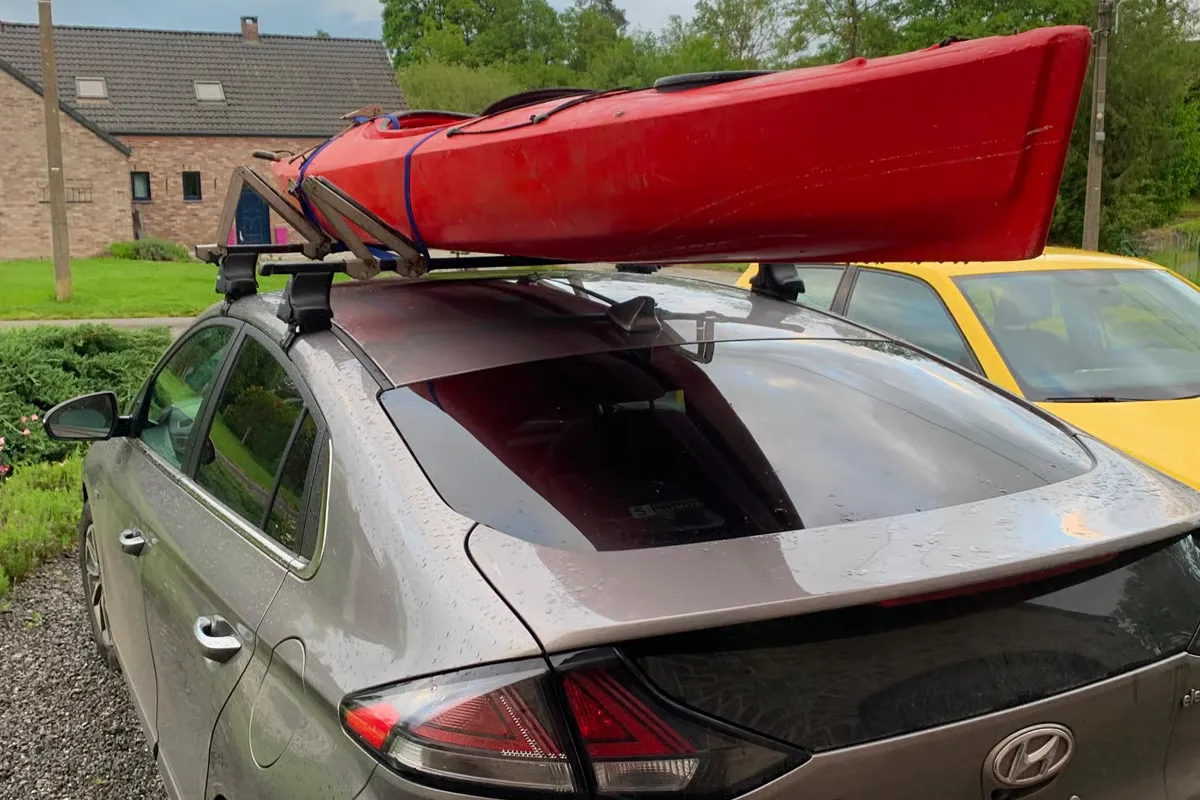
Elise wants to clarify a detail about her grandfather’s eco-driving habits: “He drives really slowly. He’s honestly the slowest driver I know! He was the first to introduce us to electric cars. He’s truly passionate about this field and everything related to ecology. He loves explaining how they work, showing us the advantages, and letting us test the cars so we can form our own opinions. I think it’s great that he’s so committed and that he inspires us to use electric vehicles too.”
Also read
Testimonial – Never again! Laurent lost interest in electric cars after his Tesla
Our charger is carefully managed for charging: “Except during holidays, my electric car is only plugged in at home. At first, it was connected to a Green’up charger, but very quickly everyone switched to the P17 socket, which is allowed in Belgium. So charging at 32 amps. I retired in 2020 and now work as a social taxi, charging 0.50 euros per kilometer, which amounts to 10,000 euros per year, or 60,000 euros since I started. For me, the best solution is to buy a used electric vehicle with solar charging. The more you drive, the more you earn. Low consumption also helps.”
What next?
What electric car should replace Pierre’s Hyundai Ioniq 38? “My next car will obviously be electric, but how do I find a model that’s efficient too? I have a rich man’s dream: in the back of my garage, I have a nice red Audi A2 with a panoramic roof that I really want to convert to electric.”
Let’s leave the final word to his daughter Isabelle: “I can never thank my Dad enough for his advice, his great deals, and all his knowledge about electric cars that he’s so passionate about.”
Automobile Propre and I would like to thank Pierre greatly for his hospitality, his quick response, and all the work he did to provide a more comprehensive account from five perspectives. A big thank you also to Gene, Isabelle, Elise, and Célestine.
For your reference, any offensive comments directed at our interviewees, their lives, choices, and/or opinions will be removed. Thank you for your understanding.
Author’s Note
This isn’t a myth: the Hyundai Ioniq 28 and 38 remain unmatched as models of efficiency. Those who drive them often find it hard to give them up and may even return to them after trying other electric cars, including the Tesla Model 3. We have another compelling testimonial in favor of this rare sedan in the competitive market, and best of all, it’s family-friendly.
Pierre has truly done his best to make the purchase and use of this car worthwhile. There are first the solar recharges, along with his social taxi business. This reminds me quite strongly of how my own former Citroën C-Zero was paid for: entirely through reimbursements for mileage costs incurred over seven years from delivering a daily newspaper.
Among the interesting features we lack in France are: the possibility of legally charging in Belgium using a P17 socket, and a home electricity meter that runs backward when there is more power generated than consumed. This will surely arouse envy among our readers.
Philippe SCHWOERER