
Testimonial – After 5 years and 50,000 km, here’s the condition of Michel’s Dacia Spring battery
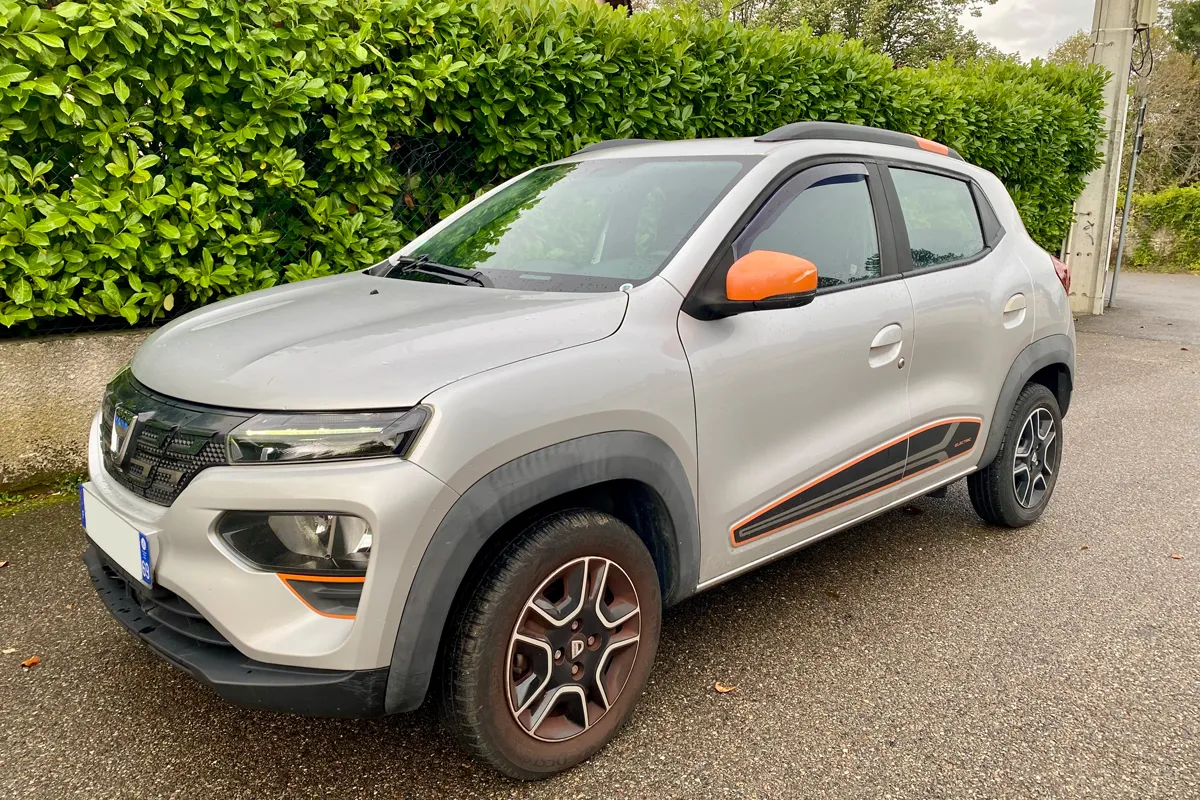
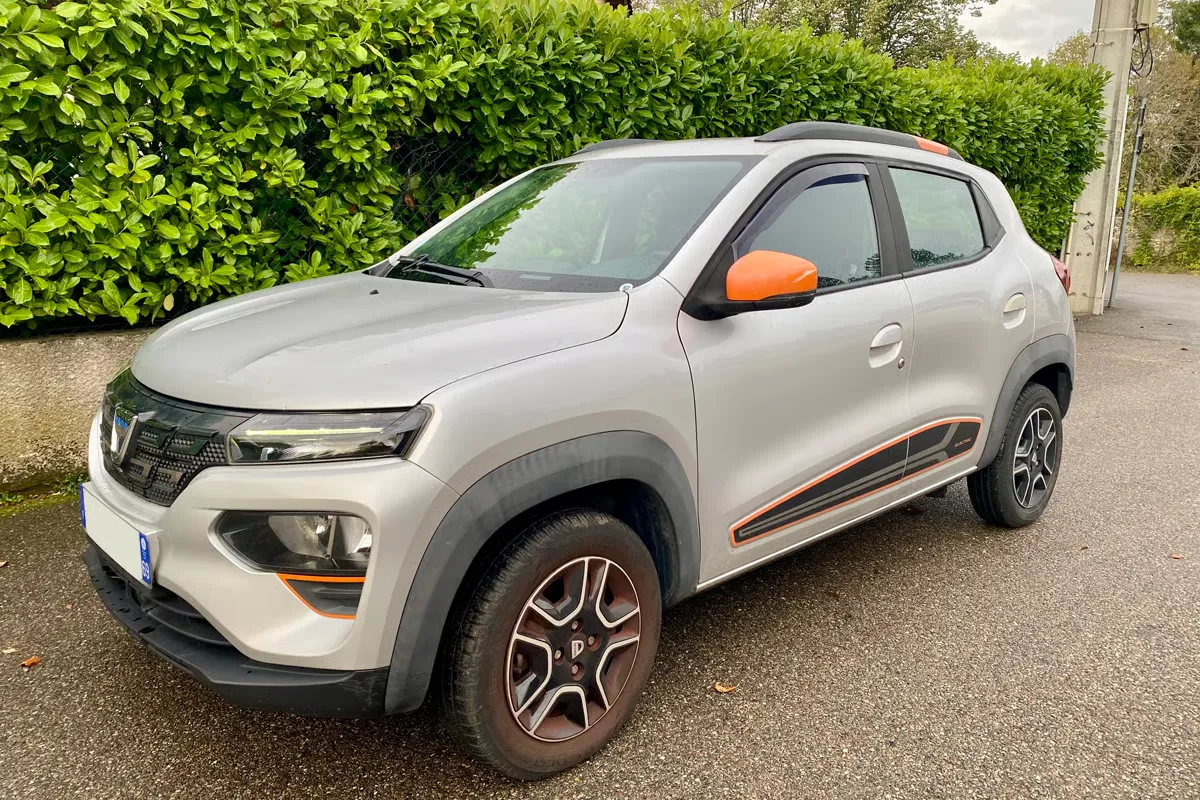
While many drivers wait for electric vehicles with long ranges and charging times no longer than refueling, others are content using models with limited features in their daily drives. This is the case for Michel, who mostly relies on a Dacia Spring. What’s the point of fast charging when the car is almost always plugged in at home?
"We can get 290 km per charge."
The progress in electric cars over the past few years has been so significant that one might almost forget there is a demand for city cars designed solely for local commuting. There’s no need for long range; rather, an affordable price relative to performance and usage is more important. Five years ago, when Michel bought his Dacia Spring, there was little competition. Although it remains limited, the market for this segment has since expanded a bit.
The year 2021, more precisely March 11, marked the launch of this four-seater car manufactured in China and sold elsewhere in the world under different names such as Renault City K-ZE, Dongfeng EV Nano Box, Venucia e30, etc. On November 20 of that same year, Dacia announced it had received 40,000 orders for Europe: “We were among the first in France to get our Dacia Spring, as it was available in very limited quantities. We reserved it six months in advance.”
Also read
Testimonial – At 79, Jean switched to an electric car and doesn’t regret his choice at all
This electric city car is equipped with a 27.4 kWh battery, of which 26.8 kWh are usable. This gives the Dacia Spring a WLTP combined range of 230 km, and up to 298 km in urban conditions: “Our car spends a quarter of the time in the city and the rest in the suburbs around Lyon. The range naturally varies with temperature. With a gentle driving style, in Eco mode, and at 20 °C, we can achieve 290 km per charge. Our fuel consumption rarely exceeds 10 kWh/100 km. In winter, it’s more like 210-220 km.”
11,500 euros after subsidies are deducted
The lithium-ion pack, consisting of 72 cells, powers a motor with 33 kW (44 hp) of output and 125 Nm of torque. With a top speed of 125 km/h, this is more than sufficient for urban use. “In Eco mode, which we use exclusively since getting our Dacia Spring, the power is even limited to 31 hp [NDLR: 23 kW]. That’s enough for daily driving and helps us blend in well with traffic; we don’t need the 44 hp. When we tell this to friends who have Teslas with over 300 hp, they can hardly believe it.”
For this retired medical radiologist, the Dacia Spring was clearly intended from the start as the second car in the household: “It replaced an old, high-mileage diesel that required lots of repairs. Thanks to it, we received a 2,500 euro conversion bonus, which was added to a 5,000 euro incentive. In the end, this electric car, which we chose in the higher Confort Plus trim, cost us 11,500 euros. It was the cheapest among electric city cars at that time.”
In its base Comfort trim, the Dacia Spring already came equipped in 2021 with electric outside mirrors, manual air conditioning, automatic headlights, a speed limiter, a Bluetooth radio, and a USB port. The Michel Comfort Plus version adds a 7-inch screen for the multimedia and navigation system, along with smartphone integration via Apple CarPlay and Android Auto. This trim also includes a rear camera and radar: “For its class, we find our Spring well-equipped and very economical.”
Economical, environmentally friendly, and pleasant to drive
In 2021, our reader had already been interested in electric vehicles for a few years: “Like pretty much everyone I think, I was watching Tesla. But we mainly needed to replace our second car. However, it’s the Spring that serves us 95% of the time for our trips. For longer distances, we still have a diesel car. The economic factor was crucial for us. At home, charging it from 20% to 80%, as we do to preserve the battery, costs us about 4.50 euros.”
Two other reasons also drove the adoption of electric mobility: “It’s also for environmental reasons. With pollution issues in Lyon, it made sense to switch to electric vehicles. Plus, there’s the unparalleled driving pleasure that EVs offer: whether it’s 44 or 31 horsepower, the power is delivered instantly. This is something we could experience firsthand during a two-hour test drive—at the dealership, they just handed us the keys. And as they often say, ‘Try an electric vehicle, and you’ll adopt it.’”
Overall, there’s no problem with this Dacia Spring, except for… “There are reinforcements under the chassis that are rusting. I thought it would be covered by the eight-year corrosion warranty, but it isn’t, since it’s not part of the chassis. It was a bit of a disappointment. I dealt with it myself. I started by stripping the paint, then applied a layer of anti-corrosion paint before treating it with a thick bituminous product. Dacia has since resolved this issue by protecting these parts through electrophoresis on newer models.”
94% SoH after 50,000 km
Similar to the early MG ZS EVs, the charging port of the 2021 Dacia Spring is located in the middle of the fake grille, beneath the brand logo, and opens upward. The city car is equipped with a 6.6 kW AC charger. Optionally, this electric vehicle from Renault’s subsidiary could be fitted with a CCS connector for fast DC charging at up to 30 kW: “I didn’t opt for this option, which cost 500 euros. Since we already had another car for long trips, we knew we wouldn’t use it.”
This doesn’t mean the car can’t occasionally be charged elsewhere than at home: “We sometimes plug in our Spring at friends’ places. At home, it’s simply connected to a household outlet. Seven hours are enough for a 20% to 80% charge. With this car, we travel about 10,000 kilometers per year. Its mileage meter recently exceeded 50,000 kilometers. At first, we were a bit worried about the battery’s durability, but with the Spring, it comes with an eight-year warranty.”
In the end, our reader is surprised by the good condition of the battery pack’s health: “To maintain the benefits of the corrosion protection warranty, it’s necessary to take the Spring in for a check-up at a Dacia dealership every year. The bill isn’t very high, around a hundred euros, unless the pollen filter or 12 V battery needs to be replaced. It’s always an opportunity to get the SoH reading for the lithium pack. It’s still at 94%. I’m not sure if this is very reliable, but it seems to indicate that my concerns about a faster or slower loss of range were unfounded.”
“My wife would never exchange it for anything in the world.”
What does Michel think of his Dacia Spring after five years of use? “With fuel costing around 2.20 euros per liter, this electric city car is very economical. I still appreciate its silence, the pleasant driving experience, and instant acceleration. It’s a very enjoyable car. Its main flaw was its handling on wet roads: the original Chinese tires turned out to be terrible. We replaced them with more performance-oriented models.”
Also read
Testimonial – Here’s how David makes money with his electric Renault 5 when it’s not in use
Our reader isn’t the only one who loves this electric city car: “My wife adores driving it, especially because it’s easy to handle and the trunk is quite large. For comparison, the Renault Twingo E-Tech has a smaller trunk. You can fold down the integrated seat, for example, to take small items to the trash dump. My wife would never trade in her Dacia Spring for anything. I don’t plan to get rid of this car until the battery warranty expires. So it will stay with us for at least another three years. It’s the second perfect car.”
And what about the main vehicle? “I really would like one; I could even say I’m dreaming of an electric car for my main vehicle as well. Chinese manufacturers are offering quite a few interesting new models these days, so it’s necessary to take a step back and consider carefully. I’ve also thought about the Tesla Model Y. My son-in-law has one as his company car. I’ve tried several of them, and they’re amazing! Plus, there’s the network of fast chargers available. Of course, there’s Elon Musk as well, but that’s another story…”
Automobile Propre and I would like to express our sincere gratitude to Michel for his excellent hospitality, remarkable responsiveness, and for sharing his insights after we asked our readers for their experiences.
For your reference, any offensive comments directed at our interviewees, their lives, choices, and/or ideas will be removed. Thank you for your understanding.
Author's Review
The main advantage of this testimony is the battery’s SoH level at 94% after 5 years and 50,000 km of use with a Dacia Spring. This gives confidence when considering a used vehicle purchase, especially since no malfunctions were experienced. The corrosion issue is minor, though it’s positive that the affected parts were treated.
It’s also important to note that it’s not unusual for an electric city car without fast DC charging to be used only locally. One should expect it to be harder to resell in the used market later, as buyers who want it as their only vehicle may not be interested or will be less inclined to purchase it.
Once again, an electric vehicle considered a second car ends up being used far more often than the one meant for long trips, sparking a desire among households to go fully electric for their mobility needs. More and more of our readers cite three almost inseparable reasons that led them to adopt electric vehicles: cost savings, environmental benefits, and the pleasure of driving.
Philippe SCHWOERER