
Test result – 2.37 L/100 km over 40,000 km: Daniel found the right way to use a rechargeable hybrid vehicle
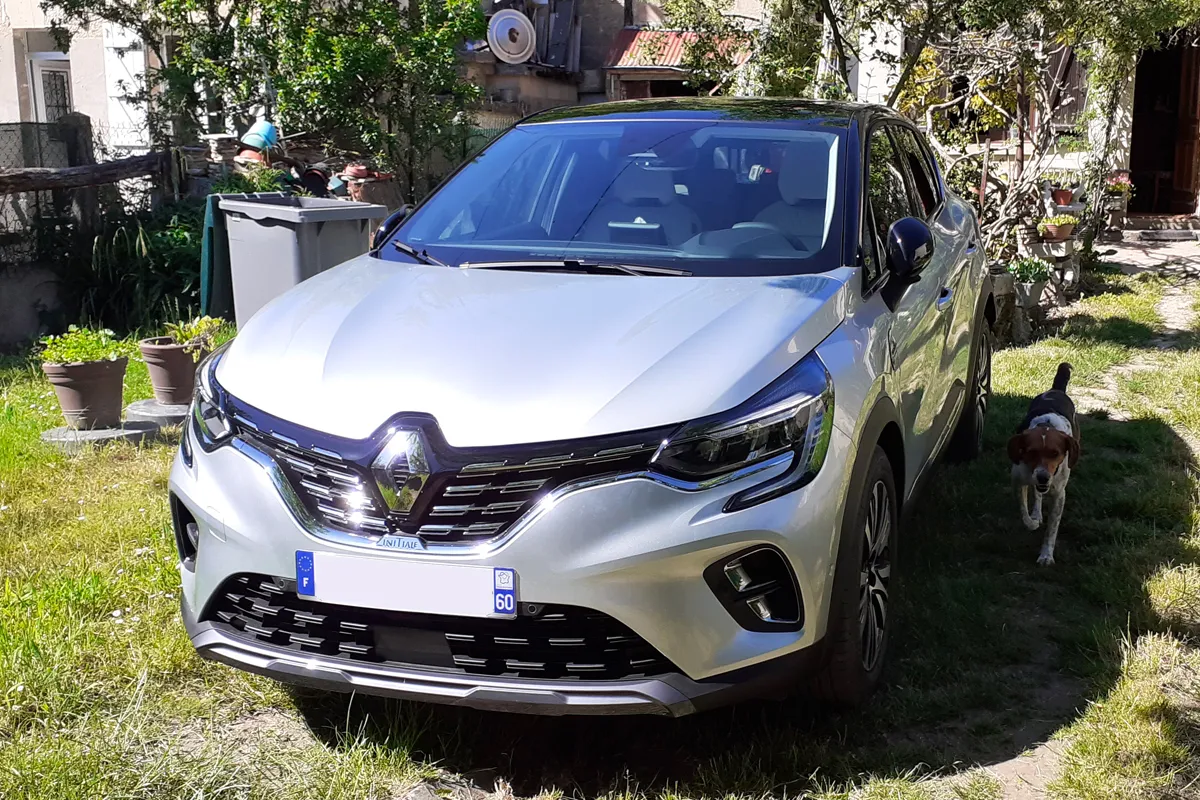
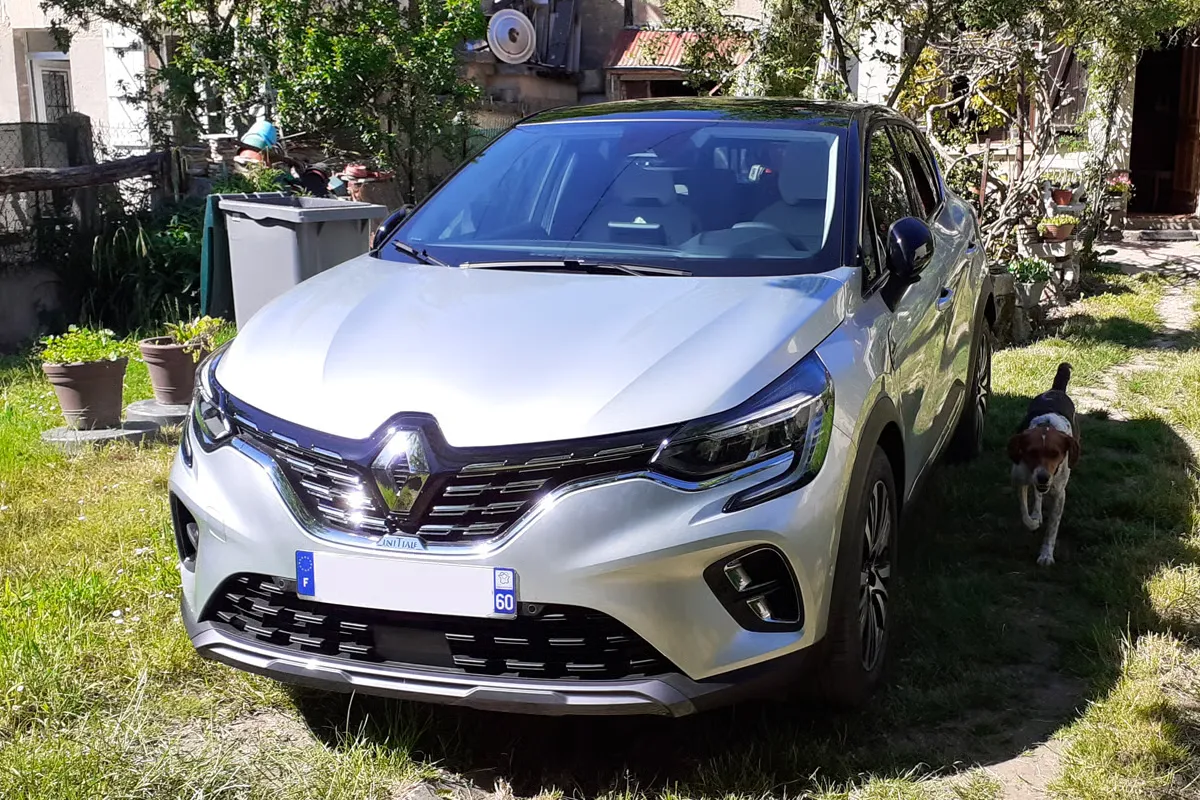
In his 45 years of driving, Daniel has owned only five cars in total, all Renaults. Although he has considered the 5 E-Tech as his first electric vehicle, he is currently satisfied with the performance of his rechargeable hybrid Renault Captur, which he bought new in 2021.
First new car
At 66, Daniel is now retired. He has never wanted a diesel vehicle at home: “The only diesel cars I drove were the utility vehicles provided by my company for fixing elevators in Paris and its surroundings. For a while, we had models that ran on LPG. For my personal cars, which I always bought used before, I opted for gasoline. I was accustomed to taking good care of them and keeping them for a long time, up to over 250,000 kilometers and about 10 years.”
In 45 years, the list of cars he’s owned is short: “2 R5s, a Super 5, a Mégane, and now the Captur PHEV… The Renault 5 E-Tech I’m considering next is part of this same tradition. With the plug-in hybrid, I already broke new ground by buying a brand-new car for the first time. It was when I retired. I still hesitated to choose this newly released Captur PHEV, as Renault had just started talking about its automatic transmission—I had never driven an automatic car before.”
It only took one test drive to convince our reader: “Everything went very well with the young salesperson who greeted me. I simply explained my situation and what I wanted. In response, he told me that his supervisor drove a Captur PHEV, and that’s the model I got to try. I signed the contract right away upon returning. I stepped into the unknown, but I quickly got used to this technology. Received in May 2021, my car with the high-end Initiale Paris finish and all options was bought for 38,000 euros. I also received a bonus of 2,000 euros.”
Average fuel consumption of 2.37 l/100 km
While considering continuing with Renault, Daniel had some preferences in 2021 that explained his choice: “I wanted a small convertible car with a trunk and the ability to charge at home so I could drive electric for local trips. The Captur PHEV was then the smallest rechargeable hybrid [NDLR: wheelbase of 4.23 x 1.80 m, with a curb weight of 1.56 tonnes]. Eighty-five percent of my trips are short distances within twenty kilometers around my home. These are things like going to medical appointments or running errands.”
Also read
Testimonial – Bruno drove 76,000 km in a Tesla Model 3 for only 3.33 € per 100 km
Our driver sometimes travels far from home: “About 12% of the trips are between 100 and 200 km. That includes my five to eight trips a year to Paris for medical examinations. In total, I’ve made only three or four trips over 500 km, to the Normandy coast and Carcassonne. Over 40,000 km, my Captur PHEV used only 950 liters of gasoline, for an average of 2.37 l/100 km. The tank holds only 38 liters. I refilled it last week at 2.15 euros per liter. The previous fill was in early February 2026, when gasoline cost 1.67 euros per liter.”
The infrequent use of the internal combustion engine is why « it starts from time to time to ensure minimal maintenance. Just before running out of fuel, this message also appears on the dashboard: ‘Old fuel. Fill at least 10 liters.’ » This alert occurs when the gasoline is more than three months old. It serves to draw the driver’s attention to the risk of impurity deposits at the bottom of the tank and clogging in the fuel injection system. The EV mode is temporarily disabled to force the use of the old gasoline.
Flexible Driving
This rechargeable hybrid Captur doesn’t use 22 kW AC charging stations: “I’ve never charged it outside my home, even when I travel far. At home, I plug my Captur PHEV into a regular outlet. I didn’t need to change my electricity subscription capacity for home use; I only start charging when I’m not using the washing machine or stoves. I have a 3 kVA subscription at the regular rate [NDLR: 0.20 euros per kilowatt-hour under EDF’s Blue tariff].”
It wasn’t the differential that caused trouble for Daniel at first: “It was more the lack of a spare tire, but I’ve never had a flat tire. With a differential, you don’t have to worry about anything: as long as you don’t jostle the vehicle, it operates smoothly and the mechanics aren’t noisy. Three years ago, I received a recall notice regarding a potentially defective differential seal, but eventually I found out my unit wasn’t affected. At the dealership, I’m also satisfied with the after-sales service. Coming back every year, my maintenance costs around 300 euros on average.”
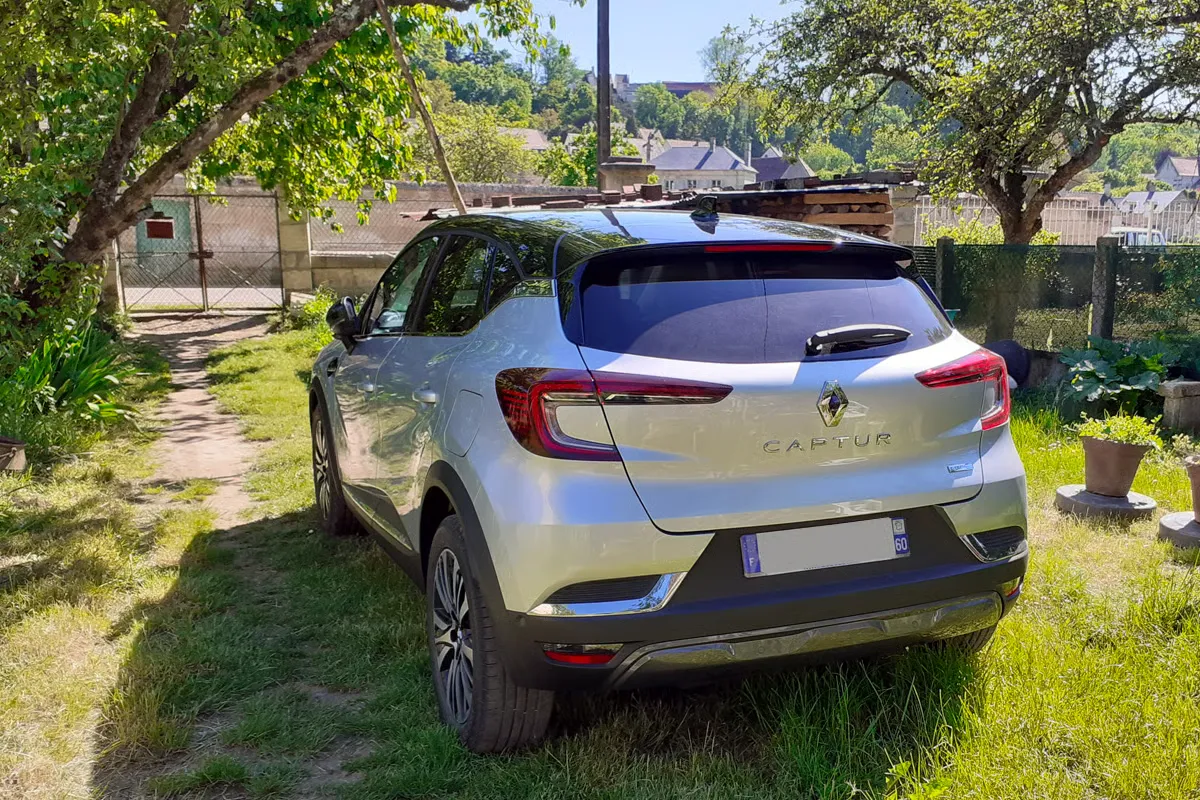
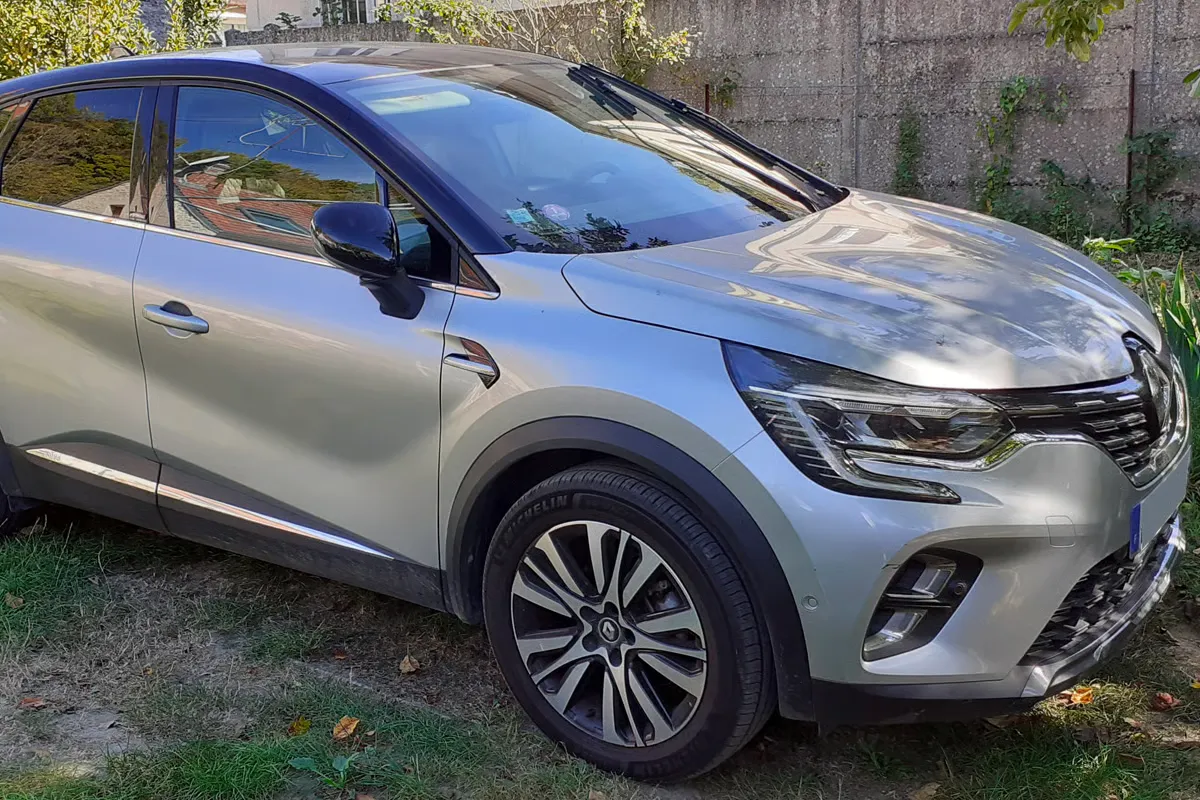
Our reader sees no difference in maintenance compared to his previous gasoline cars: “Oil changes, air conditioning refills, and replacing the 12V battery after five years, but I haven’t noticed anything specific to electric vehicles during regular maintenance. The regenerative braking isn’t very strong, but I’ve gotten used to driving by anticipating needs ahead of time. So I take my foot off the accelerator early, which helps prevent brake wear. ‘Even at work, I was known for using less fuel, tires, and brake pads than my colleagues.’”
No loss of range in 5 years
Daniel had some pleasant surprises with his Renault Captur PHEV: “I found that, like with electric cars, I could enjoy free parking in Paris. I discovered this when I tried to pay at a terminal: a message indicated it was free for me. Over time, I expected a decrease in range, but that didn’t happen at all—I still get an estimate of between 48 and 52 kilometers, based on my previous trips. I manage to keep a range of between five and fifteen kilometers.”
In one scenario, our reader finds himself with an empty traction battery: “It happens when there are long hills on the highway and I’m driving at 110-120 km/h. This situation rarely occurs to me. The gasoline engine only produces 91 hp [NDLR: 67 kW]. Having some battery charge left allows for strong overtakes on the expressways. This way, one can take advantage of the 160 hp [NDLR: 118 kW] from the entire powertrain.”
When traveling to Paris, this driver from a small rural town in the Oise department follows a specific strategy: “On the national road at 110 km/h, I start in EV mode. Then I force the system to retain about two-thirds of the energy in the battery. This allows me to drive entirely on electricity through the Parisian area. The battery’s energy capacity is only 9.8 kWh [NDLR: 7.5 kWh usable]. I think 15 kWh would have been better, but it would have made the car heavier.”
Electric vehicles for later
In daily use, Daniel wouldn’t need more autonomy: “For my neighbor who works in Paris, he needs far more than what my Captur PHEV offers. He has a rechargeable Volkswagen Golf hybrid that can travel up to 110-115 km in EV mode. Needs vary depending on the driver. Like with electric cars, this technology is limited by the lack of home charging options. Also, my car has a trunk that’s a bit small. For me alone, it’s not a problem, but it can be inconvenient for others. It’s worth noting that the seat is sliding.”
In retrospect, Daniel is satisfied with his choice: “Over more than five years, I haven’t encountered any problems, aside from a lack of parallelism that forced me to replace the front tires a bit prematurely. I consider the Renault Captur PHEV to be a car that fits me perfectly. It’s a good mid-range model not designed for frequent long trips. If I had to drive a lot and far, I wouldn’t have chosen a rechargeable hybrid car. I would definitely have bought another gasoline model.”
Also read
Testimonial – Highly disappointed with a European vehicle, Delphine reconciled herself to electric cars thanks to a Chinese model
Not an electric car? “Yes, in theory, and that’s probably what I would have done if we had been in the same situation as in 2026 five years ago. But not in 2021 when the charging network wasn’t well developed enough. Being used to keeping my used cars for a long time, the satisfaction I feel today with my Captur PHEV keeps me from switching to a Renault 5 E-Tech right now. It takes me quite some time to choose a model, but once I do, I stay loyal to it. Unless I’m disappointed, I won’t part with my plug-in hybrid any time soon.”
Our reader is aware that his choice isn’t universally accepted: “For die-hard fans of traditional cars, a rechargeable hybrid is nonsense because you have to carry around a battery all the time. The same goes for those who advocate for electric vehicles and want everyone to switch to them quickly. I can understand them, as a PHEV model puts you in a sort of middle ground. I’ve seen that European study criticizing the poor use of rechargeable hybrids, but it’s the ones used in companies that are to blame for the disastrous outcomes.”
Automobile Propre and I would like to express our sincere gratitude to Daniel for his excellent hospitality, responsiveness, and insightful insights shared after we asked our readers for their experiences.
For your reference, any offensive comments targeting our interviewees, their lives, choices, and/or ideas will be removed. Thank you for your understanding.
Author’s Note
The misuse in businesses is the reason behind many drivers’ negative views of rechargeable hybrid cars. It’s very different for individuals who have gone to the extra effort to buy one at a higher cost than a regular gasoline car. For them, charging as frequently as possible is a good way to offset the extra expense.
In 2021, choosing a plug-in hybrid car often meant wanting to experience the silence and comfort of electric driving. In many regions, the charging infrastructure was still underdeveloped, which wasn’t very reassuring. The situation has improved significantly today.
For his next car, our reader has already considered it being electric. Currently, the Renault 5 E-Tech is at the top of his list. But he doesn’t rule out the possibility that he might end up choosing another model, still from the same manufacturer, very likely.
Philippe SCHWOERER