
T&E: Europe’s truck manufacturers could lose a quarter of the E-Lkw market
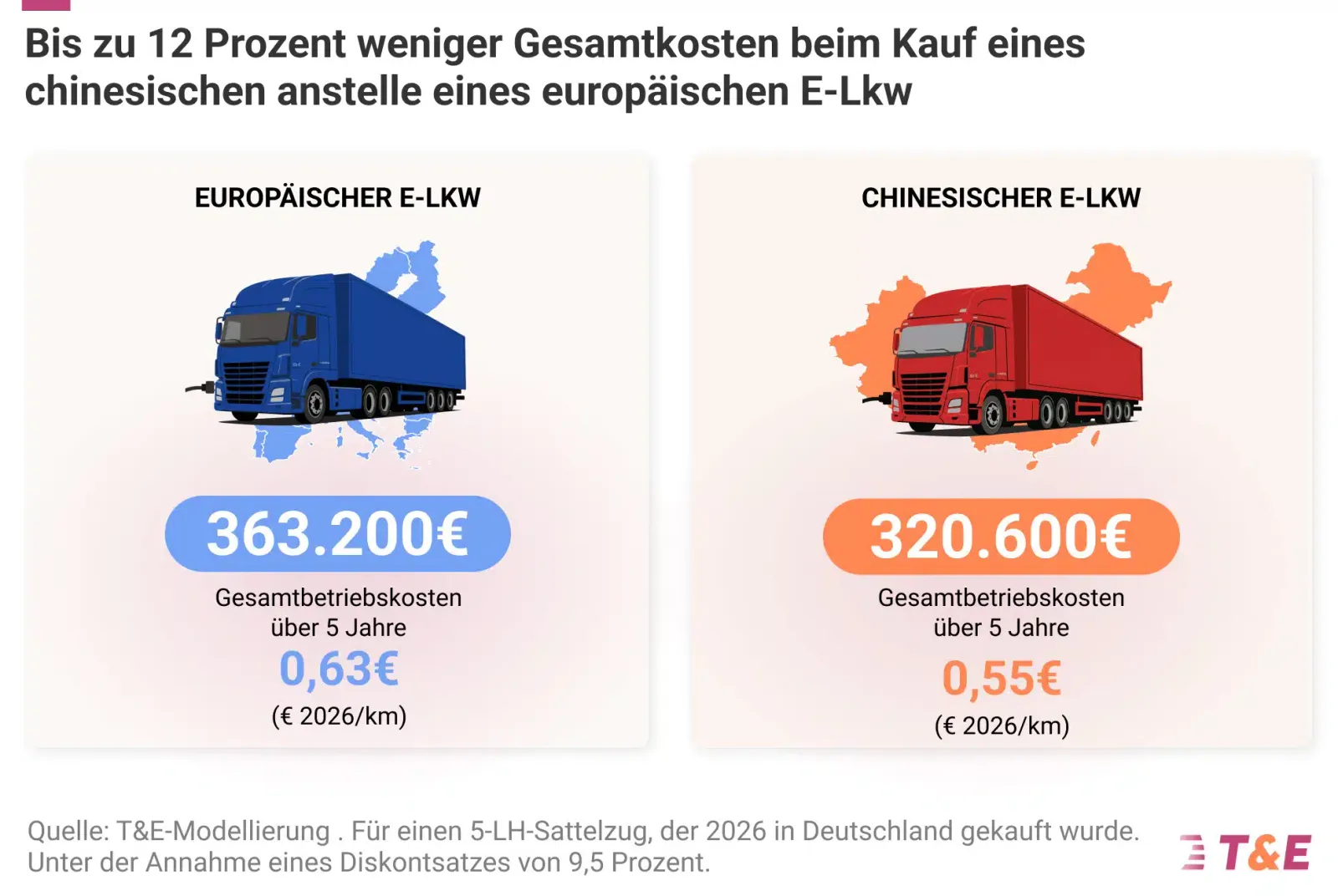
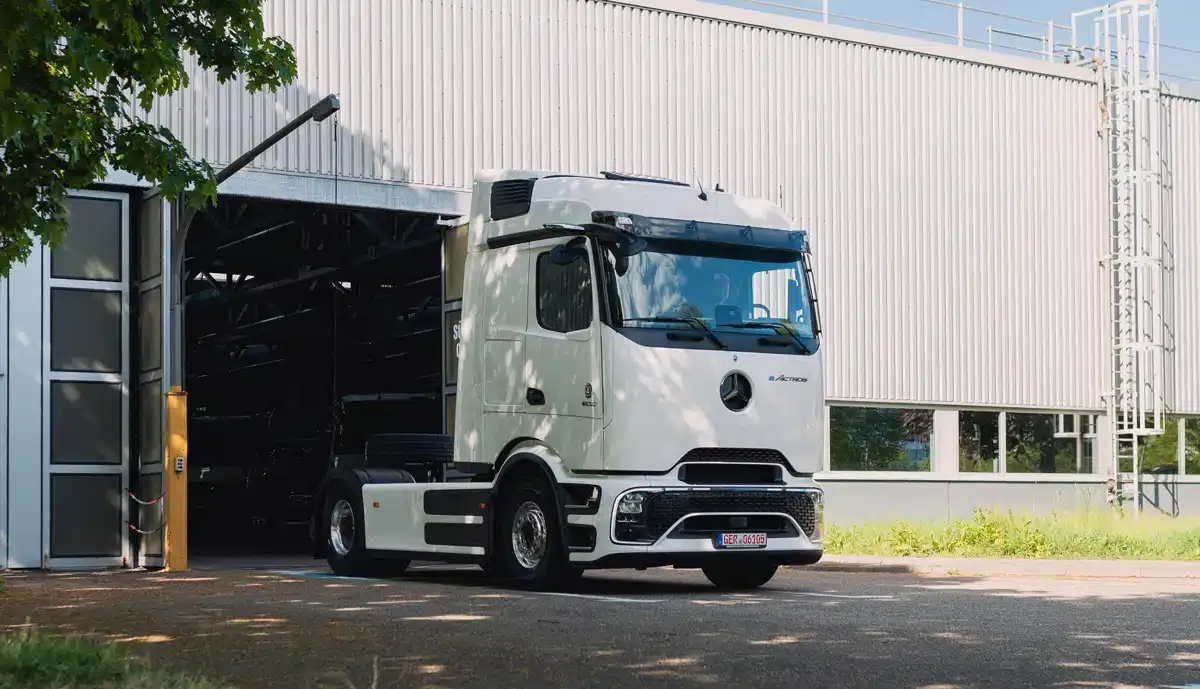
Image: Daimler Truck (illustrative)
The environmental organization Transport & Environment (T&E) warns that EU manufacturers can only maintain their market leadership by setting ambitious fleet emission limits for commercial vehicles.
A T&E analysis shows that European truck manufacturers could lose a quarter of the electric truck market to new competitors by 2030 if they do not accelerate electrification efforts. The analysis examined manufacturers’ costs, technical requirements, and goals. T&E calls on the German government to advocate in Brussels for maintaining ambitious CO2 fleet emission limits for trucks, so that EU manufacturers can retain their market leadership.
In 2025, according to the organization, 5.6 percent of all newly sold trucks in the EU had zero emissions, double the figure from the previous year. In Germany, 7.1 percent of all new trucks were electric that same year—a rise of over 60 percent compared to 2024. Germany thus leads among the five largest European markets (including France, Spain, Italy, and Poland).
This acceleration is attributed by T&E to the CO2 fleet emission limits for trucks that took effect in July 2025 and to falling battery prices. EU manufacturers are now offering more electric trucks at lower prices, but they face increasing competition as models from new market entrants are nearing launch.
According to the analysis (ENG/PDF), the total operating costs of a Chinese electric truck can be up to 12 percent lower compared to an equivalent European model. This translates to savings of up to 43,000 euros over a five-year period. Electric trucks from new competitors perform equally well in key metrics such as range, charging time, maximum payload, and energy efficiency as European trucks. Based on their stated goals for the European electric truck market, these new suppliers hope to capture up to a quarter of the electric truck market by 2030.
Johanna Braun, manager for truck e-mobility and infrastructure at T&E Deutschland: “Competitive electric trucks from China and the U.S. are already entering the European market, with more models planned. At this critical moment, truck manufacturers should learn from the mistakes of the automotive industry. Slowing down electrification now would give competitors from the U.S. and China an advantage, allowing them to gain a significant market share in Europe and around the world.”
Investments in trucks are primarily about cost considerations. Lower overall operating costs of more than 10 percent could be decisive in the transportation industry, which operates with profit margins of only 1.5 to 2 percent, according to T&E. According to calculations by the environmental organization, a Chinese electric truck can reduce overall operating costs by 12 percent.
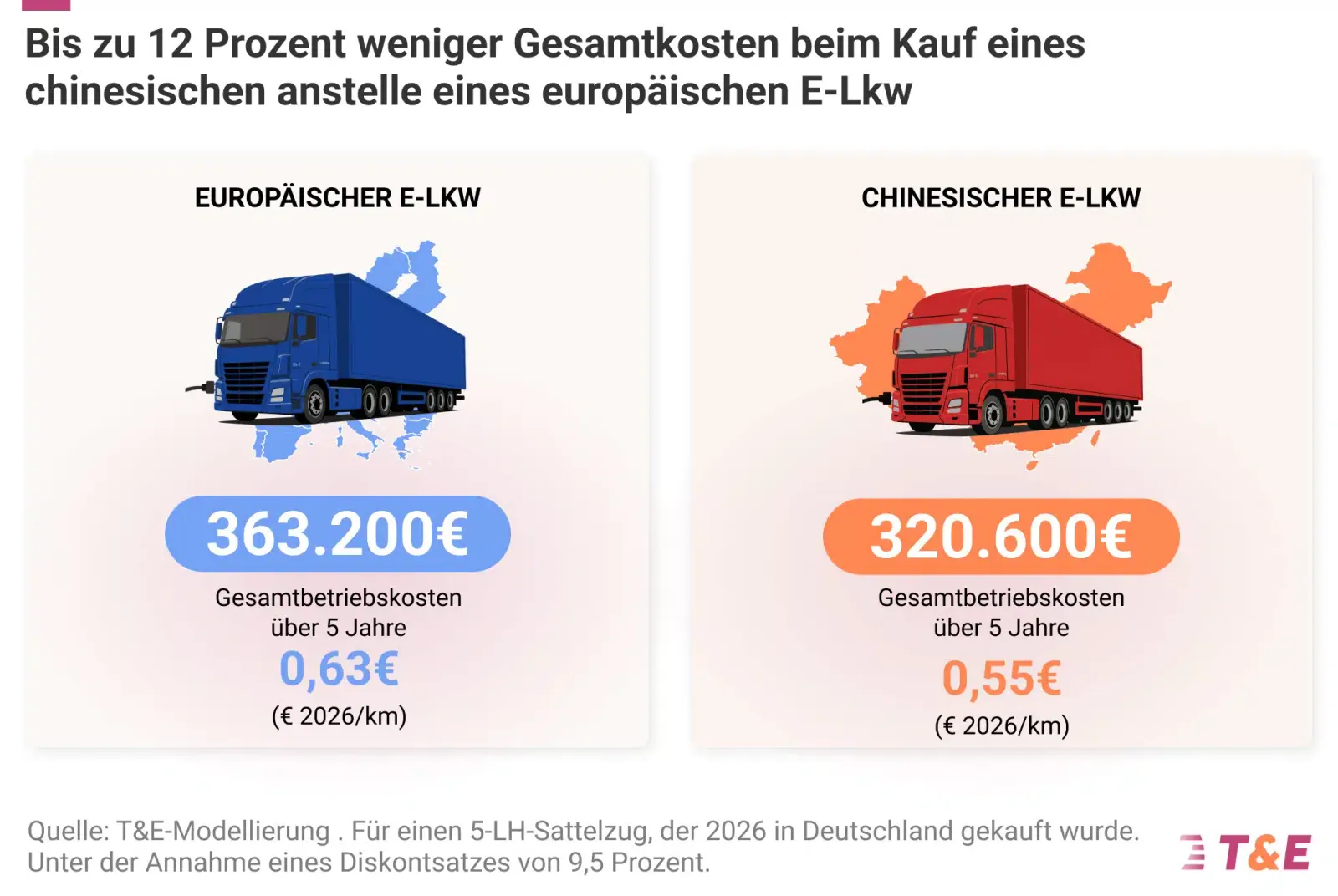
A German logistics company that chooses an electric truck from a new market entrant instead of a European model today could reduce its total operating costs from 0.63 euros/km to 0.55 euros/km (including residual value). Over a five-year usage period, this would amount to savings of 43,000 euros in total.
The EU truck market, with an annual volume of 245,000 vehicles, is dominated by a few established manufacturers: Daimler Truck, Traton, IVECO, DAF, and the Volvo Group. According to T&E, this means that competitive new market entrants could quickly capture a large market share by offering comparable quality at lower prices.
"The race for market leadership in electric trucks is in full swing," says Johanna Braun. "Chancellor Friedrich Merz should advocate for ambitious decarbonization goals at the European level if he wants to prevent a similar crisis in the truck sector as we are seeing among car manufacturers. Greater competition can benefit logistics companies and consumers. European manufacturers should stop wasting time resisting fleet emission limits and instead commit fully to electric trucks like their new competitors."
Also interesting
About the author
Thomas Langenbucher is an expert in electromobility with professional experience in the automotive industry and finance sector. Since 2011, he has been covering electric vehicles, sustainable technologies, and mobility solutions for ecomento.de. Learn more.
Reader interactions