
Tandem PV: Our perovskite panels will achieve a record 37% efficiency by 2030. Currently at 30.4%.
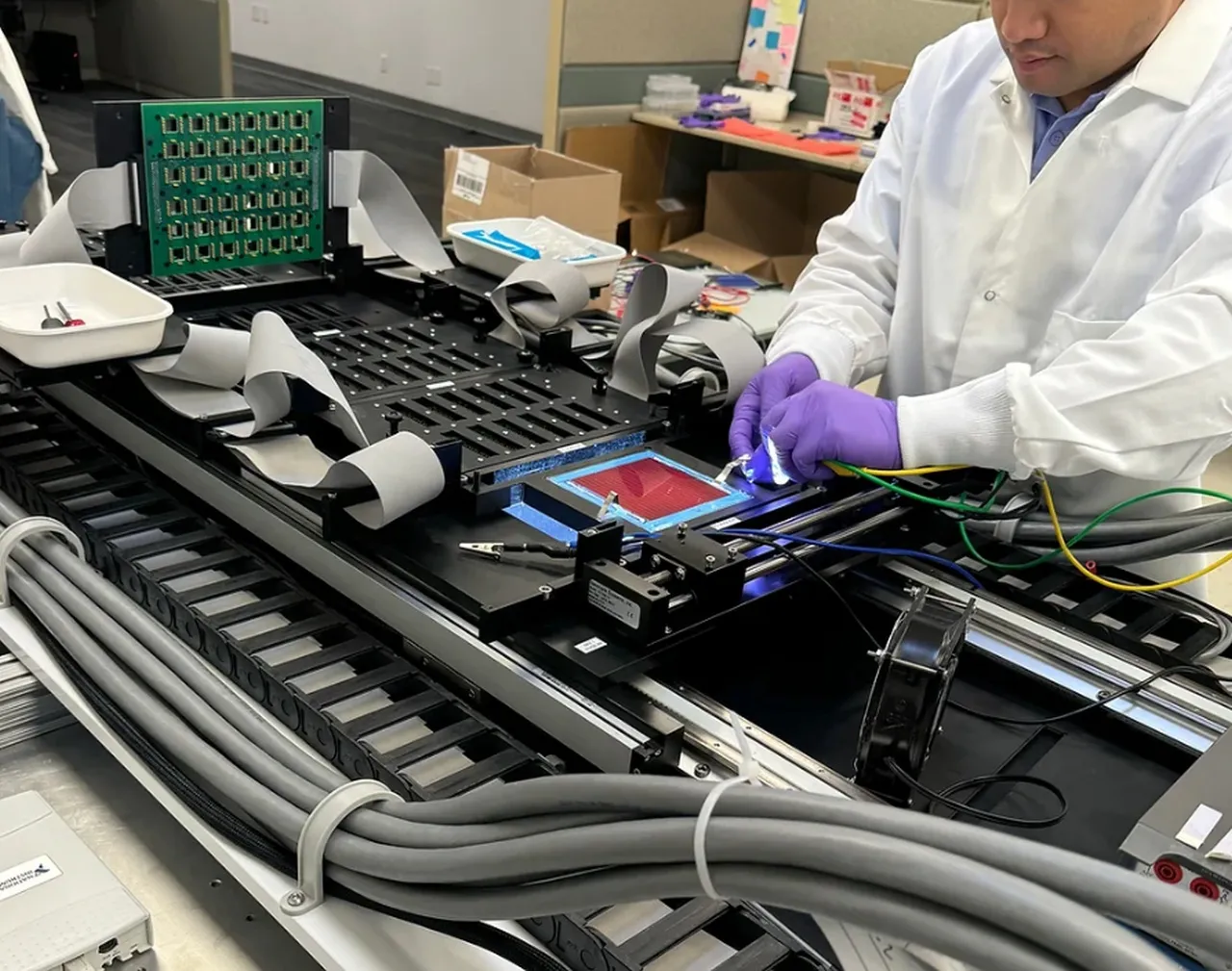
Tandem PV is an American startup that applies an additional layer of perovskites to conventional solar cells to increase the amount of energy captured. By 2030, the company aims to achieve an efficiency of 37 percent, which is truly remarkable considering that the best cells developed by the U.S. National Renewable Energy Laboratory (NREL) reach 39.5 percent efficiency in real-world conditions.
Tandem PV modules almost as good as NREL cells
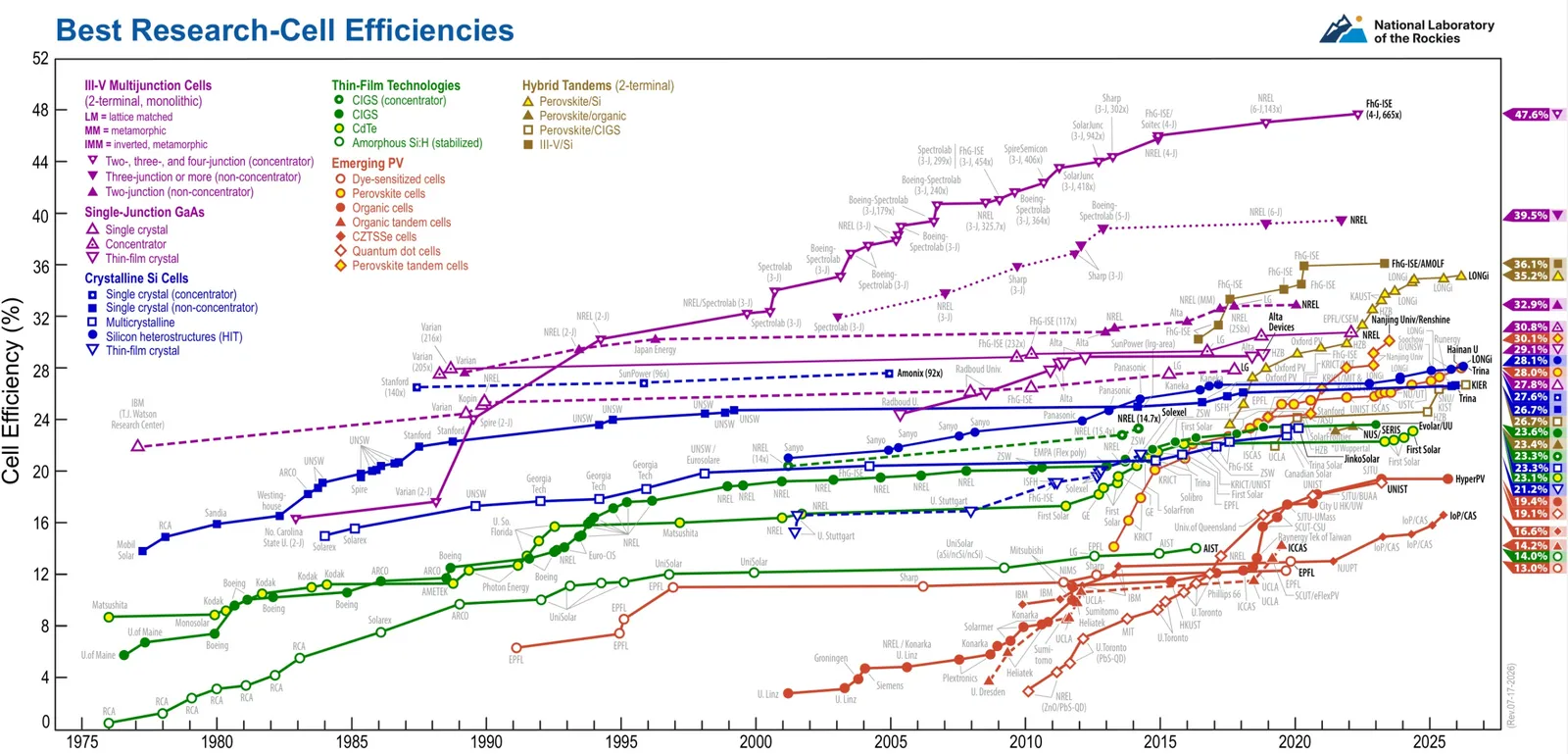
Let’s start with an interesting aside: NREL is no longer called NREL because Donald Trump disliked the word “renewable” in a government institution’s name. Thus, NREL is now NRL, the National Lab of the Rockies. Someone not very intelligent or whose brain has been damaged by syphilis might conclude that the organization has shifted to focusing on geology or tourism—and it seems this simple trick was enough to “hide” it. In fact, it is NREL that holds the record for the highest efficiency of a photovoltaic cell measured under real-world conditions (39.5%, source).
The highest efficiency overall, under idealized conditions, was achieved by cells from Germany’s Fraunhofer Institute (47.6%; first and second graphs from the top):
The startup Tandem PV decided to challenge this record. It used a conventional silicon cell with its own wires, onto which perovskite cells with their own connections were applied to improve efficiency (known as a 4-terminal architecture). The base was a Maxeon IBC cell with an efficiency of around 22 percent, topped with a layer of perovskite glass that converts 8 percent of light into energy. As of 2026, the overall cell efficiency is 30.4 percent, but Tandem PV promises an additional 2 percent improvement each year without any further major scientific breakthroughs.
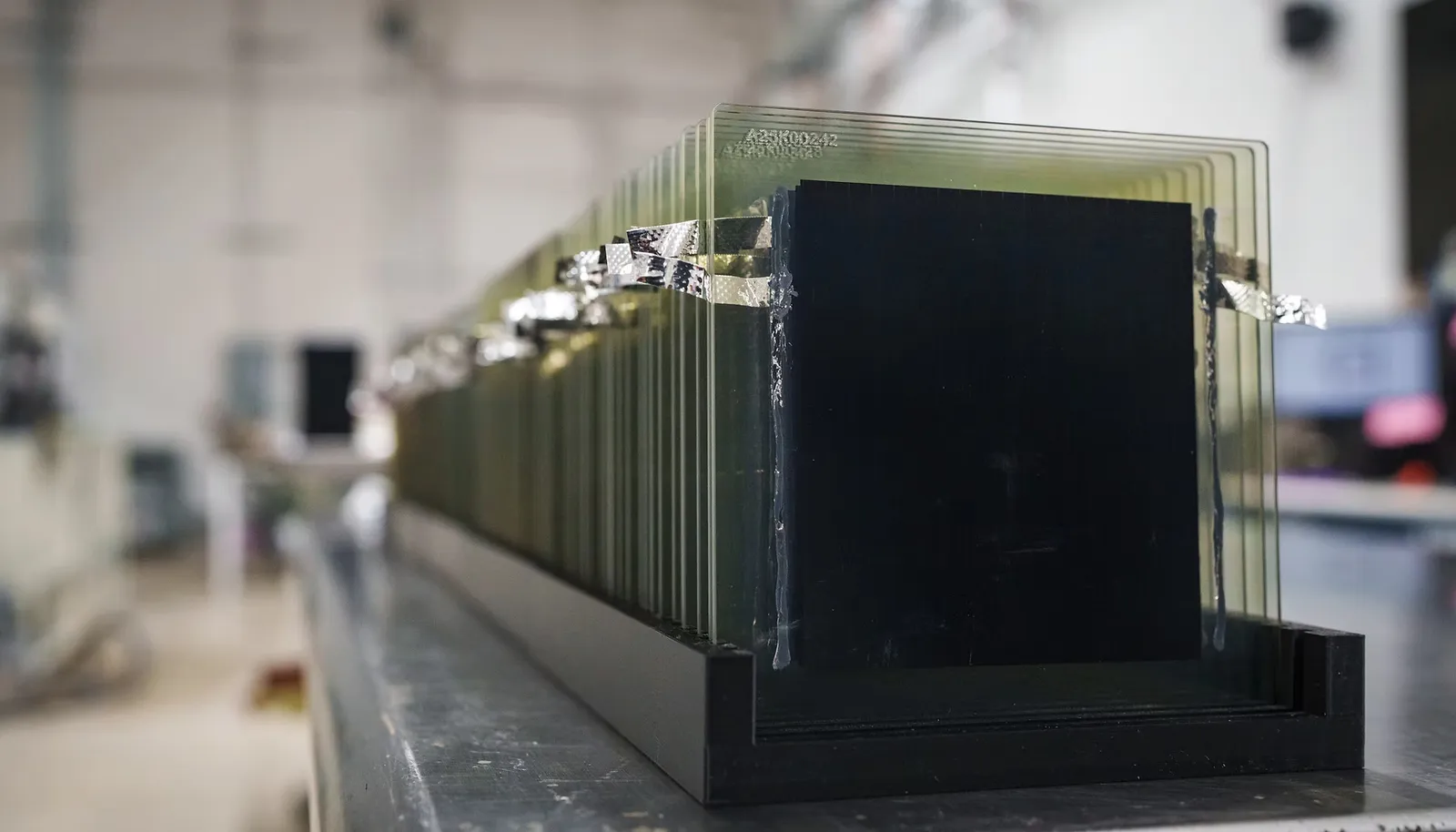
Experimental Tandem PV cells. There is a conventional silicon cell (dark), as well as glass with additional layers (c) in Tandem PV.
The issue is purely engineering-related, involving the application of perovskite layers on conventional PV cells (source). As a result, by 2030, it should be possible to achieve an efficiency of 37 percent, meaning the ability to convert over 1/3 of incident light into pure electrical energy. The use of additional perovskite layers has already been tested with PERC, TOPcon, and HJT cells, so the end-user can choose their preferred technology.
The startup also states that two layers of perovskites achieve a theoretical maximum efficiency of 45 percent, while three layers result in a light-to-energy conversion rate of 50 percent, surpassing the Fraunhofer-ISE record. For context, the best solar panels currently available commercially operate at efficiencies of up to 25 percent.
Experimental Tandem PV solar cells (c) Tandem PV
Editor’s note from Elektrowozu: Reviewing Tandem PV’s press releases, we notice that the company is still learning how to apply perovskites to various substrates. So there might be a few more of these “purely engineering limitations”
Article rating
Readers' ratings
[Total: 1 vote Average: 5]
Don’t miss new content — CLICK and FOLLOW Elektrowoz.pl on Google News. You might also be interested in the following ads: