
Nio CEO William Li: A car that is 20% heavier damages roads 2.07 times more severely
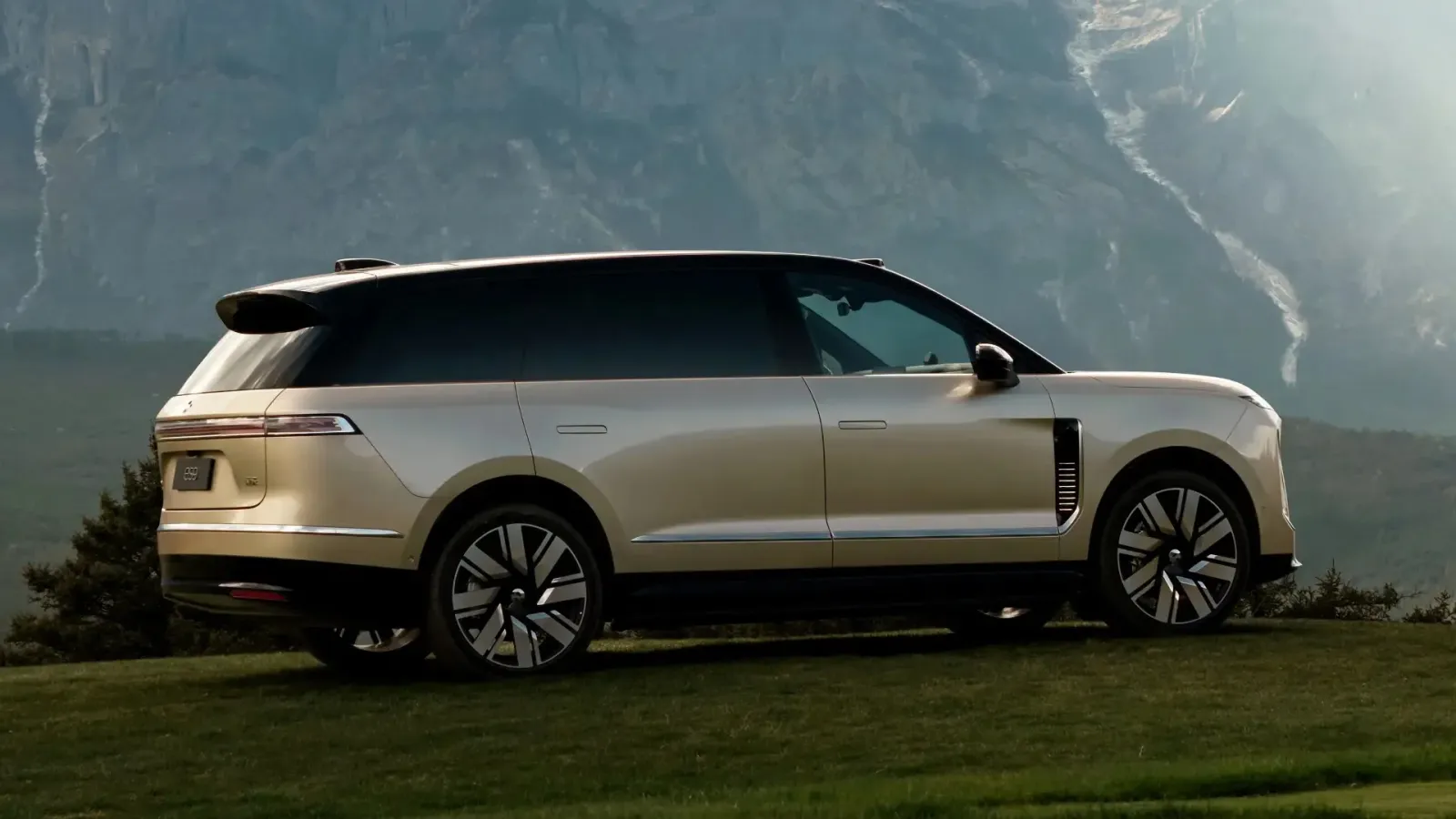
William Li, founder and CEO of Nio, once again warns about the weight of Chinese cars. On Thursday, at an overnight automotive industry forum during the 2026 World Internet Conference in Wuzhen, he said a car that is 20% heavier damages road surfaces 2.07 times more severely. In his view, the cost of competing on battery capacity is borne by public roads. Chinese newspaper Yicai reported on his remarks on Friday.
William Li said, “Some cars have 120 kWh batteries weighing 700-800 kg. For the car itself, this weight doesn’t matter much, but has anyone calculated what effect it has on roads?”
The result of 2.07 comes from the fourth power law used by road engineers. According to this law, surface damage increases proportionally to the pressure raised to the fourth power, and 1.2 to the fourth power yields approximately 2.07. With a similar mass distribution across the axles, an electric vehicle weighing 2400 kg would therefore consume asphalt roughly twice as fast as a car weighing 2000 kg.
Next to Li on stage was Eric Li, president of Zhejiang Geely Holding Group. It was their first public conversation since September 28, when the two groups established a broad partnership in battery charging and swapping. The discussion focused mainly on battery lifespan and methods of recharging.
Batteries at 400-500 kg and the president’s signature on each kilogram
Li says that weight directly affects the technical compromises at Nio. The company’s battery packs typically weigh 400-500 kg, which is significantly less than the mentioned 700-800 kg. In exchange, Nio accepts lower capacity and shorter range, seeking solutions within these constraints. The company’s CEO also admitted openly that he doesn’t know if the market will ever compensate for this.
He regularly returns to this topic. On July 6, 2025, during a live broadcast, he said the industry is blindly enlarging battery sizes, and the heavier the car, the greater the damage to roads, which is why many countries impose taxes on vehicle weight. His remarks made it onto lists of the most popular topics on Chinese social media at the time. At this year’s exhibition in Beijing, Li revealed that at Nio, each model has a approved weight target, and every additional kilogram requires his personal approval. In May, in an interview with Yicai, he called for restrictions on vehicle weight at the national level. He warned that if over 300 million cars in China become heavy vehicles, roads will not be able to handle them, and without top-down guidelines, the industry will descend into chaotic competition.
Weight reduction also comes at a cost. In June, Li explained that reducing the weight from 2 tons to 1.9 tons in an electric vehicle is relatively easy, but each additional kilogram becomes increasingly expensive. Towards the end of vehicle development, cutting off 1 kg costs around 1,000 yuan (approximately 590 zł).
Chinese passenger cars have gained almost 400 kg
According to data from China’s Ministry of Industry and Information Technology (MIIT), the average curb weight of new passenger cars in China was 1,704 kg in 2024, compared to 1,312 kg in 2012.
In the NEV segment (electric vehicles and plug-in hybrids), the average weight in the first four months of 2026 already reached 1,939.3 kg.
Starting from January 1, 2026, China will implement a standard limiting energy consumption for electric vehicles. According to Yicai, this is the world’s first mandatory limit of this kind and the first to tie allowable consumption to vehicle weight, with stricter requirements for models over 2710 kg. The standard is about 11% stricter than the previous recommended version. A vehicle weighing around 2 tons can consume at most 15.1 kWh per 100 km, and after technical improvements, the range of electric vehicles with the same battery increases by approximately 7% on average.
According to Yicai, Chinese regulators are also considering a tax reform where fees would depend on the vehicle’s weight.
Source: CnEVPost
LovEV Newsletter
Want more content like this?
Sign up — we’ll send you a weekly summary once the newsletter starts.